open-seo: A Deep Dive into the Free, Open-Source Alternative to Semrush
open-seo: A Deep Dive into the Free, O…
open-seo is a free, open-source alternative to Semrush and Ahrefs built with TypeScript.
open-seo is an open-source project by the every-app team that positions itself as a free alternative to Semrush and Ahrefs. Built with TypeScript, it has quickly gained over 5,300 GitHub stars. This article explores its architecture, real-world value, target users, and the honest trade-offs involved in choosing an open-source SEO solution over commercial tools.
The Open-Source Revolution in SEO Tools
In the digital marketing world, Semrush and Ahrefs have long been the two dominant players that website operators simply can't ignore. They offer a complete suite of features — from keyword research and competitor analysis to backlink monitoring. Semrush Pro starts at around $129.95/month, Ahrefs Lite runs $99/month, and enterprise plans can reach thousands of dollars. These fees primarily go toward maintaining massive crawler infrastructure and keyword databases, yet they've priced out many small-to-medium teams and independent developers.
It's worth noting there's an internal logic behind these high price points. Take Ahrefs: its proprietary crawler, AhrefsBot, crawls over 8 billion pages per day and maintains one of the world's largest backlink databases. Day-to-day operations involve distributed server clusters, IP pool management, anti-scraping countermeasures, and continuous keyword data procurement. These commercial tools typically adopt a feature-tiered SaaS subscription model, using API call limits, project quotas, and keyword tracking allowances as the core variables to differentiate tiers — effectively locking in different customer segments. This explains why smaller teams are often forced to settle for entry-level plans with limited functionality.
Now, an open-source project called open-seo is aiming to disrupt this dynamic. Maintained by the every-app team and explicitly positioned as "an open-source alternative to Semrush and Ahrefs," the project quickly gained traction after launch. It has already earned 5,372 stars and 603 forks on GitHub, with a single-day peak of 222 new stars — a remarkably strong growth trajectory.
open-seo: Project Positioning and Tech Stack
An Open-Source Challenger Taking Aim at Commercial Giants
open-seo's core value proposition is straightforward: give users a self-hostable SEO analysis toolkit that requires no paid subscription. For teams that have relied on commercial SaaS tools, an open-source alternative offers several key advantages:
- Data sovereignty: All data stays on your own servers, preventing sensitive website data from falling into third-party hands. With privacy regulations like GDPR tightening, this is especially critical for users in European markets.
- Zero subscription costs: Eliminates monthly software fees that can run into the hundreds of dollars — particularly valuable for budget-constrained teams.
- High customizability: Built on open-source code, users can extend and modify the tool to create their own custom SEO workflows.
A Modern Architecture Built on TypeScript
open-seo uses TypeScript as its primary development language. Released by Microsoft in 2012, TypeScript is a superset of JavaScript with a static type system. Its advantages are most pronounced in large-scale projects: compile-time type checking catches many runtime errors, and IDE-level intelligent autocomplete and refactoring support significantly boost developer productivity.
For a full-stack application like open-seo — which requires front-end and back-end coordination — TypeScript allows sharing type definitions between the front end (e.g., React/Next.js) and back end (e.g., Node.js/Express), dramatically reducing bugs caused by interface mismatches. This is a meaningful architectural choice. TypeScript has consistently ranked among the top five most popular programming languages on GitHub for several consecutive years. For developers familiar with the Node.js ecosystem, the barrier to local deployment or contributing to the project is relatively low, and sharing type definitions across the stack helps keep maintenance complexity in check.
The Real-World Significance of Open-Source SEO Tools
Breaking the Data Black Box and Improving Transparency
The SEO industry has long suffered from information asymmetry. Leading commercial tools have built near-insurmountable moats through vast crawler networks and years of data accumulation. Ahrefs' crawler (AhrefsBot), for instance, consistently ranks second only to Google in crawler activity across the internet, with a backlink database covering over 3 trillion links. Semrush boasts a keyword database of over 25 billion keywords. Building this kind of infrastructure demands continuous investment: distributed server clusters, IP pool management, anti-scraping technology, and third-party procurement of keyword search volume data.
While projects like open-seo can't realistically compete with these giants on data scale in the short term, they do offer a transparent, auditable technical path. Developers can clearly understand the logic behind each SEO metric rather than facing a black-box system. This transparency has unique value for technical research and SEO education. Metrics like "Domain Authority" and "URL Rating (UR)" used in commercial tools have never had their underlying algorithms publicly disclosed. Open-source projects, by contrast, allow community members to directly examine, challenge, and improve scoring logic — a core value that commercial tools simply cannot offer to researchers and practitioners who want to deeply understand SEO mechanics.
Community-Driven Iteration
The peak of 222 new stars in a single day confirms real market demand for open-source SEO solutions. This momentum also aligns with the broader systemic trend of "open-source alternatives to commercial SaaS" in recent years — Supabase raised over $200 million positioning itself as the open-source alternative to Firebase; Plausible Analytics targets Google Analytics with a privacy-first approach; Posthog replaces Mixpanel; Metabase replaces Tableau.
Most of these projects adopt an Open Core business model: core functionality is fully open-source, while enterprise features (SSO, audit logs, advanced permissions, compliance reporting) are offered as paid add-ons. This dual-track approach maintains community openness and activity while creating a revenue stream for sustainable operations — widely regarded as one of the most mature paths to open-source commercialization. The movement is driven by several forces: stricter privacy regulations pushing data localization, falling cloud computing costs lowering the barrier to self-hosting, and a general awakening of developer awareness around data ownership.
The greatest advantage of the open-source model lies in community collaboration — as more developers join, the project's feature coverage and data processing capabilities can expand rapidly. That said, a realistic assessment of the challenges is warranted: the core competitive advantage in SEO analysis ultimately comes down to the breadth and depth of the underlying data. Semrush and Ahrefs can charge premium prices largely because of their enormously expensive global crawler infrastructure and years of accumulated keyword data. Open-source projects can achieve functional parity in terms of features, but closing the gap on raw data scale requires sustained, long-term investment.
Many open-source SEO tools have therefore opted to integrate third-party data APIs as an interim solution. Services like DataForSEO, the Moz API, or the Google Search Console API provide structured data interfaces for keyword search volumes, SERP data, and backlinks, billed by usage — with starting costs far below commercial SaaS subscriptions. This middle-ground approach gives open-source tools an initial baseline of data usability, but it also introduces new external dependencies. If a third-party API adjusts its pricing or terms of service, the tool's overall cost structure changes accordingly — a significant risk factor worth considering before adopting this kind of solution.
Who Should Use open-seo
Target User Profiles
Based on the project's positioning, the following types of users are most likely to benefit from open-seo:
- Independent developers and site owners: Those looking to conduct basic SEO monitoring without adding recurring fixed costs.
- Small-to-medium startups: Teams with limited budgets and heightened data privacy requirements.
- Technical marketers: Users with some programming ability who want to deeply customize their SEO analysis workflows.
- Educational and research contexts: Learning the fundamentals of SEO and understanding how search engine optimization actually works.
Key Considerations Before Getting Started
Self-hosting an open-source tool eliminates subscription fees but introduces hidden costs — including server deployment, ongoing maintenance, and potentially data source access fees. For purely marketing-focused users without a technical team, the out-of-the-box experience offered by commercial SaaS tools remains more appealing.
There's also the question of long-term maintenance risk: Will the project stay actively updated? Will core contributors move on to other things? Can critical vulnerabilities be patched promptly? These are all factors that enterprise users need to evaluate before committing to a self-hosted solution. GitHub star counts are a useful proxy for community interest, but what truly reflects a project's health is its issue response time, commit frequency, and the quality of its documentation.
Ultimately, choosing between approaches is a trade-off between cost, data control, and ease of use — there's no universally correct answer.
Conclusion: Another Promising Attempt from the Open-Source Ecosystem
The rise of open-seo is yet another emblematic example of the broader "open-source alternatives to commercial software" trend. From Supabase challenging Firebase to Plausible taking on Google Analytics, more and more open-source projects are mounting serious challenges to traditional SaaS giants. Most of these projects adopt a dual-track model of "open-source core + commercial cloud hosting," preserving community openness while leaving room for sustainable growth.
While open-seo still has a long way to go before it can truly replace Semrush and Ahrefs — especially when it comes to the core barrier of data accumulation — its emergence injects fresh energy into the entire SEO tooling ecosystem. For a developer community that values data sovereignty and cost efficiency, this is undoubtedly a project worth following closely and contributing to.
Related articles

PGP-Clinical-TimeKAN: A Detailed Guide to the Multivariate Physiological Indicator Joint Prediction Framework
An in-depth analysis of the PGP-Clinical-TimeKAN framework for joint probabilistic prediction of multivariate physiological indicators, covering trajectory-first paradigm, KAN message passing, MIMIC-IV validation, and ablation studies.
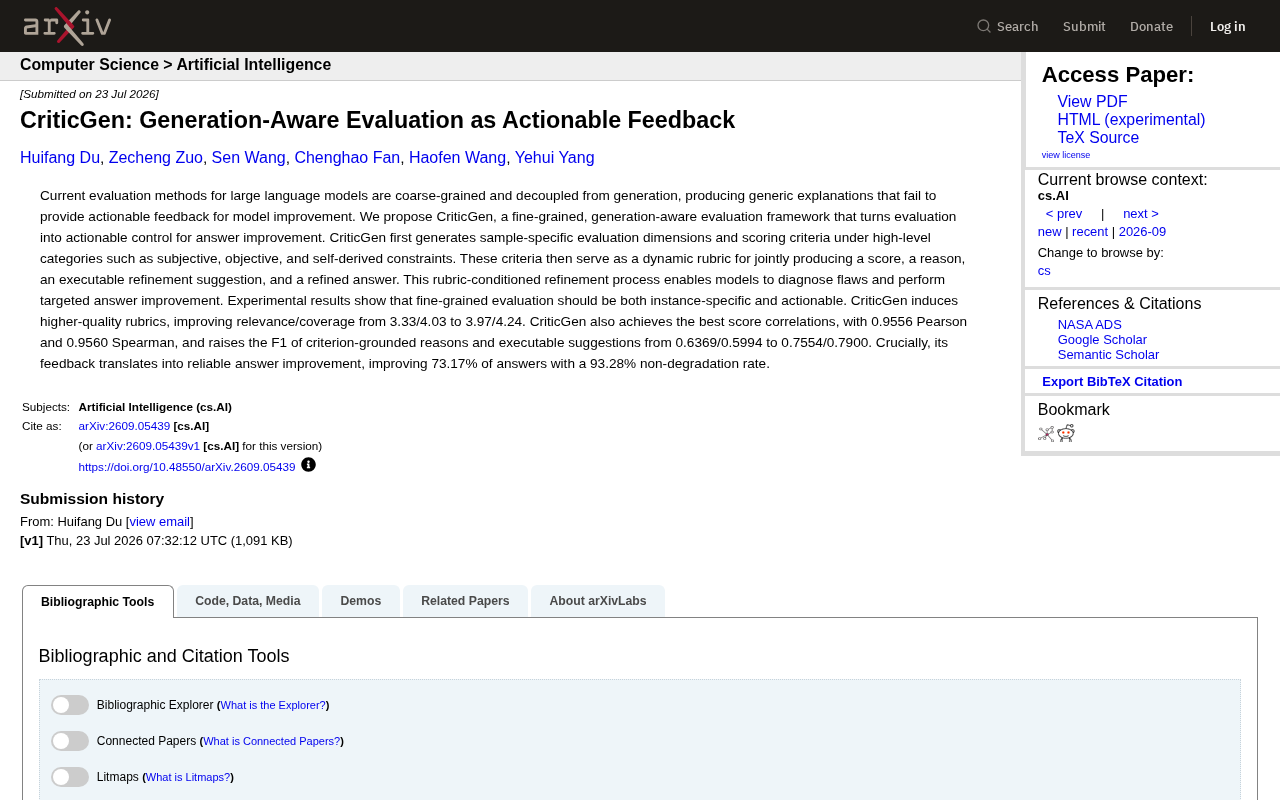
CriticGen: A New Framework That Transforms AI Evaluation into Actionable Improvement Feedback
CriticGen proposes a generation-aware evaluation framework that transforms AI assessment from passive scoring to an active optimization loop, achieving 73.17% answer improvement and 93.28% non-degradation rate.
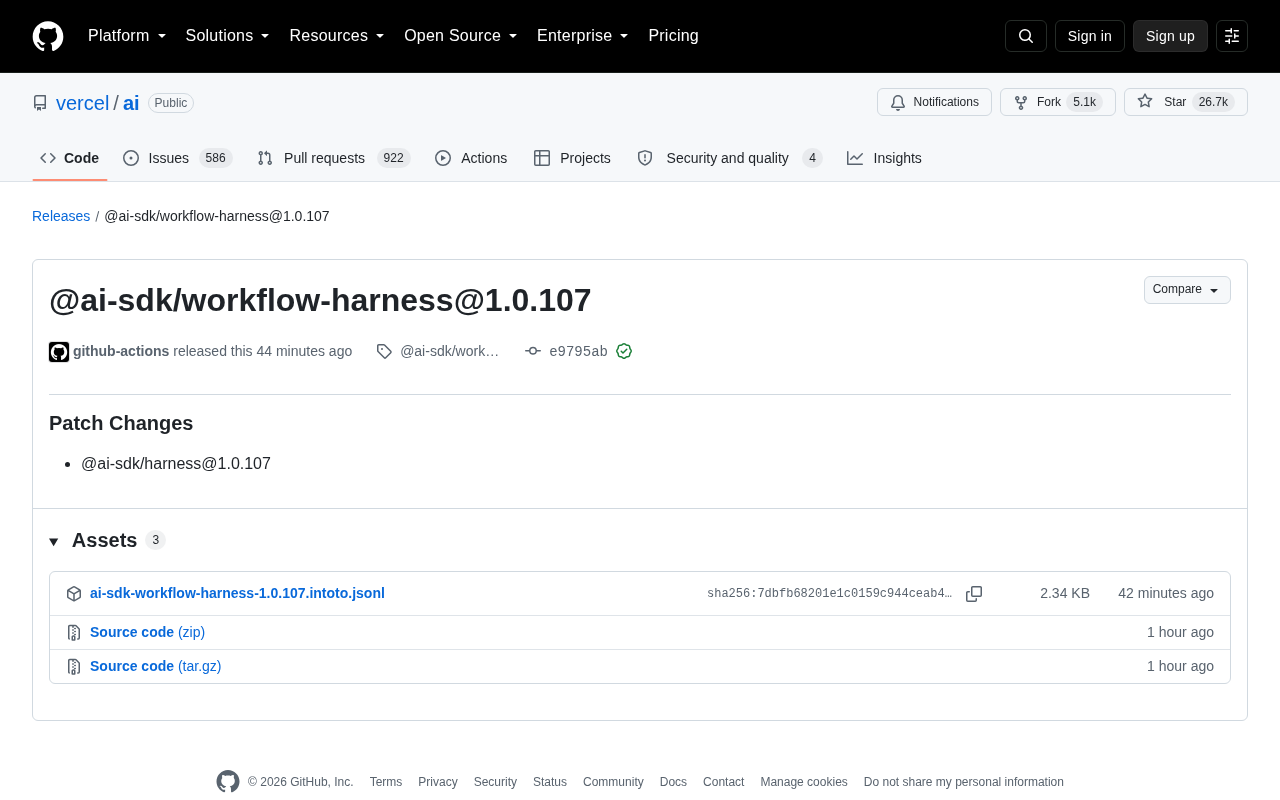
Vercel AI SDK workflow-harness Update Analysis
Deep analysis of Vercel AI SDK workflow-harness 1.0.107 update: architecture design, engineering practices, and developer value for building reliable AI apps.