Open Source AI Film Crew: Generate a Full Video from One Sentence for Just Three Cents per Second
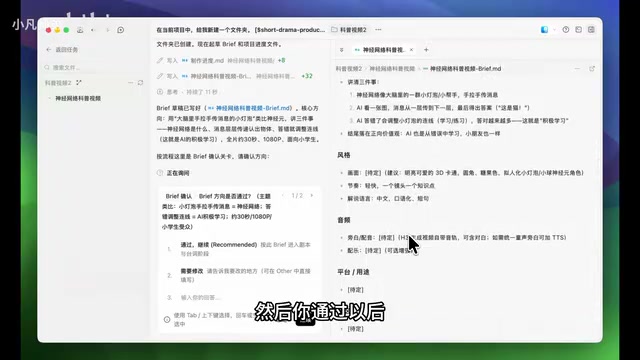
Open-source AI Agent pipeline generates complete videos from a single prompt for ~3 cents per second.
A Bilibili creator's open-source "Open Source Video Gen Scale" Agent skill pack automates the entire video production pipeline — from creative planning and scriptwriting to art asset generation and final output. The solution uses Claude Code or similar Agents to orchestrate on-demand RTX 5090 rentals on AutoDL with pre-installed MiniMax H3, shutting down servers immediately after generation to keep costs under 0.30 RMB per clip. A human-in-the-loop review mechanism lets creators intervene at key stages. Two ready-to-use templates (short film and photorealistic character) are included, with setup requiring only an AutoDL Token and a simple Agent install command.
From One Sentence to a Complete Video: AI Agents Take Over the Entire Video Production Pipeline
Video generation is evolving from "single-shot showcases" to "end-to-end automation." Recently, a Bilibili creator open-sourced an Agent skill pack called Open Source Video Gen Scale, with a clear core goal: let creators drive an entire AI "film crew" — from concept development and scriptwriting to art asset creation and final output — using nothing but a single prompt.
Whether it's short-form content, product promos, short dramas, or creative pieces, users don't need a high-end PC or locally deployed video generation models. According to the author, the combined cost of their previous two Bilibili videos (including all the discarded takes from repeated generation attempts) came to just 20 RMB — roughly three cents per second of finished video. This ultra-low barrier to entry and production cost is what makes this open-source solution so compelling.
Demo: Automated Production of a Science Education Video
The author uses "a machine learning neural network explainer video that even an elementary schooler can understand" as a demo, walking through the entire AI video generation pipeline. The Agent first produces a Video Brief — a concise outline of its creative concept and content plan. Once the user approves, the system moves into automated script and dialogue generation.
One notable detail: this workflow retains a human-in-the-loop review mechanism. When the author was unsatisfied with the script and asked to "add more professional terminology," the Agent revised it based on that feedback and resubmitted for review. After approval, it automatically generated the relevant art assets and assembled the final video.

This staged "generate → review → revise" design fully leverages AI's efficiency while keeping creators in control of the content direction — avoiding the completely unpredictable outputs that come with pure one-click generation.
Human-in-the-Loop (HITL) is a design pattern that embeds human judgment at critical checkpoints within an automated workflow. The goal is to preserve AI efficiency while having humans oversee high-stakes or highly subjective decisions. Compared to fully automated pipelines, HITL is especially practical in scenarios where output quality is inconsistent or creative direction requires personalized control. In creative work like video production — where elements like script tone and visual style are highly subjective — relying solely on AI to iterate often fails to converge on results the creator finds satisfactory. HITL thus becomes a core design choice for reconciling "automation efficiency" with "creator intent."
Technical Architecture: On-Demand Cloud GPU Rental + Agent Auto-Scheduling
The reason costs can be pushed so low comes down to a key architectural choice: rent cloud GPUs on demand, and shut them down immediately when done.
The project essentially rents servers on AutoDL that come pre-installed with the MiniMax H3 model, having the Agent automatically power them on when video generation is needed and shut them down as soon as it finishes. This "pay-as-you-go" elastic compute approach minimizes wasted spending on idle GPU time.

Video Generation Cost Breakdown
The author provides concrete cost figures:
- Renting an RTX 5090 GPU on AutoDL costs approximately 3 RMB/hour
- Generating a 1080P, ~10-second video takes around 5 minutes
- The actual cost per video clip is under 0.30 RMB
Breaking that down, the cost per second of video does indeed fall into the single-cent range. For creators who need to iterate heavily and run many generation attempts to find a satisfying result, this cost structure offers better value than subscription-based closed-source video generation services — and far more flexibility.
MiniMax H3 is a video generation model released by Chinese AI company MiniMax. It uses the Diffusion Transformer architecture — a mainstream approach for generating high-resolution, temporally coherent video clips. Compared to earlier UNet-based diffusion models, the Transformer architecture handles complex prompts better and maintains stronger visual consistency, but also demands significantly more VRAM and compute — which is one reason the solution recommends the RTX 5090 (24GB+ VRAM) as the target hardware. Pre-installing large models like this on cloud images and launching them on demand is a common engineering practice for balancing inference cost with availability.
Getting Started: Agent + Skill Pack + AutoDL Token
The barrier to using this solution is quite low. The core setup comes down to three steps.
Step 1: Prepare an AI Agent
You'll need an AI Agent to serve as the "director" of the entire workflow. The author uses Claude Code (Zcode) in the demo, but emphasizes that GPT, Cursor, Trae, and other mainstream tools work just as well. Ideally, the Agent should have built-in image generation capability; if it doesn't — as is the case with Claude Code — you can call the project's built-in Cursor ImageGen skill to fill that gap using Cursor's image generation capability.
Step 2: One-Click Skill Pack Installation
Simply copy the project repository URL to your Agent and issue the command: "Install all skill files from this project into the current Agent's skill pack." That's it — a one-click install with minimal friction.

Step 3: Configure Your AutoDL Token
Since AI video generation relies on AutoDL cloud servers, you'll need to complete the following configuration:
- Register for an AutoDL account and add funds
- Go to the App Marketplace and find the MiniMax H3 deployment app
- The author recommends selecting the "Northwest Zone B" region (more server options available), and renting an RTX 5090 GPU
- Make sure to select "pay-as-you-go" billing — the author specifically warns that daily, weekly, or monthly plans are not cost-effective
- Under "Manage App via API," navigate to the developer Token page, create a new token, and copy it

Once you have the token, you can either manually save it to a local config file following the setup documentation, or simply hand it to the Agent and let it handle the configuration automatically. This "delegate configuration to the Agent" approach further lowers the barrier for non-technical users.
Two Templates: From Science Explainers to Photorealistic Characters
The project includes two ready-to-use video production templates covering different creative needs:
- Short Film Creation Template: Designed for most longer video projects — the neural network science explainer mentioned earlier was made with this template
- Photorealistic Character Video Template: Focused on generating hyper-realistic human character videos
The author demonstrates the photorealistic character template in action: invoke the corresponding skill via a slash command, enter a prompt like "generate a video of a woman dancing," and the generation kicks off. He also notes that because this uses a self-rented GPU on an open-source stack, the generated content has "no restrictions whatsoever" — a clear advantage in terms of creative freedom, but one that means creators bear full responsibility for content compliance.
Trend Watch: Agents Evolving from Answering Questions to Executing Full Task Chains
The core value of this open-source solution isn't any single video generation model's raw capability — it's the way it integrates intelligent Agent orchestration, elastic cloud compute, and templated workflows into a single reusable automated production pipeline.
It reflects an important direction in AI application development: Agents are evolving from "answering questions" to "executing complete task chains." From writing a brief and scripting dialogue to generating art assets, automatically managing cloud server power states, and carefully controlling costs — the Agent is no longer acting as a single tool, but as an "AI project manager" capable of coordinating diverse resources.
That said, there are aspects of this solution worth approaching with clear eyes: it carries a strong dependency on external services like AutoDL and MiniMax H3 — if upstream pricing or service policies change, both overall cost and availability will be affected. And the "no content restrictions" feature, while granting creative freedom, also shifts compliance responsibility entirely to the user.
For developers and content creators who want to explore AI video creation at minimal cost, this is undoubtedly an open-source project worth studying and putting into practice.
The "Agent executing complete task chains" paradigm represents a shift in AI applications from single-turn Q&A to multi-step autonomous planning. Traditional LLM calls are stateless single inferences, whereas Agent frameworks (such as Claude Code and AutoGPT) introduce Tool Use, Memory, and Planning capabilities — enabling models to decompose complex goals, sequentially invoke external services, and adjust subsequent actions based on intermediate results. In this solution, the Agent doesn't just call a language model to generate text; it also triggers image generation APIs, controls server power states via the AutoDL API, manages file writes, and more. This ability to "dynamically orchestrate across heterogeneous tools and services" is precisely the core competency at the heart of current Agent research and engineering practice.
Related articles
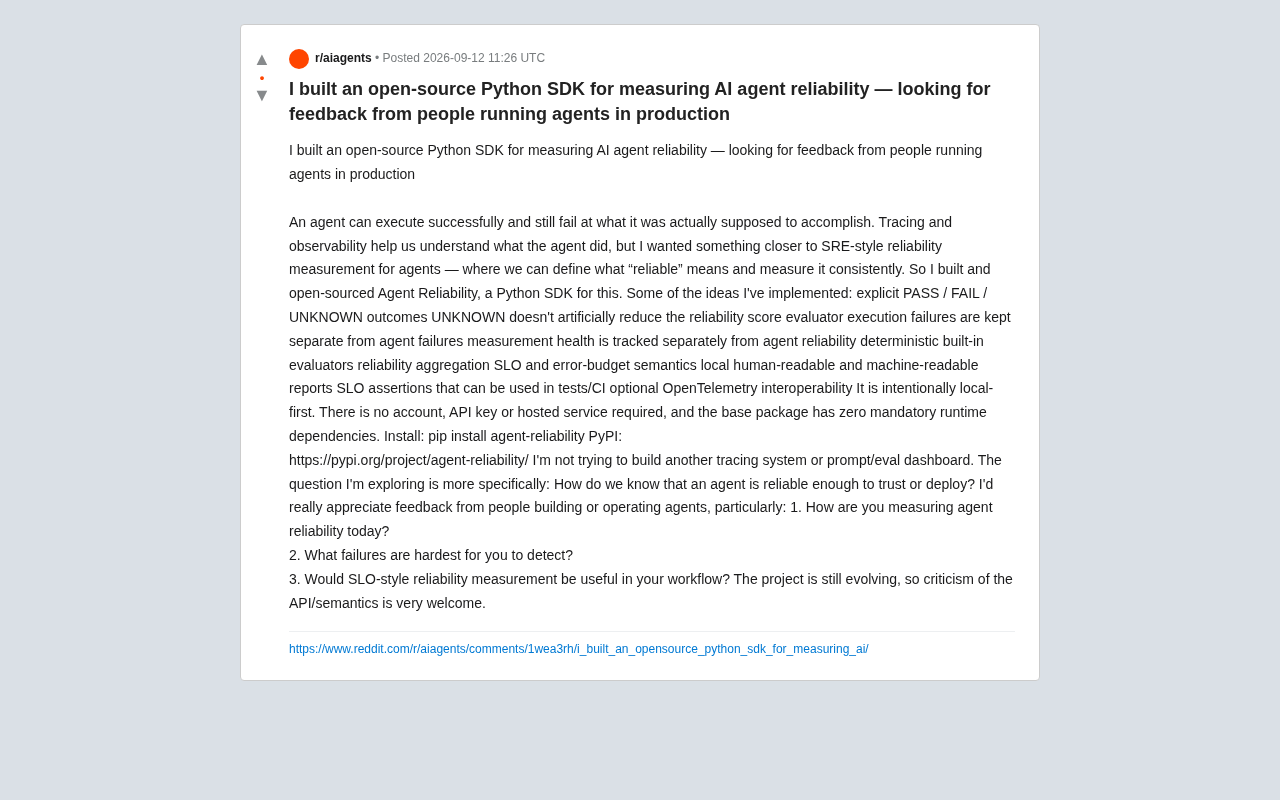
Open-Source Python SDK: Measuring AI Agent Reliability with SRE Principles
Agent Reliability is an open-source Python SDK that applies SRE's SLO and error budget concepts to AI Agent evaluation, with PASS/FAIL/UNKNOWN states, CI assertions, and zero forced dependencies.
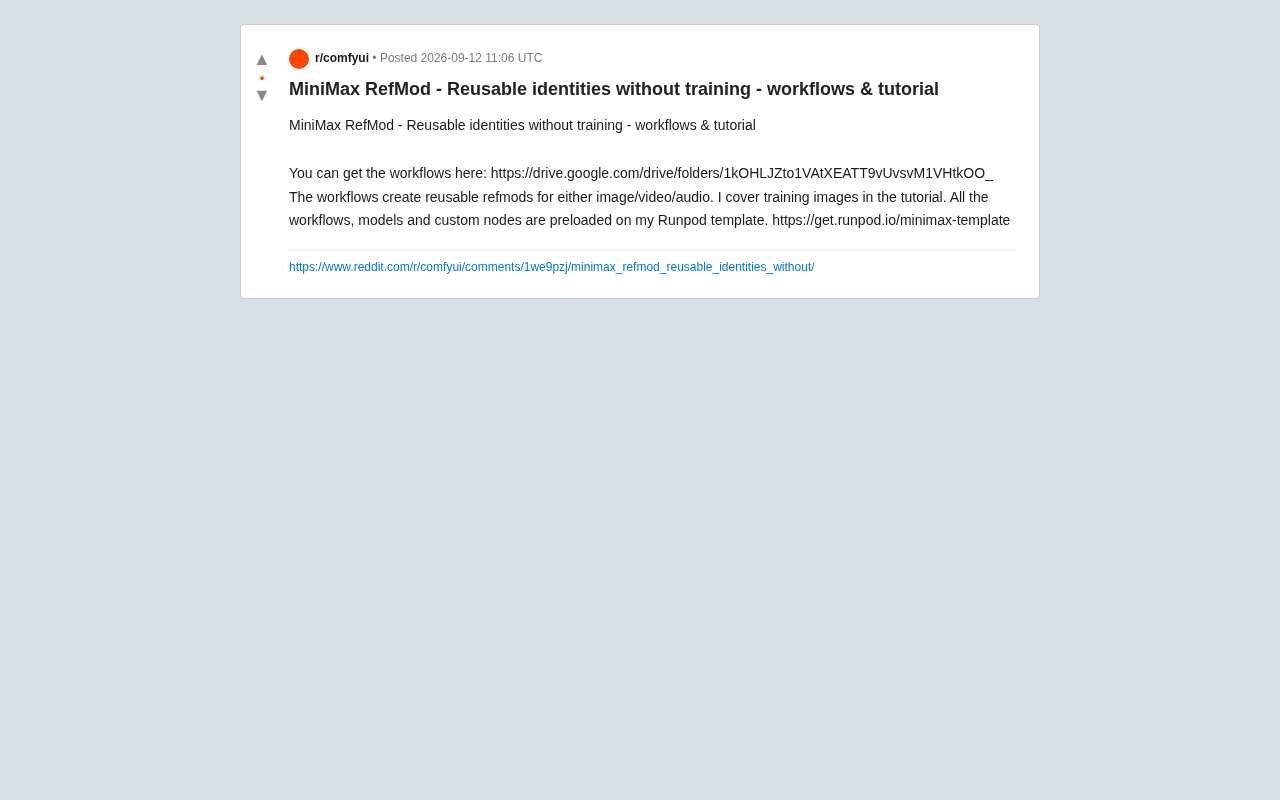
MiniMax RefMod: A Complete Guide to Training-Free Reusable Identity Workflows
MiniMax RefMod offers training-free reusable identity workflows for image, video, and audio generation. Includes Runpod template and tutorial for quick setup.

Invalid Source Material Notice
The source material provided lacks substantive information and is unrelated to AI/tech topics, making it impossible to produce a complete professional article.