Open Source as a Passport: The Hidden Barrier in AI Startups and the DeepSeek Network

A Bilibili video reflects a new rule in AI circles: open-source identity is becoming the trust credential for commercial collaboration.
Using a metaphor-rich Bilibili video as an entry point, the article explores the increasingly explicit commercial access rules in the AI open-source ecosystem. The statement "only open source can do business" reveals that open-source identity is becoming a trust signal for AI commercial collaboration—code can be inspected and communities tracked, lowering partners' evaluation costs. Meanwhile, the background of being a DeepSeek core member is repeatedly cited as commercial endorsement, showing that networks and open-source contributions reinforce each other in AI circles. The article also analyzes the ecosystem stance-taking anxiety entrepreneurs face and the potential circle-forming risk of open-source commercialization: open source is supposed to lower barriers, but it may be used by incumbents as a tool to screen insiders. Finally, it offers three takeaways for AI practitioners and raises the fundamental question: "who guarantees that the open-source condition itself is open?"
When Open Source Becomes a Ticket to "Doing Business"
In a Bilibili video titled "⚡Next time you come sightseeing, you're welcome, but doing business is not⚡", the creator uses a metaphor-laden conversation to surface a rule that's becoming increasingly explicit in AI circles: whether something is open source or not is deciding who gets to sit at the table. The video repeatedly stresses "Old Liang also does AI, so why can he come here to do business? We've already talked it through with Old Liang, and he's open source"—a few short sentences that directly tie the choice of technology route to commercial access.
This kind of statement is no isolated case. At the AI infrastructure layer, open-source models and toolchains have become a kind of "credential"—they lower the evaluation costs for partners and signal the transparency and reproducibility of a tech stack. For AI teams looking to enter a particular ecosystem or regional market, closed source is no longer a moat; it may instead be a wall of isolation. The distinction in the video between "sightseeing is welcome, doing business is not" precisely mirrors the reality of AI commercialization today: projects without open-source contributions or open-protocol endorsement struggle to win the trust of deep-pocketed partners.
The Identity Endorsement Behind the "Open Source" Label: The DeepSeek Network
Another key piece of information in the video is the identification of a person's background: "He's a DeepSeekAd fossil" (note: "fossil" here is likely a slip of the tongue or a homophone, referring in context to a core member/founder-level figure at DeepSeek). This identification attributes part of "Old Liang's" commercial right of passage to his association with DeepSeek.

According to the Bilibili creator in the video, Old Liang can "do business" here partly because his project is open source and partly because his DeepSeek background is recognized by both sides of the conversation. This reveals a phenomenon cross-validated by multiple sources: in the AI startup world, open-source technology and team pedigree are jointly forming the basis of trust. An open-source license alone is insufficient for commercial access, but when combined with the identity of a core member of a well-known open-source project, it can significantly lower the negotiation threshold. The line "we've already talked it through with Old Liang" implies that this access is the result of point-to-point negotiation rather than a universal rule—precisely a characteristic of early ecosystems.
DeepSeek is a Chinese AI company that has gained widespread attention in the global AI community for releasing multiple high-performance open-source large language models (such as the DeepSeek-V2, V3, and R1 series). Its models are released under permissive open-source licenses that allow commercial use and derivative development, which has rapidly accumulated a large number of adopters and contributors in the industry. Because of this, an identity associated with DeepSeek's core team is often seen in AI startup circles as a dual signal of technical strength and ecosystem resources. The "DeepSeek network" mentioned in the article refers to the community of developers, contributors, and commercial partners that has formed around the project, who share experience and resources in model deployment, fine-tuning, and commercialization—and this network effect further amplifies the weight of "pedigree" in commercial access.
Choice and Taking Sides: The "Picked" Anxiety of AI Entrepreneurs
The latter half of the video shifts to internal competition and stance-taking: "Once I'm picked, I can do anything; at first you say you won't pick, now you pick again" and "I might not even win, and you're even more so—you only know after you pick." These statements, though highly emotional and colloquial, reflect the widespread anxiety AI entrepreneurs face when taking sides in an ecosystem.

As the boundary between open-source communities and commercial companies blurs, entrepreneurs often need to choose among multiple camps. Expressions in the video such as "fully support me, and I'll let Dang Zhuang Xiangqian fully support you as a fossil" hint at a binding relationship between resource allocation and position promises. According to the creator's one-sided account, this choice is not always voluntary—there is a back-and-forth of "at first you say you won't pick, now you pick again." It should be noted that this is a subjective description from a single source without third-party corroboration, but the "taking sides" pressure it reflects is common in the commercialization of AI open-source ecosystems.
The Real Dilemma of Open-Source Commercialization: Who Makes the Rules?
The line "this is our rule" in the video points to the core contradiction of open-source commercialization: open source lowers the technical barrier, but the rules of commercial access are often set by incumbent players. Old Liang can do business because "it's been talked through" and "he's open source"; latecomers with neither open-source endorsement nor insider connections may be relegated to the category of "sightseeing."

From an industry-analysis perspective, this model is not healthy in the AI infrastructure space. The original intent of open source is to lower barriers and promote collaboration, but when open-source identity is used as a filter for commercial access, it effectively creates a new closed circle. The emphasis on "open source" by both sides in the video is less an endorsement of the open spirit than a utilization of a verifiable signal—open-source code can be inspected and communities can be tracked, making it a low-cost trust proxy. For teams unable to enter this trust network, even with solid technical capabilities, they may face the predicament of "doing business is not allowed."
Open-source licenses are the technical premise for understanding "open source as a trust signal." Common permissive licenses such as Apache 2.0 and MIT allow users to freely modify, distribute, and even use the code in closed-source commercial products, requiring only that copyright notices be retained; copyleft licenses such as GPL, by contrast, require derivative works to also be open source. AI models also often use custom community licenses (such as the Llama Community License), which impose limits such as user-scale thresholds on commercial use. Therefore, when the article says "open-source code can be inspected and communities can be tracked," its credibility depends on the transparency and enforceability of the license. When conducting due diligence, corporate partners often review the license types of models and toolchains to assess legal risk and long-term usability—which also explains why a clear, compliant open-source identity can significantly reduce the trust cost in commercial negotiations.
Implications for AI Practitioners
Although this Bilibili video is presented in a colloquial, emotional way, it touches on several genuine tensions in the AI open-source ecosystem: the value of open source as a trust signal, the network premium that comes from being part of a core project, and the decision-making anxiety caused by ecosystem stance-taking. For AI entrepreneurs and developers, several points are worth considering:
- Open source is a long-term trust asset: The verifiability that comes from public code can significantly reduce the other party's due diligence costs in commercial negotiations.
- Networks and open-source contributions reinforce each other: The reason core-member status at projects like DeepSeek is repeatedly mentioned is that it simultaneously proves technical ability and ecosystem position.
- Beware of "pseudo-open-source" gatekeeping: If open source is used merely as a tool to screen insiders rather than to genuinely promote collaboration, latecomers need to assess the long-term value of entering that ecosystem.
The video's ending—"Double fossils, huh—you're a fossil and I'm one too, no need to fight"—is somewhat tongue-in-cheek and also suggests that in the early stage of AI open-source commercialization, the rules are not yet settled, and identity and relationships are still in dynamic contention. For observers, rather than getting bogged down in specific personnel disputes, it's better to focus on a more fundamental question: when open source becomes a necessary condition for doing business, who guarantees that this condition itself is open?
One-line Summary
A Bilibili video reflects a new rule in AI circles: open-source identity is becoming the trust credential for commercial collaboration.
Paragraph Summary
Using a metaphor-rich Bilibili video as an entry point, the article explores the increasingly explicit commercial access rules in the AI open-source ecosystem. The statement "only open source can do business" reveals that open-source identity is becoming a trust signal for AI commercial collaboration—code can be inspected and communities tracked, lowering partners' evaluation costs. Meanwhile, the background of being a DeepSeek core member is repeatedly cited as commercial endorsement, showing that networks and open-source contributions reinforce each other in AI circles. The article also analyzes the ecosystem stance-taking anxiety entrepreneurs face and the potential circle-forming risk of open-source commercialization: open source is supposed to lower barriers, but it may be used by incumbents as a tool to screen insiders. Finally, it offers three takeaways for AI practitioners and raises the fundamental question: "who guarantees that the open-source condition itself is open?"
Related articles
 Tech Frontiers
MuJoCo: An Analysis of DeepMind's Open-Source General-Purpose Physics Simulator
An in-depth analysis of Google DeepMind's open-source physics simulator MuJoCo: high-performance C++ kernel, MJCF modeling format, contact solving principles, MJX GPU acceleration, and robot reinforcement learning use cases.
 Tech Frontiers
Claude API Quick Start: The Official Quickstarts Project Collection
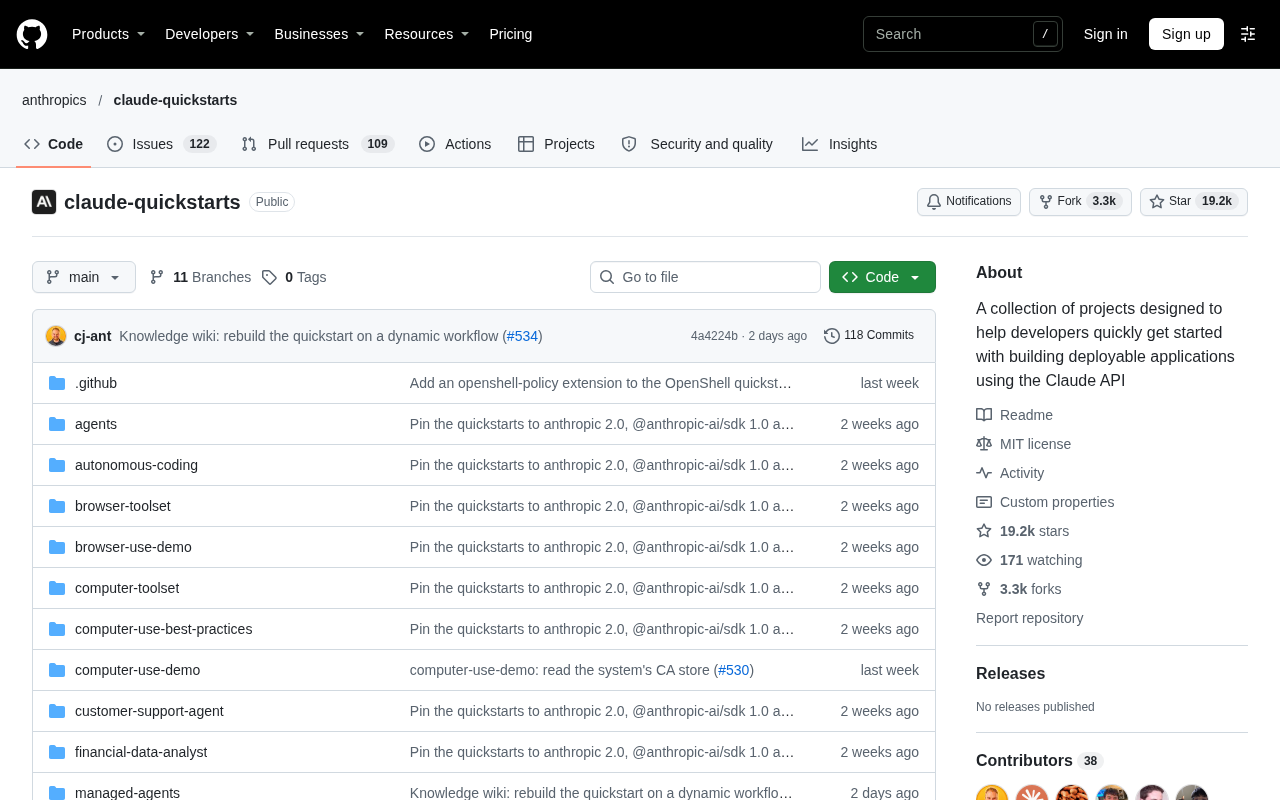
Anthropic's official claude-quickstarts project collection helps developers quickly build deployable apps with the Claude API. Nearly 20k stars, Python-based, great for beginners and prototyping.
 Tech Frontiers
AI Agents Connecting Directly to APIs: Which Calls Can Be Safely Allowed?
AI agents can call any API, but the real challenge is deciding which calls can be safely allowed. This article analyzes allowance decisions from three dimensions—intent matching, least privilege, and controllable impact—and argues that the control layer should sit outside the agent, combined with audit traceability to build a trustworthy API call governance mechanism.