Open-Source Claude Projects Alternative: Taking Back Ownership of Your AI Context
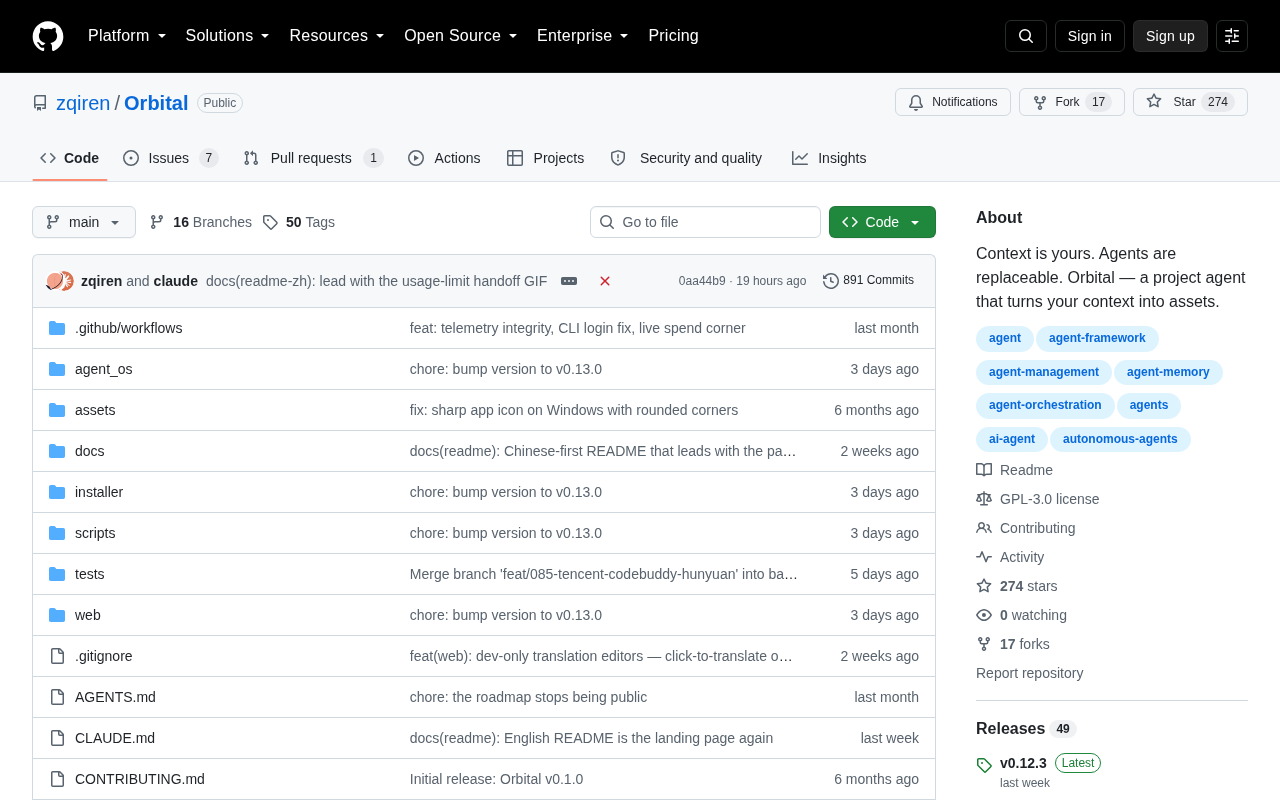
An early-stage open-source project aims to replace Claude Projects and return AI context control to users.
A project on Hacker News positions itself as an open-source alternative to Anthropic's Claude Projects, centered on the idea of "context ownership" — storing AI conversation history and knowledge bases in user-controlled environments rather than vendor clouds. The article examines the legitimate appeal of data sovereignty, cross-model portability, and auditability, while maintaining a measured view: the project is early-stage with limited details, and open-source self-hosting carries real operational costs that are easy to underestimate.
An Open-Source Effort Worth Watching
As AI assistants become increasingly embedded in everyday workflows, context management is emerging as a key factor in the overall user experience. A project that recently appeared on Hacker News bills itself as an open-source alternative to Claude Projects, with its core pitch being that users can reclaim ownership of their own context.
For users who have long relied on closed-source products like Anthropic's Claude or OpenAI's ChatGPT, this kind of project touches a genuine pain point: who actually owns the conversation history, project background, and knowledge base you've built up with an AI? And where does all of that actually live?
What Is "Context Ownership"?
Claude's Projects feature lets users create dedicated workspaces for specific tasks — upload documents, set custom instructions, and have the AI work within a persistent knowledge context. This significantly improves efficiency when handling complex, long-running tasks.
The catch is that all of this context data is hosted on the provider's servers. You can't freely export or migrate it, and you have limited control over how it's stored and used. "Context ownership" refers to putting that control back in users' hands — storing data in your own environment, where it can be freely migrated, reused across different models, and kept within privacy boundaries you actually control.
Why This Matters
As enterprises and developers face increasingly strict requirements around data compliance and privacy protection, handing sensitive project context over to a third-party closed-source platform carries real risk. Open-source solutions can theoretically deliver three key benefits:
- Data sovereignty: Context is stored where the user controls it, not in a vendor's cloud
- Portability: No lock-in to a single model or vendor — switch between different LLMs freely
- Transparency and auditability: Open-source code means data flows are publicly verifiable
The Trend Toward Open-Source Alternatives
This project isn't an isolated case. Over the past year, open-source tooling at the LLM application layer has exploded — from open-source chat frontends (like LibreChat and Open WebUI), to local knowledge base retrieval (RAG) frameworks, to various agent orchestration tools. They all point in the same direction: decoupling the AI "shell" and the underlying data from closed-source platforms.
The rise of these projects reflects the community's growing wariness of vendor lock-in. When core inference capabilities can be accessed flexibly through APIs — or even replaced with locally-run open-source models — the truly scarce and valuable asset turns out to be the long-accumulated context and knowledge organization that users build over time.
A note on RAG: RAG (Retrieval-Augmented Generation) is the core technical paradigm behind most local knowledge base tools today. It works by splitting a user's documents and notes into chunks, storing them as vectors in a local database, and then retrieving relevant segments at query time to inject as context into the prompt — allowing the model to "read" a private knowledge base without uploading everything to the cloud or requiring expensive fine-tuning. Open-source frameworks like LlamaIndex, LangChain, and AnythingLLM are representative examples of this approach. Understanding RAG helps you evaluate just how well a tool that claims "local context management" actually isolates your data — whether it merely stores files on a local disk, or also performs vectorization and retrieval entirely on-premises. The privacy protection difference between those two levels is significant.
A Sober Take: The Reality of Early-Stage Projects
One important caveat: based on publicly available information, this project currently has limited traction on Hacker News (5 upvotes, no comments at the time of writing) and is clearly in an early exploratory phase. The source material provides no details about technical architecture, supported models, or deployment options.
So it's worth keeping expectations grounded. Open-source solutions typically lag behind mature commercial products in ease of use and stability, and they require a certain level of technical know-how to deploy and maintain. They're better suited to developers and teams who have a clear need for data sovereignty and the hands-on capability to act on it.
Questions Worth Asking
If you're evaluating tools like this, consider these angles:
- How does it store and organize context? Does it truly support local or self-hosted deployment?
- Does it support multiple LLM backends to avoid creating new lock-in?
- How active is the community, and what does ongoing maintenance look like?
- What's the actual cost of migrating existing Claude Projects data?
A note on self-hosting: The real cost of self-hosting is frequently underestimated. Beyond the initial deployment hurdle, there's ongoing operational overhead: server resources, dependency version management, security patch updates, and adaptation work whenever upstream LLM APIs change. For enterprise users, there's also the question of whether a self-hosted solution can satisfy compliance audits like SOC 2 or GDPR — and sometimes building your own infrastructure creates a heavier compliance burden, not a lighter one. "Open-source self-hosting" is not the same as zero-cost privacy protection. In essence, it shifts risk from vendor-side data exposure to your own operational and security capabilities — both of which require careful management.
Closing Thoughts
The promise of "giving you context ownership" captures a core tension in today's AI application ecosystem: the tradeoff between the convenience of capable tools and the autonomy over your own data. Projects like this open-source Claude Projects alternative represent the community's grassroots effort to rebuild the AI toolchain from the ground up.
While this particular project is still early-stage and light on details, the direction it points toward — letting users truly own their AI context — is likely to be one of the important evolutionary paths for the AI application layer going forward. For anyone who cares about data sovereignty, keeping an eye on the more mature products emerging in this space is well worth the effort.
Related articles
Three Stages of AI LLM Testing: A Practical Guide from Core Concepts to API Calls
A learning path for testers covering LLM fundamentals, prompt engineering, OpenAI SDK calls, API Key vs Token differences, streaming output, RAG, and Agent systems.
Vercel's Chief of Software Looks Back: The Evolution of Agent Building — From Multi-Agent Chains to File System Agents
Vercel's Chief of Software Andrew recaps the agent-building journey at AI Engineer: from giant prompts to multi-agent chains, monolithic memory, file system agents, and the open-source EVE framework.
Tencent's Open-Source BSK in Action: Letting AI Take Over Your Already-Logged-In Browser
Tencent's open-source BSK (Browser Skill Kit) lets AI take over your real, logged-in Chrome via WebSocket. We break down the architecture, setup, and three key pitfalls from real-world testing.