Open-Source LLMs Erupt: Kimi K3.1 Weights Released and New Breakthroughs in Computer Control

Open weights release en masse, small models approach the frontier in efficiency, closed-source camp responds with price cuts.
This week saw a wave of open-source releases: Moonshot opened 3T-parameter Kimi K3.1 Pro weights, trailing only Opus 5.5 on several benchmarks; Bipo AI's North Kua family spans 9B to 397B parameters for computer control, with only about a 10-point gap between small and large models; Pruna AI turned Minimax H3 into the 8-step PH3 Image, seven times smaller; Pika H3 Flex topped the open text-to-video leaderboard with 4K and multi-asset input. Also: Sarvam Prism, MIT Hydrogen 1.0, Perplexity Embed V2, Clover diffusion model, LFM 3, and Unlimited OCR. In closed source, GPT 6.1 Tera cuts prices 50% yet grows stronger.
Kimi K3.1 Pro: A Front-Runner Among Open Weights
Moonshot kept its promise and officially released the model weights for Kimi K3.1 Pro on Hugging Face. This is a 3-trillion-parameter model, split across 96 shards of about 17GB each. The official positioning is clear: it may not yet match the absolute frontier of closed labs like Anthropic and OpenAI, but the gap is now just half a step, and it is fully open-source with open weights.
Running it locally is no small feat—a rough estimate puts the requirement at least 1.2TB of VRAM. But the community will quickly produce quantized versions once the weights are out, giving consumer-grade hardware a chance to try it. The benchmark results speak for themselves: on Terminal Bench it beat Astra, trailing only the currently acknowledged strongest, Opus 5.5; on Agent's Last Exam it took first place, ahead of Opus and Astra; on GDPVal, a benchmark measuring real-world knowledge work, its ELO score ranked second, again right behind Opus 5.5.
Mixture of Experts (MoE) is the key to understanding the parameter scale of current large models. It splits the model into multiple "expert" sub-networks, activating only a small fraction during each forward pass, so the total parameter count can be enormous while actual computation is far lower than a dense model of the same size. Kimi K3.1 Pro's 3 trillion parameters and North Kua's 397 billion total / 17 billion active parameters both reflect this approach. This also explains why "total parameters" and "active parameters" are often listed side by side: the former determines storage and VRAM requirements, the latter determines inference speed and cost.
North Kua: Turning Computer Control into an Open-Source Capability
Bipo AI's North Kua is a medium-sized computer-control model with 397 billion total parameters, 17 billion active parameters, and a Mixture of Experts architecture. The family also includes two smaller versions: North Kua Mini with 35 billion total parameters and North Kua Nano with just 9 billion. All three come with their own harness and are likewise open-source.
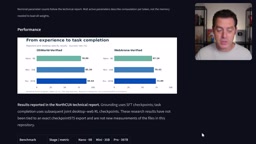
On OS World Verified, an authoritative computer-control benchmark, Nano scores 78.9, Mini 85, and Pro 88. The gap between Nano and Pro is only about 10 points, meaning a 9-billion-parameter model can run on most hardware—even a phone—while delivering near-frontier control capabilities. Web Arena Verified shows the same trend, with small and large models scoring very close. It works in an observe-think-act loop: screenshot to understand the current interface, plan the next step, execute the action, then repeat.
The Efficiency Revolution in Image and Video Models
Pruna AI did something interesting: it turned the Minimax H3 video model into an image generation and editing model called PH3 Image, and open-sourced the weights. The core selling point is efficiency—generating or editing an image takes just 8 steps instead of 50, five times faster, with a 4-megapixel image taking 2.6 seconds instead of 12.4. The model is seven times smaller than H3, greatly reducing GPU requirements for downloading and running high-resolution images.
Its strengths center on photorealism, documentary and editorial photography, cinematic stills, and graphic styles with short captions. Official comparison examples show that under multiple prompts, PH3 Image's output is nearly indistinguishable from Minimax H3's, but with far fewer steps. Handwritten images are especially impressive, even reproducing details like coffee stains.
Pika Labs' Pika H3 Flex shot straight to first place on the Design Arena text-to-video leaderboard among open-weight models. It is also trained on Minimax H3 but is faster and stronger, supporting up to 4K resolution, exportable audio stems, and faster-than-real-time generation. It can produce a 15-second clip with music in about 7 seconds, with pricing starting at one cent per second—about 60 cents for a 60-second video. Multi-asset input is another highlight: you can feed in multiple images, textures, patterns, and an audio file at once to quickly generate video with rich camera movement, and continue editing afterward.
"Steps" in text-to-video and image generation refer to the number of diffusion sampling iterations. Traditional diffusion models need dozens of denoising steps to get a clear result—more steps mean better quality but longer time. Techniques like distillation, adversarial training, or consistency models can compress sampling to single-digit steps, and PH3 Image's 8-step generation is a product of this approach. Fewer steps not only speeds things up but also reduces VRAM and compute requirements, making high-resolution generation feasible on consumer GPUs. Pika H3 Flex's "faster than real-time" also relies on this kind of sampling efficiency optimization.
Small and Specialized Models Blooming Everywhere
Sarvam's Prism is an open-weight decision model built on Sarvam 105B. You give it a piece of context and several questions with fixed options, and it returns the probability of each answer in a single forward pass. It does not generate text—answers always fall within your given options, consistent with the approach of decision models like Jeff. The official recommendation is B200 or H200, and the weights need 106GB of disk space, but sufficiently powerful consumer hardware also has a chance to run it.

MIT's Hydrogen 1.0 post-trained GLM 5.3 to specialize in scientific discovery. On frontier science benchmarks it surpassed all comparison models, including GPT-6 Astra Max, while costing less than almost all competitors—about 25 cents per question versus 88 cents for Astra. In a demo, it automatically wrote code to simulate the molecular process of polyethylene melting in 3D space, viewable from any angle.
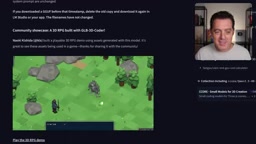
Perplexity open-sourced Embed V2 Context, a vision-language embedding model available in 9-billion and 600-million parameter versions, designed for retrieval over text, images, and visual documents like PDFs. It is small enough to run locally. A community fine-tune of Qwen 3.5 4B specializes in 3D coding, generating standalone Three.js, HTML, and JavaScript scenes with GLB export, and is also friendly to editors like Godot.
Diffusion Language Models and New On-Device Architectures
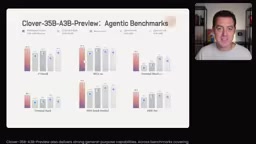
Diffuse Space AI's Clover is a 3.5-billion-parameter, 300-million-active-parameter MoE diffusion text model. The speed advantage of the diffusion architecture is striking: for a computer-control task navigating from CMU's Pittsburgh campus to the nearest Wendy's, it completed the task in 28 steps and 169 seconds, while Qwen 3.6 Flash ran for 578 seconds, hit the 30-step limit, and still did not finish.
Liquid AI's LFM 3 takes a different route. The 1.7B version surpasses the previous generation's 2.6B version with fewer parameters, and after 4-bit quantization it is about 1GB—small enough to fit on almost any device, including phones. It supports a 256K context window, offers video, text, spatial awareness, and step-by-step reasoning capabilities, and can be fine-tuned on a single GPU.
Baidu Research's Unlimited OCR targets image document reading, claiming no page limit and attention cost that does not grow with length, parsing nearly unlimited-length documents in a single pass while maintaining accuracy. In testing it performed stably on 5,000-page documents and scored excellently on most OCR benchmarks, with weights available for download.
ServiceNow's Aprile Voice 27B surprisingly adopted an open-source strategy. This voice AI model can accept text, image, and voice inputs simultaneously, routing through a speech encoder, token embeddings, and a frozen vision interface into a Mixture of Experts backbone, ultimately not only understanding tasks but also outputting speech.
Diffusion Language Models work differently from traditional autoregressive models. Autoregressive models generate token by token from left to right, requiring a forward pass for each token; diffusion models start from noise and refine the entire text simultaneously through several denoising steps, with a fixed number of steps that can be parallelized. This is exactly why Clover completed a computer-control task in 28 steps and 169 seconds while the autoregressive model ran out of steps without finishing. The trade-off is that diffusion models still face challenges in long-text coherence and precise control, so they are currently mostly used in latency-sensitive agent scenarios with relatively fixed output structures.
The Cost-Performance Battle in the Closed-Source Camp
The only closed-source model in this batch is OpenAI's GPT 6.1 Tera, but its pricing strategy deserves attention. Compared with the previous generation GPT 5.6 Tera, standard API prices are 50% lower while capabilities are stronger. On the Pareto curve of Agent's Last Exam, it sits almost against the zero-cost side; at the lowest thinking budget, its intelligence level is markedly improved over the similarly priced GPT 6 Luna. More critically, it achieves comparable performance at one-tenth the per-token price of GPT 6 Astra, and completes tasks on average more than three times faster than Astra and GPT 6.1 Sol. For teams running large-scale workflows, this is an option worth serious evaluation.
Overall, this week's main thread is very clear: open weights are shifting from challenger to co-leader, efficiency optimizations let small models approach large models on specific tasks, and the closed-source camp is responding with a price war. For developers and researchers, the choices have never been richer.
The Pareto curve in model evaluation characterizes the "intelligence—cost" trade-off boundary: points on the curve represent optimal combinations where intelligence cannot be increased at a given cost, or cost cannot be reduced at a given intelligence level. GPT 6.1 Tera sitting near the zero-cost side of the Agent's Last Exam Pareto curve means it delivers near-frontier intelligence at an extremely low price—a Pareto improvement. For team model selection, watching the Pareto frontier reflects real cost-effectiveness better than looking at any single benchmark score.
Related articles

AI Coding Enters the Team Collaboration Era: Interpreting Three Major Moves from Meta, GitHub, and Mistral
Meta acquires Conductor, GitHub Copilot Fusion becomes available, Mistral opens Large 4 weights—three moves show AI coding shifting from code generation to organizing development workflows. This article explains task orchestration, model collaboration, and cost control for developers.

Building a RAG Assistant with Dify: A Practical Guide to Knowledge Bases, Workflows, and Agent Nodes
How should knowledge bases, workflows, and Agent nodes connect in a Dify RAG assistant? We break down the division of labor and wiring logic for a shippable app.
 Tech Frontiers
The AI Industry Doesn't Lack Marketing—It Lacks Good Products
AI faces market selloffs and public skepticism—is marketing really the problem? This analysis of market signals and product experience argues the core困境 is incomplete products and a gap between promises and experience; the only way to change perceptions is to ship better products.