Open-Source MCP Project REA Lets AI Agents Reverse Engineer Apps, Hits 180K Stars in a Week

Open-source MCP server REA lets AI agents reverse engineer applications, surpassing 180,000 stars in a week.
REA (Reverse Engineer Anything) is an open-source MCP server and CLI that bridges AI agents and professional reverse engineering tools like Ghidra, IDA, and Hopper. It supports native binaries, Electron, .NET, Android APKs, firmware, and websites, and can be called directly by Claude, Cursor, and other assistants via MCP. Its evidence-first design attaches code evidence to each conclusion and marks unknowns, reducing AI hallucination. GitHub stars surged from ~11,000 to over 180,000 in a week, reflecting strong demand for AI that can understand existing systems. However, REA is not a decompiler, obfuscated software remains difficult, and users still need reverse engineering skills and legal compliance.
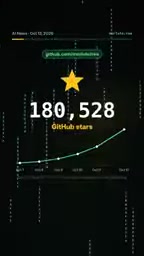
The boundaries of what AI agents can do are being redefined by an open-source project. A GitHub repository called REA (Reverse Engineer Anything) surged from around 11,000 stars to over 180,000 stars in less than a week — a growth rate that is extremely rare in the open-source community. It is essentially an open-source MCP server and CLI tool that enables AI agents to reverse engineer applications.
What REA Is: A Reverse Engineering Bridge for AI Agents
REA stands for Reverse Engineer Anything, and its positioning is clear — it is the middle layer connecting AI agents with reverse engineering tools. Through the MCP protocol, your coding agent can directly call REA, and REA in turn drives the underlying professional tools to perform the actual analysis work.
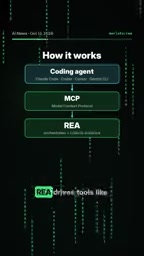
The tools REA calls include industry-standard reverse engineering platforms such as GIDRA, HOPR, and IDEA. The cleverness of this architecture lies in the fact that AI agents don't need to directly understand complex reverse engineering toolchains — REA acts as a translator and orchestrator. The agent issues instructions, REA coordinates tool execution, and ultimately returns analysis results with evidence and unknowns.
This means the agent can not only explain how a certain feature is implemented, but also build its own version based on the analysis results. The native MCP integration makes it naturally friendly to coding assistants that support MCP, such as Claude and Cursor.
MCP (Model Context Protocol) is an open protocol proposed by Anthropic in late 2024, aimed at standardizing the way large language models communicate with external tools and data sources. In traditional architectures, every time a new tool is integrated, developers need to write adapter code separately for each model; MCP defines a unified client-server interaction specification — AI applications act as MCP clients, tool providers act as MCP servers, and both parties exchange context and invocation instructions through JSON-RPC messages. This allows the same tool server (such as REA) to be directly reused by any MCP-compatible client like Claude Desktop, Cursor, and Continue, without the need for repeated integration. REA is built precisely on this foundation, encapsulating complex reverse engineering toolchains into standardized capabilities that AI agents can directly invoke.
The GIDRA mentioned in the article (should be Ghidra) is the NSA's open-source software reverse engineering suite, offering disassembly, decompilation, script extension, and other features — one of the most mainstream free reverse engineering platforms in the industry. IDA (Interactive Disassembler) is the benchmark for commercial reverse engineering tools, known for its powerful cross-reference analysis and processor architecture support. Hopper (referred to as HOPR in the article) is a lightweight disassembly and decompilation tool for macOS/Linux. Each of these tools has its own independent interface and scripting API, with steep learning curves. REA's value lies in abstracting their underlying capabilities into a unified invocation layer, allowing AI agents to indirectly drive these professional tools through natural language instructions, thereby bypassing the barrier of directly operating complex GUIs or writing IDAPython/Ghidra scripts.
Coverage: Comprehensive Detection from Binaries to Websites
REA's detection scope is quite broad. According to the project description, it can inspect native binaries, Electron applications, .NET programs, Android APKs, firmware, and websites in a local environment.
This multi-format support distinguishes it from single-purpose analysis tools. Whether it's desktop software, mobile apps, or web services, REA attempts to provide a unified reverse engineering entry point. For developers who need to understand the implementation details of third-party applications, this significantly reduces the cost of switching between tools.
Why It Went Viral So Fast: An Evidence-First Design Philosophy
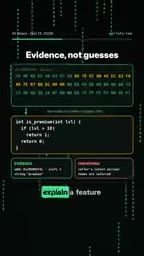
The core reason for REA's explosive popularity is its "evidence-first" design philosophy. Unlike letting AI directly guess at code logic, every conclusion REA returns comes with specific evidence, and the agent can point to actual code to support its analysis. This solves the biggest pain point for AI agents in code understanding — hallucination.
When the agent analyzes a feature, it isn't "making up" an explanation — it's citing evidence that REA extracted from the actual binary or source code. This traceability significantly boosts the credibility of the output and allows developers to verify whether the agent's conclusions hold up.
According to project information, REA also returns "unknowns," clearly marking which parts cannot be determined. This kind of honest boundary declaration is uncommon in AI tools, but it is extremely valuable for professional developers.
Hallucination refers to a large language model generating seemingly plausible but actually incorrect content when lacking reliable evidence. In code understanding scenarios, the model may fabricate non-existent function names, invent call relationships, or incorrectly infer algorithmic logic — often presented in a confident tone that makes it difficult for users to discern. REA anchors the model's output to real data by mandating that every conclusion be accompanied by traceable code evidence (such as specific addresses, decompiled snippets, or call chains). When the model cannot find evidence, REA marks it as an "unknown" rather than letting the model speculate. This mechanism is essentially an application of Retrieval-Augmented Generation (RAG) thinking in the reverse engineering domain — retrieve facts first, then generate explanations, rather than relying directly on fuzzy memories in model parameters.
How to Use It and Its Limitations
To try REA, you only need to run npx rea agent setup to complete the configuration. This concise installation command lowers the barrier to entry.
But REA is not a silver bullet. The project team explicitly points out several key limitations: REA itself is not a decompiler, obfuscated software remains difficult to handle, and users still need reverse engineering skills. REA is an amplifier of capability, not a replacement for skill.
Compliance considerations also apply. The project emphasizes that you should only analyze software you own or are authorized to analyze, and that you should respect relevant licenses and terms. The legal boundaries of reverse engineering vary by jurisdiction, and users need to ensure compliance themselves.
Significance for the AI Coding Ecosystem
REA's emergence reflects a trend in AI coding tools: extending from assisting with writing code to understanding existing systems. When AI agents can reliably reverse engineer applications, they can play a greater role in scenarios such as legacy system migration, security research, and interoperability development.
The 180,000-star popularity also shows that the developer community's demand for this kind of capability is real and urgent. However, there is still a gap between popularity and practicality. Whether REA can maintain its growth momentum depends on its actual performance in handling complex real-world software and on finding sustainable application scenarios within legal compliance frameworks.
One-line Summary
Open-source MCP server REA lets AI agents reverse engineer applications, surpassing 180,000 stars in a week.
Paragraph Summary
REA (Reverse Engineer Anything) is an open-source MCP server and CLI tool that acts as a middle layer between AI agents and professional reverse engineering tools (such as Ghidra, IDA, and Hopper). It supports analyzing native binaries, Electron, .NET, Android APKs, firmware, websites, and more, allowing coding assistants like Claude and Cursor to call it directly through the MCP protocol. Its core highlight is an "evidence-first" design: each conclusion comes with specific code evidence and flags unknowns, effectively reducing AI hallucination. GitHub stars surged from about 11,000 to over 180,000 in a week, reflecting developers' urgent need for AI's ability to understand existing systems. However, REA itself is not a decompiler, obfuscated software remains difficult, and users need reverse engineering skills and must comply with legal requirements.
Related articles

How Big Can Stars Really Get? The Physical Limits of the Largest Stars
Red supergiants are the largest stars by volume, with radii up to 2,000 times the Sun, engulfing the inner solar system. But there is no precise upper limit on stellar size—models predict up to 15,000 solar radii. The most massive blue stars are far smaller than red supergiants—biggest and heaviest are two different things.

Apple HomeView Smart Display Full Feature Breakdown: Wall-Mount or Desktop, $299
Apple launches HomeView, a $299 smart display with wall-mount and desktop options, 12MP camera for facial recognition, smart home control, music playback, and recipe step-by-step cooking. Full breakdown of watch faces, apps, privacy, and cooking integration.

Where Did the Promised New Studio Go? Craft Computing Answers After Five Years
Craft Computing's host responds to viewer questions: the new studio promised five years ago was shelved as construction costs soared from $30,000 to $75,000, and was replaced by a 168-square-foot garage conversion.