Open Source Models Enter the Enterprise: CIOs Shift Focus to Data Flow

Enterprise CIOs' questions about open source models shift from deployment location to data flow, marking their entry into production workloads.
Based on observations from conversations between the CEO of an open source model company and CIOs at multiple enterprises, the article notes that enterprise focus has shifted from "where the model runs" to "where the data goes," marking open source models' move beyond experimentation into production systems. Data flow concerns center on three layers: compliance auditing, intellectual property, and internal governance. The open source model transfers data governance responsibility from vendors to enterprises, with deployment autonomy accompanied by governance obligations. The article sees this as an inflection point signal for open source models entering the enterprise, with competitive dimensions expanding from performance and cost to trust and controllability. Model vendors need to provide data pipeline transparency and auditing capabilities to pass enterprise procurement assessments. This observation comes from a single source and requires broader survey validation.
From Deployment Location to Data Flow: The Migration of Enterprise AI Anxiety
Open source models are entering real enterprise workloads—this is not a slogan, but a genuine shift observed in frontline conversations. After speaking with CIOs and engineering leads at multiple companies, the co-founder and CEO of an open source model company found that the questions have changed: previously everyone asked "where should my model run," now they ask "where is my data going."
This shift seems subtle but actually marks a stage-level leap. When open source models were still in the proof-of-concept phase, enterprises cared most about infrastructure feasibility: on-premises or cloud, whether GPUs were sufficient, whether inference latency was acceptable. But once models are truly embedded in business processes, data governance, privacy boundaries, and compliance risks become unavoidable topics. The question changing from "can it run" to "how do we manage data once it's running" shows that open source models have crossed the experimental field and entered production systems.
According to the CEO's observations in a Fortune article, this change appeared repeatedly in conversations with CIOs and engineering leaders at multiple companies. Although the original article did not disclose specific company names or industry distribution, the use of the term "workload" itself speaks volumes: these are not demo projects, but real systems carrying business logic.
Why Data Flow Has Become the Primary Issue
When enterprises deploy open source models in their own environments, the original intention is often to keep data within their domain. But reality is more complex than intention. A model can generate data flows during training, fine-tuning, inference, logging, monitoring, and other stages. Although open source models have open weights, this does not mean the data pipeline is automatically controllable.
CIOs' follow-up questions reflect three layers of concern. The first layer is compliance: industry regulations have clear requirements for cross-border data transfer and sensitive information processing, and any external dependency in the model invocation chain can become an audit gap. The second layer is intellectual property: whether data input to the model will be used to improve services, and whether it may be leaked to third parties, requires both contractual and technical safeguards. The third layer is internal governance: when multiple business teams each connect to models, the visibility and traceability of data flows rapidly decline.
These issues are not unique to open source models, but open source models give enterprises deployment autonomy, and with it they take on the responsibility of data governance. In the closed-source API model, data flows are defined by the vendor; in the open source model, enterprises need to draw their own data maps. Responsibility has shifted, and naturally so has the anxiety.
Cross-Border Data and Compliance Auditing: In many jurisdictions (such as the EU GDPR, China's Data Security Law and Personal Information Protection Law), cross-border data transfer requires meeting specific conditions, such as standard contractual clauses, security assessments, or certification mechanisms. When enterprises use open source models, if inference requests pass through overseas-hosted dependency services (such as model download sources, telemetry reporting, third-party APIs), they may trigger cross-border compliance review. Audit gaps typically appear in non-obvious data flows—for example, usage statistics reporting enabled by default in inference frameworks, external synchronization of log aggregation services, and checkpoints uploaded to public model repositories during fine-tuning. CIOs need to draw a complete "data flow map," confirming the recipient, storage location, and retention period of each link one by one, in order to pass compliance assessment.
Distinguishing Open Model Weights from a Controllable Data Pipeline: Open source models generally refer to model weights and inference code released under an open license, which enterprises can download and run on their own infrastructure. But "open weights" only guarantees that model parameters are accessible; it does not guarantee that the runtime data pipeline is closed. In actual deployment, models may rely on external package managers to pull dependencies, call cloud-based tokenization services, send metrics to monitoring platforms, or use third-party data labeling platforms during fine-tuning. These links constitute hidden data exits. Therefore, enterprises need to treat open source models as software components that require independent auditing, rather than as naturally secure data islands.
The Enterprise Inflection Point for Open Source Models
From "where to run the model" to "where the data goes," this question shift can be seen as a signal of the inflection point for open source models entering the enterprise. Before the inflection point, the core of technology selection was performance and cost; after the inflection point, the core is trust and controllability.
This raises new requirements for the open source model ecosystem. Model providers need to explain data processing boundaries more clearly, toolchains need to build in more fine-grained data flow auditing capabilities, and enterprise architecture teams need to incorporate models into existing data governance frameworks rather than creating a separate one. Solutions that only emphasize model capabilities and do not discuss data pipelines will become increasingly less persuasive in the enterprise market.
It is worth emphasizing that this observation comes from a single source—a CEO's summary of conversations—and has not yet been cross-validated by broader industry survey data. But the direction of the issue itself is clear: for open source models to truly carry enterprise workloads, the transparency and controllability of data flows will be as important as model capabilities.
Key Points for Integrating with Enterprise Data Governance Frameworks: When incorporating open source models into existing data governance frameworks, enterprises typically need to complete several mapping tasks: first, data classification and grading, clarifying which level the business data input to the model belongs to and whether it contains personal sensitive information; second, access control, ensuring that only authorized teams can call model interfaces and recording caller identities; third, logging and auditing, unifying the format, storage location, and retention period of inference logs so that they are compatible with existing audit systems; fourth, vendor management, conducting security assessments of model providers and any third-party dependencies. It should also be noted that open source licenses (such as Apache 2.0, MIT) generally do not involve data usage terms; enterprises need to constrain data flows through internal policies and technical means themselves, and cannot rely on licenses to provide data protection.
Frequently Asked Questions
After deploying an open source model, will data still leak out? It depends on the deployment method and supporting tools. Open model weights do not equal an automatically closed data pipeline; inference logs, monitoring reporting, dependency services, and other links may all generate data flows, which enterprises need to confirm one by one.
Should CIOs focus first on model capabilities or data governance? From frontline conversations, once models enter production workloads, the priority of data governance rises rapidly. It is not an either-or choice, but unclear data flows will directly hinder model deployment.
What does this change mean for open source model vendors? It means the competitive dimension expands: in addition to model performance, they also need to provide clear explanations of data flows and auditing capabilities; otherwise, it will be difficult to pass the data compliance assessment in enterprise procurement.
Related articles

FBI and USDA Hit by Cyberattacks: Critical Infrastructure Security Alarms Sound Again
FBI and USDA reportedly hit by cyberattacks; the FBI was breached for the second time in recent months, this time targeting the National Crime Information Center (NCIC). This article analyzes the incident details, NCIC's strategic value, and common security challenges facing government agencies.

How Do UK Grid Battery Storage Systems Make Money?
How UK grid battery storage makes money: stacking frequency response, capacity market, and wholesale arbitrage revenue, plus operational trade-offs and market risks.
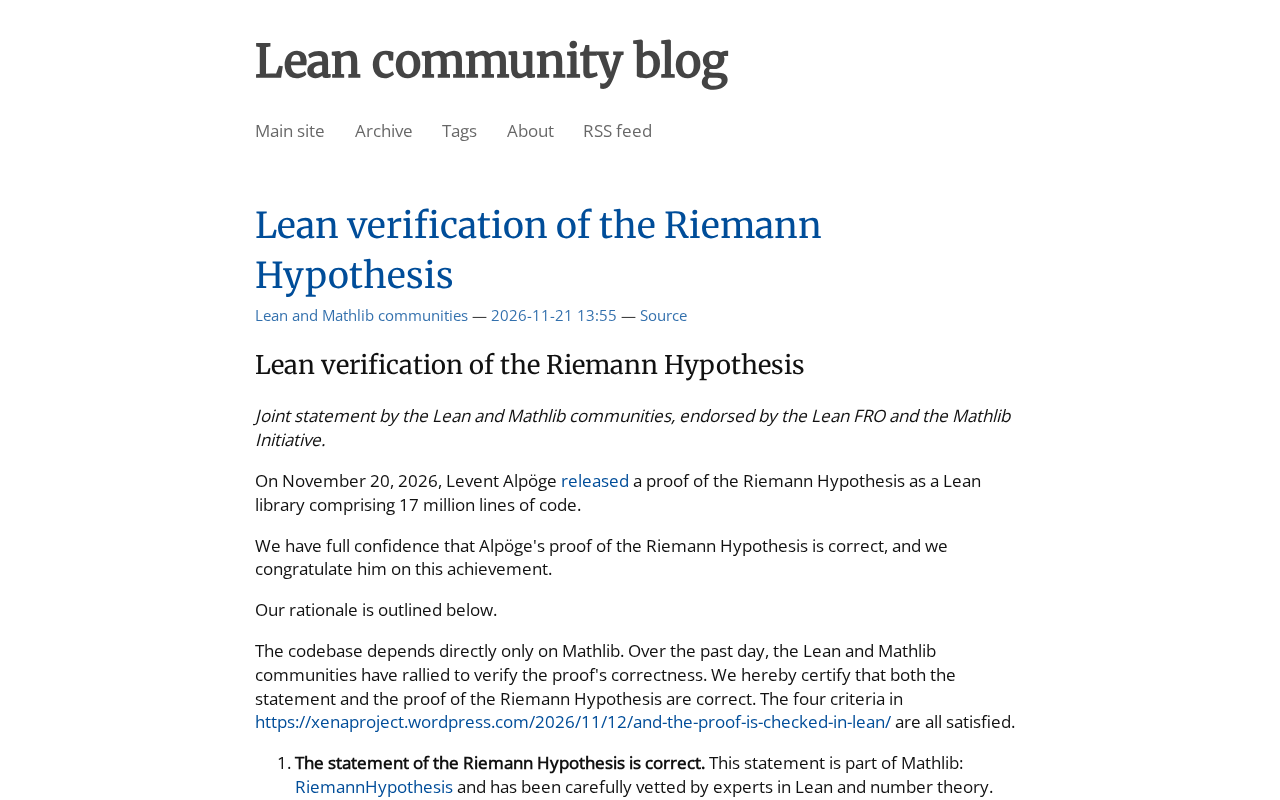
Riemann Hypothesis Formally Verified in Lean? Joint Statement Sparks Heated Debate
The Lean community blog published a joint statement on formal verification of the Riemann Hypothesis, sparking heated discussion on Hacker News with 359 points and 263 comments. This article analyzes the background of Lean and mathlib formal verification, polarized community reactions, and why one should not conclude the Riemann Hypothesis has been proven before reading the original text.