OpenAI Agents SDK Guardrails Explained: Input, Output, and Tripwire

OpenAI Agents SDK Guardrails use input/output checkpoints and a Tripwire switch to build a safety layer for AI Agents.
This article explains the Guardrails mechanism in the OpenAI Agents SDK. Guardrails are safety checkpoints for AI Agents, divided into input guardrails (which intercept inappropriate prompts before the model is called) and output guardrails (which filter harmful or incorrect responses after generation). Interception is controlled by a boolean Tripwire signal — True halts the flow, False lets it pass. The pre-emptive nature of input guardrails also avoids unnecessary model calls, saving tokens and cost. Guardrails can also operate at the individual tool-call level, making them essential infrastructure for building reliable and safe Agent systems.
When building AI Agents, ensuring that your agent neither processes inappropriate requests nor generates harmful or incorrect responses is an unavoidable engineering challenge. The Guardrails mechanism provided by the OpenAI Agents SDK is a safety layer designed specifically to address this problem. Based on a tutorial video explaining the SDK's guardrail concepts, this article walks through how guardrails work, their classifications, and the Tripwire trigger logic.
What Is a Guardrail?
At its core, a guardrail is a checkpoint. Its job is to inspect content either when a user submits a request or when an AI Agent generates a response, determining whether that content is compliant.
Simply put, guardrails evaluate two types of content: whether the user's input prompt contains inappropriate requests, and whether the AI's generated response contains improper information or behavior. If something is deemed non-compliant, the guardrail halts the process immediately; only when everything checks out does the workflow continue normally.
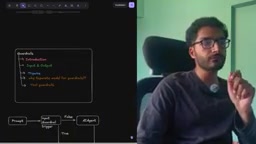
The value of guardrails lies in their defensive nature. Without them, an AI Agent would generate a response to any prompt — and users could potentially "trick" the agent in various ways, bypassing intended usage boundaries to obtain outputs that should never be produced. Guardrails serve as the first line of defense against these exploits.
Within the OpenAI Agents SDK architecture, a guardrail itself is typically an LLM call or a rule-based check function, and developers can customize its logic freely — from a lightweight, low-cost classification model for initial filtering, to regex patterns or keyword lists for deterministic rules. This flexibility means the "intelligence level" of a guardrail is configurable on demand: high-risk scenarios can invoke a dedicated content moderation model, while low-cost scenarios can rely on simple rules. Guardrails can run in parallel or in series with the main agent — the official SDK supports declaring guardrails as properties of an agent definition, so they automatically kick in on every run without requiring manual insertion of check logic throughout your business code.
Input Guardrails vs. Output Guardrails
Guardrails fall into two main categories: Input Guardrails and Output Guardrails. The difference lies in when they trigger and what they inspect.
Input Guardrail
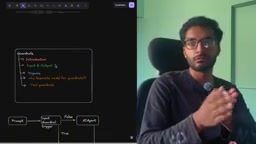
Input guardrails operate at the very front of the pipeline. They activate only when a user's prompt enters the system, assessing whether the request or question is inappropriate.
A typical example from the official OpenAI documentation: suppose you have an agent designed to help students with math homework, but you don't want it to simply complete entire assignments for them. When a user submits something like "just solve this problem for me," the input guardrail detects this as an undesired behavior and intercepts it before the agent ever calls the model — the AI Agent never even reaches the response generation phase.
Output Guardrail
Output guardrails, on the other hand, act after the final response has been generated. Once the AI Agent has produced a response, the output guardrail performs one more review. If the response contains misinformation, inappropriate behavior, or any form of policy violation, the output guardrail intercepts it before it ever reaches the user.
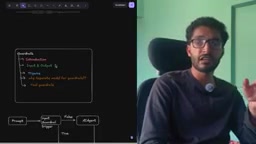
The execution order is clear-cut: input guardrails always run first, triggered when the prompt enters; output guardrails always run last, triggered after the final response is generated. This places a safety gate at both ends of the entire request-response pipeline.
Tripwire: The Guardrail's Trigger Switch
The actual interception action of a guardrail is controlled by a boolean signal called the Tripwire. Think of it as a switch:
- When the guardrail determines content is non-compliant, it sets
tripwireto True, which interrupts the downstream workflow. - When the check result is compliant,
tripwireremains False, and the workflow continues.
The full execution chain works roughly like this: after a user prompt enters, the input guardrail runs first. If the input guardrail's tripwire is True — indicating an inappropriate input — the underlying model (referred to as "Fable" in the video, i.e., the agent executing the main logic) is never called at all.
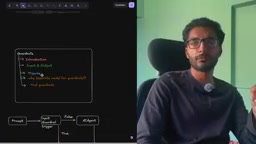
This design delivers a practical benefit that is repeatedly emphasized: cost savings. Since the input guardrail intercepts non-compliant requests before any model call is made, the computationally expensive generation process is never triggered — tokens are saved, costs are reduced, and time is preserved, since model generation often involves deep reasoning with non-trivial latency.
If the input guardrail's tripwire remains False (i.e., not triggered), the request flows to the main model, which generates a response. That response then enters the output guardrail for another round of inspection: if tripwire is set to True, the response is choked and blocked from being returned; if it's False, the response is released normally.
Guardrails at the Tool Call Level
Beyond the input and output endpoints, guardrails can also operate on every individual tool call. Say a single prompt internally triggers 5 tool calls — a guardrail can run a check before and after each one, setting the tripwire based on the result. This means guardrails aren't limited to the overall request level; they can drill down into every tool interaction that occurs during the agent's execution.
Tool calls are one of the core capabilities of modern AI Agents — they refer to the agent invoking external functions or APIs during reasoning, such as querying a database, executing code, or sending an email. Because tool calls produce real side effects (writing data, consuming resources, interacting with external systems), guarding only the request entry point and final output is often insufficient. For example, a seemingly compliant user request might trigger an unauthorized data query on the third tool call. Deploying guardrails at the tool-call granularity enables independent compliance checks on each intermediate action, refining risk control from the "request level" down to the "action level" — this is especially critical for agents that operate on sensitive resources, such as those in financial, medical, or code execution contexts.
Why Guardrails Are Essential for Agent Development
From this walkthrough, it's clear that Guardrails are not optional add-ons — they are foundational infrastructure for agent reliability and safety.
On one hand, they enforce behavioral boundaries, preventing agents from being manipulated into performing actions their designers didn't intend, and keeping erroneous or harmful content from reaching users. On the other hand, the input guardrail's "pre-emptive interception" mechanism also serves economic purposes, blocking unnecessary model calls before they happen and directly reducing operating costs.
For developers building applications with the OpenAI Agents SDK, understanding how input guardrails, output guardrails, and Tripwires work together is a prerequisite for designing an agent system that is both safe and efficient.
Related articles

OpenAI Cracks Math Problems, Why Are Mathematicians Losing Sleep?
OpenAI claims to solve math problems — why are mathematicians anxious? Vergecast reveals the Eye of Sauron dilemma and the tension between AI answers and human understanding.

CSS Conditional Border-Radius Trick: Auto-Square Corners When Elements Touch the Edge
Pure CSS conditional border-radius: auto-square corners when elements touch the edge, rounded while floating. Use calc(100vw-100%) with clamp() to kill the transition band, and container query units cqi for non-fullscreen containers, plus a scrollbar offset workaround.

Google TimesFM 3.0 Hands-On: Is Zero-Shot Forecasting Good Enough?
Hands-on test of Google TimesFM 3.0: zero-shot error cut by ~25% with second-level results, but the two versions give opposite answers in business what-if planning. A deep dive into model internals, version differences, and four key production limitations.