OpenAI Astra Model Launches for Pro Users: Outperforms Fable in Data Science
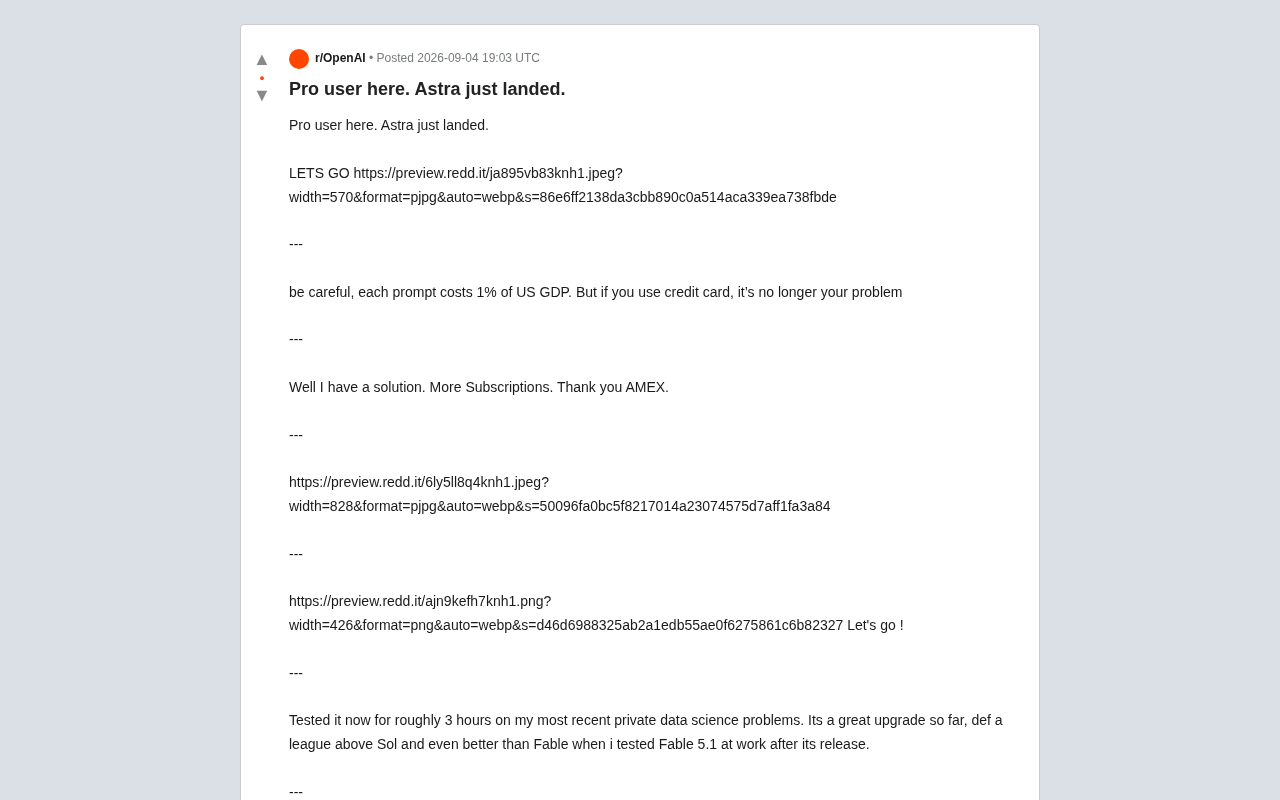
OpenAI's Astra model outperforms Fable 5.1 in data science tasks, now available to Pro subscribers.
OpenAI has launched Astra, a new model available to Pro subscribers that early users say outperforms Fable 5.1 in data science and research tasks. While Fable retains an edge in conversational interaction, Astra excels at complex data analysis and domain-specific reasoning. At $200/month for Pro access, the model targets professionals who can recoup the cost through significant productivity gains.
OpenAI's latest Astra model is now available to Pro subscribers, marking another major model upgrade following Fable. Based on early testing feedback from Reddit users, Astra delivers impressive performance on data science and research tasks — even surpassing the highly regarded Fable 5.1.
Notably, OpenAI has recently adopted a completely new codename system for its models (such as Fable, Sol, Astra, etc.), replacing the previous version-number naming convention (GPT-4, GPT-4o, etc.). This shift reflects a significant strategic transformation at OpenAI: evolving from a single general-purpose model to a multi-model matrix. After its launch in the first half of 2025, the Fable series quickly became the go-to tool for Pro users, with version 5.1 excelling at code generation, long-text comprehension, and multi-turn conversations. Sol, on the other hand, is positioned as a mid-tier model for everyday use. As the newest addition, Astra is explicitly positioned for the professional track of research and data analysis — a differentiated approach similar to how chip manufacturers release different product lines for different workloads.
Astra's Real-World Performance in Data Science Tasks
Multiple Pro users have tested Astra in real work scenarios. One data scientist reported that after approximately 3 hours of intensive use, Astra performed exceptionally well on proprietary data science problems, noting it was "clearly a tier above Sol, and even stronger than Fable 5.1 was at launch."
This assessment carries significant weight. Fable 5.1 was considered a major breakthrough for OpenAI in professional domains when it was released, and the fact that Astra earned a "surpasses Fable" verdict in such a short time suggests genuine innovation in model architecture or training data.
To understand this assessment from a technical perspective: when users evaluate AI performance on data science tasks, they typically consider multiple key capability dimensions — accuracy in data cleaning and preprocessing, soundness of statistical modeling suggestions, correctness of code generation (especially with Python/R libraries like pandas and scikit-learn), and insight into pattern recognition across complex datasets. "Proprietary data science problems" typically refer to data structures and business logic unique to a company's internal operations. These problems can't rely on the model's memorization of public datasets; they genuinely test the model's ability to generalize its reasoning. Astra's strong performance in these scenarios indicates substantial progress in logical reasoning and domain knowledge transfer.
Key Differences Between Astra and Fable
Some users have chosen to use both Astra and Fable simultaneously and have identified a clear division of labor. As one user put it: "Astra is better than Fable for research and data science, but Fable still wins at conversational interaction."
This reveals an important trend in OpenAI's product line: optimizing different models for different use cases. Fable focuses on conversational fluency and user experience, while Astra is specifically optimized for technical depth, data analysis, and research tasks. For professional users, choosing the right model for a specific task often yields significantly better results.
This practice of using multiple models for different tasks represents an important evolution in AI-assisted workflows — Model Routing. In enterprise applications, this concept has already been systematized: an intelligent middleware layer automatically selects the most suitable model based on the type of task in the user's input. For example, deep data analysis gets routed to Astra, while everyday conversation and creative writing switches to Fable. OpenAI's API layer already supports this kind of multi-model orchestration, and the manual model switching in the ChatGPT interface is a simplified version for end users. This "toolbox mindset" is replacing the "one-tool-fits-all mindset," requiring users to develop a basic understanding of different models' capabilities to maximize the value of their AI tools.
Pro Subscription Cost and Value Analysis
The user community has also discussed Astra's high computational costs. One user joked that "each prompt consumes 1% of US GDP" — an obvious exaggeration, but one that reflects the enormous compute demands of high-performance AI models.
OpenAI distributes these costs to users through its Pro subscription model, sparking debate about whether the pricing is justified. The Pro subscription is currently priced at $200 per month, far above the $20 Plus subscription. Its core value lies in priority access to the latest and most powerful models, along with higher usage quotas. The reality behind users' jokes is this: the per-inference cost of top-tier AI models is indeed far higher than that of standard models. For GPT-4-class models, a single complex query can cost anywhere from a few cents to several dozen cents, with reasoning-enhanced models costing even more.
However, based on feedback from professional users, if Astra can significantly boost productivity — especially in high-value scenarios like data science and research — the subscription cost remains well within acceptable range. For data scientists, if a single AI-assisted analysis saves several hours of manual work, and considering that senior data scientists command market rates of $100–200 per hour, the Pro subscription's monthly fee can pay for itself after just a few productive sessions.
Technical Outlook for Astra
Astra's launch signals OpenAI's continued push into domain-specific models. Unlike general-purpose conversational models, Astra has been deeply optimized for professional scenarios such as research and data science, which could lead to the following developments:
- Accelerating specialization: More industry-specific models are likely to emerge in the future
- Multi-model collaboration becomes the norm: Users will need to learn how to select the optimal model for different scenarios
- Dramatic performance breakthroughs in specific tasks: Specialized models may far outperform general-purpose models in vertical domains
From a technical implementation standpoint, deep optimization for specific domains is typically achieved through several approaches: first, domain-specific fine-tuning, where the base model undergoes post-training on large volumes of high-quality professional data; second, reward model adjustments in reinforcement learning, designing more precise evaluation criteria for professional task output quality (RLHF/RLAIF); and third, inference-time compute optimization, such as enhanced depth of Chain-of-Thought reasoning, enabling the model to perform longer step-by-step derivations when handling complex analytical problems. Astra has likely undergone targeted architectural adjustments and training strategy improvements in one or more of these dimensions, resulting in its performance leap in research and data science scenarios.
Based on early user feedback, Astra's performance in data science has already exceeded expectations. As more Pro users put it through extensive real-world use, we'll be able to more comprehensively assess its capabilities across different professional scenarios. For professionals who need to handle complex data analysis or research tasks, Astra is well worth trying first.
Key Takeaways
Related articles
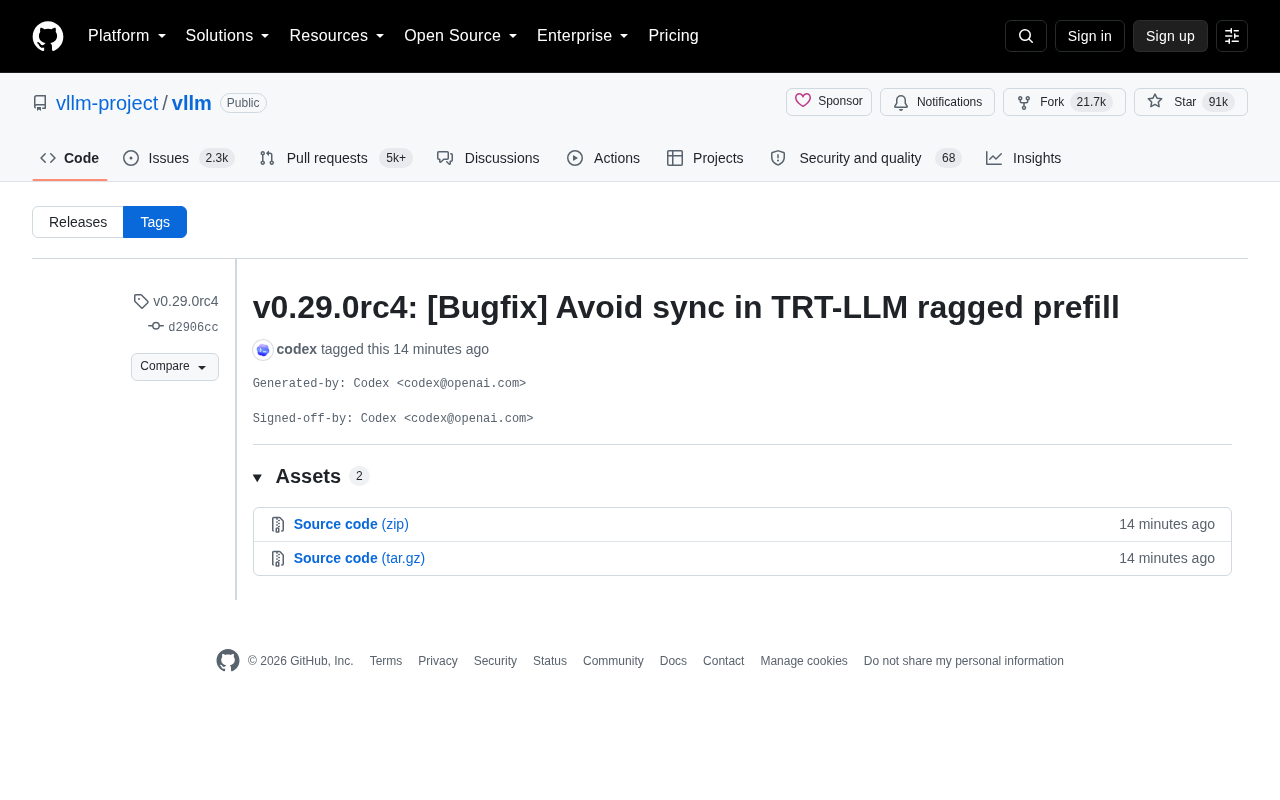
vLLM v0.29.0rc4 Released: Fixing the TRT-LLM Inference Synchronization Bottleneck Explained
Deep dive into vLLM v0.29.0rc4: fixing unnecessary GPU sync in TRT-LLM ragged prefill to eliminate CPU-GPU overhead and boost inference throughput.
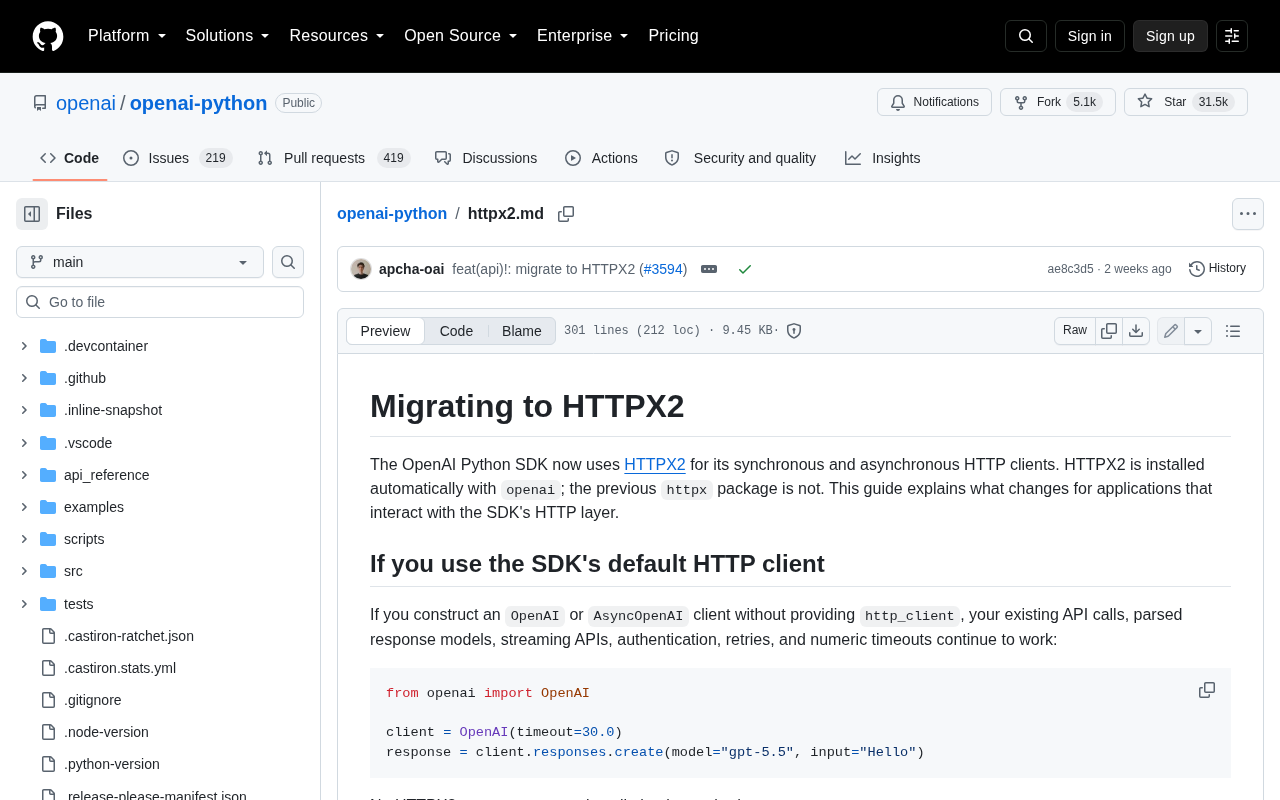
OpenAI's Migration to HTTPX: Why They Abandoned the requests Library
In-depth analysis of why OpenAI migrated its Python SDK from requests to HTTPX, covering async dual-mode support, HTTP/2 multiplexing, and the real impact on developers.
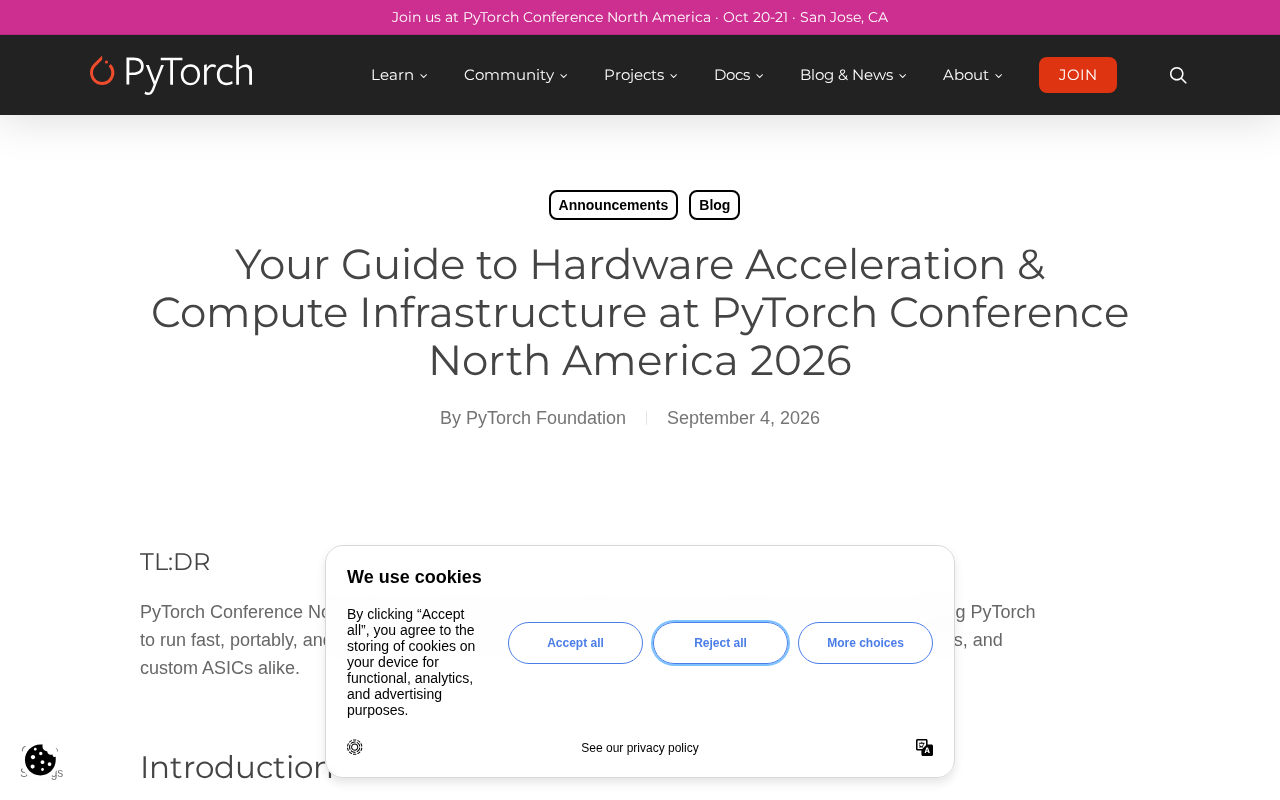
PyTorch Conference 2026: Hardware Acceleration and Compute Infrastructure Outlook
In-depth analysis of PyTorch Conference 2026 hardware acceleration core topics, covering heterogeneous chip adaptation, compilation stack evolution, torch.compile optimization, and distributed compute scheduling, examining future trends and industry impact of AI compute infrastructure.