OpenAI Codex Originals Program: Collecting Real Developer Stories

OpenAI's Codex Originals program collects real developer stories to build community and gather authentic use cases.
OpenAI has launched Codex Originals, a community story collection initiative inviting builders, tinkerers, researchers, and creators to submit real projects built with Codex. Rather than a product update, this is a strategic community play: accumulating authentic use cases to build trust, using the "Original" identity badge to foster belonging and brand advocacy, and gathering implicit feedback on product boundaries. Notably, the program deliberately includes non-professional developers, continuing AI coding tools' narrative of lowering the barrier to creation. In a fiercely competitive market, whoever gathers the most active creators wins long-term mindshare.
OpenAI has launched a program called Codex Originals, aimed at users who are creating, researching, and building with Codex — inviting them to share their real projects and experiences. This move carries signals worth noting for any developer following the AI coding tools ecosystem.
What Is Codex Originals
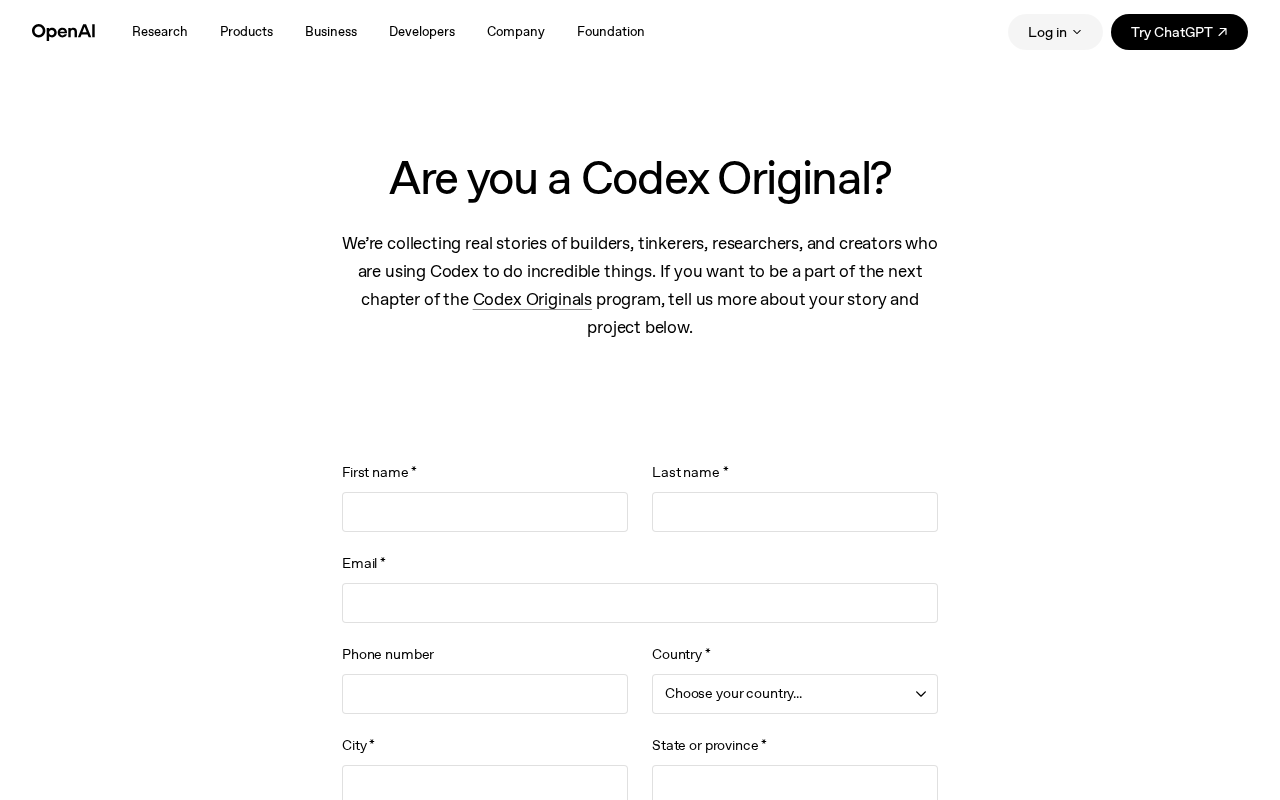
Based on the official announcement, Codex Originals is a community story collection initiative. OpenAI explicitly identifies its target audience: builders, tinkerers, researchers, and creators — anyone producing interesting results with Codex is encouraged to submit their projects and experiences.
The official copy reads: "We're collecting real stories of builders, tinkerers, researchers, and creators who are using Codex to do incredible things." This line captures the program's core intent — gathering authentic use cases, not polished marketing success stories. Anyone who wants to be part of the next wave of Codex Originals simply needs to share their story and project through the designated submission portal.
Codex is OpenAI's AI coding model, originally released in 2021 as a code-specialized version of GPT-3 and the early backbone of GitHub Copilot. In 2025, OpenAI relaunched Codex in a fundamentally new form — as a cloud-based software engineering agent built into ChatGPT, capable of handling multiple coding tasks in parallel, including writing code, fixing bugs, running tests, and navigating codebases. Its positioning has evolved from "code completion tool" to "autonomous coding agent." Understanding this context helps clarify the timing of Codex Originals: this community initiative launches right after a major product transformation, giving OpenAI a way to rapidly build a library of real-world use cases for the new Codex and support its narrative of an "AI software engineer."
Why OpenAI Is Running a User Story Collection
This type of program isn't unusual in the tech industry, but its strategic intent is quite clear given the intensely competitive AI coding tools landscape.
The first layer of value is accumulating authentic use cases. The hardest thing for any AI coding tool to convince potential users of isn't the feature list — it's "what have others actually built with this?" Developers naturally trust peer stories more than vendor claims. A real project from an independent developer or research team is more persuasive than any official demo.
The second layer is building community identity. The word "Original" carries the connotation of a badge — being recognized as a Codex Original is a form of community distinction. That sense of belonging strengthens core user retention and converts tool users into brand advocates.
The third layer is implicit product feedback collection. By learning what users are actually building and where they're hitting limits, OpenAI gains a clearer picture of Codex's real-world use cases, informing future development priorities.
The current AI coding tools market is fiercely competitive. GitHub Copilot, Cursor, Replit AI, Amazon CodeWhisperer, and Anthropic's Claude are all vying for developer attention. At a stage where features are increasingly converging, a sense of community belonging and ecosystem stickiness often becomes the key differentiator. Similar community recognition systems have proven effective in tech: AWS's Hero program and Google's Developer Expert initiative have both achieved low-cost community engagement and brand amplification by granting identity labels to active users. Codex Originals follows the same logic — but in the emerging category of AI coding tools, the scarcity of authentic use cases often makes these programs spread further than they do in traditional software ecosystems.
What This Means for Developers
For developers who are using or considering Codex, this program offers a chance to be seen by the team behind it. Whether it's a personal project, an open-source tool, or a research output — if it has something distinctive, participating in the submission process could bring visibility and opportunities to connect.
Notably, the scope of who's invited is broad. OpenAI didn't limit eligibility to professional software engineers — it explicitly includes "tinkerers" (hobbyists, hands-on experimenters). This posture continues the broader narrative of AI coding tools lowering the barrier to creation, enabling more non-traditional developers to build things with AI assistance.
A Candid Observation
It's worth noting objectively that, based on publicly available information, this is closer to a community engagement initiative than a significant product update. It doesn't include any new feature releases, nor does it reveal technical details about Codex's evolution. The original content is fairly brief — primarily a submission portal and an audience definition.
That said, viewed in the context of industry trends, leading AI companies are increasingly focused on building developer communities around their core products. Whoever can gather the most active creators into their ecosystem will hold the high ground in users' minds over the long run. Codex Originals is a concrete execution of exactly that logic.
The advice for developers is straightforward: if you have a Codex project you're proud of, consider submitting your story. It's both a chance to get exposure and a close-up window into how OpenAI is shaping its developer ecosystem.
Related articles

DeepCell: One-Click AI Generation of Documents, Spreadsheets, and Slides
DeepCell tops Product Hunt with one-click generation of documents, spreadsheets, and slides, using the .deepcell format for linked updates, designed for System 2 tasks like modeling and sales reviews.

Doneas: 15-Minute Daily Accountability Calls That Keep Indie Developers From Procrastinating
Doneas is a daily accountability tool for indie developers: plan tasks on Monday, join a 15-minute call with five builders each day, and log deliveries on a public progress page. This article analyzes its core mechanics, effectiveness, and potential issues around retention and matching.

Fastlane 2.0: Fully Automated AI Ad Campaigns, From Creative to Optimization
Fastlane 2.0 is an AI ad automation tool: enter your website and it learns your brand, generates video and image ads, and runs and optimizes them on Meta, TikTok, Instagram, and YouTube.