OpenAI DevDay Leaks: Mysterious Agent "o" and Ultra-Fast API Revealed

OpenAI DevDay leaks reveal agent "o", ultra-fast API, Sonnet 5.5, and MiniMax M3.1 Flash ahead of the event.
Just 72 hours before OpenAI DevDay, a wave of leaks emerged. The most notable: agent "o," an always-on AI supporting 63 languages and designed for long-horizon tasks, rivaling Manus and similar autonomous agents. OpenAI's ultra-fast API tier (750 tokens/sec) also surfaced, hinting at latency-based pricing. Anthropic's Sonnet 5.5 reportedly matches current pricing with major performance gains, while MiniMax M3.1 Flash went from GitHub leak to official release in hours. A coding agent demo generating a full 100K-line Minecraft clone in ~25 hours underscored the leap in autonomous agent capabilities.
AI news always arrives without warning. In the 72 hours before OpenAI's DevDay, a wave of leaks began surfacing, giving the public an early glimpse of what the company might unveil. From a mysterious always-on AI agent to a blazing-fast API tier for developers, and concurrent moves from competitors Anthropic and MiniMax, the entire industry's pace is visibly accelerating.
Mysterious Agent "o": A Long-Horizon Task Assistant Targeting Manus
The most talked-about DevDay leak is a product codenamed lowercase "o" — it has already appeared in ChatGPT's source code references. According to leakers, "o" is the name of OpenAI's upcoming always-on AI assistant, supporting up to 63 languages, carrying an internal codename of AU1, and reportedly accessible by multiple service providers.
OpenAI doesn't seem to be hiding this. The official account has been posting images that appear to be the "o" logo, and Timo, one of the product leads, has been dropping hints repeatedly on X. A crucial clue: the "o" label briefly appeared in ChatGPT's upgrade interface, with internal configs marking "o" as the display name and using NegativeO as an email suffix — suggesting this assistant may eventually take over everyday tasks like email management.
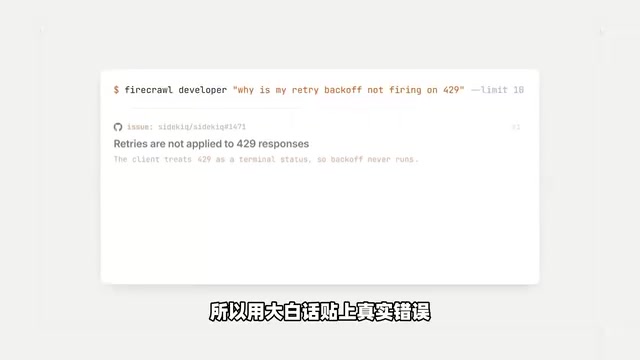
What's really intriguing is the product positioning. Rumors suggest "o" is OpenAI's answer to Grokbot, Manus, and Hermes — products in the autonomous agent space — and is specifically designed around long-running tasks. In other words, instead of handing it a task and waiting a few minutes for results, you can delegate a job that needs to run continuously for hours, days, or even weeks. The underlying system is reportedly tied to a codename called Aeon, possibly using an Astra variant optimized for long-horizon tasks. "o" may have its own cloud environment where it sets up infrastructure, executes code, conducts research, and keeps working until the goal is complete. There are even rumors that multiple agents may communicate and collaborate with each other to finish a single task.
Manus, Hermes, and Grokbot are all representative products in the Autonomous Agent space. Manus, built by a Chinese team, attracted widespread attention in early 2025 for its ability to independently handle complex tasks like web browsing, file processing, and code execution. Hermes is an open-source agent framework from Nous Research, while Grokbot is xAI's exploration into automated task execution. What these agents share in common: once a user submits a goal, the system autonomously plans steps, invokes tools, and loops through execution in a sandboxed environment — all without human intervention. Compared to the traditional back-and-forth of chatbots, autonomous agents are built around persistence and goal-orientation — they need to maintain long-term memory, self-correct on errors, and coordinate dependencies across subtasks. This explains why "o" is designed with its own cloud environment: local compute is limited, and tasks lasting hours or days must run continuously in a stable remote sandbox.
Ultra-Fast API: OpenAI Makes a Big Infrastructure Bet
Another likely major announcement is the expansion of OpenAI's ultra-fast API (a Priority/ultra-fast service tier) to more developers. Someone discovered a new speed selector in the Response API's debug panel, offering "Standard," "Fast," and "Ultra-Fast" options, and OpenAI has already listed ultra-fast as a service tier requiring full-line control in its API documentation.
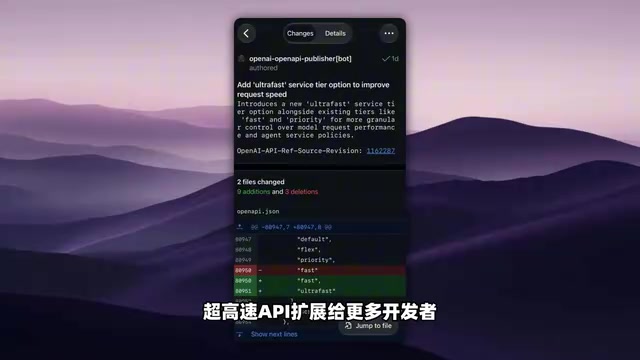
Ultra-fast itself isn't entirely new. OpenAI previously previewed it to select customers, claiming it can generate up to 750 tokens per second — roughly 14x faster than standard mode — powered by dedicated servers with extremely limited access. Combined with the recently uncovered $500 ChatGPT Pro Max plan (focused on the fastest response times), OpenAI's investment in speed and infrastructure is quite clear.
This points to a noteworthy trend: AI services may be entering a latency-based pricing era — standard mode for regular workloads, fast mode for time-sensitive needs, and ultra-fast mode for cutting-edge scenarios requiring near-instant responses. Developers can decide how much they're willing to pay for lower latency. It wouldn't be surprising if infrastructure ends up being one of the core themes of this DevDay.
A token is the basic unit a large language model uses to process text — roughly equivalent to half an English word or one Chinese character. "750 tokens per second" measures the model's inference throughput, which determines the response speed users perceive. In standard mode, GPT-4-class models typically run at around 50–80 tokens/sec, while 750 tokens/sec means a thousand-word article could be generated in about two seconds. The key techniques behind ultra-fast inference include: pre-allocating dedicated GPU servers for customers (avoiding multi-tenant queuing), algorithmic acceleration such as Speculative Decoding, and hardware-level optimization for specific model sizes. The business logic of "latency-based pricing" has long existed in cloud computing (e.g., AWS Spot Instances vs. On-Demand Instances). By bringing this to AI inference services, OpenAI is essentially turning infrastructure capability itself into a differentiable, sellable product — rather than competing on model quality alone.
Anthropic Strikes Back: Sonnet 5.5's Price-to-Performance Ratio Is the Story
Meanwhile, Anthropic will likely release Sonnet 5.5 around the same time as DevDay, putting further pressure on OpenAI. The company has confirmed the model is coming within the next few weeks, and leakers say partners have received an updated checkpoint that's even better than the first version. Reports indicate Sonnet 5.5 has been internally benchmarked within Claude Code, with testers describing it as "insanely fast and efficient" while retaining the natural, conversational style that made earlier Sonnet models popular.
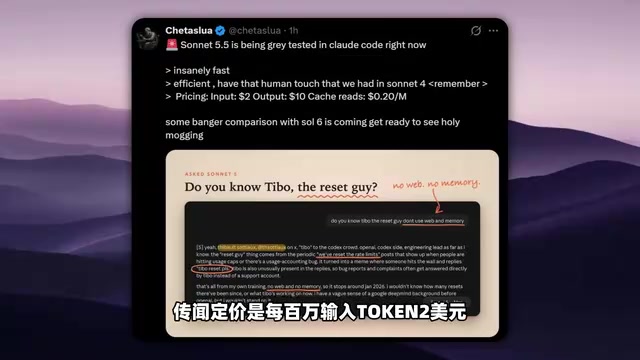
The most important angle is price-to-performance. Rumored pricing is $2 per million input tokens and $10 per million output tokens with a cache rate of $0.20 — which happens to match the current Sonnet pricing. For context, Anthropic has stated that Opus 5.5 is over 30% faster and 40% cheaper than Opus on typical workloads. If Sonnet 5.5 can hit a similar performance improvement while holding the same price point, it could be a monster product.
The video author shared a fairly bold personal take based on his own testing: he believes Sonnet 5.5 "comprehensively outperforms GPT-6 Soul." In a Minecraft clone demo he showed, Sonnet 5.5 High not only added a shader pack but also included a minimap and other extra features in the top-right corner — none of which appeared in the comparison model's output. It's worth noting that most of these test claims are unconfirmed by official sources and should be taken as one person's perspective.
MiniMax M3.1 Flash: A Speed Race Announced Mid-Edit
One particularly dramatic subplot was the release of MiniMax M3.1 Flash. It was initially spotted in an early commit to MiniMax's GitHub repository; the reference was deleted before the PR was merged, making it look like an accidental leak. Then, during the actual video editing process, MiniMax officially released the M3.1 Flash preview, which is now live on MiniMax Code. The gap between leak and official release was just a few hours — which itself says something about the pace of iteration in today's AI landscape.

MiniMax positions M3.1 Flash as its latest text model built for everyday development, emphasizing speed and reliability for tasks ranging from bug fixes to building complete features. In an SVG illustration comparison using a "Super Mario drinking coffee" prompt, GPT-6 Pro produced noticeably more detail — but for a Flash model laser-focused on speed and efficiency, M3.1 Flash still generated a remarkably detailed and coherent scene. The author's assessment was balanced: he didn't claim it beats GPT-6 Pro in a single test, but said a Flash-tier model reaching this level is already impressive.
Long-Horizon Coding Agents: From Demos to "Auto-Building Games"
Perhaps the most trend-defining element of this round of leaks is the capability leap shown by long-running coding agents. The author closes with a standout demo: a model built an entire Minecraft clone almost entirely from scratch through code — at a staggering scale: roughly 100,000 lines of game code, 26,000 lines of test code, 1,000 automated tests, and 775 files, with the agent working for approximately 25 hours. More impressively, it also generated 783 images, 184 sound effects, and even produced a complete in-game tutorial guide — all through code.
This is precisely where long-horizon coding agents start to get genuinely interesting: the jump from small demos to models that can work continuously for hours and autonomously produce complete multi-file projects. Work that once took a developer weeks might now be done in days. Combined with the earlier mention of agent "o" being specifically designed for long-horizon tasks, this may signal that agents are evolving from "Q&A tools" into "autonomous executors."
It's worth emphasizing that most of the above comes from leaks and third-party testing. Details like how Aeon and Astra feed into the final product remain speculative. As DevDay officially kicks off, the truth will reveal itself quickly.
100,000 lines of code is a meaningfully sized engineering project. For reference: the Linux kernel version 0.01 had about 10,000 lines; a mid-sized web application typically runs 50,000–150,000 lines; and a commercial indie game usually falls between 100,000–300,000 lines. For an agent to independently complete a project at this scale in roughly 25 hours, the challenge goes far beyond "generating code": it requires maintaining global architectural consistency (module dependencies across 775 files), continuously running automated tests and fixing failures, managing the generation and integration of heterogeneous assets like images and audio, and sustaining long-term memory across sessions within a limited context window. This combination of capabilities is why such demos are seen as major milestones in the evolution of agents from "code completion tools" toward "software engineer replacements" — and why they serve as central reference points in academic discussions about the capability boundaries of AI software engineers (SWE-Agents).
Related articles

How Big Can Stars Really Get? The Physical Limits of the Largest Stars
Red supergiants are the largest stars by volume, with radii up to 2,000 times the Sun, engulfing the inner solar system. But there is no precise upper limit on stellar size—models predict up to 15,000 solar radii. The most massive blue stars are far smaller than red supergiants—biggest and heaviest are two different things.

Apple HomeView Smart Display Full Feature Breakdown: Wall-Mount or Desktop, $299
Apple launches HomeView, a $299 smart display with wall-mount and desktop options, 12MP camera for facial recognition, smart home control, music playback, and recipe step-by-step cooking. Full breakdown of watch faces, apps, privacy, and cooking integration.

Where Did the Promised New Studio Go? Craft Computing Answers After Five Years
Craft Computing's host responds to viewer questions: the new studio promised five years ago was shelved as construction costs soared from $30,000 to $75,000, and was replaced by a 168-square-foot garage conversion.