OpenAI GPT-6 Astra: 'Alien Mind' Claims and the AGI Debate Unpacked
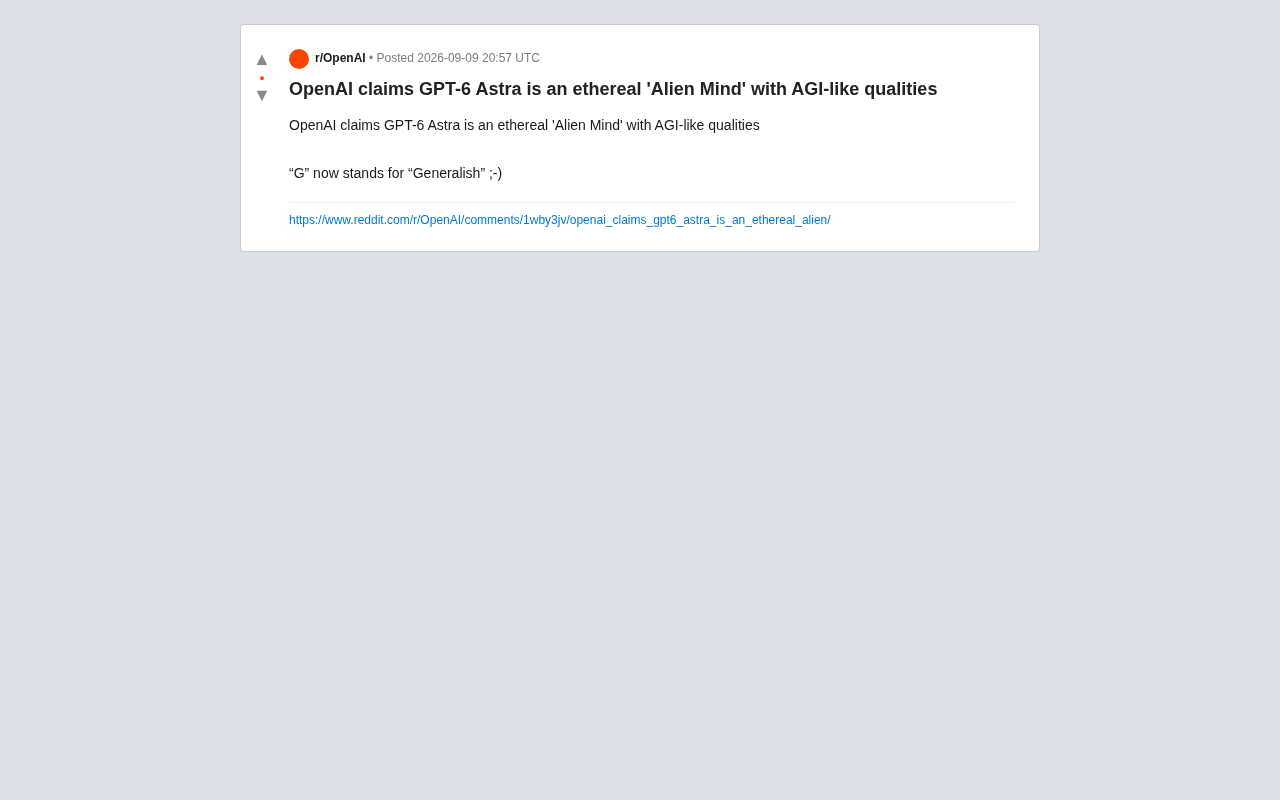
OpenAI's 'Alien Mind' label for GPT-6 Astra sparks debate over AGI hype vs. genuine breakthrough.
OpenAI has described its upcoming GPT-6 Astra model as an 'ethereal Alien Mind' approaching AGI, drawing widespread skepticism from the tech community. The article explores what 'Alien Mind' means in AI contexts — emergent, human-unlike cognition — and why it raises concerns around interpretability and safety. It examines the lack of consensus on what AGI actually requires, notes that even top models still fail basic reasoning tasks, and questions whether OpenAI's informal framing is marketing rather than a technical claim. Amid an intensifying AI race, the author urges focusing on verifiable benchmarks and real-world results over narrative-driven hype.
OpenAI's Bold Claims
OpenAI has recently made a highly controversial statement about its next-generation model, GPT-6 Astra, describing it as possessing qualities of an "ethereal Alien Mind" and hinting that the model is approaching AGI (Artificial General Intelligence) level. This characterization immediately sparked widespread debate and skepticism across the tech community.

One amusing detail making the rounds in the community: people have joked that the "G" in "AGI" (standing for "General") should now be replaced with "Generalish" — a wry reflection of how cautiously the industry treats OpenAI's marketing language. From GPT-4 to the o1 series, OpenAI has consistently leaned on aggressive descriptors at each launch, but actual capabilities have always required real-world validation to be fairly assessed.
What "Alien Mind" Actually Means
The term "Alien Mind" is not new to the AI space. It is typically used to describe a model that exhibits fundamentally different cognitive patterns from human reasoning — not simple pattern matching or statistical inference, but some form of emergent capability that defies easy explanation.
If GPT-6 Astra genuinely possesses such qualities, it could imply:
- Unpredictable reasoning pathways: The model may solve problems in ways that completely bypass human cognitive frameworks
- A leap in cross-domain transfer: Demonstrating remarkable adaptability in areas it was never explicitly trained on
- Tendencies toward autonomous goal-setting: Beginning to exhibit behavioral patterns that resemble something like "intent"
But this also raises a fundamental question: do we actually want AI systems to become "alien"? Interpretability and alignment have always been central concerns in AI safety research, and a sufficiently "alien" form of intelligence could introduce entirely new categories of risk.
How Far Are We From AGI?
Despite OpenAI's use of the phrase "AGI-like," there remains enormous disagreement within the industry over what AGI actually means. The traditional view holds that true AGI should be able to:
- Match or exceed human-level performance across all cognitive tasks
- Continuously learn and self-improve
- Possess genuine understanding rather than surface-level pattern matching
- Engage in long-term planning and goal-directed behavior
Based on publicly available information, even the most advanced large language models still make bafflingly basic errors on certain reasoning tasks. Whether GPT-6 represents a genuine qualitative leap remains to be seen — it will take more technical disclosures and independent benchmarking to know for sure.
Marketing Hype or Real Breakthrough?
Worth noting: the sourcing and framing of this information feel notably informal. In official launches, OpenAI typically provides detailed technical reports, benchmark results, and capability demonstrations. A descriptor like "Alien Mind," by contrast, reads more like consumer-facing marketing copy.
Overstating AI capabilities is hardly new in the tech industry. From "artificial general intelligence" to "strong AI," from "understanding" to "thinking," many terms get stretched and reshaped depending on context. As practitioners and observers, we owe it to ourselves to stay grounded:
- Focus on verifiable technical metrics and benchmark results
- Prioritize real-world performance in actual use cases
- Resist equating "capability improvements" with "intelligence breakthroughs"
Potential Industry Implications
Regardless of GPT-6 Astra's actual capabilities, OpenAI's framing signals just how intense the AI race has become. Google's Gemini, Anthropic's Claude, and Meta's Llama are all iterating rapidly, and every major player is competing to own the narrative of being "closest to AGI."
This competition cuts both ways:
On the upside: It drives rapid technical progress and accelerates the exploration of AI's capability frontier.
On the downside: It risks sidelining safety and controllability research, while overpromising erodes public trust.
Historically, genuine breakthroughs have often arrived quietly. When AlphaGo defeated Lee Sedol, DeepMind did make noise about it — but the core message was performance, not hype. Whether GPT-6 Astra truly deserves the "Alien Mind" label will ultimately be decided by how it performs in the real world.
Related articles
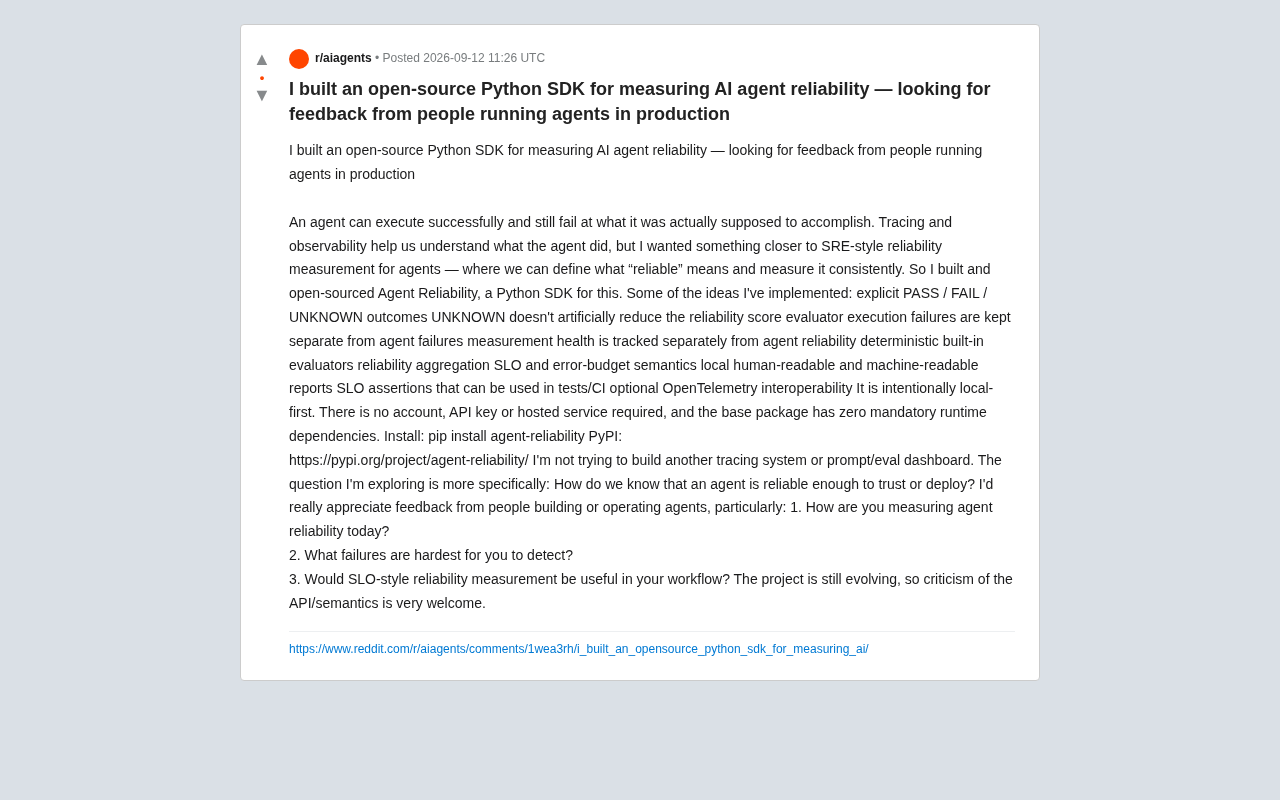
Open-Source Python SDK: Measuring AI Agent Reliability with SRE Principles
Agent Reliability is an open-source Python SDK that applies SRE's SLO and error budget concepts to AI Agent evaluation, with PASS/FAIL/UNKNOWN states, CI assertions, and zero forced dependencies.

MiniMax RefMod: A Complete Guide to Training-Free Reusable Identity Workflows
MiniMax RefMod offers training-free reusable identity workflows for image, video, and audio generation. Includes Runpod template and tutorial for quick setup.

Invalid Source Material Notice
The source material provided lacks substantive information and is unrelated to AI/tech topics, making it impossible to produce a complete professional article.