OpenAI Guaranteed Capacity Service Explained: How Enterprises Can Lock In Long-Term AI Compute Resources
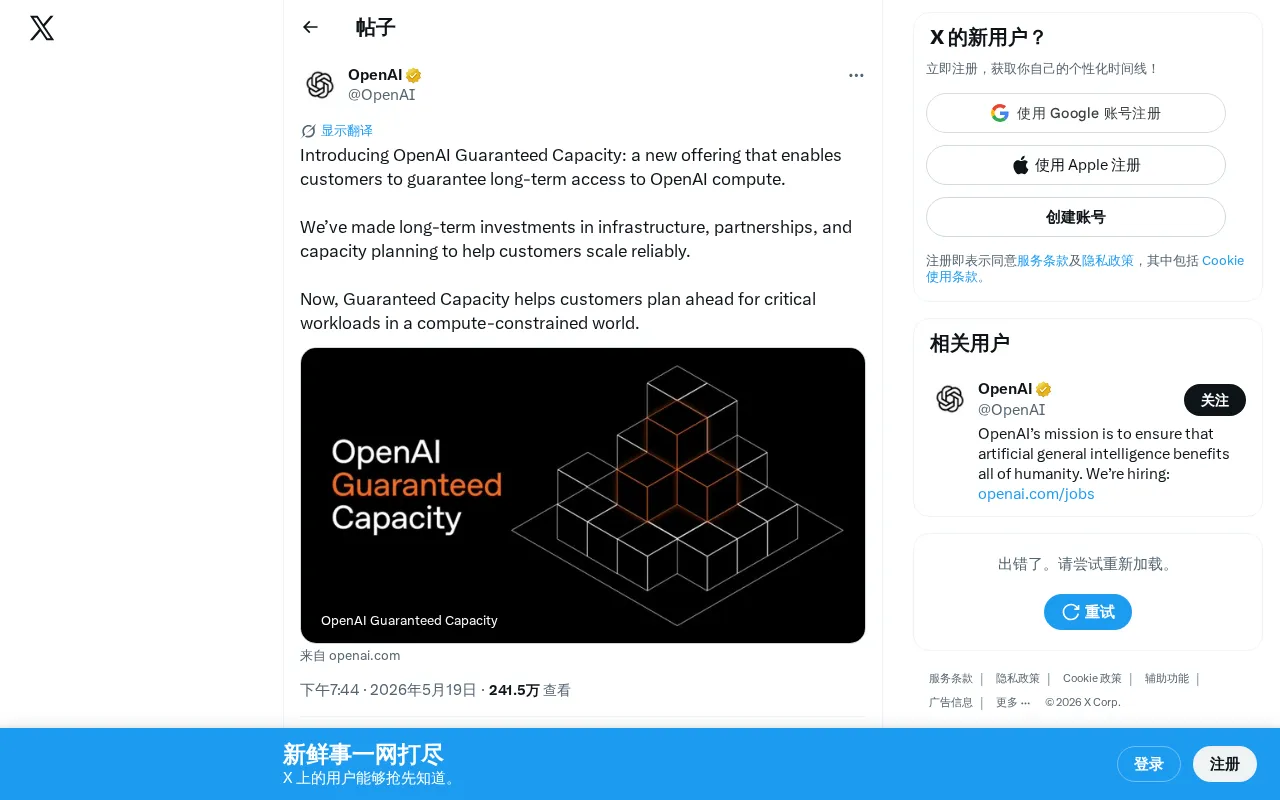
OpenAI launches Guaranteed Capacity, letting enterprises lock in AI compute through long-term contracts.
OpenAI has launched its Guaranteed Capacity service, enabling enterprise customers to reserve AI compute resources through long-term contracts to ensure stable operation of critical workloads. Drawing on the proven reserved instance model from cloud computing, it trades long-term commitments for resource certainty. This move not only builds customer lock-in effects to counter large model competition but also marks OpenAI's deeper transformation into an enterprise platform, as AI compute rapidly becomes a strategic resource akin to oil.
OpenAI recently announced a new Guaranteed Capacity service that allows enterprise customers to lock in access to OpenAI's compute resources through long-term contracts. This move marks a significant step in OpenAI's enterprise-level commercialization journey and reflects the growing reality of AI compute resource scarcity across the industry.
What Is Guaranteed Capacity?
In simple terms, Guaranteed Capacity is a compute reservation mechanism. Enterprise customers can sign long-term agreements to pre-secure access to OpenAI's compute resources for a defined period, ensuring they won't be unable to call model services due to resource constraints when they need them most.
In its announcement, OpenAI emphasized that it has made long-term investments in infrastructure, partnerships, and capacity planning to help customers achieve reliable deployment at scale. Guaranteed Capacity is a direct product of these investments, designed to help customers "plan ahead for critical workloads in a compute-constrained world."
This phrasing itself is noteworthy—OpenAI is openly acknowledging that we live in a "compute-constrained world," which aligns perfectly with the industry's widespread recognition that GPU and AI compute demand far outstrips supply.
The Technical Roots of Compute Scarcity: The current AI compute shortage stems from the extreme GPU dependency of large language model training and inference. High-end AI accelerator chips like NVIDIA's H100 require 18-24 months from design to mass production, while demand growth far exceeds supply. Since 2023, H100 cards have at times exceeded $40,000 on the open market, with delivery timelines stretching to several months. This supply-demand imbalance affects not only model training but directly constrains the scalability of inference services—each GPT-4-level API call requires dozens to hundreds of GPUs working in coordination, and this structural contradiction in compute scarcity is unlikely to be fundamentally resolved in the short term.
Why Do Enterprises Need AI Compute Guarantees?
Compute Bottlenecks Have Become Industry Consensus
As large language models become increasingly embedded in enterprise operations—from customer service automation to code generation, from data analytics to content creation—corporate dependence on AI compute is rising dramatically. However, supply chain bottlenecks for critical hardware like GPUs are unlikely to be fully resolved in the near term, and compute resources will remain scarce for a considerable period.
For enterprises that have deeply integrated AI capabilities into their business processes, API instability or unavailability can directly impact operations. Guaranteed Capacity addresses this exact pain point.
From Pay-As-You-Go to Long-Term Compute Lock-In
Previously, most enterprises used OpenAI's API services on a pay-as-you-go basis. This model offers flexibility but lacks certainty—during peak periods, users may face rate limits with no guarantee of service quality.
The launch of Guaranteed Capacity signals that OpenAI is building a tiered commercial service structure:
- General users: Continue using pay-as-you-go services, suitable for teams with highly variable usage or those still in the exploration phase
- Enterprise customers: Trade long-term commitments for guaranteed compute capacity, suitable for organizations that have deeply integrated AI into core operations
This mirrors mature models in the cloud computing industry such as AWS Reserved Instances and Azure Reserved Capacity—all fundamentally trading long-term commitments for resource certainty and price advantages.
The Evolution of Cloud Computing Reserved Instance Models: Since AWS launched Reserved Instances in 2009, they have become one of the most mature resource pre-purchase models in cloud computing. The core logic is: cloud providers gain more predictable revenue and resource planning capability by locking in customer commitments upfront, while customers receive up to 72% price discounts in exchange for 1-year or 3-year usage commitments. Azure Reserved VM Instances and Google Cloud Committed Use Discounts follow similar logic. OpenAI's transplantation of this model to AI inference services essentially applies proven cloud computing business wisdom to the emerging AI infrastructure layer—a path whose viability has been thoroughly validated by over a decade of cloud computing industry practice.
Deeper Implications for the AI Industry Landscape
OpenAI Accelerates Enterprise Platform Transformation
The launch of Guaranteed Capacity is another key signal of OpenAI's transformation from a "technology company" to an "enterprise platform." Previously, OpenAI had already released enterprise-facing products like ChatGPT Enterprise and tiered API services. The addition of compute guarantee services makes its enterprise service portfolio more complete and provides stronger support for revenue predictability—long-term contracts mean more stable cash flow.
Customer Lock-In Effects Build Competitive Moats
From a competitive strategy perspective, long-term capacity contracts effectively create a customer lock-in effect. Once an enterprise signs a long-term compute guarantee agreement, switching costs for migrating to competitors like Google Gemini or Anthropic Claude increase significantly. This holds important strategic value for OpenAI in maintaining market share amid increasingly fierce competition in the large model space.
The Economic Mechanism of Switching Costs: The economic theory of switching costs precisely explains the strategic value of Guaranteed Capacity. When enterprises sign long-term compute contracts, migration costs include not only contract penalties but also technical costs such as prompt engineering reconstruction, fine-tuning data migration, and API interface adaptation, as well as organizational costs like personnel retraining and process rebuilding. Nobel laureate Jean Tirole's research on platform economics demonstrates that first-mover platforms can maintain significant pricing power even as competition intensifies by creating high switching costs. For OpenAI, every long-term contract is a competitive moat, elevating customers' migration decisions from "technical comparison" to "comprehensive cost calculation," dramatically increasing the difficulty for competitors to poach clients.
AI Compute Is Becoming a Strategic Resource
From a broader perspective, this move reinforces a clear trend: compute in the AI era is becoming a strategic resource akin to oil. Whoever controls more compute holds a more advantageous market position.
Through its deep partnership with Microsoft, OpenAI has secured massive Azure compute capacity. Now, through Guaranteed Capacity, it allocates these resources to enterprise customers via long-term contracts—essentially playing the role of a "compute distributor." Once this model proves successful, it will generate commercial value for OpenAI far exceeding API call fees alone.
The Compute Symbiosis Between OpenAI and Microsoft Azure: Understanding Guaranteed Capacity requires understanding the unique compute symbiosis between OpenAI and Microsoft. Since 2019, Microsoft has invested over $13 billion in OpenAI, with a significant portion delivered in the form of Azure compute resources. OpenAI's model training and inference services are highly dependent on supercomputing clusters that Microsoft specifically built for it, reportedly comprising tens of thousands of NVIDIA A100/H100 GPUs. This means that when OpenAI sells Guaranteed Capacity to enterprise customers, it is effectively reselling Microsoft Azure compute resources—its role resembles that of a value-added reseller (VAR), but with model services as the core differentiating value. This three-party linkage structure—Microsoft provides compute, OpenAI provides models, enterprise customers purchase services—constitutes the most representative vertical integration paradigm in today's AI commercial ecosystem.
Key Questions to Consider Before Enterprise Procurement
While the business logic of Guaranteed Capacity is clear, enterprises should evaluate several core questions before making procurement decisions:
- Pricing and discount levels: How much savings does long-term lock-in offer compared to on-demand usage? Is the ROI reasonable?
- Contract flexibility: Details such as contract duration, capacity adjustment mechanisms, and exit clauses will directly determine the product's practical attractiveness
- Supply sustainability: Whether OpenAI's own compute expansion pace can keep up with enterprise customer growth remains a variable that requires ongoing observation
- Multi-cloud strategy compatibility: Enterprises already employing multi-cloud architectures need to assess the risks of deep dependency on a single AI provider
Overall, OpenAI's launch of Guaranteed Capacity is both a pragmatic response to market demand and an important step in its commercialization strategy. Against the backdrop of persistent AI compute scarcity, this "lock in resources ahead of time" model will likely become an industry standard. It's foreseeable that similar compute guarantee services from Google Cloud, Amazon Bedrock, and domestic large model providers are only a matter of time.
Key Takeaways
- OpenAI has launched Guaranteed Capacity, allowing enterprise customers to lock in AI compute resources through long-term contracts
- The service mirrors cloud computing's reserved instance model, helping enterprises ensure stable operation of critical workloads in a compute-scarce environment
- Long-term capacity contracts create customer lock-in effects through high switching costs, helping OpenAI maintain market share in the large model competition
- This move marks OpenAI's further transformation from a technology company to an enterprise platform, supporting revenue predictability
- AI compute is becoming a strategic resource; OpenAI essentially serves as a value-added distributor of Microsoft Azure compute, and the pre-locked compute business model may become an industry standard
Related articles
Meta Muse Hits 900K Downloads in Six D…
Meta Muse Hits 900K Downloads in Six Days: The AI Agent Era Has Officially Arrived
Meta's AI agent Muse hit 902K downloads in 6 days, topping US App Store and Google Play charts above ChatGPT and Claude. A deep dive into Muse's capabilities and the AI Agent race.
 Industry Insights
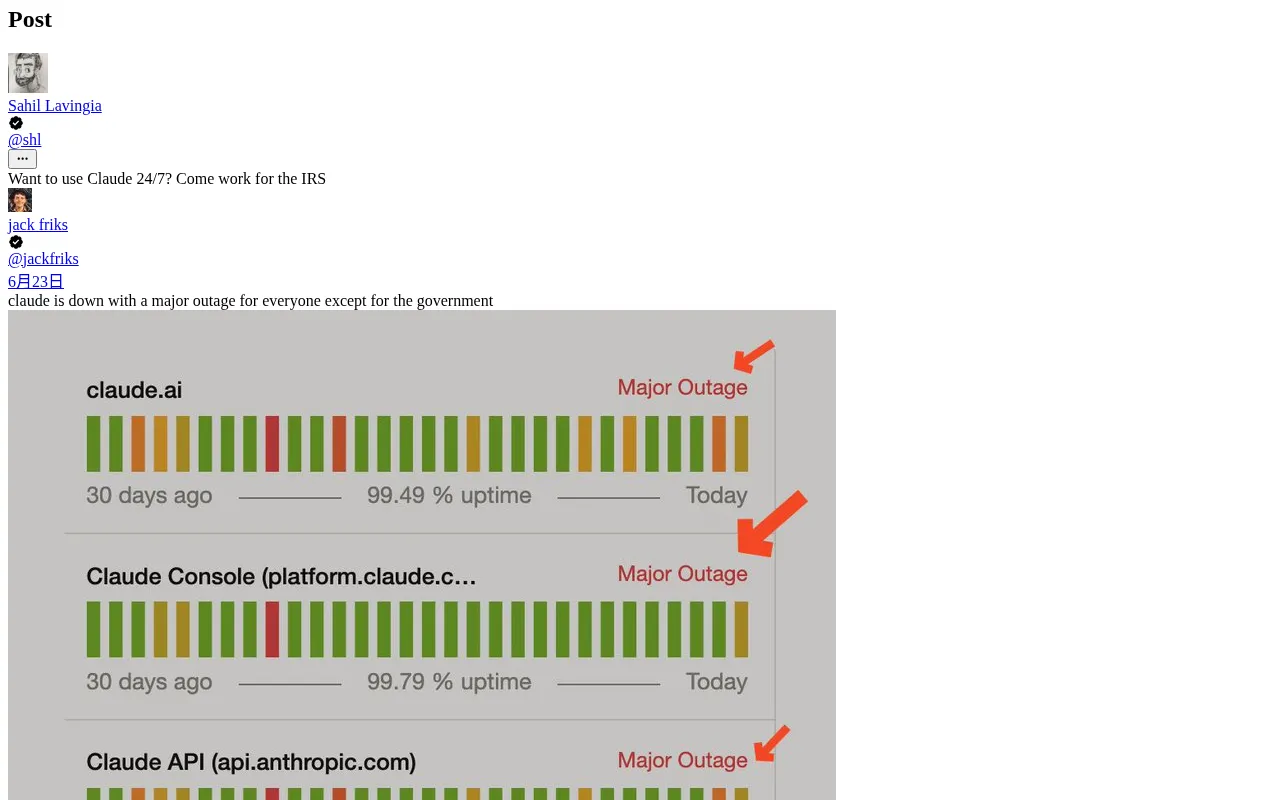
IRS Fully Embraces Claude AI, Accelerating Federal Government's AI Adoption
The IRS is recruiting staff with 24/7 Claude AI access, marking Anthropic's breakthrough into the federal government. Explore the strategic implications and tax use cases.
 Industry Insights
The IRS Mobile App Debate: A Trust Crisis in Government Digital Transformation
The IRS's proposed mobile app has sparked heated debate. This article analyzes the core arguments, exploring data security, privacy, and the trust crisis in government digital transformation.