OpenAI Launches Limited-Time Price Cut for GPT-5.6 Sol: AI Model Price War Intensifies

OpenAI cuts GPT-5.6 Sol pricing temporarily as AI model price competition intensifies across the industry.
OpenAI has introduced a limited-time price reduction for its GPT-5.6 Sol model, valid at least through November 21st. The move reflects intensifying competition among AI providers including Anthropic and Google, driven by declining inference costs from hardware advances and techniques like model distillation and quantization. While developers welcome lower barriers to innovation, the temporary nature of the discount raises concerns about long-term cost predictability, reinforcing the importance of multi-model strategies.
Event Overview
Recently, a post that sparked heated discussion on HackerNews revealed that OpenAI has launched a limited-time price reduction for its next-generation model GPT-5.6 Sol, with the discount lasting at least until November 21st. The topic quickly garnered 289 upvotes and 262 comments, becoming a focal point of discussion in the tech community.
This isn't OpenAI's first time using price adjustments to address increasingly fierce market competition. Under pressure from Anthropic's Claude series, Google's Gemini, and a host of open-source models, leading AI companies are increasingly leveraging pricing to consolidate their developer ecosystems and market share.
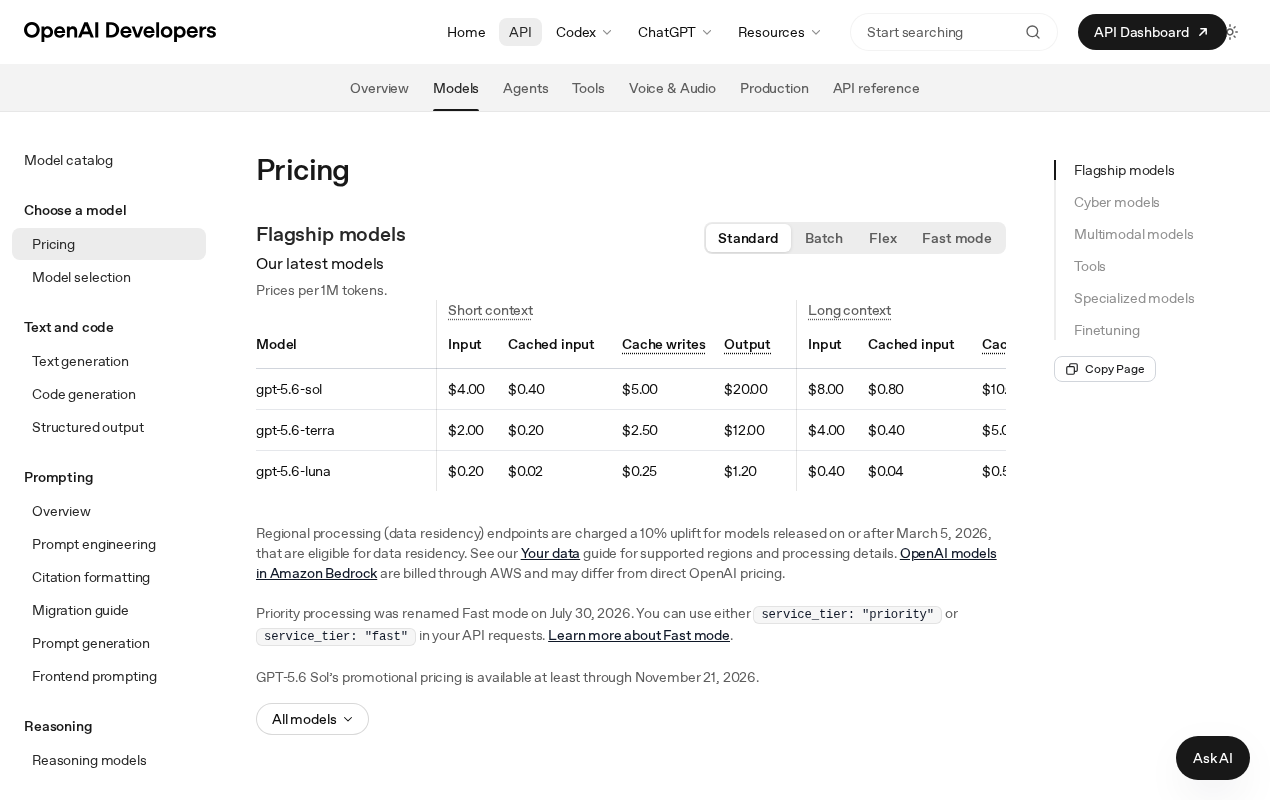
The Market Logic Behind the Price Cut
Driven by the Competitive Landscape
Inference costs for large AI models are dropping rapidly, driven by both improvements in computational efficiency and continuous optimization of model architectures. Specifically, model quantization techniques (reducing parameter precision from FP32 to INT8 or even INT4), KV Cache optimization, Speculative Decoding, and the maturation of memory management technologies like PagedAttention have enabled a single GPU to serve far more concurrent requests. On the hardware side, iterations of dedicated inference chips like NVIDIA H200/B200 and Google TPU v5 continue to drive down the marginal cost per token. These factors combined have reduced mainstream large model API inference prices by approximately 90% or more over the past two years.
For OpenAI, proactive price cuts serve as both a pass-through of declining hardware costs and a defensive strategy — lowering the barrier to API usage to lock in more enterprise customers and independent developers.
In the HackerNews comments, many developers welcomed the move, noting that the limited-time discount allows them to deploy GPT-5.6 at scale in production environments with greater confidence. However, others cautioned that the word "limited-time" implies pricing uncertainty, and enterprises should still carefully evaluate cost volatility risks when making long-term technology decisions.
The Deeper Intent of the Limited-Time Strategy
The phrasing "at least until November 21st" is quite deliberate. This type of limited-time offer can rapidly stimulate usage growth and create a short-term adoption spike, while also preserving OpenAI's flexibility to adjust pricing later. For a company on the fast track of model iteration, this elastic pricing mechanism helps smooth transitions between different product generations.
It's worth noting that current mainstream large model APIs generally adopt a per-token pricing model, distinguishing between input tokens (prompt) and output tokens (completion). Output tokens typically cost 2-4x more than input tokens because the generation process requires autoregressive decoding token by token, with computational density far exceeding that of encoding input in a single pass. Some providers also offer cached token discounts, giving significant price breaks on repeated system prompts and similar content. Understanding this token economics is crucial for evaluating the real impact of price cuts — a typical RAG (Retrieval-Augmented Generation) query might consume thousands of input tokens but generate only a few hundred output tokens, while a long-form writing task might produce massive amounts of output tokens. The cost structures differ dramatically across use cases, which is why the same price adjustment affects different types of developers differently.
Impact on the Developer Ecosystem
Lowering the Barrier to AI Application Innovation
For small teams and individual developers, API pricing is one of the key factors determining project viability. A price reduction directly translates to more room for experimentation — AI application ideas that were previously shelved due to prohibitive costs may now have the opportunity to come to life.
A recurring theme in community discussions is that as inference costs continue to decline, the business models for AI applications are being redefined. When calling costs are low enough, developers can more aggressively embed AI capabilities into their products without excessive concern about margin erosion.
Confusion Over Model Version Naming
It's also worth mentioning that many users in the comments expressed confusion over OpenAI's increasingly complex model naming system. From GPT-4 to various suffixed variants, to the current "GPT-5.6 Sol," the rapidly iterating version numbers give developers headaches when choosing models. This also reflects a new challenge for providers as model product lines expand: how to clearly communicate the capability boundaries and pricing differences between versions.
Where Is the AI Model Price War Heading?
The Long-Term Trend of Declining Costs
Looking at the industry as a whole, large model inference costs show a clear downward curve. This results from multiple converging factors: more efficient model distillation techniques, the proliferation of dedicated inference chips, and continuous concessions by vendors competing for market share.
Knowledge Distillation plays a particularly critical role. This model compression technique, proposed by Geoffrey Hinton and others, centers on training a smaller "student model" using the output distribution of a large "teacher model." The student model learns not only hard labels (correct answers) but also soft labels (probability distributions) from the teacher model's output, thereby acquiring the teacher's "dark knowledge." In the large model space, distillation is widely used for production deployment — vendors distill flagship models with hundreds of billions of parameters into lightweight versions with tens of billions of parameters, maintaining most capabilities while reducing inference costs by an order of magnitude. Many vendors' "mini" or "lite" model versions are products of distillation, serving as one of the key technical pillars enabling continued inference cost reduction.
It's foreseeable that price competition will remain an important tool for vendors to attract developers in the short term. But in the long run, price wars alone cannot build a moat — model capability quality, ecosystem completeness, and reliability are the core factors that determine winners and losers.
Practical Advice for Users
For teams currently evaluating AI technology solutions, this price cut provides a good entry point. However, it's equally important to establish cost monitoring mechanisms and closely track pricing changes after the promotional period ends. Additionally, adopting a multi-model strategy and avoiding over-dependence on a single vendor remains a prudent approach to navigating market uncertainty.
The Multi-model Strategy borrows from the multi-cloud strategy in cloud computing. Its core principle is integrating model APIs from multiple AI providers within the technical architecture, using a routing layer to dynamically select the optimal model based on task type, cost budget, and latency requirements. In practice, enterprises typically deploy proxy gateways like LiteLLM or OpenRouter to unify different vendors' APIs into compatible interfaces, reducing the engineering cost of switching models to near zero. The benefits of this architecture extend beyond improved bargaining power — it also enables rapid failover when a provider experiences service outages or sudden price increases, ensuring business continuity. Mature open-source frameworks such as LangChain's model abstraction layer and various AI gateways already support this pattern.
Conclusion
OpenAI's limited-time price cut for GPT-5.6 Sol is yet another snapshot of the intensifying competition in the AI large model market. For developers, it's good news that lowers costs and accelerates innovation. For the industry as a whole, it signals a new phase of competition where price and capability advance in parallel. In this race with no finish line, the ultimate winner may not be the one with the lowest prices, but the one that achieves the best balance between cost, capability, and ecosystem.
Related articles

Felix Rieseberg Personal Homepage
Felix Rieseberg's personal homepage sparks attention on Hacker News. This article covers the Slack engineer's technical background, the rise and fall of nativefier, and the value of a developer homepage as a tech calling card.

@ai-sdk/vue 3.0.306 Patch Release Syncs with [email protected] Update
@ai-sdk/vue 3.0.306 released, synced with [email protected]. A routine patch release for the Vercel AI SDK ecosystem with no public API changes; the Vue adapter layer stays version-aligned with the core package.

Gemini 4 Argon API Launches: The Era of Million-Token Output Begins
Google launches Gemini 4 Argon with sparse MoE architecture, up to 1M output tokens, and a 68.90% Vals Index score, available across API, AI Studio, and the Gemini app.