OpenAI Merges ChatGPT and Codex: The Birth of an AI OS and Four Core Strategies

OpenAI merges ChatGPT and Codex into a Super App, laying the groundwork for an AI operating system.
OpenAI has merged ChatGPT and Codex into a single Super App alongside the new GPT-5.6 model, signaling the early formation of an AI operating system. This deep-dive analyzes four core strategies shaping the Agent era: the Loop mechanism for autonomous workflow iteration, a building block tool stack economy, multi-threaded parallel execution for peak Agent performance, and Sites with an upgraded built-in browser for low-code web creation.
OpenAI's Strategic Integration: The Birth of a "Super App"
OpenAI recently made a move with significant strategic implications: merging ChatGPT and Codex into a single "Super App" while simultaneously releasing a new-generation model, GPT-5.6 (internally codenamed Sol). This model reportedly comes very close in capability to Fable 5 — OpenAI's not-yet-widely-released frontier model — but at only a fraction of the cost.
The concept of a "super app" was pioneered by WeChat during the mobile internet era — a single entry point aggregating payments, social networking, shopping, and transportation. OpenAI's Super App ambition echoes that vision, but the underlying logic is fundamentally different: WeChat relied on manually building a mini-program ecosystem, while OpenAI's model dynamically orchestrates tools and interfaces through the model itself. This distinction means OpenAI's integration path can theoretically extend indefinitely, without needing to pre-write rules for every scenario.
On the Agent Native podcast, host Riley Brown and developer Ross Mike offered a deep breakdown of this update. Their core thesis: this isn't merely a feature addition at the product level — it's the early blueprint of an "AI operating system." Users no longer need to jump between different applications; instead, they trigger tasks through conversation, invoke tools, generate interfaces, and transition to the next conversation flow.
Beyond the model upgrade, OpenAI also made significant updates to the Sites (website building) feature and built-in browser, while announcing the "sunset" of the standalone browser product Atlas — consolidating team resources into Codex's built-in browser. Together, these moves sketch out OpenAI's bet on the future of human-computer interaction.
The Loop Mechanism: The Core Model Reshaping Agent Workflows
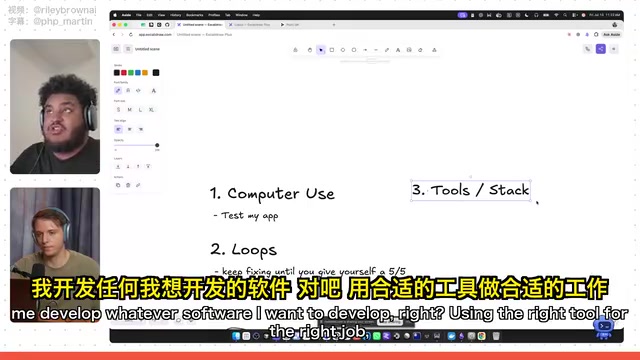
The concept most worth exploring from the conversation is Loop. Ross Mike breaks it down into three key elements: a clear prompt, a Feedback Engine, and explicit success criteria. Given these three components, an Agent can autonomously loop through execution, self-evaluate, and iterate until it reaches the defined quality threshold — without you explicitly telling it to "loop."
The Loop mechanism is fundamentally an engineering realization of the core ideas behind Reinforcement Learning (RL). In RL, an agent continuously approaches an optimal solution through the cycle of "action → feedback → policy update." The three elements Ross Mike describes — prompt, feedback engine, success criteria — map directly onto RL's "policy, reward function, and termination condition." This also explains why Loop performs more stably on programming tasks: code correctness has objective execution results as a reward signal, whereas the reward function for creative tasks must be constructed manually (which is essentially what "feeding the AI high-quality examples" achieves).

Riley, as a marketer and entrepreneur, offered a highly concrete marketing use case. They use Foreplay (an ad scraping API) to pull the highest-converting ads from competitors that have been running the longest, then have Codex generate 20 ad scripts, using those high-performing ads as the "Feedback Engine" to score each one. Codex continuously loops and optimizes until its generated scripts reach a level comparable to the benchmark ads.
The same approach applies to YouTube thumbnail optimization. Ross Mike highlighted a key insight: programming tasks have clear success/failure criteria, while design and copywriting are inherently ambiguous — this is the root cause of AI's inconsistent performance on creative work, because the reinforcement signals during training are themselves full of disagreement. The solution: feed the AI enough high-quality examples (such as 20 thumbnails you approve of) and let it evaluate and iteratively improve its own output accordingly.
Worth noting is that Riley also configured Codex with a tool that calls Gemini's video understanding capability. Google Gemini 1.5 Pro and later versions use a native multimodal architecture that can directly process video frame sequences, rather than relying on external OCR or caption extraction tools. Its million-token context window (1M context window) allows it to "watch" videos over an hour long in a single pass. This cross-model collaboration pattern of "best tool called on demand" signals that future Agent systems will no longer maintain loyalty to a single model provider, but will instead form a model-dispatch network organized by capability. This enables Codex to analyze videos submitted by UGC creators, benchmark them against top-performing content, and create an automated content quality-control loop.
Tool Stack Strategy: The "Building Block Economy" of the Agent Era
Tools (the tool stack) is another heavily emphasized dimension. Ross Mike candidly notes that engineers used to take pride in "building their own wheels," but in today's speed-first environment, choosing the right tools matters far more than implementing everything yourself. He mentions that when asked to "build a web app," an Agent will typically default to React; for 3D content, Blender's MCP is the go-to.
The MCP (Model Context Protocol) referenced throughout is an open protocol proposed by Anthropic in late 2024, designed to standardize communication between AI models and external tools. Analogous to how the USB interface unified hardware connection standards, MCP aims to provide a universal "plug spec" for Agents calling various tools (databases, APIs, local file systems, etc.). Support for MCP by tools like Blender MCP and Convex means Agents don't need to learn a separate invocation method for each tool, dramatically reducing integration costs. This is the technical prerequisite that makes the "building block economy" viable.
Vercel CEO Guillermo Rauch has offered a noteworthy observation: a building block economy is forming around Agents. Agents don't need to build everything from scratch — they call "pre-built blocks" constructed by other companies. Ross Mike particularly favors "Agent-friendly" frameworks like Convex and EVE — through semantically named files and directory structures (agent.ts, skills, tools, sandbox, channels), they let Agents immediately understand the system's architecture, making it much easier to replicate and extend.
He further argues that many companies' products in the future will essentially be "plugins, Markdown, and MCP." The competitive focus will shift to: can an Agent use it well with a single prompt? This also explains why developers remain indispensable — AI still cannot fully maintain these underlying tools on its own.
Multi-Threading: Keeping Agents Running at Peak Performance
Multiple Threads is the strategy Ross Mike considers most "counterintuitive." Many people are accustomed to pushing forward in a single conversation, enjoying a continuous flow state — but he offers two compelling counterarguments.

First, multi-threading forces you to break out independent features or tasks and handle them in parallel, improving overall efficiency. Second, and more critically: a new thread means a fresh context.
This judgment has solid technical grounding. The dominant Transformer architecture suffers from "context dilution": as conversation length increases, the model's attention weight on early critical information gets diluted by large amounts of intermediate content — commonly known as the "Lost in the Middle" problem (confirmed by Stanford research in 2023). Additionally, long contexts significantly increase inference latency and computational costs. Therefore, "new thread = fresh context" isn't just engineering wisdom — it's a direct countermeasure against the limitations of the model's attention mechanism. An Agent that has consumed 120,000 tokens of context will inevitably underperform a freshly started Agent.
Codex also has a useful hidden capability: it can spawn multiple sub-threads from a single thread in bulk. Ross Mike shared a real example — after completing a feature, he directly told Codex to "open a thread for each feature and test them one by one using computer use," generating 10 parallel threads at once while he went to spend time with his family, leaving the work entirely to Codex. You can also have Codex summarize the progress of all threads from the day, producing a one-page summary with jump links — especially useful for knowledge work in marketing, operations, and similar fields.
Sites and the Built-in Browser: Infrastructure for the AI OS
With this update, OpenAI opened the Sites feature — previously limited to Teams users — to all users. The term "Vibe Coding" was coined by OpenAI co-founder Andrej Karpathy in early 2025 to describe a programming style where natural language is the primary input and almost no hand-written code is required — the developer acts more like a "director with ideas," driving AI to handle the actual coding through conversation. The essential difference from traditional low-code/no-code platforms (like Webflow or Bubble) is that those still require users to understand the platform's own operating logic, whereas Vibe Coding's interaction layer is natural human language, making the learning curve theoretically approach zero. You can vibe code a website directly in Codex using @sites, host it on the OpenAI platform with one click and share it — similar to the Replit or Lovable experience — with support for later migration to Vercel. This effectively turns Codex into a complete vibe coding platform, significantly lowering the barrier for non-technical users.
Even more noteworthy is the built-in browser upgrade — it now supports multiple tabs, functioning as a full-featured browser. Combined with OpenAI sunsetting the standalone browser Atlas, the strategic intent is clear: no longer building an isolated browser, but instead deeply embedding browsing capability into Codex as the central hub.

From this, the two hosts propose a key conceptual distinction: the Super App (i.e., Codex itself) can be seen as the vessel for an AI operating system, while Agent Native Apps / Mini Apps are "Agent-first" mini-applications — ones users almost never open proactively, but that get invoked when an Agent needs them. An example would be an email mini-app where AI drafts the message and the user only needs to confirm sending or add feedback. Ross Mike believes a new paradigm for computing is beginning to take shape.
The Real Gap Is in Education, Not Tooling
The conversation's closing thoughts are particularly illuminating. Ross Mike notes that the best coding models tend to also be the best "everything models," which has led him to think about larger-scope projects while deliberately sharpening the skills models struggle with — design and writing. He emphasizes that as model capabilities improve, people will increasingly be able to tell "which websites were AI-generated," making aesthetic sensitivity to color, typography, and spacing — along with the ability to clearly articulate needs — the core human competitive advantage.
Riley focuses on using Codex as an operating system for marketing and operations, continuing to explore this "underexplored" domain. Both agree: the biggest opportunity in today's market isn't a tooling gap — it's an education gap. Short-video platforms are flooded with low-quality and even misleading content, and those who can be a "voice of reason" — genuinely teaching people to properly configure loops, automations, and tool chains — will capture enormous long-term value.
As Ross Mike put it: "Most products today are essentially Markdown files. Don't spend your time writing Markdown — go build something genuinely useful." With the most powerful models now within everyone's reach, what limits most people is no longer technology, but imagination and the ability to express it.
Key Takeaways
Related articles

Felix Rieseberg Personal Homepage
Felix Rieseberg's personal homepage sparks attention on Hacker News. This article covers the Slack engineer's technical background, the rise and fall of nativefier, and the value of a developer homepage as a tech calling card.

@ai-sdk/vue 3.0.306 Patch Release Syncs with [email protected] Update
@ai-sdk/vue 3.0.306 released, synced with [email protected]. A routine patch release for the Vercel AI SDK ecosystem with no public API changes; the Vue adapter layer stays version-aligned with the core package.

Gemini 4 Argon API Launches: The Era of Million-Token Output Begins
Google launches Gemini 4 Argon with sparse MoE architecture, up to 1M output tokens, and a 68.90% Vals Index score, available across API, AI Studio, and the Gemini app.