OpenAI Releases GPT-6 Sol and Luna: Workhorse Models With Another 50% Price Cut

OpenAI's GPT-6 Sol and Luna cut API prices 50%, with Luna delivering near-flagship performance at just $0.10/M tokens.
OpenAI launched GPT-6 Sol and GPT-6 Luna on the same day amid an intense "model week," with both models receiving permanent 50% API price cuts. Luna, priced at just $0.10 per million input tokens, is positioned as the ultimate workhorse capable of handling 90–95% of everyday tasks. Benchmarks show Luna Max scoring 66.6% on Frontier Code agentic tasks at only $0.22 per task — within 7 percentage points of flagship Astra — though it lags significantly on OS World's complex GUI interactions. The simultaneous price cuts from both OpenAI and Anthropic reflect a shared "pacing the Frontier" strategy: anchor with expensive flagships, then roll out efficient distilled versions to reach broader audiences.
OpenAI launched two new models on the same day — GPT-6 Sol and GPT-6 Luna — a day that also saw Anthropic release Opus 5.5, with Grok having dropped version 4.7 the day before. Three major players making their moves in rapid succession made this a true "model week." Based on analysis from the YouTube channel Forward Future, this article breaks down the pricing, performance benchmarks, and industry trends behind these two new models.
Another 50% Price Drop: Luna Is Priced Almost Unbelievably Low
From GPT-5.6 Sol to GPT-6 Sol, pricing dropped 50%, landing at $2 per million input tokens and $10 per million output tokens — and this is the second-tier model, just below the absolute flagship Astra.
Luna's price cut is even more aggressive. GPT-5.6 Luna had already seen an 80% price reduction, making it "one of the most worthwhile models on the planet" — extremely fast, extremely cheap, yet still highly capable. Now GPT-6 Luna cuts that price by another 50%, coming in at just $0.10 per million input tokens and $0.50 per million output tokens.
The content creator called this pricing "unbelievable," noting that Luna can handle 90–95% of tasks you throw at it, making it a true workhorse model. OpenAI has also confirmed that the API price cuts are permanent, which will make both models viable in a wide range of new use cases while giving subscription users more durable token allowances.
Benchmarks: Sol Closes In on Astra, Luna Wins the Price-Performance Crown
In Automation Bench testing (Y-axis = score, higher is better; X-axis = cost, lower is better), GPT-5.6 at max effort scored 28.8, while GPT-6 Sol at the extra high setting claimed the top spot with 33%. That said, the creator emphasizes that Astra remains OpenAI's strongest model — Sol is simply a cheaper alternative. If you need the absolute best answer, you'll still need to pay for Astra.
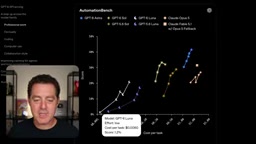
Luna scores the lowest of the three, but at a fraction of the cost. Even at the low effort setting its score isn't high, but the cost is minimal; at max effort it achieves over 20%, with each task costing under $0.05.
The Frontier Code benchmark is where things get interesting. Luna performs impressively: Luna Max costs $0.11 per task and is comparable to Sol Medium at $0.80 per task; Sol in turn rivals Astra Low at $1.70 per task. In what the creator considers the benchmark that best reflects agentic coding ability, GPT-6 Luna Max scored 66.6% at just $0.22 per task — described as "phenomenal."
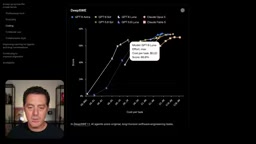
However, in the OS World (computer operation) benchmark, Luna falls noticeably behind: scoring 53% versus Astra's 73%, revealing that cheaper models still have gaps when it comes to complex environment interaction.
Automation Bench is a benchmark designed to evaluate AI models' end-to-end task completion in automation scenarios, covering typical workflows like web navigation, form filling, and information retrieval. The "effort levels" (low / medium / high / extra high) correspond to the amount of compute the model invests during inference — higher levels mean more reasoning steps and better output quality, but also higher token consumption and cost per call. Frontier Code focuses on real-world software engineering tasks including code generation, debugging, and multi-file modifications, and is widely considered the gold standard for measuring agentic coding capability. OS World goes further, requiring models to directly manipulate a GUI within a simulated desktop environment to complete tasks like installing software and managing files — significantly harder than pure code generation. Even when cheaper models perform well on the first two benchmarks, their performance gap on OS World reveals their limitations in multimodal perception and long-horizon planning.
Three Giants, One Day: Tiny Performance Gap, Massive Price Differences
The creator had Astra generate a chart placing GPT-6 Sol, Luna, and Opus 5.5 in the same comparison framework on the same day. On Frontier Code, the performance gap between the three models is only about 6–7 percentage points, yet their prices differ by several multiples — ranging from $0.10 to $2 to $4.
This reinforces an increasingly clear industry narrative: getting "the absolute best answer" is expensive, but most real-world tasks don't require flagship-level performance — they can be efficiently handled by workhorse models at a fraction of the cost.
Why Did Both Companies Cut Prices on the Same Day? The Inevitable Result of "Pacing the Frontier"
It's worth noting that both Anthropic and OpenAI cut prices on new models on the same day. The creator's interpretation: when these companies talk about "pacing the Frontier," what you get is efficiency, speed, and lower prices — not raw compute and maximum intelligence.
He further notes that this doesn't mean companies aren't internally developing more powerful models — it's about what they choose to release externally. The typical release cadence is: first launch an expensive foundational flagship (like Astra or Fable), then over the following weeks or months, gradually release more efficient, cheaper workhorse versions — which may be architecturally similar to the flagship or even distilled from it. Sol and Luna's arrival was therefore entirely expected.
"Pacing the Frontier" is a concept from AI safety and product strategy, referring to leading labs deliberately releasing capabilities to the public at a controlled pace rather than revealing their strongest results all at once. The underlying logic: a lab's internal research often runs far ahead of its public release timeline, but safety evaluations, market timing, and competitive positioning lead to staged product launches. Flagship models (like Astra and Fable) serve as capability anchors and brand benchmarks; the efficient distilled versions that follow (like Sol and Luna) target broader real-world deployment. Model Distillation is the key technology enabling this path: training a smaller student model on the outputs of a larger teacher model, allowing it to retain as much of the flagship's reasoning capability as possible while dramatically reducing parameter count and inference cost. Sol and Luna are very likely products of Astra's distillation chain, which explains how they achieve close scores on most benchmarks at less than one-tenth the cost of the flagship.
Availability and Wrap-Up
GPT-6 Sol and GPT-6 Luna are available starting today in ChatGPT Work and Codex for all Plus, Pro, Business, Enterprise, and EDU users; Free and Go users can access GPT-6 Luna through the desktop app. OpenAI says both models show significant improvements across capabilities, with writing quality described as a "night and day" difference you'll notice immediately.

Taken together, GPT-6 Sol and Luna represent a key direction in today's large model competition: delivering practical intelligence that approaches flagship performance at a much lower price. For the vast majority of developers and enterprise users, these workhorse models may be far more compelling than expensive flagships.
Related articles

Workbuddy for Absolute Beginners: How a Desktop AI Agent Fits Into Real Workflows
A beginner's guide to the Workbuddy desktop AI agent: installation, claiming credits, file management, and building automated workflows—compared with CodeX for fit and cost, helping professionals shift from AI question-askers to AI managers.

OpenAI's New Agent Stack: Computer Use, Decisions API, and Ultra-Fast Workflows
OpenAI Dev Day unveiled a new agent stack: Computer Use outperforms humans, Decisions API delivers ultra-low-latency classification via Luna, Agents API opens the same Computer Use capabilities, and GPT-6.1 Sol costs only one-seventh of Astra. Core updates, benchmark data, and developer insights.

Liang Wenfeng Open-Sources DeepInfo Inference Framework, Takes On U.S. Ban
DeepSeek open-sources its DeepInfo inference framework after its models, featuring GPU/CPU cross-pipelining, small-model prediction with large-model verification, and full Huawei Ascend and NVIDIA chip support—facing the U.S. federal ban head-on. This article analyzes its significance for AI deployment and open-source strategy.