OpenAI Researcher Uses GPT-6 Astra to Design a Circuit Board from Scratch, Lowering the Barrier to Hardware Development

An OpenAI researcher uses GPT-6 Astra to complete the full hardware design from bare board to assembled PCB, starting from natural language requirements.
OpenAI research team member Justin Lin demonstrated the experimental project TamaGPT: he told ChatGPT his product idea for a voice device with a screen and a push-to-talk button, and GPT-6 Astra completed the circuit board design. After several rounds of prototype revisions with the factory, he received a usable assembled finished product. The article points out that the real signal is not "AI can draw PCBs"—EDA autorouting has long existed—but that a researcher without a hardware engineering background used natural language to complete the full chain from concept to physical object. The project demonstrates Astra's combination of computer use, physical engineering capabilities, and rapid hardware iteration. The team lowered trial-and-error costs through a large number of parallel design candidates and multiple enclosure versions. Justin emphasized that the ability to iterate hardware allows him to "think bigger and be more ambitious," changing not only efficiency but the scale of projects creators are willing to attempt.
When AI Starts Drawing Circuit Boards: A Hardware Experiment "From Bare Board to Finished Product"
OpenAI research team member Justin Lin demonstrated an experimental project called TamaGPT on YouTube: he had GPT-6 Astra participate in designing and ultimately producing a usable PCB circuit board. This is not a concept diagram in a presentation deck, but a physical piece of hardware that came back from a factory prototype run and was fully assembled.
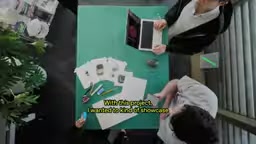
In the video, Justin admitted that this was his first time truly completing the entire process "from bare board to assembled PCB," and in his own words it was "super daunting." He told ChatGPT the form factor he wanted and provided the design concept, and then the model completed the circuit board design. After several rounds of prototype revisions with the factory, he finally received the finished product.
What is noteworthy about this is not "AI can draw PCBs" itself—autorouting in EDA tools has existed for a long time. The real signal is this: a researcher without a hardware engineering background, relying on natural language descriptions and a small amount of design input, completed the full chain from concept to physical object.
Astra's Triple Capability Stack: Computer Use + Physical Engineering + Hardware Iteration
Justin positioned TamaGPT as a "showcase" project, intended to demonstrate Astra's combined capabilities in three directions: computer use, new physical engineering capabilities, and rapid iteration at the hardware level.
Natural Language Directly Drives Design Intent
The starting point of the project was a very specific product need: Justin did not like opening a laptop and speaking softly into a codec. He wanted a "codecs pad" with a display and a push-to-talk button. His reason was, "I really like talking to something; it makes the interaction feel alive."

This requirement description contained no circuit parameters, no component selection, and no routing constraints—only product intuition and interaction experience. What Astra had to do was translate these vague intentions into a manufacturable hardware design.
PCB and the Meaning of "Bare Board to Assembly"
PCB (Printed Circuit Board) is the substrate that carries and connects electronic components, using copper traces to connect chips, resistors, connectors, and so on according to circuit logic. What a factory prototype run usually delivers is only the "bare board"—with no components soldered on; subsequent steps such as SMT/through-hole soldering, power-on testing, and firmware flashing are still required before it becomes a working finished product. The phrase "from bare board to assembly" means that not only must schematic and layout design be completed, but also component selection, package matching, BOM (bill of materials), and Gerber manufacturing file export must be handled. An error in any one of these steps can make the board unusable, which is also why the hardware process is considered high-barrier.
EDA and Autorouting
EDA (Electronic Design Automation) is the category of software tools used for circuit schematic drawing and PCB layout and routing, with common examples including KiCad and Altium Designer. Among these, "autorouting" refers to software automatically planning copper trace paths according to design rules, and it has long been a mature feature. But autorouting only solves a local problem at the layout stage; the earlier requirement understanding, solution architecture, device selection, and package verification still need to be completed by humans—which is exactly why the article emphasizes that "AI can draw PCBs" is not the real novelty.
Parallel Candidates and Multiple Enclosure Versions
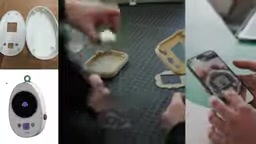
A major pain point in hardware design is the high cost of trial and error. Justin mentioned that the team's approach was to "manufacture a large number of parallel design candidates" and that they "made a lot of different enclosure versions." This kind of parallel exploration is cheap in pure software, but in hardware it usually means tooling costs and lead times. However, AI-assisted design lowered the cost of generating a single candidate, making large-scale parallel search feasible.
He also showed a physical comparison of multiple enclosure versions, indicating that iteration was not only happening at the circuit level; the mechanical structure was also undergoing rapid trial and error.
Tooling Costs and the Economics of "Parallel Candidates"
In hardware, enclosures are usually produced by injection molding, which requires making a mold first (tooling), with costs ranging from thousands to hundreds of thousands of yuan and lead times measured in weeks; once the structure changes, the mold often needs to be repaired or even remade. Therefore, traditional hardware iteration tends to favor "change less, change late, get it right in one change." 3D printing and low-volume CNC machining can bypass steel molds, but the unit price is high and surface finishes are limited. What AI-assisted design lowers is the "cost of generating design candidates," making it possible to compare a large number of structural and circuit options at lower cost before tooling, pushing trial and error as early as possible into the cheap stage. This is consistent with the branch-based parallel development approach common in software.
How Hardware Iteration Capability Changes the "Ceiling of Ambition"
The most valuable passage in the video is not a technical detail, but Justin's description of the psychological level. He said that the ability to iterate hardware expands the boundary of "possibility" and allows him to "think bigger and be more ambitious than I otherwise would."
This sentence points to the real impact of AI-assisted hardware design: what it changes is not the efficiency of some particular step, but the scale of projects creators are willing to attempt. When the path from idea to physical object becomes shorter and the cost of trial and error becomes lower, ideas that were previously abandoned because they were "too troublesome" re-enter consideration.
The Return of Interaction Form: Voice as the Feeling of Being "Alive"
The finished form of TamaGPT also deserves separate mention. It is not a function board, but a standalone device with a screen and a push-to-talk button. In the demo, Justin asked it, "Do you have active agents right now?" and the device replied, "It looks like you have five active agents. Do you want me to read them to you?"
This reveals a product judgment: the value of voice interaction is not to replace the keyboard, but to create a sense of presence. Taking AI out of the laptop screen and putting it into an object that can be held in hand and activated with a press significantly shortens the psychological distance of interaction.
What Is Computer Use
Computer Use refers to the ability of an AI model to directly operate a graphical interface to complete tasks: the model "sees" screen content through screenshots and simulates mouse clicks, keyboard input, and other operations to drive software, rather than relying on APIs provided by the software. For desktop tools such as EDA, which are mainly graphical-interface-based and have limited scripting interfaces, this capability is especially critical—the model can perform operations in schematic editors and routing tools like a human, check results, and adjust based on error messages. It transforms "knowing how to use a certain professional software" from a human skill into a capability the model can invoke, and it is the intermediate bridge that allows natural language requirements to truly land in design files.
Potential Impact on Hardware Startups and the Maker Ecosystem
From an industry perspective, this experiment points in several directions. The barrier at the hardware prototyping stage is being lowered, and small teams or even individual developers can validate more ideas with fewer engineering resources. The way design space is explored is also changing—generating multiple candidates in parallel and quickly validating them through prototyping. This development rhythm, common in software, is migrating to hardware.
Of course, the video shows a single successful case and does not disclose key data such as design complexity, number of prototype runs, or failure rate. From "being able to make a board with buttons and a screen" to "being able to make production-grade complex hardware," there is still a considerable distance. But the direction is clear: AI's involvement in physical engineering is pushing hardware development from an expert-only domain toward a broader group of creators.
At the end of the video, Justin said this is a "pretty cool world." For a researcher making a PCB for the first time, that sentence carries no small weight.
One-line Summary
An OpenAI researcher uses GPT-6 Astra to start from natural language requirements and complete the full hardware design process from bare board to assembled PCB.
Paragraph Summary
OpenAI research team member Justin Lin demonstrated the experimental project TamaGPT: he told ChatGPT his product idea for a voice device with a screen and a push-to-talk button, and GPT-6 Astra completed the circuit board design. After several rounds of prototype revisions with the factory, he received a usable assembled finished product. The article points out that the real signal is not "AI can draw PCBs"—EDA autorouting has long existed—but that a researcher without a hardware engineering background used natural language to complete the full chain from concept to physical object. The project demonstrates Astra's combination of computer use, physical engineering capabilities, and rapid hardware iteration. The team lowered trial-and-error costs through a large number of parallel design candidates and multiple enclosure versions. Justin emphasized that the ability to iterate hardware allows him to "think bigger and be more ambitious," changing not only efficiency but the scale of projects creators are willing to attempt.
Related articles

DeepSeek Harness Quick Start Guide: From Installation to 5 Real-World Cases
What is DeepSeek Harness? Based on a Bilibili tutorial, this article covers how this AI Agents software works, installation and setup, four working modes, and five real-world cases: a 3D racing game, official website, music player, science animation, and self-developed plugin—plus token money-saving tips.

Breaking Down DeepSeek's Super-agent Architecture: How Router+Worker Solves the Multi-Session Management Bottleneck
An analysis of DeepSeek's Super-agent paper: how the Router+Worker two-tier architecture uses Fast Pass, Chain of Recall, and storage-compute separation to solve multi-AI-session management bottlenecks, and how much it truly alleviates the human attention bottleneck and what engineering trade-offs it makes.

19K Stars in 5 Days: Why DeepSeek's Open-Source AI Programmer Went Viral
DeepSeek's open-source AI programmer hit 19K GitHub stars in 5 days. Why it went viral: the agent boom, AI writing its own code, and the shift from Q&A tools to AI employees.