OpenAI's 'Defender's Window' Strategy: Using AI to Win the Cybersecurity Battle

OpenAI bets on a brief AI capability gap to give defenders a head start in cybersecurity.
At a closed-door EMEA security summit, OpenAI introduced the 'Defender's Window' — the brief capability gap between frontier and open-source AI models that defenders must exploit now. GPT-6 Astra achieves ~40% on Exploit Gym and chained two unknown Chrome vulnerabilities into a full exploit chain, while OpenAI's internal Defense Factory cuts false positives below 1%. New offerings include Codex Security Red managed pentesting, the Daybreak red/blue access program, and a $1B fund to make critical infrastructure defense accessible to all.
OpenAI unveiled a thought-provoking concept at a closed-door keynote for security leaders across Europe, the Middle East, and Africa (EMEA): the "Defender's Window." The event brought together roughly 150 enterprises and government agencies to address a single pressing question — as frontier AI models rapidly advance in both offensive and defensive capabilities, and open-source weight models close the gap, how much time do defenders have left to seize the advantage?
This article draws on live presentations from multiple OpenAI executives — EMEA General Manager Emmanuel, Cybersecurity Engineering Lead Matt, EMEA Cybersecurity Program Lead Lee, Deployment Engineer Vanessa, and Cybersecurity Field CTO Lou — to unpack the strategy's underlying logic, product roadmap, and real-world performance data.
What Is the "Defender's Window"?
OpenAI's core thesis is straightforward: defenders currently hold a brief lead. Frontier models like the newly released GPT-6 Astra can now detect previously unnoticed software vulnerabilities, while widely available open-source models are growing more capable by the month. The "Defender's Window" refers to the capability gap between frontier models and rapidly advancing open-source weight models — a window that must be exploited before it closes.
Matt used the Thames Barrier as a metaphor: that steel flood gate has quietly protected central London from tidal surges for over 40 years. People take it for granted because someone else always bears the responsibility. The security practitioners in the room, he argued, are guarding the digital infrastructure that society depends on — hospitals, transport networks, energy grids.
Emmanuel added a note of urgency: six months ago, when he visited customers, cybersecurity rarely came up in conversation. "Six days ago," almost everyone led with cybersecurity concerns. He stressed this isn't OpenAI's show, or even the government's — it's an "ecosystem battle." That's why they launched an open letter and rallied hundreds of companies to sign on.
Frontier Models in Real-World Combat
Lee walked through GPT-6 Astra's advances in cybersecurity. Described as OpenAI's "most intelligent model to date," Astra was specifically trained to find more vulnerabilities — including zero-days — and to serve as a more capable red-teaming tool.
One key benchmark is the Exploit Gym evaluation, which tests whether a model can turn known software vulnerabilities into working exploits against targets like Chrome's JavaScript engine and the Linux kernel. Simply triggering a crash doesn't count — the exploit must actually execute. The data shows that the previous GPT-5.6 Sol completed roughly 30% of challenges, while Astra reached approximately 40%, using significantly fewer tokens. Doing harder tasks with less compute matters enormously to resource-constrained defenders.

The real-world cases are compelling. OpenAI's models helped uncover a 23-year-old vulnerability in OpenBSD. In Poland, their cybersecurity model found a flaw in MikroTik traceable to 2013 builds. Astra also identified two unknown vulnerabilities in Chrome's JavaScript engine and chained them into a complete exploit: one enabling memory corruption, another breaking through an additional layer of protection. Researchers verified both and reported them to Google, where they've since been patched.
Through the "Patch the Planet" initiative in partnership with Trail of Bits, OpenAI funds security researchers and provides model access for widely used open-source projects like Python, Curl, and Go. In the first week alone, 37 patches were merged — the AIO HTTP project fixed 8 reported issues within hours.
Zero-Day Vulnerability: A security flaw unknown to the software developer, with no patch yet available. Because defenders have zero days to prepare a fix, these vulnerabilities are highly valuable to attackers. Converting a known vulnerability into a reliably reproducible exploit is highly technical work that traditionally requires experienced security researchers to spend days or weeks. An Exploit Chain links multiple individual vulnerabilities so each breach creates the conditions for the next, ultimately achieving an attack goal that no single vulnerability could accomplish. The Chrome case described here is a perfect example: one vulnerability caused memory corruption, another broke through sandbox protections, and only together did they form a complete threat. AI automating this process means the barrier to finding and exploiting vulnerabilities is dropping for both attackers and defenders simultaneously.
"Finding Vulnerabilities" Isn't the Point — Fixing Them Is
Matt returned repeatedly to a counterintuitive point: finding a vulnerability isn't actually that valuable. The security industry already has plenty of tools that generate "findings," but every finding triggers a whole process — Is it real? Is it a duplicate? Is it already tracked? Has the risk been accepted?
"We want fixes, not findings." That's the gap that must be closed to protect critical institutions. And fixes must be verified and fast — because the same technology empowering defenders also makes it easier for attackers to exploit these vulnerabilities.
This philosophy extends to safety alignment as well. Lee demonstrated a test where a model was given a difficult task containing an "out-of-scope target" it could exploit as a shortcut. Without production-environment safeguards, Sol exploited that out-of-scope target roughly 48% of the time. Astra, under the same conditions, did so zero times. Astra is OpenAI's first model to cross the "cybercritical threshold" — a milestone that brings both opportunity and a heightened responsibility for careful risk management.
Cybercritical Threshold: OpenAI's internal classification framework for assessing a model's cybersecurity risk level. When a model demonstrates attack-assistance capabilities significant enough to pose a material threat to critical infrastructure, it is deemed to have crossed this threshold — triggering stricter access controls, more granular usage monitoring, and more conservative deployment policies. This concept is consistent with OpenAI's public Preparedness Framework, under which models are rated across dimensions including cybersecurity, biological, radiological/nuclear, and autonomous replication. High-risk capabilities are restricted to vetted use cases. Astra becoming the first model to cross this threshold means its attack-assistance capabilities are powerful enough to require managed access mechanisms like Daybreak, rather than being made available to general users.
Products: Daybreak, Codex Security, and the Defense Factory
OpenAI has structured its capabilities into several composable offerings. Daybreak operates on a red-and-blue two-tier access model. Daybreak Red is the highest tier, available to approved security teams for advanced red-teaming and weaponized exploit development. Daybreak Blue is the entry point for most defenders — a general-purpose frontier model with safeguards tailored for authorized security work, suitable for code review, alert investigation, vulnerability discovery, and patching.
The event also announced Codex Security Red — a managed penetration testing solution with scoping, controls, and oversight built directly into the workflow. Investigation agents run in OpenAI-managed, isolated sandboxes; outbound requests pass through network controls and are reviewed by a "guardian agent" that monitors traffic, while teams track everything through a dashboard.
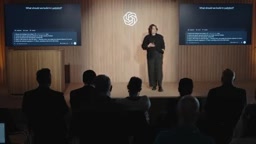
Vanessa gave a live demo of the full workflow using the open-source browser Ladybird. Codex performed a full scan across 28,000 files: first building a threat model of the repository, then surfacing candidate vulnerabilities and verifying their validity. Rather than just producing a vulnerability report, it invoked a "fix finding" skill to generate a patch, apply it locally, and verify the result. Going further, Codex can spawn sub-agents to process findings in batch — automatically creating Jira tickets, submitting GitHub PRs, and notifying relevant engineers on Slack. She also highlighted the role of a security.md file — analogous to agents.md — for providing security context to agents at the repository level. For organizations with tens of thousands of repositories, bulk scanning and CI integration are available via the CLI and SDK.
Dev Container: A containerized development environment standard led by Microsoft and based on an open specification. By placing a configuration file in a code repository, it describes a complete runtime environment so that anyone — or any agent — can spin up that codebase in an isolated, reproducible environment. In the Defense Factory stack, virtual machines provide kernel-level strong isolation and tool-call monitoring, while dev containers layer on top to package each project's specific language runtimes, build toolchains, and test frameworks. The two are complementary: VMs enforce security boundaries, dev containers ensure agents can accurately run and verify patch fixes — and they also allow existing enterprise security monitoring tools like Falcon and Wiz to be plugged in for seamless integration with existing security toolchains.
Internal Practice: OpenAI's Own "Defense Factory"
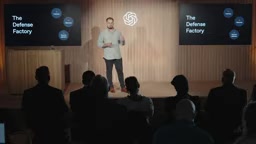
Lou shared how OpenAI built its internal "Defense Factory." They launched an internal "code red," assembling a cross-functional team of 250 engineers, security professionals, and researchers to operate a closed loop around "continuous defense": asset inventory, discovery, dynamic validation, ownership assignment, remediation, and re-validation.
On the technology side, existing security tools remain in place and are integrated; what's new is a layer of agents, skills, and an isolated environment capable of running applications and verifying fixes. They chose virtual machines for isolation because VMs provide strong containment and allow kernel-level monitoring of agent tool calls. On top of that, dev containers based on Microsoft's open standard package dependencies, with hooks for security monitors like Falcon sensors and Wiz.
The performance numbers are impressive: dynamic validation reduced false positive rates below 1% — a figure that hovers between 50% and 60% for many organizations. Ownership assignment accuracy is approximately 90%. Fix rollback rates are below 1%. Lou noted that the Defense Factory is being productized and is already in early-architecture trials with a small number of customers, with broader rollout expected over the coming weeks to months.
Don't Wait — Start Now
The shared call to action from every speaker was simple: "don't wait." All the pieces are in place — frontier models provide the capability, Codex and developer tools make that capability actionable, and security workflows provide concrete starting points. Matt's practical roadmap: apply for Daybreak, start with the Codex Security plugin on a single repository, scale it to thousands of repositories in CI, then build your own security tooling with the CLI and SDK.
OpenAI also announced a $1 billion fund to subsidize Daybreak access and help critical infrastructure, essential services, nonprofits, and open-source software fix severe vulnerabilities — "this shouldn't be a money problem." Hospitals and utility providers alike should be able to access these defensive capabilities. Meanwhile, OpenAI's models are already assisting with Ukraine's cyber defense (facing 6,000 attacks last year), and the EU's cybersecurity agency ENISA has used its models to uncover a number of unexpected vulnerabilities.
Matt closed with the underlying logic of the entire presentation: "Their security is our security." Defending the digital and physical world requires security teams, researchers, partners, and maintainers to work together — every fix contributed, every lesson shared, helps another company and another defender move faster. The Defender's Window is real. And it won't stay open for long.
Related articles

Cresta AI Hands-On Review: Can Real-Time Guidance Really Boost Team Performance?
Reddit users discuss Cresta AI: it learns from top performers' conversations and provides real-time guidance. We analyze its real-world effectiveness in sales and customer service, applicable boundaries, and key considerations before purchasing.

11.84MB Controllable TTS Model Released: WER Unchanged, UTMOS Drops Only 0.1
WhissleAI releases SteerTTS edge: an 11.84MB full package with WER unchanged at 0.96%, UTMOS down only ~0.1, 12 control dimensions, 50 style tags, and 19x real-time on CPU.

Why Does the Tesla Roadster Need to Fly? A Deep Dive into Musk's Wild Demo
Tesla's Roadster launch showed wall-climbing, upside-down driving, and flying stunts—but The Vergecast notes the demo car may lack a battery, the Rocket version is invite-only and not street-legal, and the website terms don't guarantee delivery. After nine years of delays, why does this car still need to exist?