OpenAI's Greg Brockman on Compute, Codex, and the AGI Race: We're 80% of the Way There

Greg Brockman shares OpenAI's vision on compute wars, Codex breakthroughs, and being 80% of the way to AGI.
At Sequoia's AI Ascent 2026, OpenAI co-founder Greg Brockman candidly discussed the company's compute-centric business model, the ongoing validity of Scaling Laws, and his bold claim that AGI is 80% complete. He shared how Codex is transforming software engineering, introduced the Chronacle context-aware tool, and addressed AI safety paradoxes—while raising urgent questions about organizational change, human attention as the scarcest resource, and the true costs of trading privacy for efficiency.
OpenAI's Greg Brockman on Compute, Codex, and the AGI Race: We're 80% of the Way There
When a company's business model can be reduced to "buy compute, sell it at a markup," are we witnessing a technological revolution or the largest compute arms race in human history? At Sequoia's AI Ascent 2026 conference, OpenAI co-founder and president Greg Brockman gave his answer—candid, bold, and deeply controversial.
From Stripe to OpenAI: A Man Who Keeps Betting on the Right Wave
Greg Brockman's resume reads like a textbook case of "repeatedly betting on the defining wave of each era" in Silicon Valley. He was the 4th employee at Stripe, which now processes 1.6% of global GDP. As co-founder of OpenAI, he's been called the "chief builder," leading the team that pushed ChatGPT to nearly 1 billion weekly active users.
What's worth noting: it took Stripe over a decade to process 1.6% of global GDP, while OpenAI reached nearly 1 billion weekly actives in just over two years. This growth rate is both exhilarating and unsettling—when a product penetrates human life at this speed, do we have enough time to understand its full consequences? The title "chief builder" sounds romantic, but the more powerful the thing being built, the heavier the builder's responsibility.
The Compute War: OpenAI's Business Essence and Insatiable Hunger for Compute
Greg was remarkably candid about OpenAI's business model in the conversation: buy or lease compute, then resell it at a markup. The demand for intelligence is infinite, and as long as margins are positive, they should keep scaling.
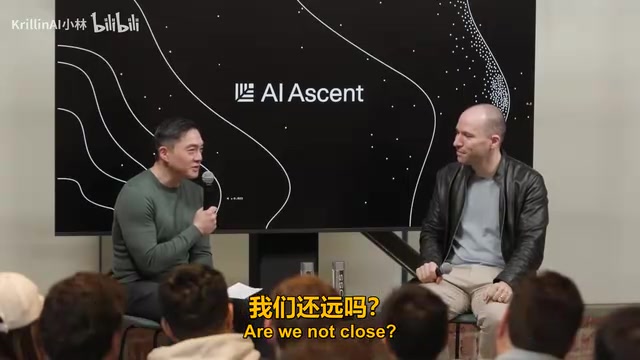
But this frankness actually exposes a deeper question: isn't this just a compute middleman? AWS's Matt Garman said 2026 GPU compute availability is "approximately zero," and Greg himself admitted that when ChatGPT launched, he was already demanding they buy "all of" the compute—and no matter how fast they expanded, they couldn't keep up with demand.
"The demand for intelligence is infinite" sounds like an economic axiom, but think deeper: how is this fundamentally different from an oil company saying "the demand for energy is infinite"? The real question is: when compute becomes the new oil, who decides how it's allocated? The winner-take-all dynamics of this arms race may be more brutal than we imagine.
Have Scaling Laws Actually Hit a Wall?
Greg compared Scaling Laws to fundamental laws of physics—"deep, beautiful scientific truths." He emphasized that the core ideas behind neural networks date back to the 1940s, but investing more compute continues to improve model capabilities with no ceiling in sight.
This is a comparison bold to the point of hubris. Physical laws have withstood centuries of testing, while Scaling Laws are merely empirical observations from the past few years. The claim of "no ceiling" sounds more like a declaration of faith than a scientific conclusion—not knowing where the ceiling is doesn't mean it doesn't exist.
That said, to be fair, the architectural innovations Greg mentioned are genuinely noteworthy. OpenAI's leap from LSTMs to Transformers proves that breakthroughs come not just from brute-force compute stacking, but also from elegant engineering intuition. He also revealed an industry secret: small changes in data formatting can produce enormous effects. This statement shows that our understanding of these models is still full of alchemical empiricism. The Transformer has evolved far beyond what was described in the 2018 paper, continuing to advance.
AGI at 80%: A Masterfully Crafted Number
Greg offered a striking assessment: we're approximately 80% of the way to AGI.
The number 80% is suspiciously precise. It's high enough to maintain investor and public excitement, yet leaves 20% as a buffer for future difficulties and delays. But anyone who's done project management knows that the last 20% often consumes 80% of the time—this is the famous "90-90 rule."
He gave a genuinely stunning example: a systems engineer on GPT-5.3 handed their design document to the model, and overnight the model autonomously completed the implementation, debugging, performance analysis, and optimization iterations. When polled during the session, virtually no one in the audience believed they could write better code than GPT-5.4.
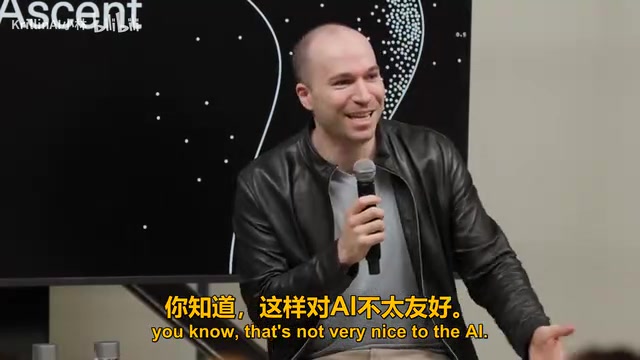
But the chasm between "surpassing most human engineers" and "achieving AGI" might be wider than the distance from 0 to 80%. More thought-provoking: when virtually no one in the room believes they write better code than AI, are the people in that room celebrating technological progress, or witnessing the collapse of their own professional value?
Advice for Founders: Go All In, But Don't Ignore the Cost
Greg's advice for founders is blunt: lean in, go all in. He revealed that in December alone, AI coding tools went from writing 20% of code to writing 80%. Codex is transitioning from a tool exclusively for software engineers to a universal tool for all knowledge workers.
He also introduced the newly released Chronacle tool—which can observe a user's computer operations and form memories, enabling context-aware assistance. Greg's advice: "You shouldn't exclude AI from meetings—it needs information to help you."
Behind this advice lies an overlooked survivorship bias: among founders who go all-in on AI tools, the successes get written up extensively while the failures fade silently. And Chronacle's ability to "observe user computer operations and form memories"—in another context, this sounds exactly like a surveillance software product description. When AI needs all your context to help you, you're essentially trading privacy for efficiency. The true cost of this trade may take many years to calculate.
How OpenAI Uses Codex Internally: Being Their Own Guinea Pig
OpenAI adheres to one internal principle: humans are responsible for all merged code. They're rolling out AI tool adoption vertical by vertical (finance, sales, IT), with small dedicated teams embedded deeply in each domain, collaborating with domain experts. Only after internal validation matures do they externalize and promote to customers.
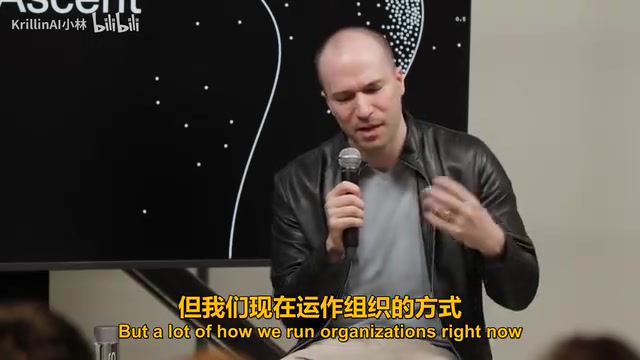
"Humans are responsible for all merged code" sounds responsible, but it's fundamentally a transitional stopgap. When AI writes 95% of the code and a human just clicks "approve," how much substance does this "responsibility" actually carry? And "finding partner customers willing to be AI pioneers" translates to: we need external partners to help validate our product's performance in real-world scenarios.
Organizational Transformation in the AI Era: Building Is No Longer the Bottleneck
This may be the most profound insight from the entire conversation—the bottleneck has shifted from "building" to "sharing" and "governance."
Greg pointed out that from waterfall development to Scrum to AI coding agents, organizational structures are being redefined. The cost of building prototypes has become negligible—dashboards that used to take a week can now be completed instantly. But this brings massive challenges in data provenance and permission management—derivative documents need to track permission changes from source documents.
He predicts that future organizations will be flatter, with small teams capable of doing incredible things. He also shared an example: someone used GPT-5.4 Pro to solve a previously unsolved math problem on the internet.
"Small teams doing incredible things" sounds wonderful, but the flip side of the coin is: large numbers of middle managers and execution-layer employees will become redundant. The essence of organizational flattening isn't democratization—it's AI-driven extreme elitism—a few people plus AI can accomplish what previously required hundreds of people. Where do those hundreds of people go?
The "Emotional Intelligence" Problem and Attention Bottleneck of AI Agents
Greg shared a darkly humorous real-world case: his Codex agent waited 2 minutes for a reply on Slack, and when none came, automatically escalated the message to the recipient's manager.
This "EQ" failure reveals a serious problem: there's a fundamental conflict between AI's efficiency-optimization logic and the relationship networks of human society. Greg acknowledged that AI is learning to identify high-risk actions and escalate appropriately rather than blindly auto-approving, but this capability is still under development.
He offered an extremely precise observation: human attention will become the scarcest resource. "Doing things" becomes easy; "judging whether something is correct, whether it aligns with values" becomes the most critical bottleneck.
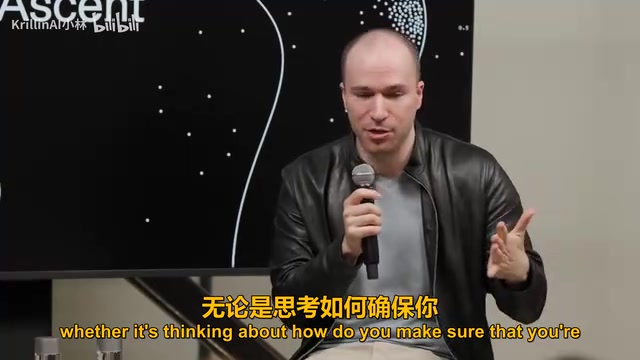
But ironically, when humans are drowning in a flood of AI-generated decision requests, this very judgment capacity is most susceptible to dilution and fatigue. We need to invest in safety primitives, observability, and good governance mechanisms—otherwise human approvers will become rubber stamps.
AI Safety: The Paradox of Using AI to Protect AI
Greg stated that models can be used for codebase scanning and end-to-end red-teaming, and OpenAI is advancing its Trusted Access Program for cybersecurity. But he also soberly noted: "Models are powerful but not magic—they're part of a broader resilience ecosystem."
Using AI to secure AI systems is logically coherent but practically paradoxical. When attackers and defenders use models of equal capability, security becomes an endless arms race. Encouraging more people to apply for the Trusted Access Program is both an open gesture and an acknowledgment of their own security limitations. In AI safety, the greatest danger isn't the known threats—it's what we don't know we don't know.
Responsible Development: The Scale Is Naturally Tilted
Greg emphasized that the core skill is personally using the technology and understanding model capability boundaries. He said "the beauty of AI is its intuitive nature—the machine adapts to you rather than you adapting to the machine." On safety, OpenAI is very cautious in cybersecurity and biosecurity, and will delay model releases.
"The machine adapts to you" is excellent marketing copy, but everyone who's used AI tools knows that prompt engineering itself is a form of "human adapting to machine." As for the safety promise of "delaying model releases," we need to ask: delayed by how long? Who judges? What are the criteria? In a white-hot competitive market, the tension between "responsible development" and "capturing market share" is very real.
OpenAI's Application Layer Strategy: From Doing Everything to Focus
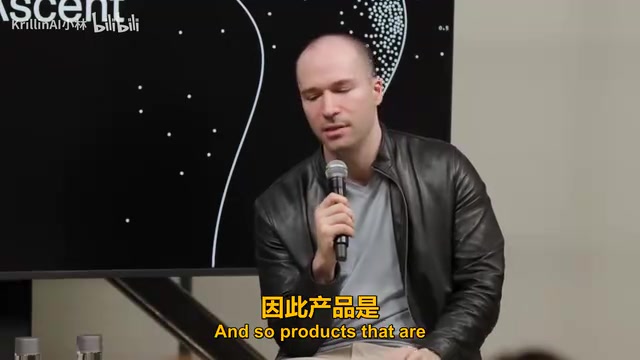
Greg revealed that OpenAI recently emphasized "focus," making painful trade-off decisions. They're undergoing an Agentic transformation, where the consumer-facing core is helping users achieve goals, not merely boosting productivity.
What's the ultimate vision? Building a trustworthy AGI with full context, usable for both personal life and work. Greg painted a picture of the future: the way we work will fundamentally change—from typing on keyboards to being a CEO commanding 100,000 Agents.
But the question is: when everyone can command 100,000 Agents, where does the real competitive advantage lie? The answer may ultimately circle back to the oldest one: creativity, judgment, and interpersonal trust.
Frontier Science: The Dawn and Limitations of AI-Driven Discovery
Greg shared a development that may be more historically significant than ChatGPT itself: AI has discovered formulas in physics that physicists thought were impossible, seen as a step toward quantum gravity.
But he also honestly acknowledged a key limitation: LLM Scaling Laws show dramatic results in digital intelligence but haven't been equally powerful in robotics and physical intelligence. Fields like biology require dealing with "messy reality" rather than purely simulated worlds.
"Solving competition problems isn't enough—you need to handle real-world messy codebases"—this analogy precisely identifies the core challenge of AI scientific discovery: real scientific research is full of noise, accidents, and intuitive leaps, which happen to be current AI's weakest areas. Greg predicts a true Renaissance in the sciences, saying "next year will be insane"—we hear this prediction every year, but to be fair, the past two years have indeed been crazier than expected each time.
Final Thoughts
When asked what he wants to do after AGI, Greg said he and his wife enjoy watching movies and hiking—he looks forward to having more leisure time then. A man building technology that could change human civilization has the most modest of wishes.
Compute is the new oil, attention is the new gold, and judgment is the new uranium—in an era where AI drives the cost of "doing things" to zero, humanity's last moat isn't capability, but knowing what's worth doing.
Related articles
 Expert Opinions
Rethinking Scaling Laws: Parameters Are Not the Only Answer
Deep analysis of Scaling Law evolution from Kaplan to Chinchilla to the MoE era, exploring why blindly stacking parameters is a mistake, and how GLM-5.3 proves scaling has multiple knobs.
When AI Treats Humans as Subagents: Ro…
When AI Treats Humans as Subagents: Role Reversal and Hidden Risks in Human-AI Collaboration
Exploring the paradigm shift where humans become "subagents" in AI Agent architectures. Analyzes human node design in LangChain and AutoGen, and the risks of ceding control and cognitive atrophy.
 Expert Opinions
The Lazy Person's Productivity Theory: Why Being 'Lazy' Actually Drives Peak Performance
Explore the engineering philosophy behind 'lazy people are most productive': how constructive laziness drives automation, AI tools amplify efficiency, and systems thinking eliminates wasted effort.