OpenAI Teases Its Biggest-Ever DevDay Developer Conference

OpenAI teases its 'biggest-ever' DevDay developer conference, with no agenda details disclosed yet.
OpenAI posted a brief teaser announcing what it calls its 'biggest-ever' DevDay developer conference. DevDay is OpenAI's annual flagship event for the developer community, historically featuring new model launches, API upgrades, pricing changes, and ecosystem tooling updates — all of which directly affect companies and developers building on OpenAI's stack. The 'biggest ever' framing suggests an unusually dense slate of announcements, though no agenda or specifics have been shared. The article advises tempering expectations until official details emerge, and notes that in today's competitive generative AI landscape, developer conferences from top players have become important signals of industry direction.
OpenAI Drops a DevDay Teaser
OpenAI posted a short but intriguing teaser on social media: "Our biggest DevDay ever, don't be late." The accompanying image pointed to the company's upcoming annual developer conference. Despite the brevity, the message carries a clear signal — this edition of DevDay may surpass every previous one in scale and significance.
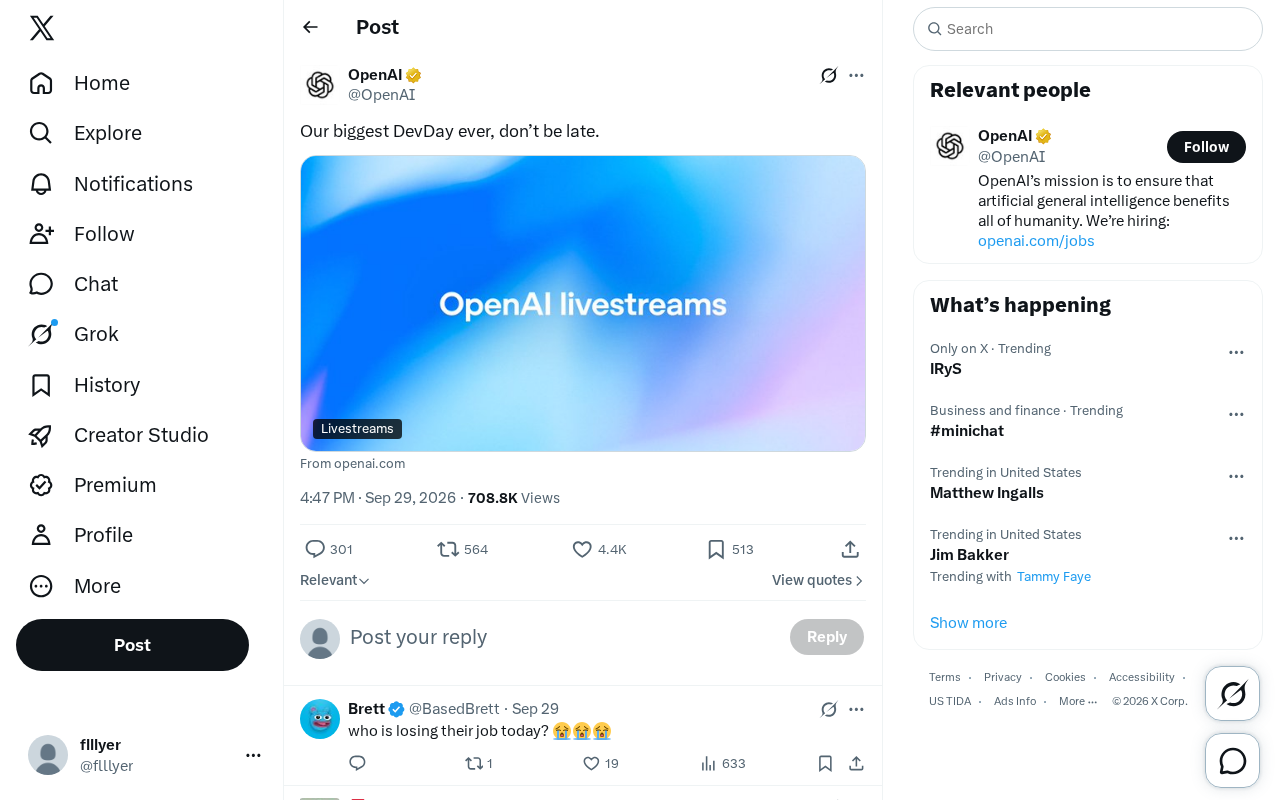
As OpenAI's flagship event for the developer community, DevDay has traditionally been the venue for major product updates, API capability expansions, and ecosystem tooling announcements. The choice of "biggest ever" as the framing suggests the event could involve a broader range of technical releases and ecosystem moves.
Why DevDay Matters
DevDay is one of the most direct channels through which OpenAI engages its developer community. Past editions have consistently delivered updates around model capabilities, API interfaces, pricing strategies, and developer toolchains. For companies and independent developers building on OpenAI's stack, these events often have a direct impact on their technical decisions and product roadmaps.
The "biggest ever" positioning implies this year's conference could be especially information-dense. New model launches, expansions to existing capabilities, and enterprise-focused tooling are all areas the industry is watching closely. That said, OpenAI has not disclosed any specific agenda — all details remain under wraps until the event officially kicks off.
DevDay traces its roots back to November 2023, when the inaugural edition saw OpenAI unveil GPT-4 Turbo, the Assistants API, GPTs (custom GPT agents), and several other major capabilities — directly accelerating the launch of a wave of OpenAI-powered products. For developers, technical details like API pricing adjustments, context window expansions, and Function Calling optimizations often matter more than model names alone, since they directly shape cost structures and product capabilities. On the competitive front, Anthropic, Google, Meta, and others have all been ramping up their own developer ecosystem events, making OpenAI's DevDay increasingly important as a strategic vehicle for maintaining developer loyalty and demonstrating technical leadership.
Keeping Expectations Grounded
It's worth noting that this teaser is light on specifics. What can be confirmed is simply that OpenAI plans to hold a DevDay it's billing as its largest to date. Details on the actual content, schedule, and how to participate have yet to be shared.
For developers and industry professionals tracking AI progress, this kind of teaser is best treated as a date worth marking on the calendar. The recommendation is to follow OpenAI's official channels for the full agenda and actual announcements, then assess the implications for your own work from there.
Takeaway
With a single short teaser, OpenAI has raised expectations for this year's DevDay. In an era of intensifying generative AI competition, developer conferences from the leading players have become key barometers for where the industry is heading. Whether this "biggest-ever" DevDay delivers on the hype is a question that will only be answered when the event unfolds.
Related articles

Why Does the Tesla Roadster Need to Fly? A Deep Dive into Musk's Wild Demo
Tesla's Roadster launch showed wall-climbing, upside-down driving, and flying stunts—but The Vergecast notes the demo car may lack a battery, the Rocket version is invite-only and not street-legal, and the website terms don't guarantee delivery. After nine years of delays, why does this car still need to exist?

AI Is Not a Replacement: Human-AI Collaboration Through the Lens of Factory Root Cause Analysis
Starting from factory root cause analysis, this article explains how AI accelerates evidence chain construction rather than replacing human experts, exploring the pragmatic implementation logic and business value of 'AI supporting people rather than replacing them.'

AI Agent Decision Auditing: Building an Evidence Chain in Regulated Workflows
Starting from a Reddit discussion, this article analyzes three core issues in AI agent decision auditing within regulated workflows: what fields audit records should contain, how to handle feedback latency for erroneous decisions, and how to continuously calibrate LLM judge consistency with human judgment.