OpenAI Uses a ChatGPT Data Agent to Help Teams Answer Data Questions on Their Own

OpenAI's internal data agent enables company-wide self-serve queries, built on a foundation of trustworthy data.
Data teams have long faced a structural bottleneck where demand far exceeds capacity. OpenAI tackled this by building an internal data agent that lets product, marketing, and other teams query data independently each week — no analyst queue required. But the key to making it work isn't how smart the AI is; it's whether the underlying data foundation is trustworthy, with unified metric definitions, clear data lineage, and well-structured models. This shift also redefines the data team's role — from reactively answering individual queries to proactively building the reliable data infrastructure that empowers everyone.
The Data Team's Perennial Problem: Demand Always Outpaces Capacity
Anyone who has worked as a data scientist or managed a data team knows this chronic pain point all too well — the size of a data team almost never keeps pace with the growing demands of the teams it serves. Relative to downstream teams in product, marketing, and operations, data teams are perpetually understaffed, fielding far more questions than they can possibly answer.
This isn't just a resource problem — it's a structural bottleneck. When every data query has to pass through the data team, that team becomes a funnel in the company's entire decision-making chain. Analysts get buried under a flood of repetitive, ad-hoc requests and never have the bandwidth to do the deep, strategically valuable analytical work they were hired for. This "firefighting" mode of working is especially pronounced in fast-growing organizations.

The ChatGPT Data Agent: Company-Wide Self-Service Queries
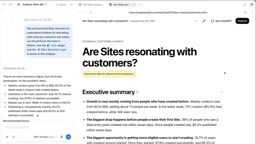
OpenAI's approach was to build an internal data agent that puts data query capabilities directly in the hands of every employee. According to their internal sharing, most people at OpenAI today — from product teams to GTM (Go-To-Market) teams — use this data agent on a weekly basis, or even more frequently, to answer their own data questions independently.
This represents a fundamental shift: data consumers no longer need to queue up and wait for the data team to respond. Instead, they can "follow their own curiosity" and investigate their questions directly. When a product manager wants to understand usage trends for a feature, or a marketer wants to check the conversion rate of a particular channel, they can just do it themselves — no ticket submission, no days-long wait.

The Critical Prerequisite: Build a Trustworthy Data Foundation First
For this approach to actually work, there is one prerequisite that cannot be overlooked — you must first establish a "trustworthy foundation." The OpenAI team specifically emphasized that getting this step right is what truly unlocked the value of self-serve analytics.
This is a lesson worth heeding for any team looking to replicate a similar model. The biggest risk of letting an AI agent answer data questions directly is the "plausible but wrong" answer. If the underlying data definitions are inconsistent, metric calculations vary across teams, and data quality is uneven, then a highly articulate AI will simply produce incorrect conclusions at greater speed and scale — actively misleading decisions.
A trustworthy foundation typically means: unified and validated metric definitions, clear data lineage, well-structured data models, and explainability in the agent's query logic. Only when this foundational work is in place can non-specialist users get reliable answers to their questions — and only then will they develop genuine trust in the tool.
In the data engineering world, the Semantic Layer is one of the core components for achieving a trustworthy data foundation. Sitting between the raw database and business users, the semantic layer translates technical table structures into business-understandable metrics and dimensions — for example, defining a combination of fields from the orders table as "Monthly Active Users" or "Revenue per Customer." When an AI agent queries data, it is actually interacting with this semantic layer rather than directly manipulating underlying SQL tables. This means that even when users ask questions in natural language, the system maps their queries to validated, consistently defined metrics — fundamentally eliminating the chaos of "everyone calculating the same metric differently." Tools like dbt, Looker Semantic Layer, and Cube.js are among the most popular choices for enterprises building a semantic layer today. An AI data query system without a semantic layer is essentially driving without a map — you might reach your destination, or you might go completely off course.
Redefining the Role of the Data Team
When self-serve analytics becomes the norm, the value of the data team isn't diminished — it's redefined. They shift from being "executors who answer every specific question" to "builders who construct and maintain a trustworthy data infrastructure."
In other words, the data team's focus moves upstream: from responding to queries at the end of the chain, to data governance at the source, semantic layer development, and agent tuning. This is a leverage effect — instead of answering questions one by one, you build a system that empowers everyone to help themselves, freeing scarce specialized expertise for work that genuinely requires judgment.
This shift is commonly referred to in the industry as Data Democratization — enabling non-technical members of an organization to independently access and analyze data without relying on dedicated data staff as intermediaries. However, data democratization is not a new concept. Self-serve BI tools like Tableau and Power BI promised a similar vision over a decade ago, yet adoption remained limited. The fundamental reason is that drag-and-drop reporting tools still require users to understand data structures — the barrier was never truly lowered. What makes AI agents different is the introduction of natural language interaction, replacing "knowing how to build models" with "knowing how to ask questions" as the usage barrier. This theoretically extends the addressable audience to virtually all employees. But as OpenAI's own experience underscores, progress at the tooling layer must be built on a mature data governance layer — otherwise, democratization simply makes poor decisions more widespread.
Lessons for the Enterprise
This case study reveals a pragmatic path for deploying AI agents inside enterprises. It's not as simple as plugging a large language model into a database and calling it done. The emphasis is on "trust first": invest the effort to build a solid data foundation, then let AI take on the work of scaling query responses.
For organizations exploring a similar direction, the core question shouldn't be "Is our AI smart enough?" — it should be "Is our data foundation trustworthy enough to support reliable AI-generated answers?" The real barrier to data democratization has never been just the tools. It has always been the underlying data quality and governance.
Related articles

ChatGPT Space Launches: Team Collaboration and New Pages Features Explained
ChatGPT Space is OpenAI's new team collaboration feature with Pages, real-time collaboration, and Slack/Google Drive sync. We break down its privacy design, multi-platform integration, and the full workflow from conversation to document.

Migrating Apache Spark UDFs to GPU Acceleration with AI Agents
NVIDIA developer blog explains how AI Agents rewrite Apache Spark UDFs for GPU acceleration, covering migration criteria, agent rewriting and verification workflows, plus pitfalls like result consistency and CPU-GPU transfer overhead.

Zed Editor v0.40.4-rc2 Released: Usage Credits Now Available Without Upgrading
Zed editor releases v0.40.4-rc2, allowing users to use usage credits for AI features without upgrading to a paid plan, lowering the trial barrier.