OpenArch: An Open-Source Project Reimplementing Modern LLM Architectures in PyTorch
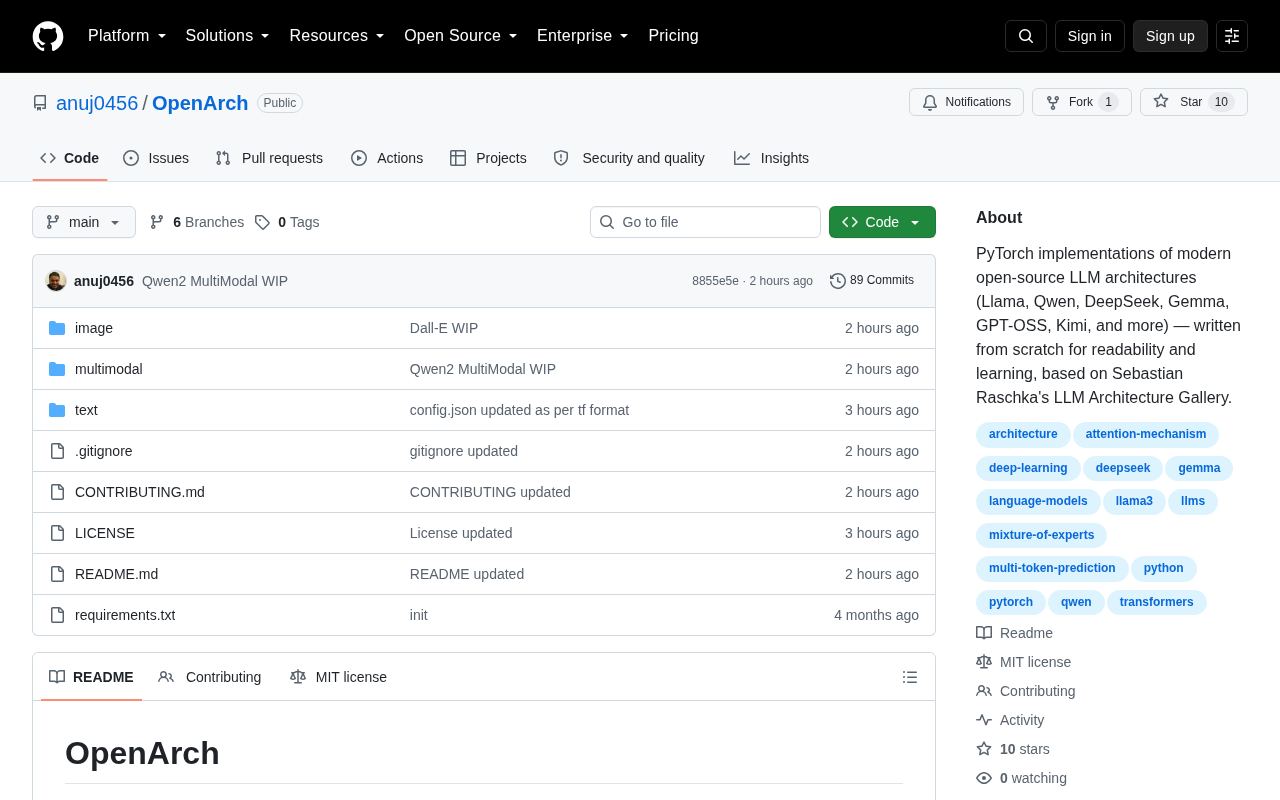
OpenArch reimplements modern LLM architectures in PyTorch, bridging the gap between papers and production code.
OpenArch is an open-source project aimed at reimplementing modern large language model architectures in PyTorch, recently surfacing on Hacker News. Rather than a training framework or model distribution tool, it translates abstract architectural descriptions from papers into clean, runnable code — in the same spirit as nanoGPT and minGPT, but with a broader focus on modern architecture diversity. Its core value is bridging the gap between papers and production code, where implicit details like positional encodings and normalization placement are typically buried inside distributed training logic. Prioritizing readability, it suits learners, researchers needing a baseline, and educators alike — though the project is still very early-stage with limited community validation.
A Focused Open-Source Effort on Architecture Reimplementation
OpenArch is an open-source project that recently appeared on Hacker News with a straightforward goal: reimplementing the core architectures of modern large language models (LLMs) in PyTorch. For developers and researchers who want to understand how various models have evolved beyond the original Transformer, the value of such a project lies in translating the abstract structural descriptions in papers into code that can actually run, be debugged, and read line by line.
The project's name (Open + Architecture) reflects its focus clearly — it's not yet another training framework, nor a channel for distributing model weights. Instead, it zeroes in on the implementation details of the architectures themselves. This puts it in the same conceptual lineage as educational projects like nanoGPT and minGPT, though with a broader emphasis on the diversity of "modern" architectures.
It's worth noting that the project currently has modest traction on Hacker News (5 upvotes, 3 comments), placing it firmly in the early-stage community exposure category. This article therefore focuses more on the project's positioning and the general value of such tools, rather than vouching for its maturity.
Why "Readable Architecture Implementations" Are Still Rare
Modern LLM papers come out at a relentless pace, but between a paper and working code lies a minefield of implicit details: the exact form of positional encodings, where normalization layers are placed, attention mechanism variants, how KV caches are organized, and so on. These specifics are often glossed over in papers, yet they directly determine whether a model trains and infers correctly.
Official model codebases are typically tightly coupled with massive training infrastructure, distributed logic, and performance optimizations — making them difficult to read through. Projects like OpenArch, which aim to "cleanly reimplement architectures," theoretically strip away that engineering noise and expose the core structure at a glance. That's exactly what learners need most: understanding how a model is actually assembled with as few abstraction layers as possible.
Why PyTorch Works Well as a Teaching Medium
Choosing PyTorch over lower-level or higher-level frameworks is itself a deliberate trade-off. PyTorch's dynamic computation graph and intuitive tensor operations allow code to map almost line-by-line to mathematical formulas — which is extremely helpful for understanding architecture. Highly optimized production implementations may be fast, but they often sacrifice readability for performance. OpenArch clearly prioritizes readability.
Who This Kind of Project Is For
If you're a student or engineer looking to understand the internals of LLMs, reading through a clean, ground-up implementation of a modern architecture is far more efficient than wrestling with papers or navigating a massive codebase. You can modify a component, observe how the output changes, and build intuition for how the model behaves.
For researchers, a reproducible reference implementation provides a reliable experimental starting point — when validating a new idea, you won't have to wonder whether your baseline has a bug. For educators, projects like this can serve directly as course or workshop material.
That said, early-stage projects come with real risks: whether the implementations have been verified for correctness, which architectures are covered, how complete the documentation is, and whether the project will be actively maintained are all things users need to evaluate for themselves. The open-source world has no shortage of architecture reimplementation projects that started strong and then went quiet. How far OpenArch will go remains to be seen.
Takeaway
OpenArch represents a pragmatic and genuinely useful category of open-source effort: liberating modern LLM architectures from papers and production codebases, and turning them into readable, runnable, learnable reference implementations. At a time when LLM engineering is growing ever more complex and the barrier to entry keeps rising, projects that "return to architectural fundamentals" have real value for both learning and research.
It's still in a very early stage with limited community feedback, and whether it's worth investing time in depends on your specific needs. But for anyone who wants to truly understand how modern LLMs are built, bookmarking and keeping an eye on projects like this is never a bad idea.
Related articles
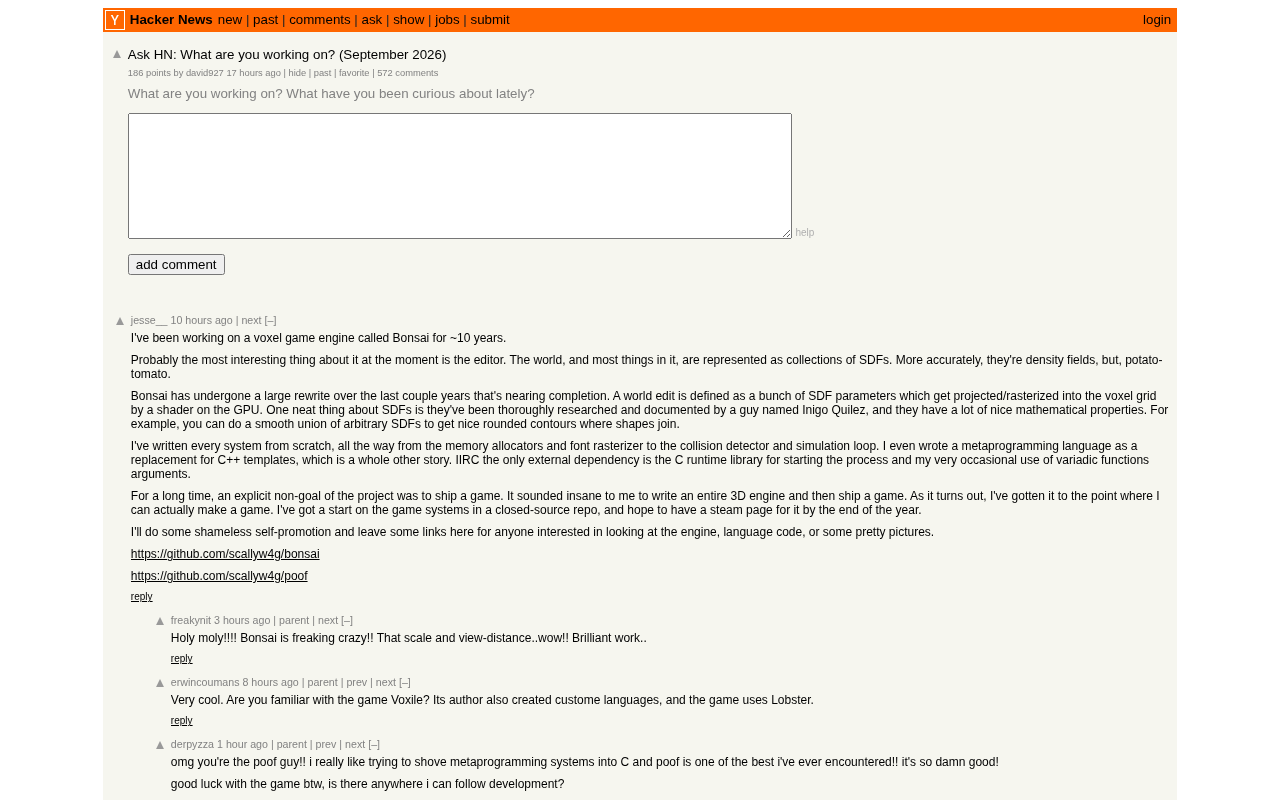
Hacker News Monthly 'What Are You Working On?' Thread: A Window Into the Developer Community
Hacker News's monthly 'What are you working on?' thread drew 180 upvotes and 558 comments. We explore why this community ritual persists and what it reveals about developer trends.

After Towns Cancel Flock Contracts: The Lingering Fallout of AI License Plate Recognition Cameras
Towns across the US are canceling Flock AI license plate camera contracts amid public backlash, but terminating contracts doesn't erase collected data. A look at the data retention risks that persist.
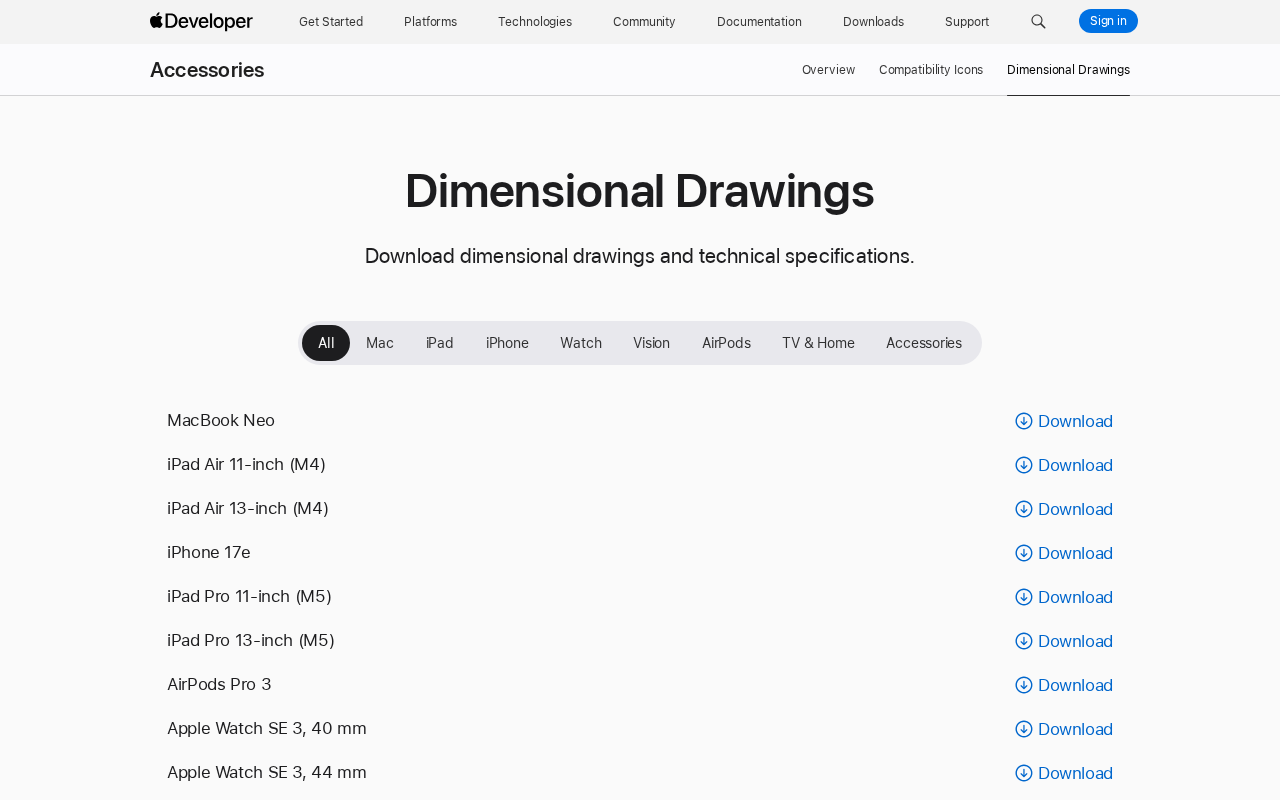
Apple Releases Accessory Dimensional Drawings: The Invisible Foundation of Its Hardware Ecosystem
Apple has published Dimensional Drawings on its developer portal, giving third-party accessory makers precise device specs. Here's what it means for the hardware ecosystem.