OpenClaw Skills Explained: The Core Skill Files for AI Test Case Auto-Generation

Skills turn prompts into files, enabling version control and progressive loading for AI test case generation.
Skills are a technical concept of writing prompts as Markdown-formatted files, offering four core advantages in AI test case auto-generation: larger scope for complex testing instructions, easy team reuse and sharing, Git version control support, and most critically, progressive loading capability (avoiding context overload caused by MCP's full injection approach). Skills upgrade AI testing capabilities from personal tricks to sustainably iterable team knowledge assets.
What Are Skills? The Evolution from Prompts to Files
In the field of AI-assisted testing, Skills (skill files) are becoming a hot concept. Simply put, Skills are prompts written as files—specifically, files in Markdown format.
Markdown is a lightweight markup language widely adopted for its concise syntax and high readability. In the AI prompting domain, Markdown's hierarchical headings (#, ##), lists, code blocks, and other structures can significantly improve a model's accuracy in parsing instructions. Research shows that structured prompts, compared to plain text paragraphs, help models more precisely identify boundaries between different instruction modules and reduce instruction confusion—this is an important reason why Skills use Markdown rather than plain text or JSON.
This might sound unremarkable, but it's precisely this step of "turning prompts into files" that brings a series of significant advantages, giving Skills an important position in AI test case auto-generation workflows.
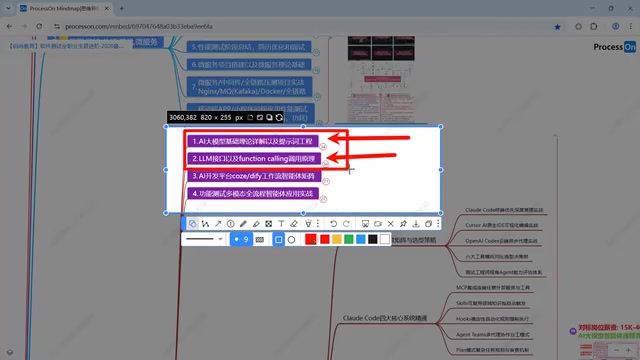
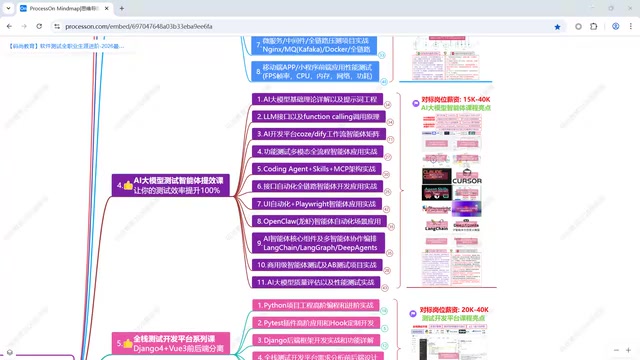
To understand Skills, you need some prerequisite knowledge: the basic principles of Prompt Engineering and Function Calling.
Prompt Engineering is a discipline that studies how to design and optimize input instructions to maximize AI model output quality. Since the LLM explosion in 2022, prompt engineering has evolved from a collection of "tricks" into a systematic methodology, encompassing paradigms such as Zero-shot prompting, Few-shot prompting, and Chain-of-Thought. In the testing domain, high-quality prompts directly determine the accuracy and coverage of AI-generated test cases.
Function Calling is a core capability introduced by OpenAI in 2023 for GPT models, allowing AI models to invoke external functions or APIs in a structured manner. Its essence is enabling models to output structured data conforming to a predefined JSON Schema, which the host program then parses and executes as real operations. This mechanism is the cornerstone of building AI Agents—without Function Calling, AI can only "talk"; with it, AI can actually "do."
These two concepts are the foundation for using AI large models and the common basis for building Agents. Once you've mastered them, advanced concepts like Skills and MCP become much easier to understand.
The Four Core Advantages of Skills
Larger Scope, Richer Testing Instructions
Once prompts are written into files, you're no longer constrained by the input length of a chat box. A Skills file can contain more detailed, more structured AI instructions, covering complex test scenario descriptions, boundary condition definitions, output format requirements, and more. For AI test case auto-generation, this means you can put your complete testing strategy, case templates, and validation rules all into a single file.
Easy Reuse and Team Sharing
Once carefully crafted prompts are organized into Skills files, reuse becomes extremely simple:
- They can be used repeatedly in the current project
- They can be directly shared with other team members
- They can be directly migrated to the next project
This means a one-time investment yields multiple returns. Good Skills files are essentially a team's testing knowledge assets.
Version Control
Prompt optimization has no upper limit and no endpoint. When Skills exist as files, they can be incorporated into version control systems like Git, clearly recording every iteration: what changed, why it changed, and what effect it had.
Git is currently the most mainstream distributed version control system, originally designed for code management. Incorporating Skills files into Git management means every prompt iteration has a complete diff record, commit messages, and branch history. Teams can conduct peer review of prompts through Pull Request workflows, reproduce the generation effects of historical versions, and even perform A/B testing—engineering capabilities that prompts scattered across chat boxes can never achieve. This follows exactly the same logic as developers using version control to manage code.
Progressive Loading—The Most Critical Differentiating Advantage
This is the most distinctive feature of Skills compared to solutions like MCP.
To understand this advantage, you first need to understand the concept of a Context Window. The context window is the maximum number of tokens a large language model can process in a single inference. Early GPT-3 only supported 4K tokens, while modern models like Claude 3.5 have expanded to 200K tokens. Although windows continue to grow, the more tokens consumed, the higher the inference cost and the slower the speed. There's also the "Lost in the Middle" phenomenon—the model's attention to information in the middle of the window drops significantly, leading to degraded instruction-following quality.
MCP (Model Context Protocol) is an open protocol released by Anthropic in late 2024, aimed at standardizing the connection between AI models and external tools/data sources, similar to a "USB port" for the AI world. However, MCP's design philosophy is "full registration"—all Server tool descriptions are injected into the context at once during session initialization. When the number of tools exceeds dozens, the tension between token consumption and tool selection accuracy begins to emerge: facing massive tool descriptions, AI can experience "choice paralysis" or truncate critical information due to insufficient context space.
Skills' progressive loading works completely differently:
- First, only a small portion of metadata is loaded
- Based on the current task assessment, the system decides whether to load the full file
- The AI stays focused and isn't distracted by irrelevant information
This mechanism allows the agent to possess rich capabilities while not degrading performance due to context overload.
Application Layers of Skills in AI Test Case Generation
From an overall technology stack perspective, the learning path for AI-assisted testing roughly follows this progression:
- AI Large Model Fundamentals → Understanding model capability boundaries
- Prompt Engineering → Mastering the basic way to interact with AI
- Function Calling → Giving AI execution capabilities
- Platform-based Agent Development → Using platforms like Coze
- Command-line Agent Development → The layer where Skills reside
- OpenClawAd Framework-level Agents → Deeper Agent development
- Agent Testing → Quality assurance for Agents themselves
Skills sit at the fifth layer, representing fairly advanced content. Their positioning is: using structured files to define Agent behavioral specifications, making test case auto-generation more controllable, reusable, and maintainable.
Practical Use Cases and Tool Selection
In real-world practice, Skills can be used with various AI tools. Whether you're using Doubao, DeepSeekAd, or other large models, the core approach remains consistent:
- Write testing requirements, testing strategies, and case templates as Markdown-formatted Skills files
- Load these Skills through an Agent framework
- The Agent progressively invokes relevant Skills based on the current context
- Automatically generate test cases that conform to specifications
The value of this approach lies in: it's not a one-time prompt interaction, but rather a sustainably iterable testing knowledge system. Every optimization of a Skills file improves the entire team's AI test case auto-generation capability.
Summary
The essence of Skills isn't complex—they're simply prompts turned into files. But it's precisely this step of "filing" that opens up possibilities for version control, team collaboration, progressive loading, and more. For test engineers, mastering OpenClaw Skills means upgrading AI testing capabilities from "personal tricks" to "team assets," making test case auto-generation more standardized and efficient—that's where their true value lies.
Related articles
 Tutorials
ChatGPT Plus Subscription Guide: Are GPT-5.5, image-2, and Codex Worth the Upgrade?
A detailed look at ChatGPT Plus features — GPT-5.5, image-2, and Codex — with a Plus vs Pro comparison and a complete step-by-step subscription guide for users outside the US.
 Tutorials
Harness AI Engineering in Practice: Using Claude Code to Master Enterprise-Level E-Commerce Development
Deep dive into Harness AI Engineering: master enterprise e-commerce development with Claude Code using the Rules, Skills, Wiki, and Changes framework.
 Tutorials
Cursor + Codex Dual-IDE Collaboration: A Practical Methodology for Open-Source Project Customization
A complete methodology for open-source project customization based on real-world experience, detailing the Cursor+Codex dual-IDE workflow, seven-stage process, MVP validation, and AI source code reading techniques.