OpenYak: Open-Source Local AI Agent Supporting 100+ Models with Zero Telemetry Privacy

OpenYak is an open-source local AI agent with multi-model access and zero-telemetry privacy protection.
OpenYak is an MIT-licensed open-source local AI agent tool supporting all three major desktop platforms, positioned as a private alternative to Claude Code and OpenAI Codex. It connects to 100+ models through OpenRouter, MCP, and Ollama, includes 20+ built-in tools, and adopts a BYOK model with zero-telemetry design — giving users complete control over data flow. It's ideal for developers and enterprise teams with high demands for privacy and flexibility.
What Is OpenYak: An Open-Source Local AI Agent Tool
OpenYak is an open-source local AI agent tool that supports Windows, macOS, and Linux. Positioned as a private alternative to Claude Code, Claude for Work, and OpenAI Codex, it adopts a BYOK (Bring Your Own Key) model that gives users complete control over their AI workflows.
The project is released under the MIT license, is completely free, and collects zero telemetry data, fully safeguarding user privacy. It has already earned 780 stars on GitHub and is developed in Python.
Core Features: 20+ Built-in Tools and 100+ Models
A Rich Tool Ecosystem
OpenYak comes with 20+ built-in tools covering a wide range of everyday developer scenarios. Users don't need to switch between multiple tools — a single agent can handle code writing, file operations, information retrieval, and more. This "agent as workbench" design philosophy reflects the industry trend of AI tools evolving from point-specific assistance to full-workflow automation. Instead of manually coordinating multiple tools, developers describe their intent in natural language and let the AI agent autonomously select and invoke the right tools to complete the task.
Multi-Channel Model Access
OpenYak connects to AI models through three channels:
- OpenRouter: Provides unified access to 100+ models, including mainstream commercial models like GPT-4, Claude, and Gemini. OpenRouter is essentially an aggregation gateway for AI models — it unifies APIs from different providers into a single standard interface. Developers only need to integrate once to access all models, while also benefiting from automatic failover and cost-optimized routing.
- MCP (Model Context Protocol): Supports the standardized Model Context Protocol, enhancing model-tool interaction capabilities. MCP is an open protocol standard introduced by Anthropic in late 2024, designed to solve the problem of standardized communication between AI models and external tools or data sources. Before MCP, every AI tool had to write custom integration code for different external services, leading to massive duplication and ecosystem fragmentation. MCP defines a unified client-server architecture: AI applications act as MCP clients that initiate requests, while external tools and data sources act as MCP servers that respond. Similar to how HTTP works for the web, MCP provides a common language for AI agent-tool interactions. Hundreds of MCP server implementations now exist, covering scenarios like database queries, file system operations, and API calls.
- Ollama: Supports running open-source models locally for completely offline AI inference. Ollama is an open-source framework for running large language models locally, dramatically simplifying the process of deploying and running open-source models on personal computers. Users can download and run models like Llama, Mistral, and Qwen with a single command — no need to deal with complex dependency configurations or GPU driver issues. Under the hood, Ollama uses llama.cpp for inference acceleration and supports CPU-GPU hybrid inference, meaning even users without high-end graphics cards can run quantized models. For OpenYak, Ollama integration means users can leverage AI capabilities in completely air-gapped environments — a critical feature for industries like defense, finance, and healthcare that have strict network isolation requirements.
This multi-channel design allows users to flexibly choose models based on task requirements, budget, and privacy needs.
Privacy First: Zero Telemetry, Local Execution
Unlike cloud-based solutions such as Claude Code, OpenYak emphasizes local execution and zero telemetry. All data processing happens locally on the user's machine, API keys are self-managed, and there is no risk of data leaking to third parties.
Telemetry refers to the practice of software automatically collecting usage data during runtime and sending it to developers — typically including feature usage frequency, error logs, performance metrics, and more. While telemetry helps improve products, in the context of AI coding tools, telemetry data may contain sensitive information such as code snippets, file paths, and project structures. Since 2023, multiple AI tool data leak incidents have heightened enterprise concerns about data sovereignty — Samsung famously banned all external AI tools after employees pasted internal code into ChatGPT. A zero-telemetry design means the software sends no runtime data to any external server, providing the foundational conditions for passing enterprise security audits.
This is particularly important for developers working with sensitive code or internal enterprise projects.
Technical Architecture and the BYOK Design Philosophy
OpenYak's choice of Python as its development language is a pragmatic one for the AI tools space. Python's rich ecosystem of AI/ML libraries (such as agent frameworks like LangChain and LlamaIndex), convenient package management (pip/conda), and cross-platform compatibility all provide a foundation for rapid iteration. Additionally, the large number of AI developers in the Python community means a lower barrier to contribution and more active community participation.
The project's BYOK design philosophy deserves attention. The BYOK (Bring Your Own Key) model is becoming a significant trend in the AI tools space. Under the traditional SaaS model, user data and requests pass through the vendor's servers, making the vendor both the tool provider and a middleman for AI capabilities. BYOK breaks this bundling by decoupling the tool layer from the model layer. Users establish billing relationships directly with AI model providers (such as OpenAI or Anthropic), while tool developers focus on delivering quality interfaces and workflow orchestration. This model has already been validated in development tools like Cursor and Cline — it reduces operational costs for tool developers while giving users greater flexibility and transparency.
Users bringing their own API keys means:
- The project itself doesn't need to bear model inference costs
- Users can leverage their existing API quotas
- There's no middleman markup
- Users have complete control over where their data flows
OpenYak vs. Claude Code and OpenAI Codex
| Feature | OpenYak | Claude Code | OpenAI Codex |
|---|---|---|---|
| Open Source | ✅ MIT | ❌ | ❌ |
| Local Execution | ✅ | Partial | ❌ |
| Multi-Model Support | 100+ | Claude only | GPT only |
| Privacy | No telemetry | Data collection | Data collection |
| Pricing | Free (API costs only) | Subscription | Subscription |
It's worth noting that Claude Code and OpenAI Codex, as commercial products from their respective companies, typically have advantages in deep model integration, enterprise-grade support, and product polish. OpenYak's competitive strengths lie more in flexibility, transparency, and cost control — the two categories serve overlapping but not identical user bases.
Use Cases and Target Users
- Independent Developers: Those who need powerful AI assistance without being locked into a single platform
- Enterprise Teams: Organizations with strict code privacy requirements that prohibit uploading code to third parties
- AI Researchers: Those who need to flexibly switch between different models for comparative testing
- Offline Development Environments: Fully air-gapped usage through Ollama support
Outlook and Community Ecosystem
As an emerging project, OpenYak's 780 stars and 52 forks indicate initial community recognition. The open-source AI agent space is heating up rapidly, with similar projects like Aider and Continue also actively evolving.
From 2024 to 2025, the open-source AI agent space has experienced explosive growth. Aider focuses on Git-aware code editing, generating more precise modifications by understanding repository structure. Continue, as a plugin for VS Code and JetBrains, provides an in-IDE AI assistance experience. Others like Open Interpreter serve as general-purpose agents capable of executing arbitrary code and system commands. These projects each have their own focus, but they share a common trend: evolving from simple code completion toward autonomous agents with planning, execution, and feedback loop capabilities. OpenYak has positioned itself as a "Swiss Army knife" in this space, aiming to cover more use cases through broad tool integration and model compatibility.
OpenYak's differentiation lies in its combination of full platform support, multi-model access, and zero telemetry. As local AI model capabilities continue to improve (open-source models like Llama 3 and Qwen 2.5 are approaching commercial model performance on coding tasks) and enterprises become increasingly conscious of data sovereignty, local-first AI agent tools like OpenYak are poised for broader adoption.
Key Takeaways
- OpenYak is an MIT-licensed open-source local AI agent supporting Windows/macOS/Linux, positioned as a private alternative to Claude Code and OpenAI Codex
- It accesses 100+ models through OpenRouter, MCP, and Ollama, includes 20+ built-in tools, and supports fully offline operation
- With its BYOK model and zero-telemetry design, users maintain complete control over data and API keys — ideal for privacy-sensitive scenarios
- Developed in Python, the project has earned 780 GitHub stars with steadily growing community activity
- It differentiates itself in the open-source AI agent space through its combination of full platform support, multi-model access, and privacy-first positioning
Related articles
 Product Reviews
The Programmer's Desk Setup Guide: Building a Workspace That Feels Like Home
Discover how programmers build productive, comfortable workspaces. From multi-monitor setups to ergonomic design, explore the desk philosophy that drives focus and flow.
 Product Reviews
Qoder vs Cursor Real-World Comparison: Which $20/Month AI IDE Is Better?
Hands-on comparison of Qoder vs Cursor AI IDEs: Agent autonomy, human interaction count, and architecture decisions. Qoder needed only 2 interactions vs Cursor's 8.
 Product Reviews
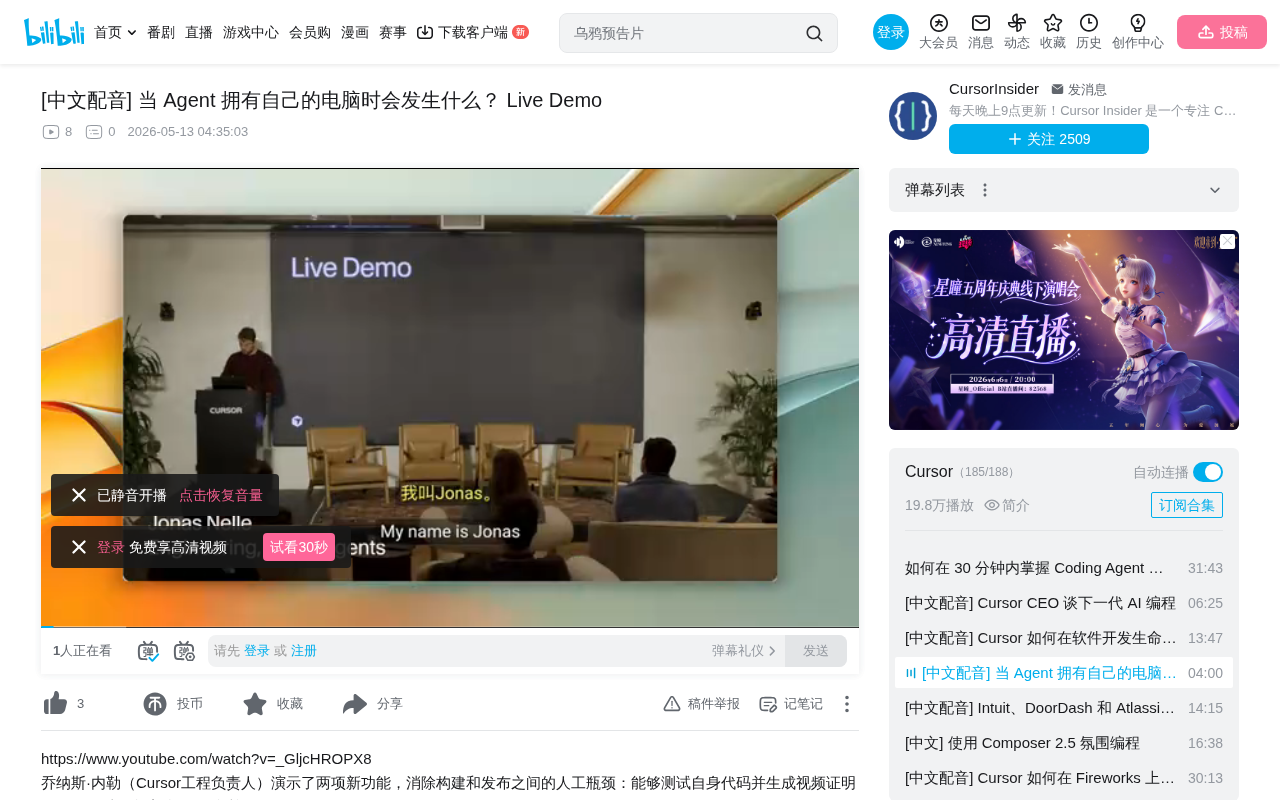
Cursor Cloud Agent Demo: Eliminating Bottlenecks Across the Entire Software Development Lifecycle
Deep analysis of Cursor's Cloud Agent demo showing how cloud VMs, automated test artifacts, and a full-chain control plane systematically eliminate human bottlenecks across the software development lifecycle.