Oppora AI Review: End-to-End Automated Outbound Sales System for B2B
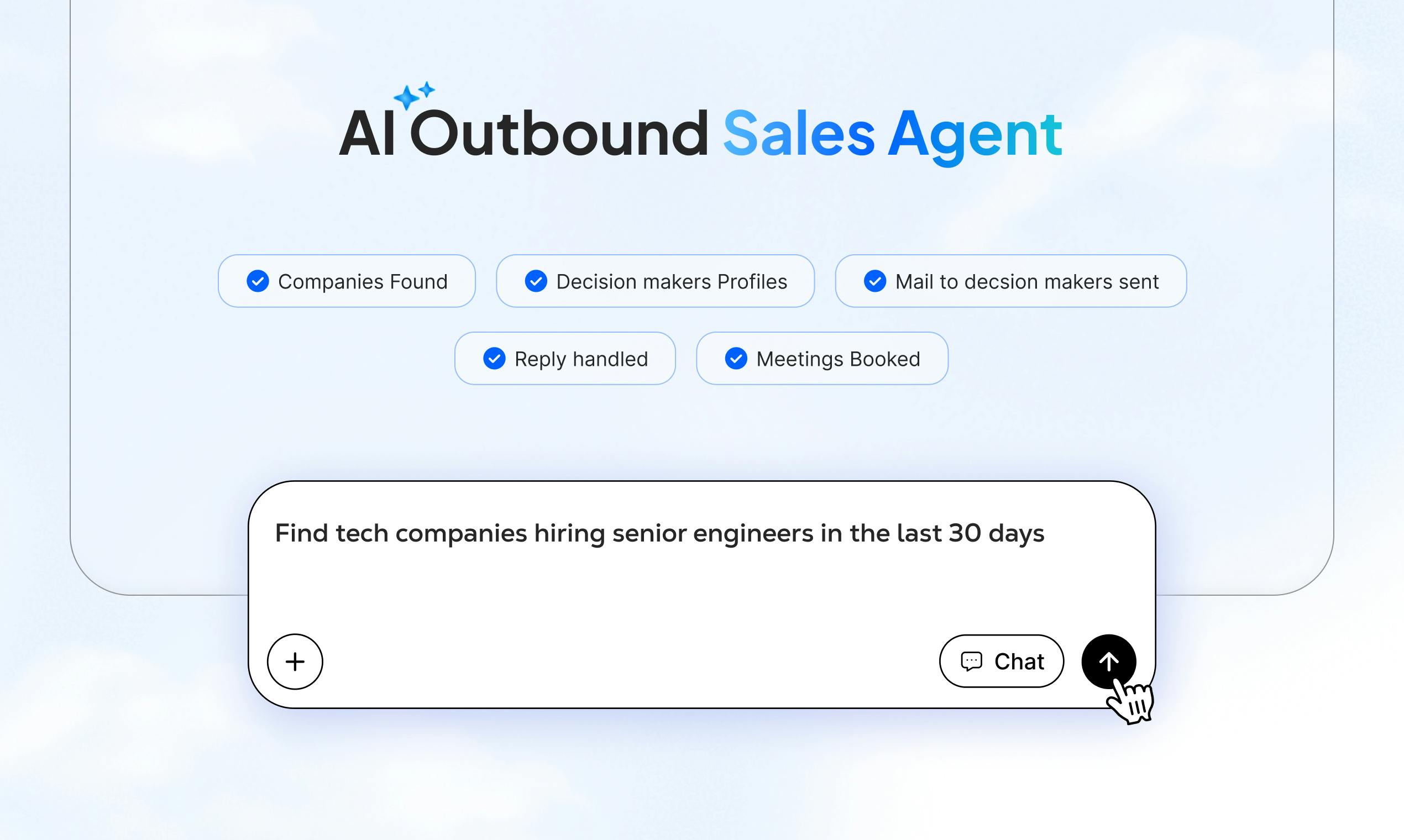
Oppora AI consolidates the fragmented B2B outbound tool chain into one self-running AI sales system.
Oppora AI is a newly launched B2B sales automation platform that transforms Ideal Customer Profiles into self-running outbound workflows. It integrates lead discovery, AI scoring, personalized multi-channel outreach, deliverability protection, automated reply handling, and CRM sync into a single system, aiming to replace the typical 5-8 tool outbound stack. While promising, teams should evaluate its personalization quality, deliverability effectiveness, and data compliance before scaling.
From ICP to Closed Deals: A Self-Running Sales System
For any company doing B2B sales, outbound sales is both critically important and incredibly tedious: finding leads, enriching data, qualifying prospects, writing personalized emails, maintaining deliverability, following up on replies, booking meetings, logging everything in the CRM… Each step requires a different tool, and sales teams often find themselves constantly switching between databases, enrichment services, sending platforms, warmup tools, inboxes, and CRMs. A typical B2B outbound tech stack consists of 5-8 standalone tools: lead databases (such as ZoomInfo or Apollo.io) provide company and contact data; data enrichment services (like Clearbit or Lusha) fill in key fields such as email addresses, phone numbers, and job titles; email warmup tools (like Warmbox or Lemwarm) build sender reputation for new domains by simulating normal email activity; sending platforms (like Outreach or Salesloft) manage multi-step email sequences; LinkedIn automation tools handle social outreach; and finally, CRMs (like Salesforce or HubSpot) manage customer relationships. These tools typically rely on API integrations or middleware like Zapier to connect, and data flowing between different systems is prone to format incompatibilities, missing fields, or sync delays.
Recently launched on Product Hunt, Oppora AI aims to solve this pain point. Its positioning is refreshingly direct — an AI sales system that transforms your Ideal Customer Profile (ICP) into a self-running outbound workflow. The Ideal Customer Profile is a foundational concept in B2B sales, referring to a detailed description of the type of customer most likely to derive value from your product or service and deliver the highest return. An ICP typically includes dimensions such as company size, industry, geographic location, tech stack, annual revenue, and decision-making structure. Unlike Buyer Personas, which describe individual characteristics, ICPs focus on organizational-level attributes. In AI-driven sales systems, the ICP essentially serves as the algorithm's "input parameter" — the system uses it to filter leads, assess fit, and determine outreach priority. Users only need to build the workflow once, and Oppora keeps running, automatically completing the entire chain from prospecting to closing.
Core Problems Oppora AI Solves
The Fragmented B2B Outbound Tool Chain
Today's outbound tech stacks are often cobbled together: one tool to find leads, another to enrich contact data, a sending platform for bulk outreach, separate tools for email warmup and deliverability management, and finally manual syncing of qualified opportunities to the CRM. This "stitched-together" approach is not only expensive but also prone to data loss and efficiency leaks at every handoff point.
Oppora's approach is to consolidate all these capabilities into a single, unified automated workflow. According to its product description, the system can perform the following actions:
- Lead Discovery & Data Enrichment: Identify decision-makers in target industries and enrich their key information;
- AI Lead Scoring: Score and rank leads by quality. AI lead scoring is a technology that uses machine learning models to rank sales leads by quality. Traditional lead scoring relies on manually defined rules (e.g., "C-level title adds 10 points, 500+ employee company adds 5 points"), while AI scoring analyzes historical deal data to automatically identify which feature combinations are most predictive of conversion. Common techniques include logistic regression, gradient boosted trees, and neural networks, with model inputs typically including company attributes, individual attributes, behavioral signals, and third-party intent data. High-quality scoring models enable sales teams to prioritize the most valuable leads, typically improving sales efficiency by 20%-40%;
- Multi-Channel Personalized Outreach: Automatically generate and send personalized emails and LinkedIn outreach messages. This capability is powered by the application of Large Language Models (LLMs) in sales scenarios — LLMs can generate highly customized opening lines and value propositions based on multi-dimensional information such as a prospect's LinkedIn profile, company news, funding activity, and tech stack. For example, the system can automatically pull a target company's recent product launch and weave it into the email content, making the recipient feel that the sender has done their homework. However, as more and more sales teams use similar AI tools, recipients are gradually learning to recognize typical patterns of AI-generated content (such as overuse of flattering openers and overly polished structure), which can actually reduce reply rates. Therefore, excellent AI outbound tools need to continuously invest in model fine-tuning and prompt engineering to maintain a "human touch" and differentiation;
- Deliverability Protection: Built-in warmup and deliverability safeguards to reduce the risk of landing in spam folders. Email deliverability refers to the percentage of sent emails that successfully reach recipients' primary inboxes, influenced by factors including sender domain reputation score, SPF/DKIM/DMARC email authentication protocol configurations, sending frequency and patterns, content quality, and recipient engagement rates. Email warmup involves gradually building sender reputation through a period of low-frequency, high-engagement email exchanges before a new domain begins bulk sending. Notably, Google and Microsoft further tightened their bulk sender policies in 2024, requiring senders exceeding 5,000 emails per day to meet stricter authentication and unsubscribe requirements, making deliverability protection an increasingly critical technical component of outbound automation;
- Automated Reply Handling & Meeting Booking: Automatically process prospect replies and help schedule meetings;
- Automatic CRM Sync: Automatically push qualified opportunities into the CRM.
Set Up Once, Run Continuously
Oppora AI's biggest selling point is its "Autopilot" mode. Traditional outbound requires salespeople to spend significant time each day on repetitive tasks, whereas Oppora emphasizes "build a workflow once and let it run continuously." This means sales teams can free themselves from mechanical labor and redirect their energy to the high-value activities that truly require human involvement — such as deep negotiations and relationship management.
Which Teams Need Oppora AI
Based on its category tags (Sales, Artificial Intelligence, Marketing automation), Oppora is clearly targeting B2B teams with significant outbound needs — especially sales organizations still using multiple fragmented tools and struggling with deliverability and data sync issues.
For early-stage startups or growth-phase SaaS companies, the value of sales automation tools lies in leveraging less manpower to achieve greater outreach scale. If Oppora can truly connect the entire pipeline of "prospecting → outreach → follow-up → closing," it could theoretically reduce the acquisition cost per qualified opportunity significantly.
Key Considerations Before Using Oppora AI
The Competitive Landscape of AI Outbound Automation
The AI outbound automation space that Oppora operates in is far from empty. Over the past two years, as LLM capabilities have matured, the quality of personalized outreach content generation has improved dramatically, spawning a wave of similarly positioned tools. For Oppora to stand out, two factors are critical: first, the actual quality of personalized content (avoiding cookie-cutter emails that are obviously AI-written), and second, the real-world effectiveness of deliverability protection (the invisible make-or-break factor for outbound campaigns).
The Long-Term Challenges of Data Compliance and Deliverability
Automated outbound naturally faces two long-term challenges. The first is data sourcing and privacy compliance, especially when LinkedIn outreach and email data are involved, requiring careful attention to platform rules and regulations like GDPR. The General Data Protection Regulation (GDPR) is a data privacy regulation implemented by the EU in 2018 that directly impacts B2B outbound. While sending commercial emails to business contacts is permitted in many countries under B2B scenarios (based on the "legitimate interest" legal basis), GDPR requires data processors to demonstrate the legality of data collection, provide clear opt-out mechanisms, and respond to data subject deletion requests within a reasonable timeframe. Regarding LinkedIn outreach, LinkedIn's user agreement explicitly prohibits automated scraping and bulk messaging, and violating accounts may be restricted or banned. Additionally, the U.S. CAN-SPAM Act and Canada's CASL each have their own compliance requirements for commercial emails. For teams using AI outbound tools, understanding the tool's data sources (whether it's purchased third-party data, publicly scraped web data, or user-authorized data) is crucial, as the legality of data sources directly determines the legal risk of the entire outbound operation.
The second challenge is the sustainability of deliverability. As email service providers continuously upgrade their anti-spam mechanisms, any bulk sending system requires ongoing investment to maintain delivery performance. The fact that Oppora lists "deliverability protection" as a core feature shows the team is aware of this, but actual effectiveness still needs long-term validation.
Early-Stage Product — Consider Small-Scale Testing First
Based on Product Hunt data, Oppora currently has 9 upvotes and 10 comments, ranking #15 — placing it firmly in the early-stage product category. This level of traction isn't blockbuster, but for a vertical B2B sales tool, early user feedback and word-of-mouth are often more important than vote counts. Interested teams should consider starting with a small-scale trial, focusing on evaluating the quality of personalization and the smoothness of CRM integration, before deciding whether to deeply integrate it into their existing workflows.
Conclusion: Is Oppora AI Worth Trying?
Oppora AI represents a quintessential direction in today's B2B sales automation: using AI to consolidate a previously fragmented outbound tool chain into a continuously running closed-loop system. Its value proposition is clear — turn your ICP into a self-running outbound engine and free your sales team from repetitive labor.
However, like all automated outbound tools, its real test lies in the quality of content personalization, the stability of deliverability, and data compliance. For B2B sales teams currently frustrated by fragmented tool chains, Oppora is worth adding to your trial list — but before committing at scale, it's still advisable to validate its actual performance with a small-scale test.
Related articles

Workbuddy for Absolute Beginners: How a Desktop AI Agent Fits Into Real Workflows
A beginner's guide to the Workbuddy desktop AI agent: installation, claiming credits, file management, and building automated workflows—compared with CodeX for fit and cost, helping professionals shift from AI question-askers to AI managers.

OpenAI's New Agent Stack: Computer Use, Decisions API, and Ultra-Fast Workflows
OpenAI Dev Day unveiled a new agent stack: Computer Use outperforms humans, Decisions API delivers ultra-low-latency classification via Luna, Agents API opens the same Computer Use capabilities, and GPT-6.1 Sol costs only one-seventh of Astra. Core updates, benchmark data, and developer insights.

Liang Wenfeng Open-Sources DeepInfo Inference Framework, Takes On U.S. Ban
DeepSeek open-sources its DeepInfo inference framework after its models, featuring GPU/CPU cross-pipelining, small-model prediction with large-model verification, and full Huawei Ascend and NVIDIA chip support—facing the U.S. federal ban head-on. This article analyzes its significance for AI deployment and open-source strategy.