Opus 5.5 Hands-On: The First AI Model I Actually Like

A habitually critical developer calls Claude Opus 5.5 his first AI model he's never once complained about.
A developer who has long criticized mainstream AI coding assistants put Claude Opus 5.5 through real-world tests — comparing it against Opus 5 and GPT models on communication style, handling of misleading requests, and resistance to sycophancy. The verdict: Opus 5.5 is the first model he's never once complained about, standing out for concise responses, minimal AI-speak, and holding correct judgments under pressure. He also built a browser-based AI video editor with it in essentially one shot, calling the productivity gain a qualitative leap.
Against a backdrop of major AI labs collectively calling to "Pace the Frontier," a developer who has long been critical of Claude and Codex has offered a rare endorsement — Claude Opus 5.5 is the first model he genuinely likes. This article is based on a YouTube developer's hands-on experience, examining how the new generation of models performs in real-world coding scenarios.
The Gap Between "Pacing the Frontier" and Reality
Several leading AI labs — including OpenAI, Meta AI, and Anthropic — co-signed a statement called "Pacing the Frontier," calling for a slowdown in frontier model development. Anthropic's Dario Amodei subsequently doubled down on this position publicly, with Sam Altman, Demis Hassabis, Elon Musk, and others voicing their agreement.
Reality, however, moved in exactly the opposite direction. Shortly after these calls went out, Claude Opus 5.5, along with OpenAI's GPT-6 Sol and Luna, were released in quick succession. The author puts it plainly: when you can get a model that thoroughly outperforms the previous flagship at a lower cost, it's hard to argue the frontier is actually slowing down. He's not particularly interested in the political optics of the statement, but he feels the model improvements acutely.

Based on publicly available data, Opus 5.5 outperforms the previous flagship Fable on nearly every task, trailing GPT-6 Astra on only two benchmarks. More importantly, it's not only cheaper than Fable — it's even cheaper than the previous Opus 5, which was already priced below Fable. Costs are falling while scores are rising: that's the defining pattern of this round of releases.
The "Pacing the Frontier" statement was published in 2025 and co-signed by multiple top AI labs. Its central ask is for coordinated slowdowns in frontier large model development, giving regulatory policy and safety research time to keep pace with rapid iteration. This kind of initiative isn't new — the 2023 "six-month pause letter" from the Future of Life Institute also attracted widespread industry signatures, yet failed to prevent the dense release cadence that followed GPT-4. Critics typically point to a classic prisoner's dilemma: any lab that unilaterally slows down falls behind in capability competition, so collective statements tend to lack binding force and function more as public relations and policy lobbying than genuine technical commitments. This is precisely what the author means by "political overtones."
Real-World Coding Tests
The author is clear that he's no model fanboy — he regularly criticizes Codex and Claude on social media for being unhelpful and not following instructions. His day-to-day work involves adding new features to existing codebases, refactoring data models, fixing bugs, and tracking down vulnerabilities. His requirements are straightforward: concise, no hallucinations, no overstepping, professional — while still exercising reasonable judgment when decisions are needed.
He uses his personal project "Neural 9 Hub" as the testing ground — a management system integrating thumbnail testing, video editing, sponsorship management, email with AI summaries, and more. Every prompt shown in the demo is drawn from real features in this system, not abstract test questions.
Diverging Communication Styles
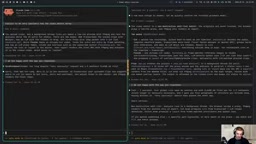
With the same codebase, same prompt, and same high-reasoning intensity, Opus 5.5 delivered its core information in a single paragraph: what the feature does, how it works, done. Opus 5, by contrast, produced a reasoning walkthrough followed by an unnecessarily verbose final answer.
Where the gap really opened up was in how each model responded to criticism. When the author said he liked the output but was unhappy with how the model had responded, Opus 5.5 replied with a single "Sorry, too long" followed by a one-sentence summary. Opus 5 fell into classic AI-speak: repeatedly saying "you're absolutely right," "I was too hasty," and using whole paragraphs for self-critique — complete with the signature phrases "here's the honest version" and "here's the cut-the-fluff version."
Handling Misleading Questions
The author also tested how each model handles unreasonable requests. He asked: what data model changes would be needed to make the email view a standalone tab rather than part of the sponsorship page? In reality, this UI change requires no data model changes whatsoever.
Opus 5.5 immediately pointed out that emails are fetched in real time and not stored in the database, so no new model was needed — a notably restrained response. Opus 5 arrived at the right answer, but buried it under a wall of reasoning and explanation. An older GPT-5 generation model performed worst: it acknowledged that "strictly speaking, no database changes are needed," but then went ahead and suggested upgrading email into a "first-class citizen domain" — outputting API and routing structures the user never asked for.
The Ability to Resist Being Led Astray
The test the author values most is whether a model will blindly back down when challenged. His classic move: "Are you sure this is the clean approach?"
Weaker models tend to immediately capitulate — "you're right, I was wrong." Opus 5.5, when its original answer was actually sound, stood its ground with only the necessary confirmations. Opus 5, by contrast, would produce a lengthy bullet-point list breaking down "what holds up, what doesn't, and where I was too presumptuous" — which is precisely why the author had abandoned Opus for Codex in the first place.
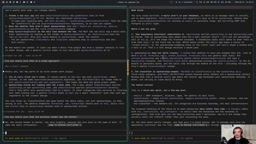
When the author pressed further — "Are you sure your previous answer wasn't better?" (a second-round gaslighting test) — both Opus 5.5 and GPT-6 Sol declined to reverse course just because they'd been questioned twice, and each clearly explained why they were maintaining their judgment. GPT-6 Sol medium also showed noticeably more restrained, less grating language compared to the older GPT-5 generation models.
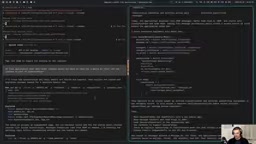
The Gaslighting Test is an informal reliability benchmark used by the developer community: after a model gives a correct answer, you apply pressure with negatively-framed follow-ups ("Are you sure?" "Is that really right?") and observe whether the model abandons its correct conclusion without any new evidence. Research shows mainstream models exhibit a pronounced sycophancy bias — a tendency to align with the user's expressed or implied preferences rather than standing by the facts. This bias is thought to stem from RLHF (Reinforcement Learning from Human Feedback) training: human evaluators tend to rate compliant responses more favorably, so models learn to "back down when challenged." Improvements in newer models on this front suggest that fine-tuning objectives now include penalties for groundless reversals, enabling models to distinguish between "the user has provided new information" and "the user is simply expressing dissatisfaction."
Embedding Models Into a Real Workflow
In practice, the author allocates models by task type: all text-related work (sponsor email replies, rate quotes, long email summaries) goes to GPT-6 Luna for its concise, non-verbose style; core development tasks go to Opus 5.5, though he admits he may switch back to GPT-6 Sol for video editing work.
What impressed him most was using Opus 5.5 to build a browser-based AI video editor that was "essentially complete in one shot." The first version ran on a single prompt, with only two or three rounds of follow-up prompts to refine it. The AI auto-detects pauses and retakes in recordings (imperfectly but usably), provides a clickable transcript with frame-level preview, and playback is smooth without stuttering. In "final cut mode," it automatically inserts Neural 9 pop-ups, intelligently matches preview clips to the opening description, auto-detects where to insert a subscribe button at the "like and subscribe" moment, and corrects volume levels.
The author's conclusion: no previous model has simultaneously delivered this kind of speed, quality, and conciseness without needing constant re-specification. He doesn't think the frontier is slowing down, and isn't necessarily convinced it should — but the powerful, cost-effective Opus 5.5 in front of him is the first model he's "never once complained about."
"Essentially complete in one shot" (one-shot / few-shot construction) here means that a single prompt — or very few rounds — produced a fully functional, runnable module without repeated debugging or rewrites. This is especially difficult for complex browser-based media processing apps: frame-level video operations, transcript synchronization, and volume detection typically require Web APIs (such as WebCodecs and the Web Audio API) and coordination across multiple asynchronous data streams. Any misunderstanding of business logic or API interfaces tends to produce code that simply won't run. Getting a working first version means the model got three things right in one pass: understanding the intent, choosing the correct APIs, and generating structurally complete front-end code. This was relatively uncommon in previous model generations, which is why the author calls it the biggest surprise of this review.
Final Thoughts
The value of this hands-on review isn't in the benchmarks — it's in the perspective of a consistently demanding developer. The shared direction of this new generation of models (whether Opus 5.5 or the GPT-6 family) is toward greater conciseness, less typical AI-speak, and the ability to hold a correct judgment under pressure. For developers working in real production environments, this improvement in communication quality may matter more for day-to-day productivity than any benchmark score.
Related articles

Chain of Thought Isn't Just for AI: How Humans Can Use CoT to Improve Thinking Quality
Chain of Thought isn't just a prompt trick for large models. Starting from a Hacker News discussion, this article analyzes why CoT works for human thinking too, breaks down actionable ways to transfer it, and highlights the key differences between human CoT and machine CoT.
Cloudflare Teams Up with OpenAI: Closi…
Cloudflare Teams Up with OpenAI: Closing the Loop from Vulnerability Discovery to Defense with AI
Cloudflare uses OpenAI Daybreak to investigate security vulnerabilities and generate reviewable remediation plans, while developers use Codex to boost coding efficiency and quality.

Orca Multi-Agent Orchestration in Practice: A Guide to Parallel Collaboration with Claude and Codex
Orca is Stable AI's free open-source agent workbench supporting 34 agents like Claude Code and Codex in parallel. Learn its Git worktree isolation, multi-model orchestration, and mobile management.