Opus 5.5 vs. GPT-6 Astra: A Head-to-Head Test on Motion Effect Replication

Opus 5.5 and GPT-6 Astra go head-to-head on motion replication — Astra wins on detail accuracy.
A Bilibili creator used the same animated typography video to test both Opus 5.5 and GPT-6 Astra on motion effect replication via Remotion. Opus 5.5 completed its version in roughly 15 minutes with strong overall fidelity; Astra matched the overall quality while edging ahead on details — most notably, correctly reproducing a straight decorative line that Opus 5.5 mistakenly rendered as curved. The creator notes this test only covers "replication," with the more revealing "directorial ability" test — asking models to create without a reference — coming next.
A Model Showdown Over "Replication Ability"
As large models continue advancing in programming and visual understanding, an increasingly interesting testing dimension has emerged: having AI directly replicate an existing motion graphic to see how faithfully it can reconstruct the original. A Bilibili creator ran the same motion effect through both Opus 5.5 and GPT-6 Astra, using the results for a side-by-side comparison of each model's real-world "visual replication" capability.
The core task was to use Remotion — a React-based programmatic video generation framework — to replicate a short animated typography video. The source material was a motivational text animation built around the theme "visibility matters more than ability," featuring the copy: "If people don't see you, they won't pay you... It pays the most recognized." This kind of rhythmic text entrance, typographic layout, and decorative elements is exactly the kind of content that tests a model's precision in capturing visual detail.
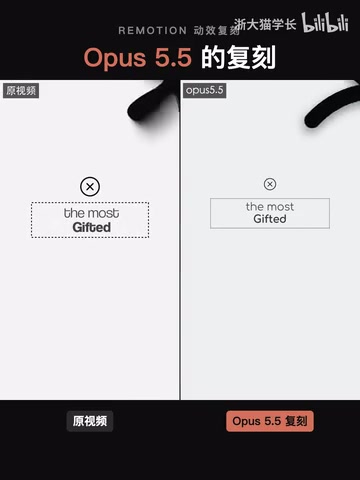
Opus 5.5: A High-Fidelity Replica in About 15 Minutes
According to the creator's hands-on testing, Opus 5.5 completed the full motion effect replication in Remotion in roughly 15 minutes. The output showed strong reproduction of the main text animations, layout structure, and overall timing — close enough that at a glance, you'd barely notice a difference.
That alone is worth noting. Replicating a motion effect isn't just about generating runnable code — it requires the model to understand the movement logic of each element, the timeline relationships, and the visual hierarchy. The fact that Opus 5.5 could produce a high-fidelity result in under 15 minutes suggests it has reached a fairly mature level on the "visual understanding + code generation" pipeline.
Remotion is an open-source framework released in 2021 by German developer Jonny Burger. Its core concept is "describing video declaratively, the same way you write React components." Every frame is essentially a React component rendered at a specific point in time. Developers use hooks like useCurrentFrame() and useVideoConfig() to access the current frame number and video configuration, then drive element animations via CSS transitions or interpolation functions like interpolate(). At render time, Remotion captures each frame using headless Chromium and stitches them into an MP4. This architecture means an AI model only needs to output valid TypeScript/React code to effectively "program" a video — which is exactly why Remotion was chosen for this test: code is video, making automated generation and precise evaluation straightforward.
GPT-6 Astra: A Slight Edge on the Details
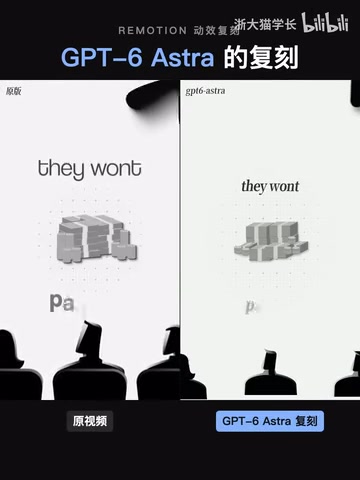
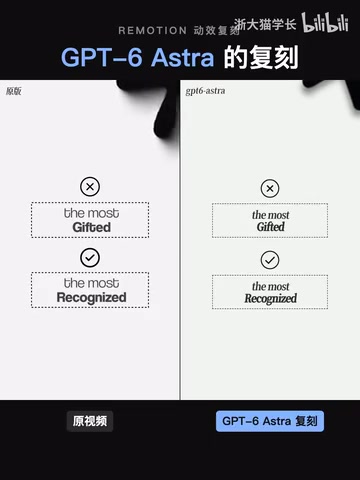
Comparing the two versions side by side, the creator's verdict was: both models demonstrated strong replication capability with no dramatic gap overall — but Astra edged ahead on the finer details.
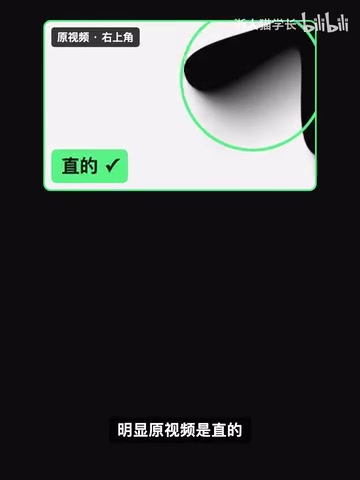
The most telling difference appeared in a decorative element in the upper-right corner of the frame. In the original video, the decorative line is straight. Astra reproduced this accurately, while Opus 5.5 — for reasons unclear — rendered it as a curve. This might seem like a trivial discrepancy, but it directly exposes differences in how stably each model parses visual detail. Whether a model can accurately tell a straight line from a curved one reflects the granularity of its visual reconstruction.
In real-world commercial design or content production, these kinds of details determine whether a finished asset is "usable." Getting the main content right but drifting on the decorative elements usually means extra manual rework. Even a difference of this magnitude has genuine practical implications.
Beyond Replication: Directorial Ability Is the Next Frontier
Notably, the creator made clear that this test only covered the "replication" dimension — that is, given a clear target, how well can a model reproduce it? The dimension that may ultimately separate models more decisively is what comes next: visual imagination, or what might be called "directorial ability."
Replication is passive reconstruction; direction is active creation. The former tests a model's parsing and execution precision; the latter tests whether it can autonomously design a cinematic language, build narrative rhythm, and orchestrate visual composition without an explicit reference. These two capabilities correspond to fundamentally different roles for AI in video production: one is an execution tool, the other is a creative collaborator.
Based on these replication results, both Opus 5.5 and Astra have already reached a high level of execution capability, with the gap concentrated in detail stability. But in the more creativity-demanding directorial arena, how far apart the two models will drift remains an open question — and arguably the most compelling part of this ongoing test series.
"Cinematic Language" in traditional filmmaking refers to the full set of narrative tools — shot scale (wide/medium/close-up), camera movement (push, pull, pan, tilt, track), editing rhythm, and visual composition — that directors and cinematographers use to convey emotion and guide audience attention. In the context of AI-generated video, testing "directorial ability" means asking: when there's no reference material, can a model proactively select an appropriate visual presentation strategy for a given script or narrative? For example, should it use a slow push-in to build a sense of weight, or rapid cuts to create tension? The essential difference from replication is this: replication optimizes for minimizing deviation from a source, while direction requires the model to internalize aesthetic judgment and make original decisions — placing much higher demands on world knowledge, aesthetic alignment, and long-range planning.
What This Means for Creators
For content creators and design professionals, the value of a comparison like this isn't about "who won" — it's about what it reveals regarding the current capability boundaries of AI visual generation tools:
- High-fidelity replication is now a practical reality: Regardless of which model you choose, replicating motion effects via natural language + a code framework has moved from concept to usable, and the efficiency is impressive (on the order of 15 minutes).
- Details still require human review: Models continue to make mistakes on decorative elements, line shapes, and other fine details. Manual verification before final delivery remains necessary for now.
- The right choice depends on the use case: If detail precision is critical, Astra performed more reliably in this test. If overall efficiency and usability are the priority, the gap between the two is minimal.
As the directorial ability tests unfold, the full picture of this competition will become much clearer. For everyday users, the rapid evolution of these tools means the barrier to producing high-quality dynamic visual content is being lowered — fast.
Related articles

Chain of Thought Isn't Just for AI: How Humans Can Use CoT to Improve Thinking Quality
Chain of Thought isn't just a prompt trick for large models. Starting from a Hacker News discussion, this article analyzes why CoT works for human thinking too, breaks down actionable ways to transfer it, and highlights the key differences between human CoT and machine CoT.
Cloudflare Teams Up with OpenAI: Closi…
Cloudflare Teams Up with OpenAI: Closing the Loop from Vulnerability Discovery to Defense with AI
Cloudflare uses OpenAI Daybreak to investigate security vulnerabilities and generate reviewable remediation plans, while developers use Codex to boost coding efficiency and quality.

Orca Multi-Agent Orchestration in Practice: A Guide to Parallel Collaboration with Claude and Codex
Orca is Stable AI's free open-source agent workbench supporting 34 agents like Claude Code and Codex in parallel. Learn its Git worktree isolation, multi-model orchestration, and mobile management.