Opus 5 in Practice: AI-Generated Presentations Now Match Consultant Quality

Opus 5 can now generate consultant-quality spreadsheets and presentations in minutes.
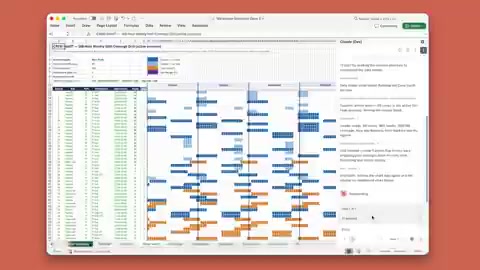
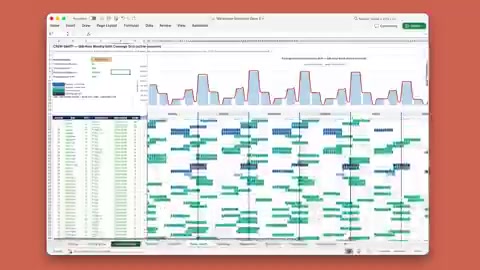
Anthropic's Opus 5 model now produces spreadsheets and presentations approaching professional consultant quality, marking AI's evolution from text generator to deliverable producer. This capability leap—combining logical structuring, data visualization, and design sense—could fundamentally reshape white-collar work, though human verification remains essential for accuracy.
A Six-Month Leap: The Tipping Point for AI Office Capabilities
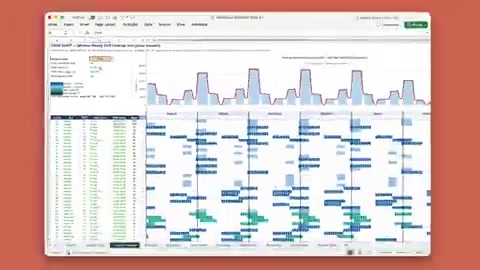
A recent Twitter observation has sparked industry-wide discussion: in just over six months, Anthropic's Opus 5 model can now generate "near-superhuman" spreadsheets and presentations, with quality rivaling the work of professional consultants. The original poster's exclamation — "Things are changing fast" — captures the accelerating evolution of generative AI in practical office scenarios.
Anthropic was founded in 2021 by former OpenAI VP of Research Dario Amodei and his sister Daniela Amodei as an AI safety company. Its Claude model series is tiered by capability: Haiku (lightweight and fast), Sonnet (balanced), and Opus (flagship). Opus, as the highest-capability tier, has consistently excelled at complex reasoning, long-document processing, and multi-step tasks. Opus 5, the latest iteration, represents Anthropic's newest breakthrough in structured output and professional-grade content generation.
Though brief, the tweet reveals a trend worth examining: AI's capability frontier is rapidly shifting from "text generation" to "structured output" and "professional deliverables." Spreadsheets and slide decks — outputs once considered to require human professional judgment, aesthetic sense, and logical organization — are now being conquered by AI at a surprising pace.
From Text to Deliverables: The Nature of This Capability Leap
Why Spreadsheets and PPTs Are a Critical Milestone
Generating fluent text is no longer a challenge for modern LLMs, but producing a high-quality, consultant-grade presentation is an entirely different beast. It requires a synthesis of multiple capabilities:
- Logical structuring: Organizing scattered information into a persuasive narrative framework (e.g., the Pyramid Principle)
- Data processing and visualization: Performing calculations and modeling in spreadsheets, selecting appropriate charts
- Visual design sense: Layout, color schemes, and proper information hierarchy
- Professional context understanding: Knowing how a consultant would frame a business argument
The Pyramid Principle mentioned here is a thinking and communication framework developed by former McKinsey consultant Barbara Minto in 1973. Its core logic is "lead with the conclusion, support from top down" — present the key insight first, then layer in grouped supporting evidence. Top consulting firms strictly follow this structure in client presentations: each slide has a governing thought at the top, with supporting evidence in the body, forming a top-down logical chain across the entire deck. An AI mastering this methodology means it has not only learned to express ideas in text but has internalized the thinking patterns of professional consulting.
When an AI model can handle all these dimensions simultaneously, it has evolved from a "content generator" into a "deliverable producer." This is precisely the qualitative shift Opus 5 demonstrates.
What "Near-Superhuman" Really Means
The term "near-superhuman" deserves a measured interpretation. It doesn't mean AI surpasses humans in every dimension, but rather that it likely matches or exceeds the average practitioner in speed, consistency, and baseline quality. A senior consultant might spend hours or even days crafting a complete slide deck, while Opus 5 can produce a first draft in minutes — with consistent quality, unaffected by fatigue.
To appreciate this achievement, consider the complexity of consulting slide decks. A standard management consulting presentation goes far beyond simple text-and-image layouts — it typically includes situational analysis, problem definition, hypothesis-driven analytical frameworks, data-backed arguments, and action recommendations, each page requiring precise information density control. Junior analysts at top consulting firms typically need months of intensive training before they can independently produce acceptable slides, and a 20-30 page client proposal might require a team of several people working one to two weeks. AI completing this process in minutes represents an order-of-magnitude efficiency gain.
This combination of efficiency and quality is the reasonable interpretation of "superhuman."
Far-Reaching Impact on Knowledge Work
Redefining White-Collar Work
A massive portion of work in consulting, finance, and marketing essentially revolves around "creating spreadsheets and presentations." If AI-generated PPTs have reached consultant quality, the center of gravity in these roles will fundamentally shift — from "creating" to "reviewing, deciding, and managing client relationships."
Human value will no longer be defined by "filling data into spreadsheets" or "turning insights into slides," but by asking the right questions, verifying AI output accuracy, and bearing ultimate responsibility for business decisions. This is a classic "capability elevation" process.
Historically, this pattern has recurred across technological revolutions. The spread of Lotus 1-2-3 and later Microsoft Excel in the 1980s-90s didn't eliminate accounting and financial analysis roles — it shifted practitioners' core competency from manual calculation to data analysis and business insight. PowerPoint's adoption in the 1990s expanded presentation creation from a specialized designer's domain to every white-collar worker. Each tool revolution redefined what "professional competence" meant — from operational skills to judgment and creativity. AI's current impact on knowledge work can be seen as the latest chapter of this historical pattern, though its speed and depth may far exceed any previous transformation.
A Paradigm Shift in Productivity Tools
In the past, we used Excel and PowerPoint as tools, with humans as operators. Future AI-powered office workflows may completely invert this — AI becomes the primary operator, while humans serve as directors and gatekeepers. This shift will trigger cascading effects on corporate organizational structures, hiring criteria, and training systems.
Maintaining Healthy Skepticism
Despite the exciting prospects, several caveats deserve attention:
First, this remains a single-source personal observation, lacking systematic third-party evaluation data. "Near-superhuman" reflects the user's subjective experience, and actual quality may vary significantly across different tasks and industries.
Second, professional deliverables involve factual accuracy and data reliability. If AI hallucinates or makes errors in spreadsheet calculations and business analysis, the consequences can be severe. Human verification remains essential before formal adoption. AI hallucination refers to LLMs generating content that appears plausible but is actually inaccurate or entirely fabricated. In plain text conversations, hallucinations may only cause misinformation; in spreadsheets and business analysis, the consequences are dramatically amplified — the model might use nonexistent industry benchmarks in financial models, fabricate competitor market share figures in market analyses, or introduce logical errors in Excel formulas that skew the entire model's output. Since tabular data often serves as direct input for business decisions, a decimal point error could lead to investment misjudgments worth millions of dollars.
Finally, while the claim of such a leap in six months reflects the industry's rapid iteration pace, it also reminds us that the curve of technological progress can be nonlinear — short-term impressive performance doesn't necessarily mean all use cases are mature.
An Accelerating Transformation in How We Work
Opus 5's performance on spreadsheets and presentations is a microcosm of generative AI's evolution from "assistive tool" to "production workhorse." Whether the "superhuman" claim is slightly exaggerated or not, one fact is undeniable: AI is rapidly penetrating the most core output processes of knowledge work.
For practitioners, rather than worrying about being replaced, the better approach is to adapt early — learn to collaborate with AI and re-anchor your value in judgment, creativity, and accountability. As the original post said, "Things are changing fast," and the only certain response is to proactively embrace this transformation.
Related articles

Chain of Thought Isn't Just for AI: How Humans Can Use CoT to Improve Thinking Quality
Chain of Thought isn't just a prompt trick for large models. Starting from a Hacker News discussion, this article analyzes why CoT works for human thinking too, breaks down actionable ways to transfer it, and highlights the key differences between human CoT and machine CoT.
Cloudflare Teams Up with OpenAI: Closi…
Cloudflare Teams Up with OpenAI: Closing the Loop from Vulnerability Discovery to Defense with AI
Cloudflare uses OpenAI Daybreak to investigate security vulnerabilities and generate reviewable remediation plans, while developers use Codex to boost coding efficiency and quality.

Orca Multi-Agent Orchestration in Practice: A Guide to Parallel Collaboration with Claude and Codex
Orca is Stable AI's free open-source agent workbench supporting 34 agents like Claude Code and Codex in parallel. Learn its Git worktree isolation, multi-model orchestration, and mobile management.