Ora: AI Agent-Powered Automated Website Flow Testing and Tracking Tool
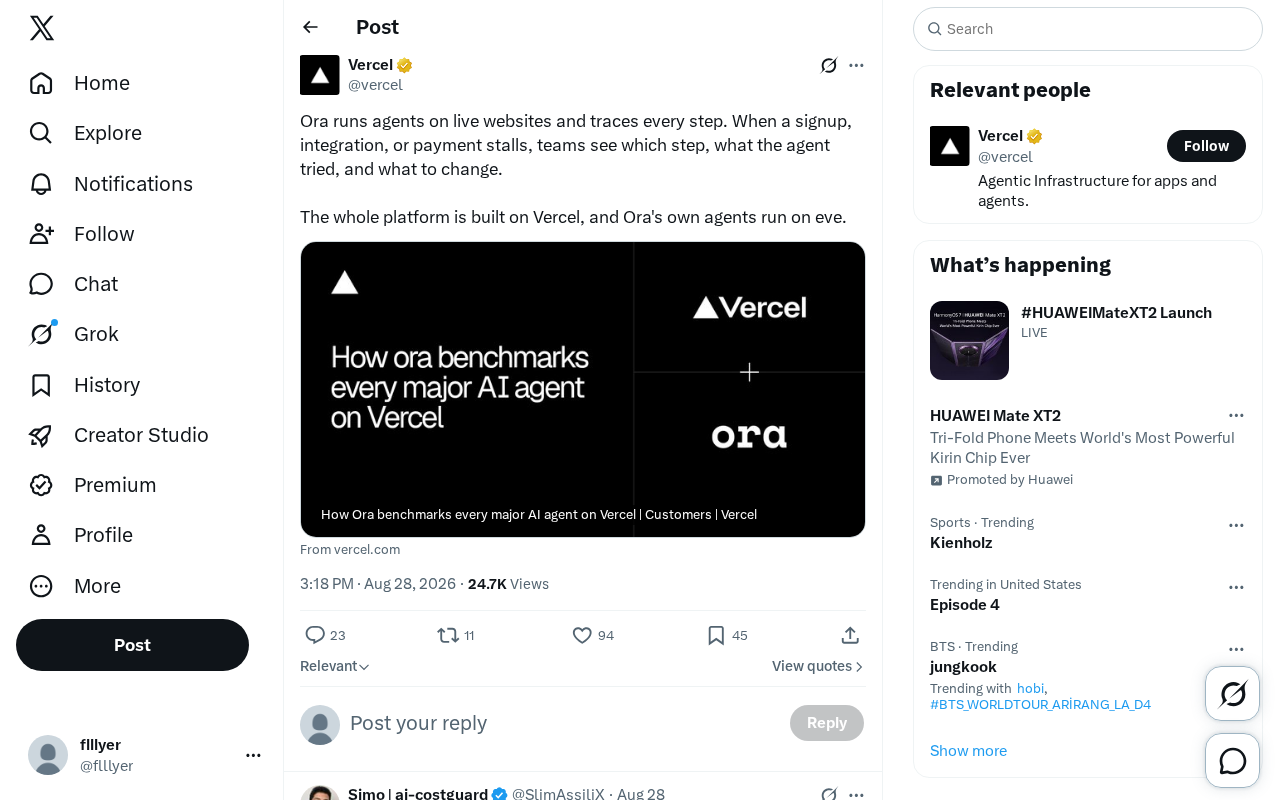
Ora deploys AI Agents to test and track real website flows, pinpointing exactly where users get stuck.
Ora is an AI-powered tool that runs Agents on live websites to execute complete user flows—sign-up, payment, integration—and tracks every step in detail. Built on Vercel with a decoupled Agent runtime, it identifies exactly where flows break, reconstructs Agent behavior, and provides actionable fix recommendations, addressing gaps left by traditional analytics and session recording tools.
How Do You Quickly Identify Issues When Critical Website Flows Break?
Sign-up, integration, payment—when these core flows experience friction, the result is direct user churn and revenue loss. The real challenge is that teams struggle to pinpoint exactly which step the problem occurs at. Is it the form-filling step that causes users to abandon? Does the payment page throw an error? Or is there a compatibility issue with a third-party integration?
Product teams have long relied on analytics tools like Google Analytics, Mixpanel, and Amplitude to track user behavior funnels. These tools excel at quantifying problems—for instance, showing that the drop-off rate at step three of the sign-up flow is 40%—but they are fundamentally event-counting tools that cannot reconstruct what the user actually experienced at that step. Was a button unresponsive? Was a form validation message unclear? Was a third-party OAuth popup blocked by the browser? Traditional session recording tools (like Hotjar and FullStory) can replay user actions, but require manual review of recordings one by one—extremely inefficient and unable to proactively surface issues.
Ora offers a new solution: it lets an AI Agent execute complete flows on real websites, fully tracking every action step, turning the "black box" of user experience into something transparent and visible.
How Ora Works: AI Agents Executing Real User Flows
Testing in Production, Not Isolated Environments
According to official documentation, Ora's core capability is running Agents on real websites and tracking every step of their actions. This is fundamentally different from traditional automated testing tools.
Traditional automated testing tools (such as Selenium, Cypress, Playwright, etc.) rely on pre-written scripts that execute actions along fixed paths in controlled environments. These scripts are inherently deterministic—they can only verify scenarios the developer anticipated. Once page elements change (e.g., button repositioning, CSS selector updates), scripts break, leading to extremely high maintenance costs. Moreover, traditional tests typically run in staging or CI/CD environments, where configuration differences, data differences, and third-party service state differences compared to production mean that many live issues go undetected during testing.
Ora lets AI Agents execute complete user journeys directly on live websites—registering accounts, completing integration configurations, and walking through payment flows just like real users. The AI Agent interacts with pages using vision-based understanding and semantic reasoning, allowing it to adaptively complete tasks even when page layouts change, closely mirroring how real users operate.
Three Steps to Identify Issues: Discover, Analyze, Recommend
Ora's value lies in its tracking and diagnostic capabilities. When a flow stalls, teams receive three key pieces of information:
- Issue Localization: Precisely identifies which specific step is stuck
- Behavior Reconstruction: Shows what actions the Agent attempted
- Improvement Suggestions: Provides directly actionable optimization recommendations
This complete closed loop of "localize + attribute + recommend" is exactly what many monitoring tools lack. Traditional analytics tools can show that conversion rates are declining but struggle to answer "why" and "how to fix it."
Technical Implementation: Full-Stack Architecture Built on Vercel
Ora's technology choices are noteworthy. The entire platform is built on Vercel, while the Agent runtime is deployed in an eve environment.
Vercel is a cloud platform created by Next.js founder Guillermo Rauch. Initially known for frontend deployment, it has evolved into a Serverless platform supporting full-stack applications. Its core strength lies in Edge Computing—running code on globally distributed edge nodes to push computation as close to users as possible, achieving ultra-low response latency. This architecture is particularly important for AI Agent applications: Agents need to frequently dispatch tasks, process execution results in real time, and quickly return tracking data. Vercel's Serverless Functions, which start on demand and auto-scale, eliminate the cost of maintaining persistent servers for Agent execution. Additionally, Vercel's Edge Runtime supports running lightweight logic directly at edge nodes, further reducing orchestration layer response times.
Decoupling the Agent runtime from the platform itself reflects a modular design philosophy: the platform handles orchestration and tracking, while the runtime handles actual execution. This architectural pattern is known as "Separation of Concerns" in distributed systems. The benefits of decoupling are multifold: the runtime can scale independently to handle varying task loads; platform iterations won't affect Agent execution stability; and different runtime implementations can be swapped without restructuring the entire system. This is also a classic application of microservices architecture thinking in the AI Agent domain, aligned with the design philosophy in frameworks like LangChain that separate LLM calls, tool execution, and memory management.
Why Tools Like This Are Becoming Important
AI Agents Are Shifting from Conversation to Execution
The center of gravity for AI Agent capabilities is shifting from pure conversational interaction to real task execution. Agents that can operate browsers, fill out forms, and complete multi-step flows represent this evolutionary direction.
Browser-operating AI Agents are a rapidly developing technology area over the past two years. Early examples include Adept AI's ACT-1 and Microsoft's UFO, which demonstrated the possibility of AI controlling GUI interfaces through visual recognition and semantic understanding. Since 2024, as multimodal large model capabilities have improved, projects like Browser Use, WebVoyager, and Anthropic's Computer Use have emerged, enabling Agents to understand web content and perform clicks, inputs, scrolling, and other actions just like humans. These Agents typically combine screenshot understanding (vision models) and DOM structure parsing (text models) to perceive page state, then use a planning module to decide the next action.
Ora focuses this execution capability on website flow quality assurance—a textbook case of browser-operating Agents moving from general capabilities to vertical application deployment, directly addressing a core pain point for product teams.
Observability Determines How Well Agents Land in Practice
As Agents take on more automated tasks, observability becomes a critical issue.
The concept of Observability originates from control theory and has been widely adopted in software engineering in recent years (especially in cloud-native and microservices architectures), typically comprising three pillars: Logs, Metrics, and Traces. When this concept extends to the AI Agent domain, the challenges escalate significantly. Traditional software execution paths are deterministic, while AI Agent behavior is non-deterministic—the same task may produce different operation sequences due to variations in LLM reasoning. This means simply recording "what was done" isn't enough; you also need to record "why it was done"—the Agent's decision context, perceived page state, and reasoning chain.
Tools like LangSmith and Arize Phoenix are addressing observability at the LLM level, while Ora pushes observability to the level of Agents executing tasks in real environments, covering the complete chain from perception to decision-making to action. As Agent behavior grows more complex, teams must be able to trace their operational processes and decision logic. Ora's comprehensive tracking of every step reflects the deep application of observability principles in a real product.
A Product Direction Worth Watching
It's worth noting that publicly available information about Ora currently comes primarily from official sources, with a lack of third-party in-depth reviews, real-world usage data, or performance comparisons. Therefore, the capability descriptions in this article are based on official statements, and actual effectiveness awaits further validation.
From a product positioning perspective, the direction Ora is targeting—using AI Agents to automate testing of real website flows while providing diagnosable tracking—genuinely addresses a long-standing pain point for product teams. As AI Agents increasingly move toward real task execution, flow quality assurance tools like this are worth keeping an eye on.
Key Takeaways
Related articles
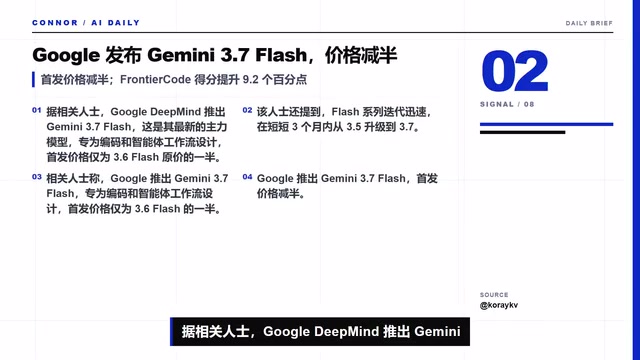
AI Daily: The Speed War and Cost War Are in Full Swing
OpenAI GPT 5.6 UltraFast mode delivers 14x faster inference, Gemini 3.7 Flash slashes prices while boosting performance, MOE architecture gains traction, HBF storage breakthrough—AI industry competition shifts from model capability to speed and cost efficiency dual-front battle.
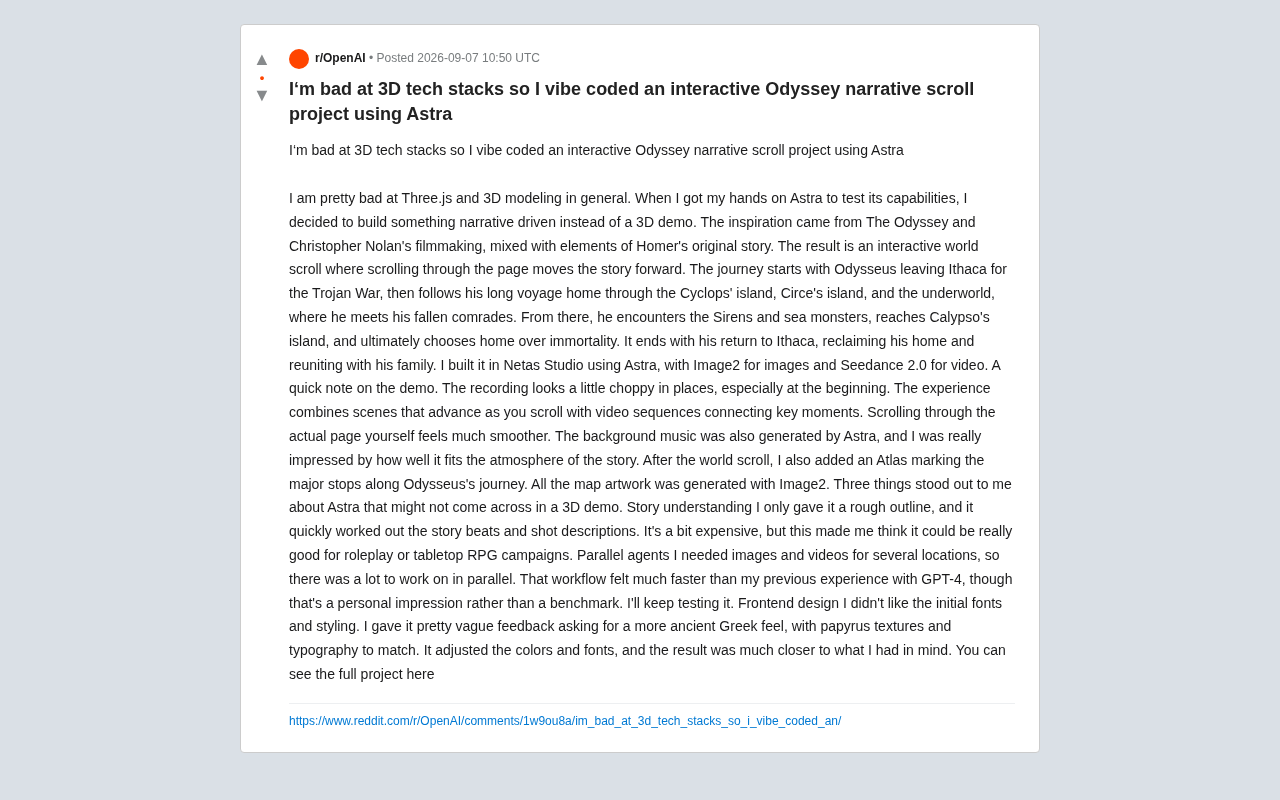
AI-Assisted Creative Production: Building an Interactive Odyssey Narrative Scroll with Astra
A developer with weak 3D skills used Astra AI to create an interactive Odyssey narrative scroll. Learn how AI tools lower technical barriers through story comprehension, parallel workflows, and design iteration.

Internet Archive Fundraising Crisis: Server Operations Challenge Behind 800 Billion Archived Web Pages
The Internet Archive faces server operations funding pressure with 800 billion archived pages. Analysis of Wayback Machine cost challenges, nonprofit digital preservation survival crisis, and sustainable development paths.