OTP.com Review: One API to Unify SMS, WhatsApp, Email, and Telegram OTP Delivery
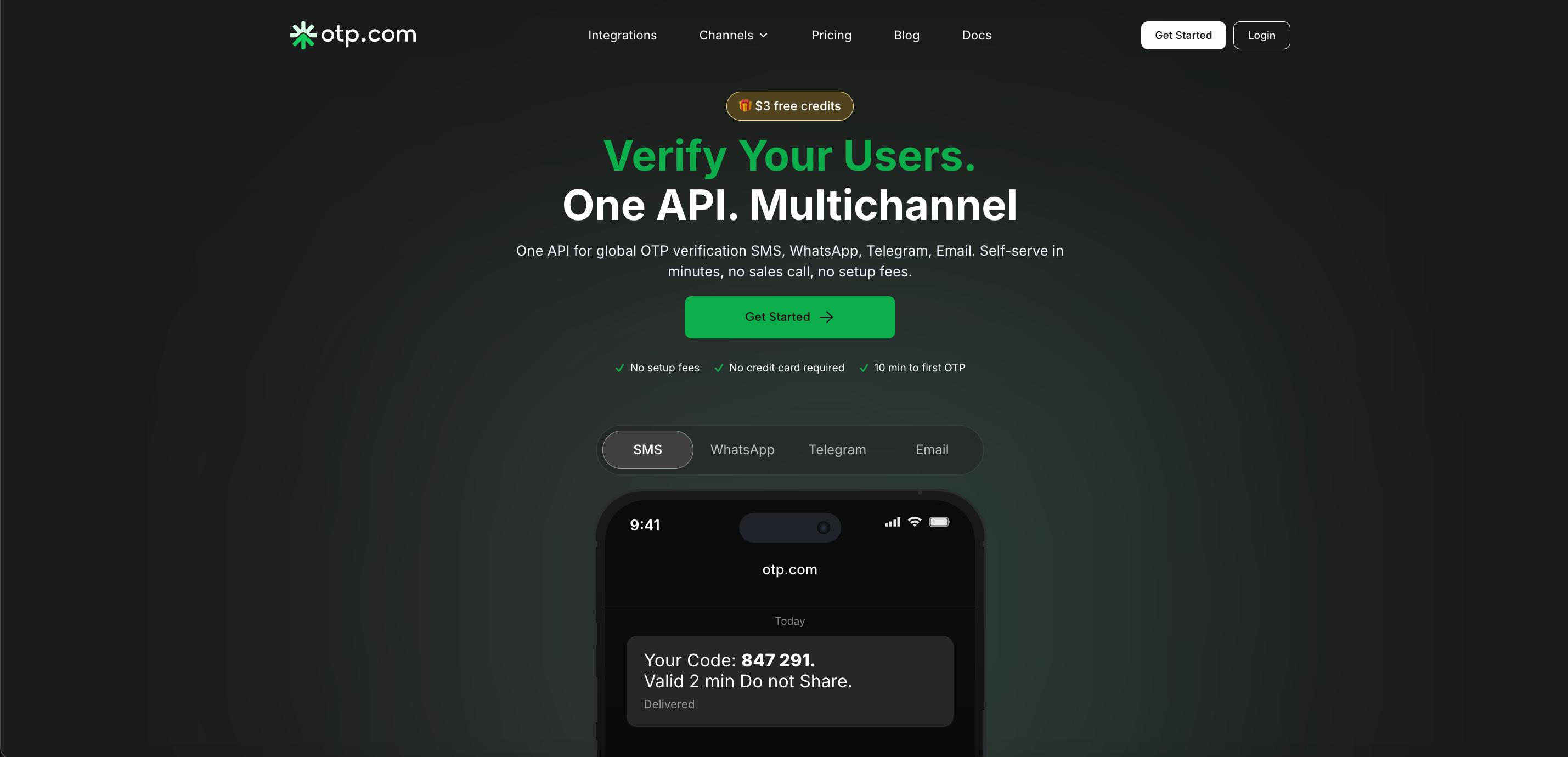
OTP.com unifies SMS, WhatsApp, Email, and Telegram OTP delivery through a single developer-friendly API.
OTP.com is a developer tool that consolidates OTP delivery across SMS, WhatsApp, Email, and Telegram into one unified API. Targeting product builders and indie developers, it reduces the complexity of integrating multiple verification channels, supports intelligent channel fallback for higher delivery rates, and competes with incumbents like Twilio Verify and Auth0 by focusing on simplicity and speed of integration.
An Underrated Developer Pain Point
For any product that requires user login or identity verification, OTP (One-Time Password) is nearly unavoidable infrastructure. Whether it's SMS verification codes, email verification links, or dynamic codes sent through instant messaging apps, OTP serves as the first line of defense for account security.
The core security principle of OTP lies in its "one-time" nature — each code is valid only within a brief time window (typically 30 seconds to 10 minutes) and expires immediately after use. OTP generally falls into two technical approaches: TOTP (Time-based One-Time Password, as defined by the RFC 6238 standard used by Google Authenticator) and dynamic codes pushed through external channels. The latter — where the server generates a random numeric code and sends it to the user via SMS, email, or messaging platforms for the user to enter back — is precisely the scenario OTP.com focuses on. This model fundamentally relies on "Proof of Possession," meaning it verifies that the user owns the corresponding phone number or email address. It's a classic implementation of the "Something You Have" factor in multi-factor authentication (MFA).
However, building a stable, multi-channel OTP system is far more complex than it seems. Developers typically need to integrate separately with SMS providers, email services, WhatsApp Business API, and Telegram Bots — each with its own authentication methods, rate limits, template approval processes, and billing logic. This fragmented integration is not only time-consuming but also prone to maintenance pitfalls.
More specifically, integrating each channel goes well beyond simply "calling an API." Take SMS, for example: developers need to handle carrier-level phone number normalization (E.164 format), navigate varying Sender ID registration requirements across countries, manage template registration (particularly strict in the Chinese market), and process asynchronous delivery receipt callbacks. WhatsApp Business API requires businesses to go through Meta's business verification process, use pre-approved message templates, and comply with the 24-hour conversation window rule. Telegram Bot API is relatively open, but handling rate limits under high concurrency requires building your own message queue. Email channels involve configuring SPF, DKIM, and DMARC domain authentication to ensure deliverability. This fragmented technical debt is exactly the hidden cost that OTP.com aims to absorb for developers.
OTP.com, which recently launched on Product Hunt, targets this exact pain point. Positioning itself as an "OTP service for product builders," it promises to let developers use a single API to unify four major channels — SMS, WhatsApp, Email, and Telegram — enabling faster verification flow development.
Core Value Proposition: 4 Channels, 1 API
A Unified Interface That Reduces Integration Costs
OTP.com's most direct value proposition is reducing complexity. In a traditional setup, developers would use Twilio for SMS, SendGrid for email, Meta's official API for WhatsApp, and build their own Bot for Telegram — four SDKs, four sets of documentation, four billing accounts. OTP.com abstracts these channels into a single unified endpoint, so developers only need to work with one API to handle multi-channel OTP delivery and verification.
For early-stage teams and indie developers, this "integrate once, use across all channels" model translates to significant time savings. During the cold-start phase, products need to validate market fit quickly rather than burning precious engineering resources on infrastructure glue code.
Multi-Channel Coverage Boosts OTP Delivery Rates
Covering four channels isn't just about stacking features — it meaningfully improves delivery rates. The adoption of each channel varies dramatically across regions and user demographics:
- SMS: Universally available but relatively expensive, with latency or interception issues in some regions.
- Email: Low cost with no geographic restrictions, but weaker in timeliness and delivery reliability.
- WhatsApp: Extremely high penetration in Europe, Latin America, and India, with a smooth user experience.
- Telegram: Has a stable user base in certain tech communities and regions, with extremely low delivery costs.
By orchestrating these channels through a single API, product teams can flexibly switch based on user location, cost considerations, or channel fallback strategies — striking a balance between verification success rates and costs.
It's worth understanding that Channel Fallback is a core concept in OTP system reliability design. In production environments, single-channel unavailability is the norm, not the exception — SMS delivery may fail due to carrier outages or anti-fraud filters, WhatsApp may be unreachable if the user hasn't installed the app, and emails may be caught by spam filters. A mature fallback strategy typically uses a "waterfall" pattern: the system first tries the preferred channel with the lowest cost or highest delivery rate. If no delivery confirmation is received within a set timeout window (e.g., 30 seconds), it automatically switches to the backup channel. More advanced implementations also incorporate intelligent routing based on user behavior history — for example, if a user's WhatsApp verification success rate has been 98%, WhatsApp would be prioritized. This multi-channel orchestration capability directly impacts the final verification completion rate and is an important dimension for evaluating an OTP provider's technical depth.
Precise Positioning for "Product Builders"
You might not have noticed, but OTP.com is categorized on Product Hunt under API, SaaS, and Developer Tools, with its target audience explicitly defined as "product builders." This positioning reveals two layers of meaning.
First, it targets teams that prioritize development efficiency rather than large enterprises requiring deeply customized telecom infrastructure. For the latter, directly integrating with carriers or using mature CPaaS solutions like Twilio may offer better negotiating leverage. But for small-to-medium teams and indie developers, an out-of-the-box integrated service is clearly more appealing.
Second, the domain "OTP.com" itself is a powerful brand asset. A precise, memorable generic domain can quickly establish trust and recognition in the developer tools space — a natural advantage that many competing startups can't easily replicate. In the developer tools market, the brand value of an Exact Match Domain should not be underestimated. Short, punchy domains like Stripe.com and Vercel.com have been proven to significantly reduce developers' cognitive overhead and trust-building time. As a three-letter generic abbreviation .com domain, OTP.com could be worth tens or even hundreds of thousands of dollars in market value. This domain advantage is equally significant from an SEO perspective — when developers search for "OTP API" or "OTP service," the domain's keyword match gives it a natural search ranking advantage. In the developer tools space, first impressions are often formed within the first 30 seconds of a developer seeing the documentation page, and a professional, intuitive domain is a crucial component of that "30-second impression."
Competitive Landscape and Practical Considerations
The OTP Service Space Is Far from Empty
Identity verification and OTP services are not a greenfield market. Mature solutions like Twilio Verify, Auth0, Firebase Authentication, and AWS SNS already command significant market share. For OTP.com to break through, its core competitive edge must be rooted in being "simpler and more focused" — achieving extreme ease of use in the verification code niche rather than trying to become a comprehensive identity platform.
To understand the full competitive picture, it helps to know how each competitor differentiates. Twilio is the undisputed giant in the CPaaS (Communications Platform as a Service) space — its Verify API product processes billions of verification requests monthly, covering SMS channels in over 200 countries and regions. Auth0 (now part of Okta) leans more toward a complete identity management platform, offering a full-stack solution from social login and SSO (Single Sign-On) to adaptive MFA. Firebase Authentication, as part of Google's ecosystem, has captured significant mobile developer mindshare through its free tier and deep integration with other Firebase services. AWS SNS (Simple Notification Service) is commonly used as an SMS delivery channel by enterprises already deeply embedded in the AWS ecosystem. While these solutions are feature-rich, they often come with steep learning curves, numerous configuration options, and complex pricing structures — which is exactly what creates room for "small but beautiful" vertical tools like OTP.com.
Based on publicly available information, OTP.com's differentiation is precisely this "four channels, one API" streamlined experience. This holds real appeal for teams looking to ship quickly, but whether it can consistently deliver on promises around pricing, reliability, and channel depth remains to be proven over time.
Key Questions to Address Before Integration
As a newly launched product on Product Hunt, OTP.com is still in its early stages. Developers considering integration should carefully evaluate the following dimensions:
- Service Reliability and SLA: Verification codes sit on the critical path — any delay or failure directly impacts the user login experience. SLA (Service Level Agreement) is particularly crucial in the OTP context because OTP sits on the "Critical Path" of user login and registration — the system chain that users must pass through to complete core operations. If OTP delivery fails or latency exceeds the user's patience threshold (research suggests this is typically 15-30 seconds), users are highly likely to abandon the action entirely, causing significant drops in registration funnel conversion rates. Industry-leading OTP services typically guarantee 99.95% or higher availability (corresponding to no more than approximately 4.4 hours of annual downtime) and P95 latency under 5 seconds. Developers should also check whether the service provides a transparent Status Page, multi-region redundant deployment, and notification and compensation mechanisms during outages.
- Pricing Transparency: Is the cost structure behind multiple channels clear? Are there any hidden fees?
- Compliance and Data Security: Since user phone numbers, emails, and other sensitive information are involved, pay attention to data handling and privacy compliance capabilities.
- Channel Fallback and Retry Mechanisms: Does it support automatic switching to backup channels when a primary channel becomes unavailable?
Conclusion: Who Is OTP.com Best Suited For?
OTP.com represents a clear trend in the developer tools space: abstracting complex infrastructure into clean APIs so builders can focus on their core business. It doesn't try to reinvent identity verification. Instead, by integrating SMS, WhatsApp, Email, and Telegram into a unified solution, it solves a real and frequently encountered integration pain point.
For indie developers and early-stage teams looking for a lightweight, multi-channel verification solution, OTP.com is worth adding to the shortlist. Of course, as an emerging product, its long-term value will depend on service quality, pricing strategy, and whether it can maintain its "simple and focused" differentiation in an intensely competitive landscape.
Related articles
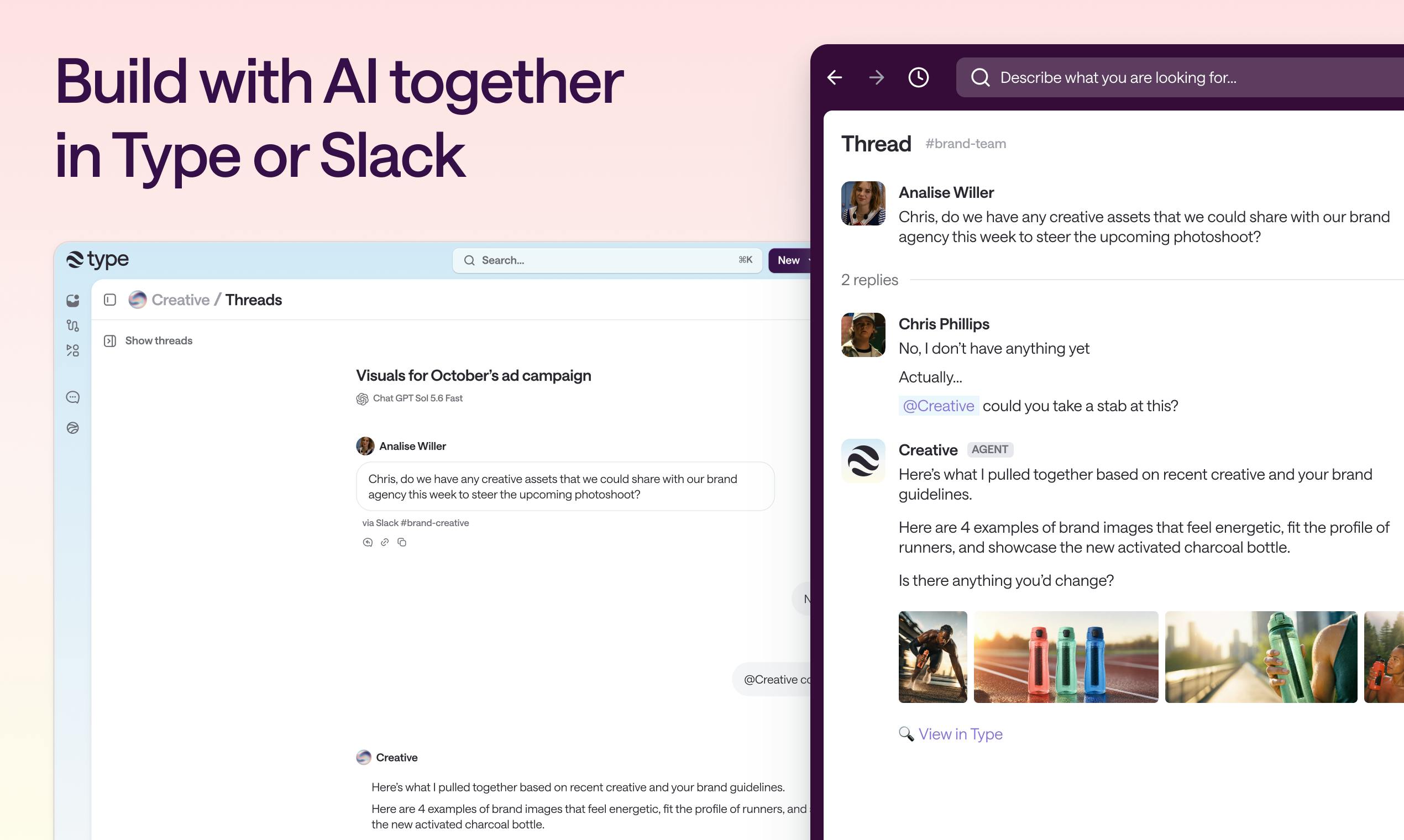
Type.com Review: A Deep Dive into the Team AI Collaboration Shared Workspace
Type.com integrates Claude, Codex, and other AI models into a team collaboration platform with shared knowledge, automation, and custom apps. Read our in-depth review of its features, use cases, and competitive edge.
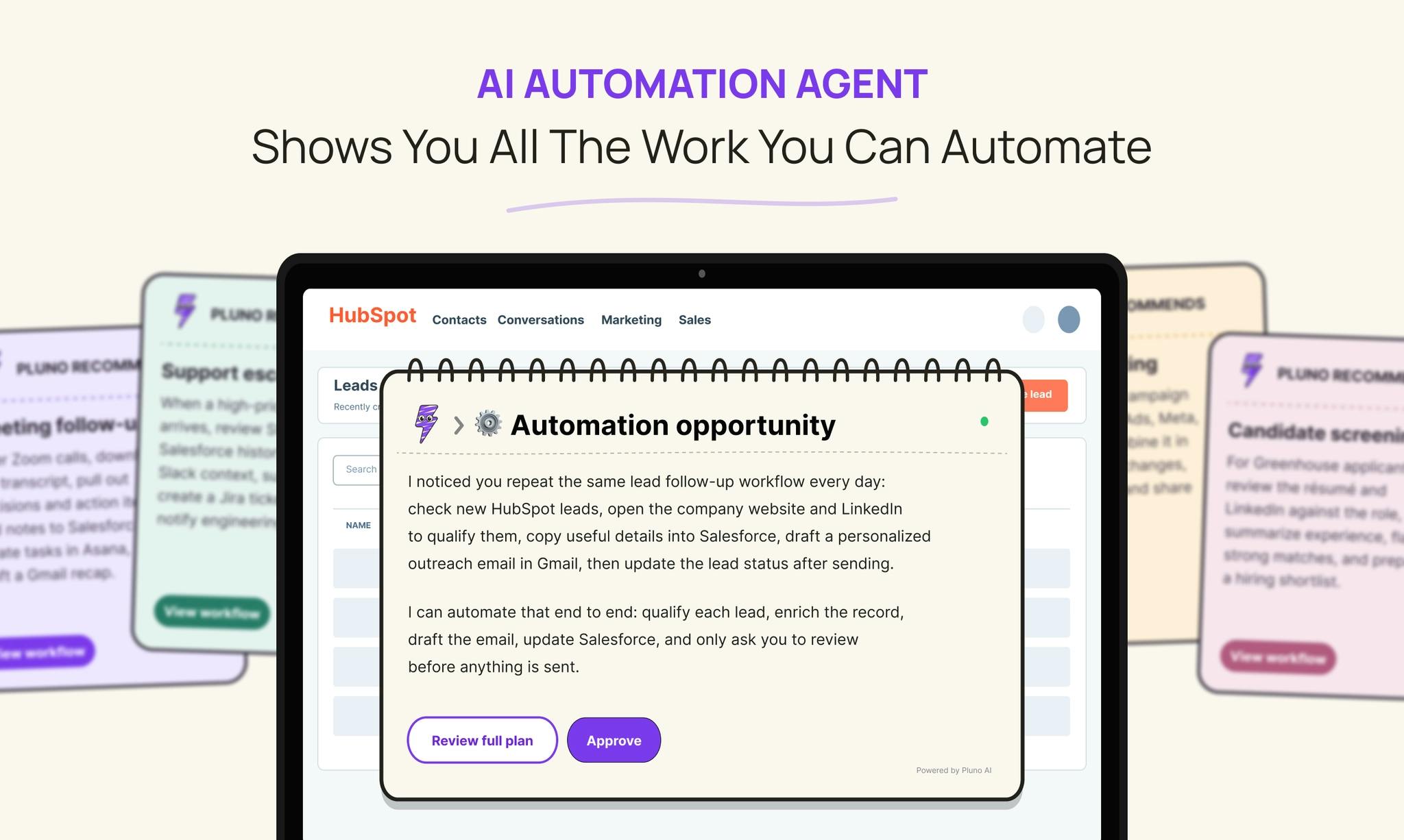
Pluno Review: An AI Chrome Extension That Proactively Discovers Automation Opportunities
Pluno is an AI Chrome extension that proactively discovers and executes automation tasks. No manual workflow setup needed — it observes user behavior, identifies repetitive tasks, and proposes automation solutions.
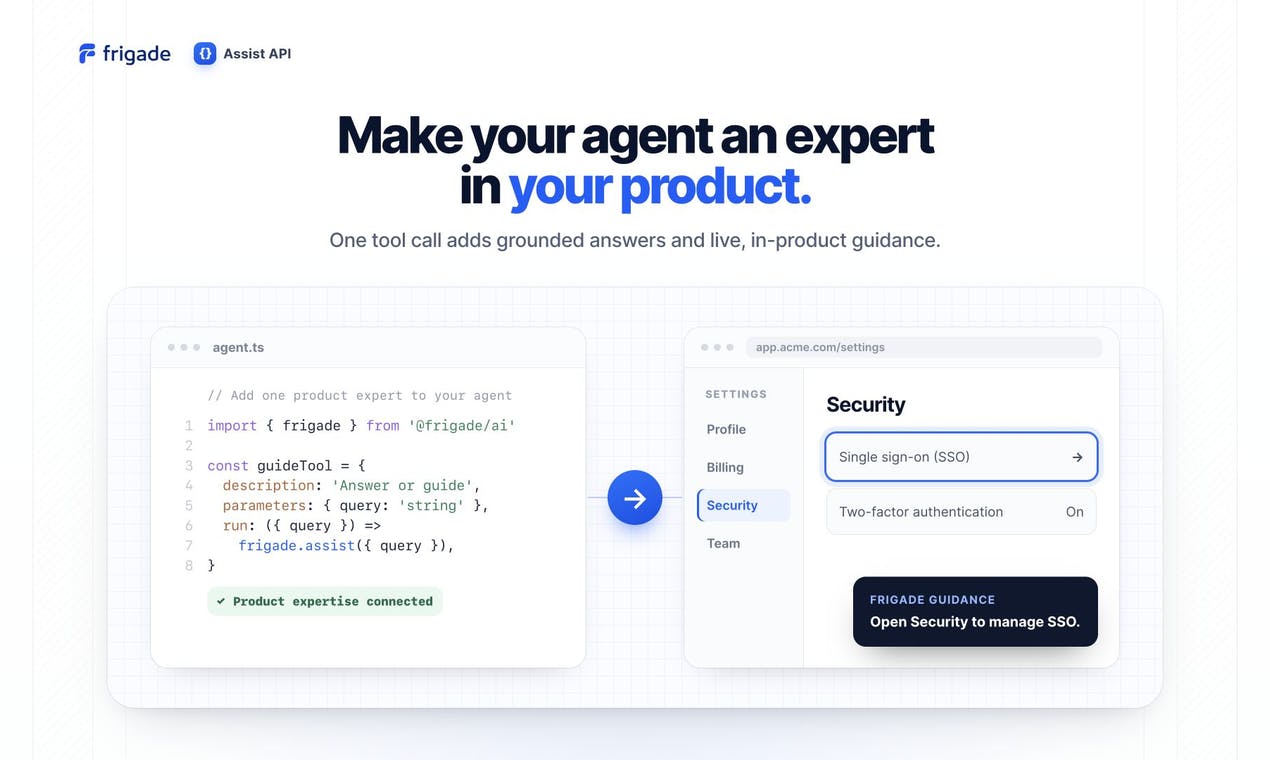
Frigade Assist API: Turning AI Customer Service from Document Dumps to Precise On-Screen Guidance
Frigade Assist API adds screen awareness and visual step-by-step guidance to AI customer service via a single tool call. Browser Agents auto-learn your product — no manual setup needed.