Oumi: An All-in-One Open-Source Framework for LLM Fine-Tuning, Evaluation, and Deployment
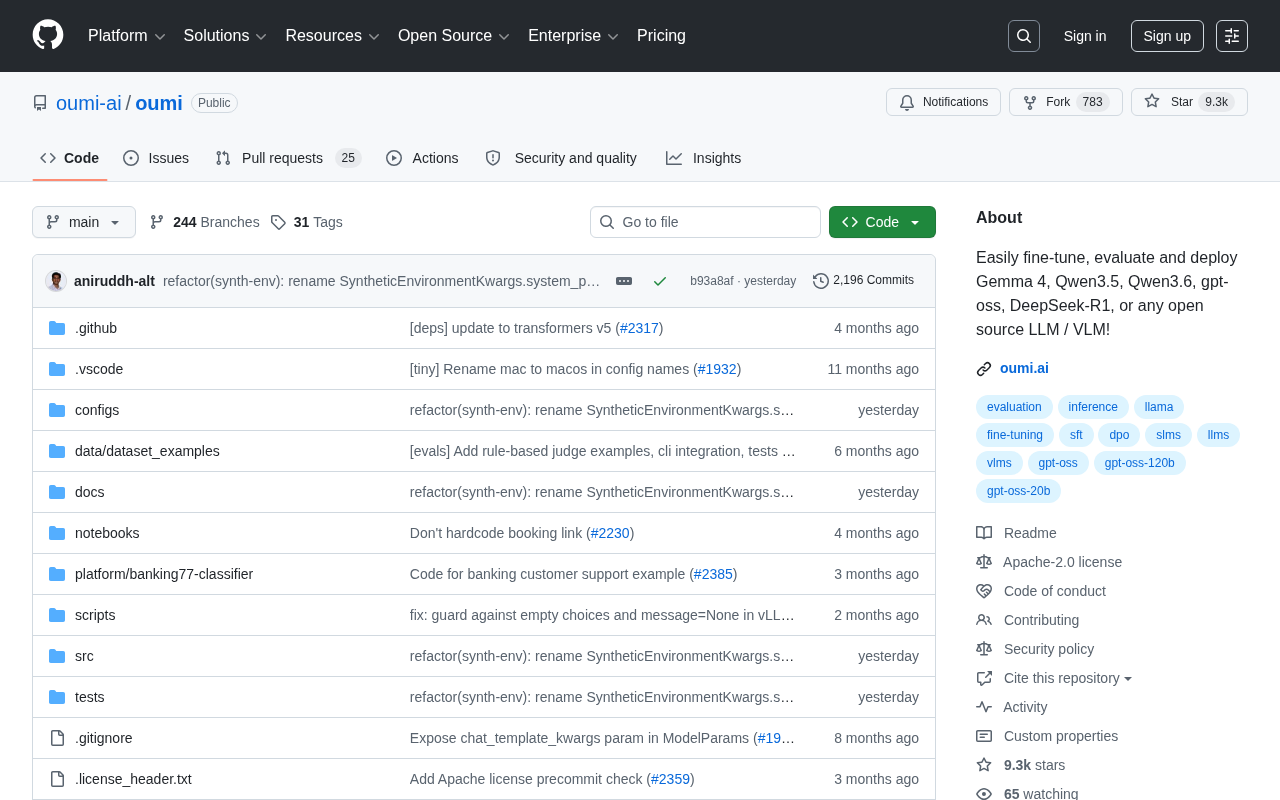
Oumi is an open-source Python framework unifying LLM/VLM fine-tuning, evaluation, and deployment in one toolchain.
Oumi is an open-source Python framework designed to eliminate the fragmentation of stitching together multiple tools for LLM and VLM engineering. It consolidates fine-tuning, evaluation, and deployment into a single unified toolchain with support for Gemma, Qwen, DeepSeek-R1, and multimodal VLMs. Its core value for small teams and researchers lies in reducing engineering complexity from data preparation to production deployment. The project has surpassed 9,200 GitHub stars and exemplifies the trend toward integrated open-source model toolchains.
What Is Oumi
Oumi (oumi-ai/oumi) is a Python framework focused on the full lifecycle management of open-source large language models (LLMs) and vision-language models (VLMs). Its goal is straightforward — give developers a unified toolchain to handle model fine-tuning, evaluation, and deployment, with out-of-the-box support for popular open-source models including Gemma, the Qwen series, gpt-oss, DeepSeek-R1, and any other open-source LLM or VLM.
The project has accumulated over 9,200 stars and 762 forks on GitHub, with Python as its primary language, making it one of the more widely recognized model engineering tools in the open-source community.
For many teams, the journey from selecting a base model to running it in production typically involves stitching together multiple incompatible tools — one for data processing, another for training, and yet more solutions for evaluation and inference serving. Oumi aims to solve exactly this fragmentation by consolidating all these stages into a single framework.
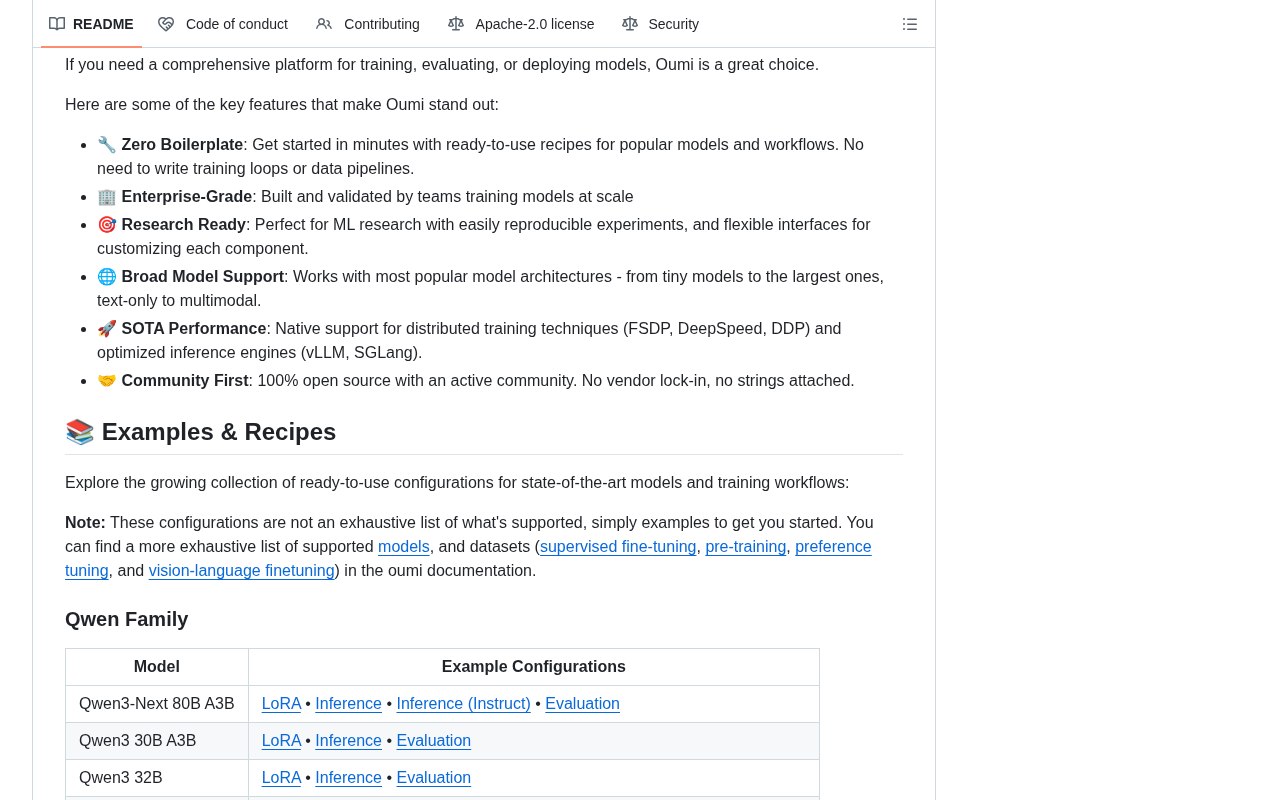
Core Capabilities: Fine-Tuning, Evaluation, and Deployment in One Place
Oumi's positioning breaks down into three key actions, which also happen to be the three most common stages in model engineering.
Fine-Tuning
Fine-tuning is the core technique for adapting a general-purpose base model to specific tasks or domain data. Oumi supports fine-tuning across a wide range of mainstream open-source models, so developers don't need to write separate training scripts for each one. The framework claims out-of-the-box support for models like Gemma, Qwen3.5/3.6, gpt-oss, and DeepSeek-R1 — meaning when the community releases a new open-source model, users can get started quickly using a consistent workflow.
Evaluation
Once a model is trained, objectively measuring its performance is unavoidable. Oumi integrates evaluation into the unified pipeline, letting users validate their fine-tuned models within the same framework without setting up a separate benchmarking environment. This closed-loop "train-then-evaluate" design helps shorten model iteration cycles.
Deployment
Putting a model into actual use is the final step in delivering value. Oumi supports deploying fine-tuned models as callable services, bridging the gap between experimental environments and real-world applications for both LLMs and VLMs.
Why This Kind of Framework Deserves Attention
The open-source LLM ecosystem has expanded rapidly over the past period, with the number of models, parameter scales, and architecture variants all growing quickly. But for the vast majority of developers and small-to-medium teams, the real barrier isn't "can we access the model weights" — it's "can we actually put the model to work efficiently."
Building a complete pipeline from scratch — covering data preparation, distributed training, metric evaluation, and inference serving — is extremely costly and prone to version conflicts and ongoing maintenance burdens. Frameworks like Oumi that encapsulate the entire workflow are fundamentally lowering the barrier to using open-source models, allowing more teams to focus on business logic and data rather than infrastructure.
Also worth noting is its support for vision-language models (VLMs). As multimodal models become a dominant trend, the ability to handle both text and multimodal tasks within the same tool is increasingly becoming a key indicator of a framework's forward-thinking design.
Who Is It For?
Oumi is primarily aimed at the following types of users:
- Teams that need domain-specific models: Those who want to fine-tune a specialized model on their own data using an open-source base model.
- Researchers: Those who need to quickly compare multiple open-source models on specific tasks, where having a unified evaluation stage is especially valuable.
- Developers looking to reduce engineering complexity: Those who don't want to switch between multiple toolsets and prefer a consistent development experience.
For users who only need simple inference calls without any training involved, a heavyweight framework like this may not be necessary. But for anyone running a full pipeline involving fine-tuning and evaluation, the efficiency gains from a unified framework are significant.
Summary
Oumi represents one direction in which the open-source LLM toolchain is heading — toward consolidation. It brings fine-tuning, evaluation, and deployment — three traditionally scattered stages — under one roof, while maintaining broad compatibility with mainstream open-source models like Gemma, Qwen, and DeepSeek-R1. For teams looking to truly productionize open-source LLMs and VLMs, the value of an all-in-one framework like this lies in reducing redundant work and shortening the distance from model to application.
A note of caution: this article is based on the project's public documentation. Actual performance, ease of use, and stability should be further validated against the official project docs and hands-on experience.
Related articles
Hallucination Detection for Local LLMs in Practice: Low-VRAM Approaches from 1.5B to 120B
How to detect hallucinations in local LLMs without consuming extra VRAM? Practical insights from testing 1.5B to 120B models, covering confidence signals, self-consistency, and lightweight validators.
Self-Hosting for Beginners: Building a Home Server from Jellyfin to Stremio
A self-hosting newcomer shares their home server setup on Reddit, covering Jellyfin, Stremio addons, and Calibre. We break down the starter stack and how to expand it.
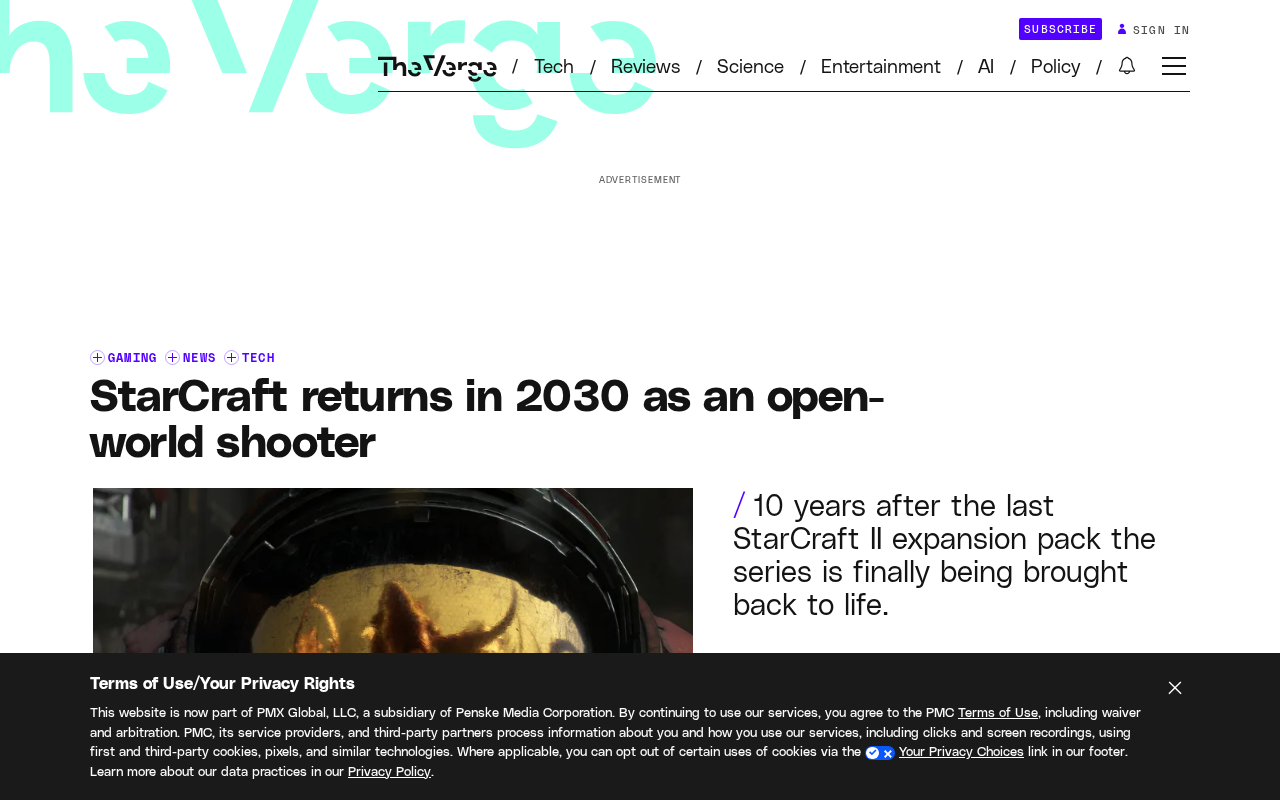
StarCraft Returns: Blizzard Reboots the Franchise as an Open-World Shooter
Blizzard is rebooting StarCraft as an open-world shooter, led by Far Cry veteran Dan Hay — revisiting the dream that StarCraft: Ghost never fulfilled.