PackLoop: An Efficient Self-Speculative Approach for Concurrent Decoding in Looped Language Models

PackLoop confines speculation to rows that must be read, keeping looped language models fast under concurrency.
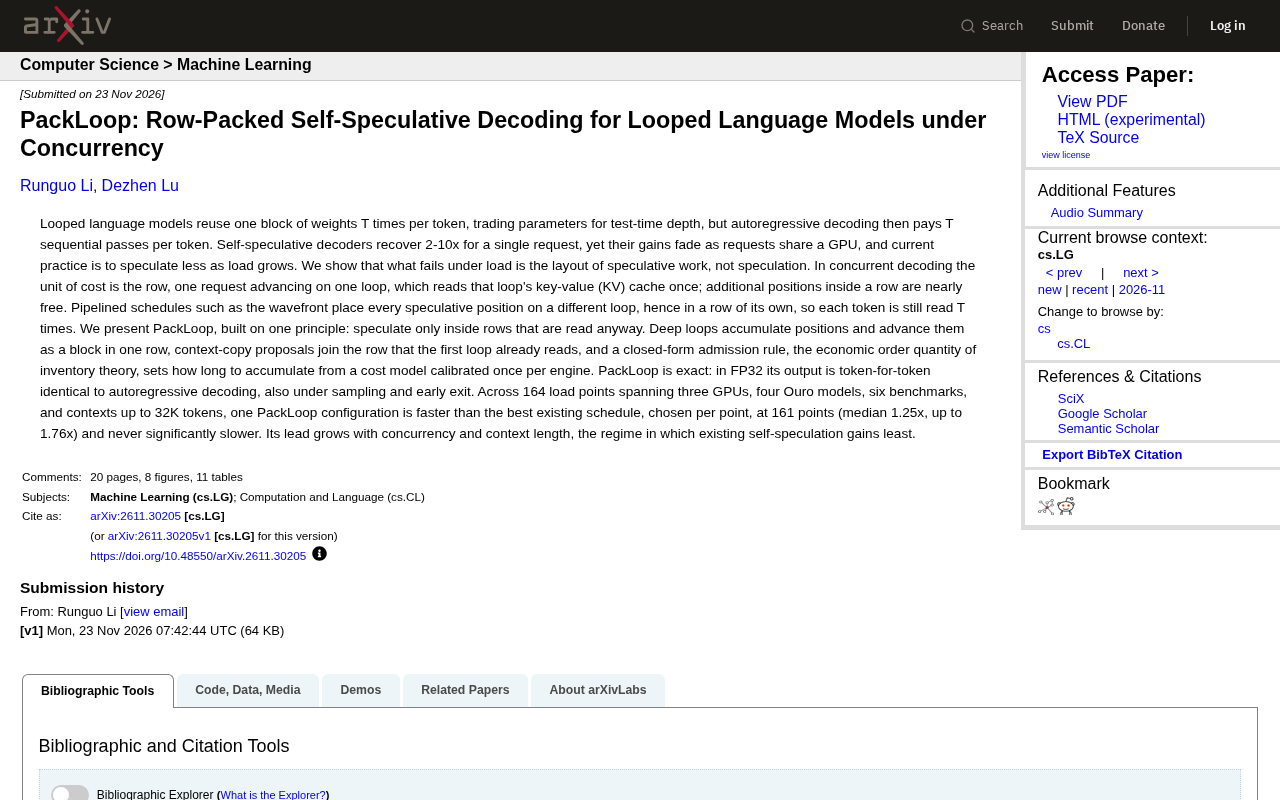
Looped language models reuse the same weights T times per token to gain depth, but autoregressive decoding needs T sequential forward passes, causing high latency. Self-speculative decoding gives 2-10x speedup for single requests but decays quickly when multiple requests share a GPU. PackLoop argues the issue is the layout of speculative work: the cost unit in concurrent decoding is the "row"—one request's advancement on one loop—and each row must read the KV cache once, while extra positions within the row cost almost nothing. Using deep-loop accumulation, context-copy proposals, and an EOQ-based closed-form admission rule, PackLoop places speculation in rows that must be read anyway. It is token-for-token identical to autoregressive decoding in FP32 and beats the best existing scheduler on 161 of 164 load points, with median 1.25x and up to 1.76x speedup.
The Concurrency Dilemma of Looped Language Models
Looped Language Models trade parameters for depth by reusing the same block of weights T times per token, thereby improving model capability. However, during autoregressive decoding, each token requires T sequential forward passes, which significantly increases inference latency. Self-Speculative Decoding can deliver 2-10x speedup for single requests, but its benefits rapidly diminish when multiple requests share a GPU. Existing approaches reduce speculation as load increases, but recent research points out that the real problem lies in the layout of speculative work, not speculation itself.
Self-Speculative Decoding is a speculative decoding variant that requires no additional draft model: it uses a shallower or cheaper path within the same model (e.g., early-exit layers, partial loops, or sparse subnetworks) to generate several candidate tokens first, then has the full model verify them in parallel, thereby compressing multiple sequential forward passes into a single batched forward pass for a single request. Its speedup depends on the candidate acceptance rate—the higher the acceptance rate, the more sequential steps are saved. But when multiple requests share a GPU, the verification step competes with other requests' essential computation for memory bandwidth and SM resources, and candidate generation is no longer "free," causing benefits to decay as concurrency rises. This is exactly the context in which looped language models need to redesign the speculative layout rather than simply cutting the amount of speculation.
The Cost Unit of Concurrent Decoding: Rows
In concurrent decoding, the basic unit of cost is the "row," i.e., one request's advancement on one loop. Each row requires reading that loop's key-value (KV) cache once, while additional positions within the row add almost no cost. Pipeline scheduling (such as wavefront scheduling) places each speculative position on a different loop, causing each token to still be read T times. PackLoop's core principle is: speculate only within rows that must be read anyway.
Intra-Row Speculation and Accumulation
PackLoop achieves efficient speculation through three mechanisms: deep loops accumulate positions and advance them in blocks within a single row; context-copy proposals join rows already read by the first loop; and a closed-form admission rule based on the Economic Order Quantity (EOQ) from inventory theory decides accumulation duration according to a cost model calibrated once per engine. This approach ensures that speculative work aligns with essential row reads, thereby maintaining speedup under concurrency.
KV Cache (Key-Value Cache) refers to the key and value tensors of historical tokens cached during autoregressive decoding to avoid redundant computation. For each new token generated, the model only needs to compute the Query for the current token and perform attention with all historical Keys/Values in the cache, without recomputing the entire prefix. Therefore, one of the main memory-access overheads of a decoding step is reading that request's KV cache. Cache size grows linearly with context length and can quickly saturate memory bandwidth under long contexts and high concurrency. In looped language models, each loop typically maintains an independent KV cache, so advancing a token through T loops requires reading T copies of the cache—the "row" as a cost unit essentially measures one such cache read.
Economic Order Quantity (EOQ) is a classic model from inventory theory: it balances ordering cost against holding cost under constant demand to find the order quantity that minimizes total cost, with the closed-form solution (Q^*=\sqrt{2DS/H}), where D is the demand rate, S is the fixed cost per order, and H is the holding cost per unit. PackLoop borrows this framework: it analogizes "accumulating multiple speculative positions and advancing them at once" to batch ordering, the fixed overhead of reading the KV cache per row to ordering cost, and the extended waiting or occupancy caused by accumulation to holding cost, thereby deriving a closed-form optimal accumulation duration. Since the cost model only needs to be calibrated once per engine, the admission rule can decide at runtime with low overhead when to accumulate and how much to accumulate.
Exactness and Performance Validation
PackLoop is exact: under FP32, its output is token-for-token identical to autoregressive decoding, including in sampling and early-exit scenarios. Across 164 load points spanning three GPUs, four Ouro models, six benchmarks, and contexts up to 32K tokens, a single PackLoop configuration outperformed the best existing scheduler selected per point on 161 points (median 1.25x, maximum 1.76x) and was never significantly slower. Its advantage grows with concurrency and context length—precisely the scenarios where existing self-speculative methods deliver the least benefit.
FP32 Exactness means that under 32-bit floating-point arithmetic, PackLoop's batched verification produces exactly the same output as token-by-token autoregressive decoding. Speculative decoding typically guarantees only "distribution equivalence" rather than "token-for-token identity," because the verification stage executes reduction operations in a different order or with different batch shapes, and differences in floating-point associativity can introduce tiny numerical deviations that may then amplify into different tokens in greedy decoding or long sequences. PackLoop achieves token-for-token consistency under FP32, indicating that its row packing and accumulation do not change the reduction order of attention and forward passes, and sampling and early-exit scenarios remain exact as well—this is especially important for evaluation and deployment requiring reproducibility.
Multi-Source Cross-Validation
According to the paper preprint and community analysis, PackLoop's innovation lies in re-examining the speculative layout under concurrency. Unlike prior work, it does not simply reduce the amount of speculation; instead, it uses row packing to position speculation within rows that must be read, thereby sustaining speedup under load. This idea has been validated across multiple models and hardware configurations, and the consensus indicates that its effectiveness does not depend on specific settings.
Conclusion
PackLoop offers a new approach for efficient decoding of looped language models in concurrent scenarios. By confining speculation to rows that must be read and dynamically adjusting via a cost model, it maintains significant speedup even under large-scale loads, providing a practical solution for deploying looped language models.
One-line Summary
PackLoop confines speculation to rows that must be read, enabling looped language models to maintain speedup under concurrency.
Paragraph Summary
Looped language models trade parameters for depth by reusing the same block of weights T times per token, but autoregressive decoding requires T sequential forward passes, resulting in high latency. Although self-speculative decoding can deliver 2-10x speedup for single requests, its benefits rapidly diminish when multiple requests share a GPU. PackLoop points out that the problem is not speculation itself but the layout of speculative work: the cost unit of concurrent decoding is the "row," i.e., one request's advancement on one loop; each row must read the KV cache once, while additional positions within the row add almost no cost. Through deep-loop accumulation, context-copy proposals, and a closed-form admission rule based on EOQ, PackLoop positions speculation within rows that must be read anyway. It is token-for-token identical to autoregressive decoding under FP32 and outperforms the best existing scheduler on 161 of 164 load points, with a median speedup of 1.25x and a maximum of 1.76x.
Related articles
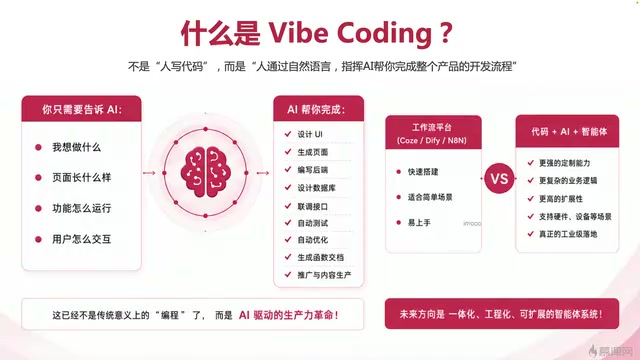
Vibe Coding End-to-End in Practice: A One-Person Company Development Guide for the AI Era
An analysis of the 80-episode Vibe Coding tutorial: from humans directing AI to write code to a full product loop, covering AI-collaborative development, UniApp multi-platform, and AI-automated operations, while clarifying that workflow orchestration is not AI development.
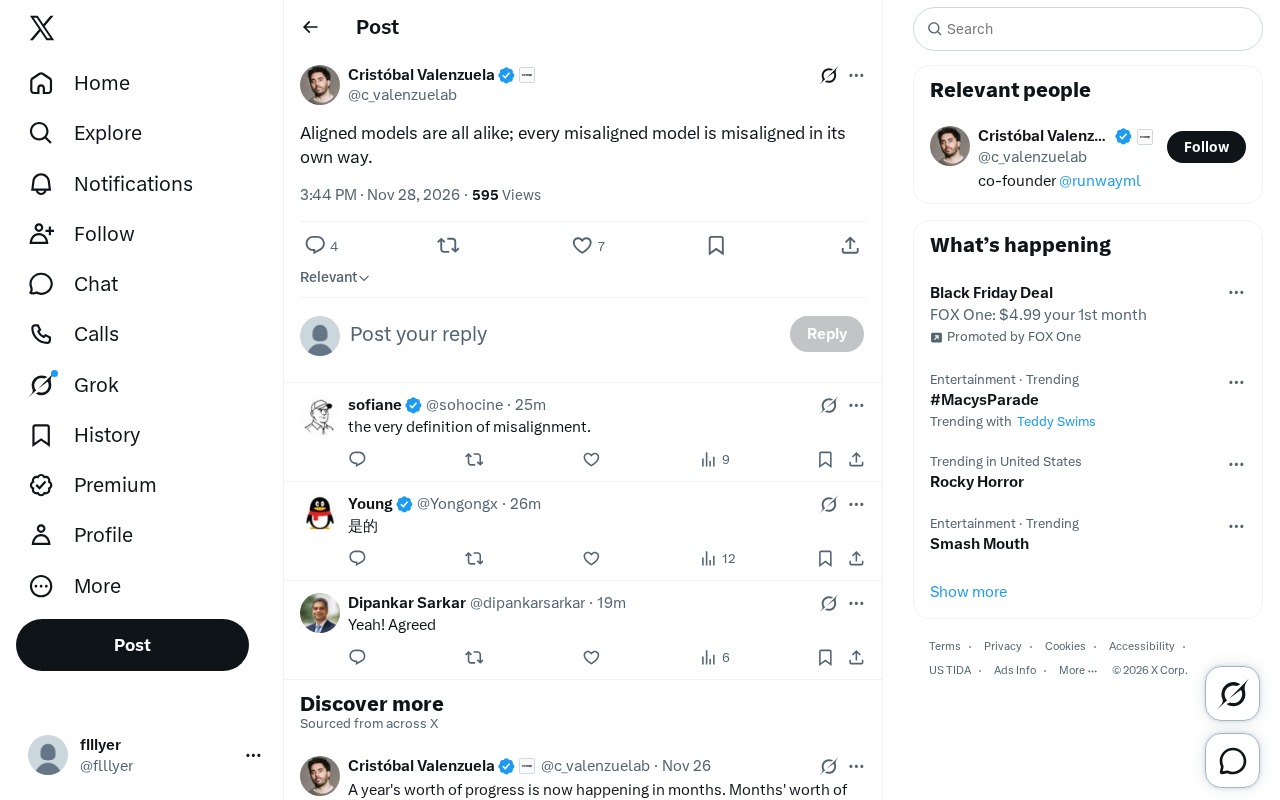
Aligned Models Are All Alike; Every Misaligned Model Is Misaligned in Its Own Way
A Tolstoy-inspired community observation reveals AI alignment's core challenge: aligned models converge, while misaligned models fail in wildly diverse ways.

Kodak Charmera Mini Camera Drops to $30: Retro Charm Beats Image Quality
Kodak Charmera keychain camera on sale for $30. Review calls image quality mediocre but charm undeniable. Learn about this mini retro camera's positioning and buying advice.