Parents Are Calling for Safer Phones — How Are Companies Responding?

Parents' fears about smartphone risks are driving a kids' phone market built on hardware subtraction and safety by design.
Ordinary smartphones are a double-edged sword for kids, so a growing number of companies are launching children's phones in two categories: feature-limited mobile devices and minimalist home phones. Their core approach is to subtract at the hardware level — stripping app stores and browsers — making safety part of the product definition rather than a software patch. This reverse innovation trades constraints for trust, though the market still faces challenges in balancing simplified features with kids' growth and finding a sustainable business model.
The ubiquity of smartphones has put parents in a bind: they want their kids to stay connected, but they worry about the risks of unrestricted internet access. According to a report from RSS Tech Media, a growing number of companies are now designing phones specifically for children — ranging from feature-limited mobile devices to minimalist home phones — in an attempt to strike a balance between safety and connection.
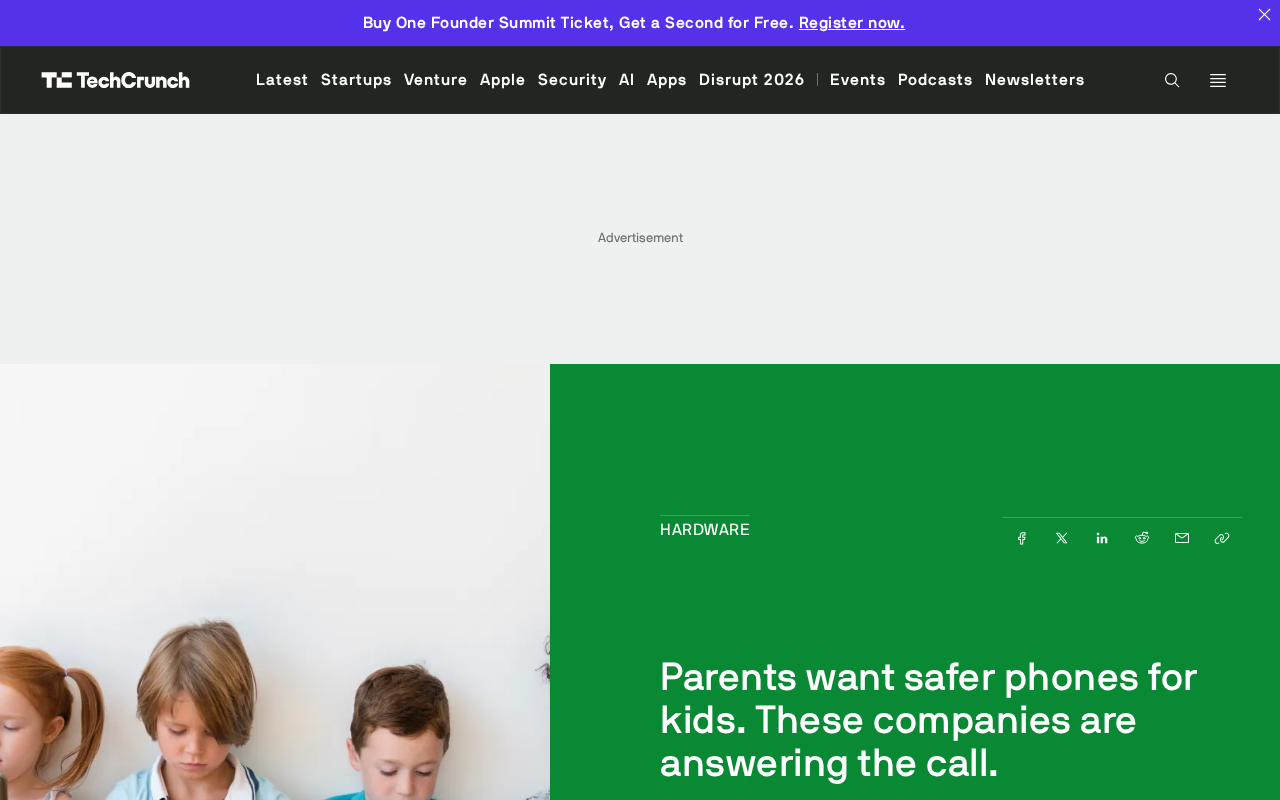
Why Do Parents Need "Kid-Specific Phones"?
For children, an ordinary smartphone is a double-edged sword. What parents really want isn't to cut their kids off from the digital world entirely, but to have a controllable way to connect — one that allows calls and messages without exposing children to social media, endless short-form videos, and open browsers. This demand has given rise to a niche market: devices that cut back at the hardware level rather than relying solely on software-based parental controls.
Two Product Paths: Feature Phones and Minimalist Home Phones
The report notes that these companies' offerings cover different scenarios. One category is feature-limited mobile devices that retain basic calling and location capabilities but strip out app stores and browsers; the other is minimalist home phones suited to younger children, meeting communication needs within the household or in emergencies. Both paths point to the same design philosophy: making "less" a selling point rather than a flaw.
The Core Philosophy of Safety by Design
What these children's phones share is that safety isn't an after-the-fact patch — it's part of the product definition. When a device is incapable of installing arbitrary apps from the start, parents don't need to constantly monitor it, and children have fewer chances to stumble onto inappropriate content. For the tech industry, this represents a kind of reverse innovation: subtracting rather than adding, trading constraints for trust.
Market Signals and Future Challenges
Parents actively seeking out these products shows that relying purely on software parental controls is no longer enough to put people at ease. Still, the children's phone market faces challenges: how to transition smoothly between minimalist functionality and the changing needs of kids as they grow, and whether these devices can build a sustainable business model under pressure from the mainstream phone ecosystem — both are questions worth watching.
For parents, these companies' responses at least offer a clear option — a safe phone doesn't have to be a product of compromise; it can be a deliberate design choice.
One-line Summary
Parents' concerns about smartphone risks are fueling the children's phone market, trading hardware subtraction and safety-by-design for controllable connectivity.
Paragraph Summary
The article notes that ordinary smartphones are a double-edged sword for children — parents want them to stay connected but worry about unrestricted internet access. In response, a growing number of companies are launching children's phones in two categories: feature-limited mobile devices and minimalist home phones. The core design approach is to subtract at the hardware level, stripping out app stores and browsers so that safety becomes part of the product definition rather than a software patch. This reverse innovation trades constraints for trust, but the market still faces the challenge of balancing simplified functionality with kids' evolving needs as they grow, as well as the test of building a sustainable business model.
Related articles
 Tech Frontiers
MuJoCo: An Analysis of DeepMind's Open-Source General-Purpose Physics Simulator
An in-depth analysis of Google DeepMind's open-source physics simulator MuJoCo: high-performance C++ kernel, MJCF modeling format, contact solving principles, MJX GPU acceleration, and robot reinforcement learning use cases.
 Tech Frontiers
Claude API Quick Start: The Official Quickstarts Project Collection
Anthropic's official claude-quickstarts project collection helps developers quickly build deployable apps with the Claude API. Nearly 20k stars, Python-based, great for beginners and prototyping.
 Tech Frontiers
AI Agents Connecting Directly to APIs: Which Calls Can Be Safely Allowed?
AI agents can call any API, but the real challenge is deciding which calls can be safely allowed. This article analyzes allowance decisions from three dimensions—intent matching, least privilege, and controllable impact—and argues that the control layer should sit outside the agent, combined with audit traceability to build a trustworthy API call governance mechanism.