Pascal's Pager: Turn Webhook JSON into Readable iPhone Notifications with AI
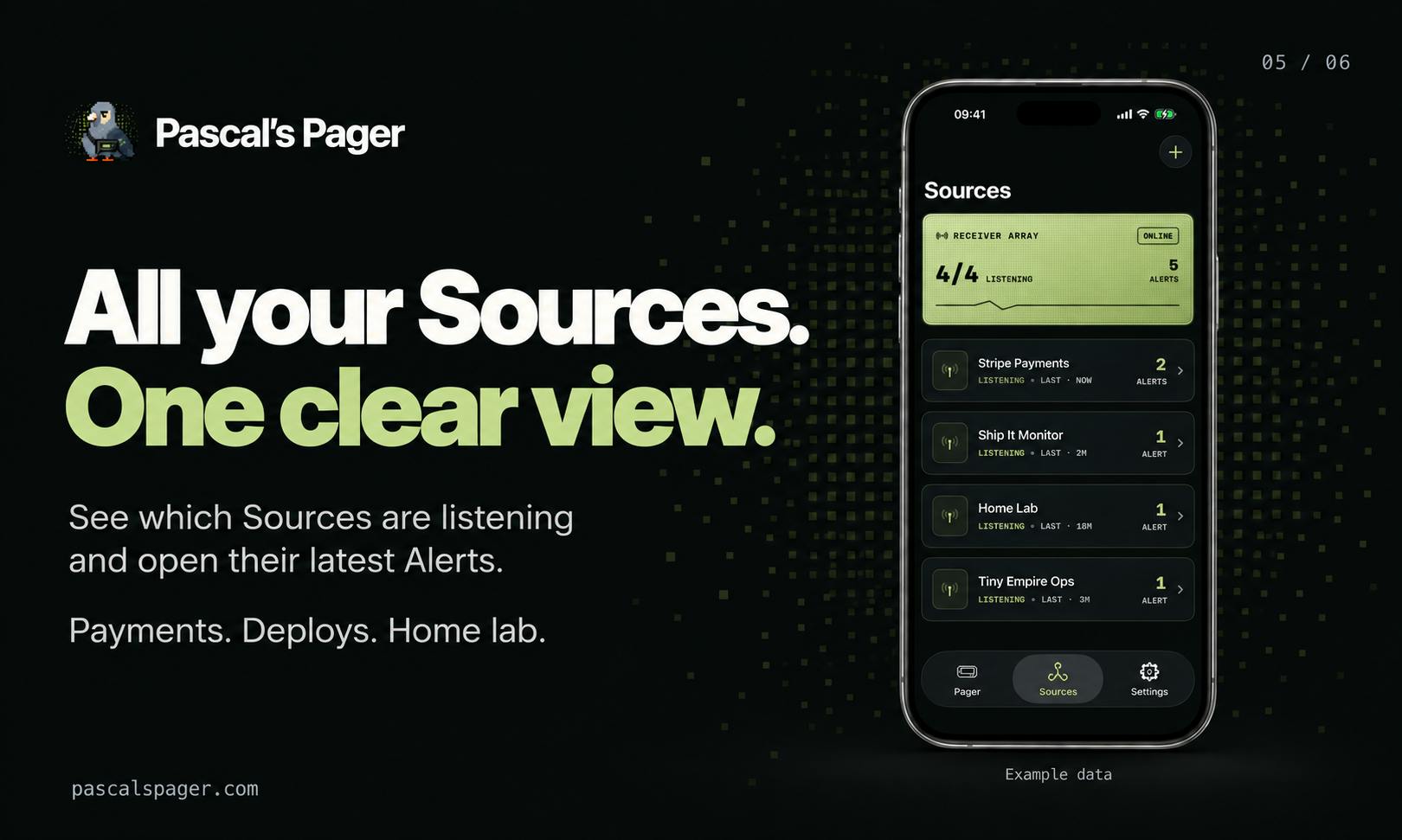
Pascal's Pager uses AI to turn raw Webhook JSON into clean iPhone push notifications — no custom parsers required.
Pascal's Pager is an AI-powered webhook notification tool for indie developers that collapses the "receive JSON payload → parse and extract → push notification" pipeline into a single automated flow. Developers assign a private URL to each service, tell the AI what to watch for, and receive concise summary notifications on iPhone — no need to write separate parsing code for Stripe, GitHub, or other services. The app also offers sensitive field masking to reduce privacy risk and 30-day payload history for debugging. It targets side-project builders and home server operators who want lightweight notification infrastructure without the maintenance overhead.
For indie developers and self-hosted service operators, webhooks are the glue connecting everything — payment confirmations, failed builds, server alerts all flow through them. But raw webhook data is often a mess of nested JSON, and making sense of it on your phone usually means writing custom parsing logic for every service. A new Product Hunt launch called Pascal's Pager aims to automate this chore with AI, turning chaotic JSON into clean, readable iPhone push notifications.
The Core Idea: Let AI Read JSON for You
The product's positioning is refreshingly direct — "Stop writing a parser for every service." The workflow has three steps: assign a private URL to each integrated service, tell Pascal what information you care about, and start receiving summary notifications with key facts and useful links.
In other words, Pascal's Pager collapses the "parse + extract + notify" pipeline into a single AI-driven flow. Developers no longer need to write separate field-mapping code for Stripe, GitHub, monitoring services, and whatever else they're running. The AI extracts what matters based on your stated preferences. For anyone juggling multiple side projects who doesn't want to spend time on notification infrastructure, this is a genuinely useful time-saver.
Webhooks are essentially a "reverse API" mechanism: when a specific event occurs, a third-party service proactively sends an HTTP POST request to a pre-configured URL, pushing event data in JSON format — rather than requiring your app to repeatedly poll for status updates. Take Stripe payments as an example: after a successful transaction, Stripe immediately pushes a JSON object containing dozens of fields — amount, user, order ID, and more — to your server endpoint. The problem is that every service uses a completely different JSON structure. GitHub build events, Grafana alert events, and Stripe payment events each have their own field naming conventions and nesting hierarchies. The traditional approach requires writing separate mapping code for each service to translate raw payloads into meaningful notification text. That's precisely the step Pascal's Pager aims to skip using the semantic understanding capabilities of an LLM.
Privacy and Security Considerations
Handing webhook data off to AI raises an obvious concern: sensitive information leakage. Webhook payloads frequently carry API keys, user emails, payment amounts, and other private fields. Pascal's Pager addresses this with a field masking feature that redacts specified fields before the data enters the AI processing pipeline.
This design choice signals that the team is aware of the compliance risks involved in "AI processing third-party data." For projects handling real user data, this kind of upfront masking is a necessary baseline — at minimum, it lets developers control which fields never get fed into the model.
Field masking is a technique for replacing specific field values with placeholders or hashed values before data crosses a trusted boundary. Common implementations include rule-based matching on field names (e.g., automatically obscuring any key named
token,password, or
Engineering-Friendly Details
Beyond the notifications themselves, Pascal's Pager includes a few features that lean more toward developer tooling:
- Grouped related webhooks: Aggregates notifications from the same source or event type to prevent alert fatigue.
- Payload inspection (30 days): Lets you review raw payloads processed over the past 30 days — useful for debugging questions like "why didn't that notification fire?" or "what did the AI summary miss?"
The 30-day payload retention is genuinely valuable for debugging. Webhook issues tend to be intermittent, and without historical records, troubleshooting is nearly impossible. This feature signals that the product isn't just a flashy notification beautifier — it's trying to fit into a developer's actual operational workflow.
Target Audience and Market Positioning
Creator Matt Blake explicitly targets three audiences: indie developers, side projects, and home server operators. These users share a few traits: limited budgets, no desire to build complex notification infrastructure, and a real need to stay on top of service status. The traditional alternatives are either rolling your own scripts with Pushover or Bark, or relying on automation platforms like Zapier — the former is time-consuming, the latter offers limited intelligence when it comes to JSON comprehension.
Pascal's Pager slots in between, using AI to fill the "semantic understanding" gap. The product received 67 upvotes on Product Hunt, ranking 14th — a respectable but unremarkable showing for a developer tool. It will need more real-world usage feedback to validate the accuracy and consistency of its AI summaries.
Pushover and Bark are two mobile push services with similar positioning but different emphases. Pushover is a paid push notification API for developers that supports sending custom messages to iOS/Android devices via simple HTTP requests — long the go-to building block for indie developer notification systems, though it has no ability to parse or understand webhook payloads; formatting is entirely the caller's responsibility. Bark is an open-source push tool designed specifically for iOS with self-hosting support and stronger privacy guarantees, but it likewise doesn't process message semantics. Zapier offers more powerful automation orchestration, but its JSON handling relies on preset field-mapping templates — still requiring manual configuration for varied webhook structures — and its pricing isn't friendly for lightweight side projects. Pascal's Pager's differentiation lies in using AI to fill the "understanding unstructured content" layer, so onboarding a new service requires zero manual mapping.
Open Questions
Based on the product description, several things remain unclear: AI summary accuracy, which underlying models are used, pricing structure (subscription vs. usage-based), and whether Android or desktop support is planned. For developers trusting a tool with critical alerts, these are the factors that determine long-term adoption.
Overall, Pascal's Pager addresses a real and recurring pain point. It's not trying to replace mature monitoring and alerting systems — it's offering a "good enough, low-maintenance" notification layer for lightweight projects. If you're looking for a webhook notification solution for a side project that doesn't require writing any parsing code, it's worth putting on your shortlist.
Related articles
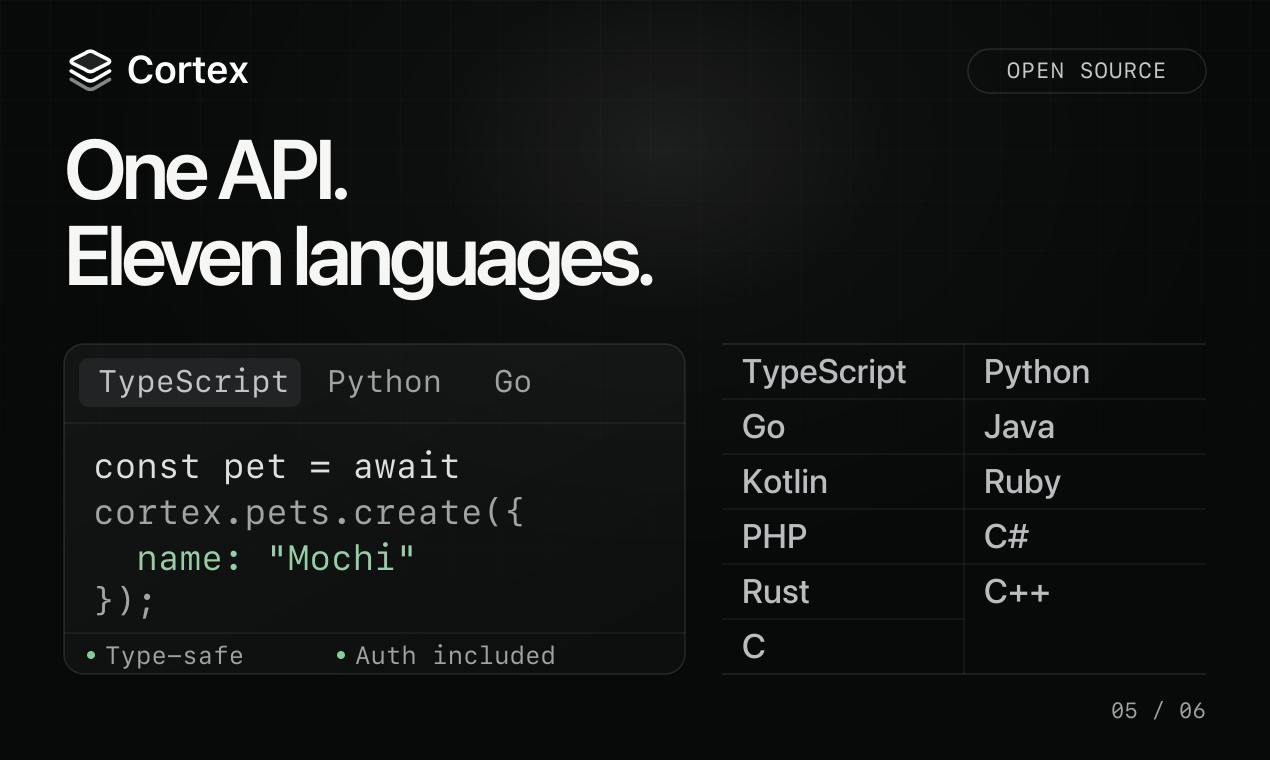
Cortex: Convert API Specs into Docs, SDKs, and MCP Servers in One Click
Cortex is an open-source tool that converts OpenAPI, GraphQL, gRPC and more into interactive docs, typed SDKs in 11 languages, and MCP servers for AI agents.
ABrush: An AI Studio Built for Digital Artists
ABrush is an AI studio for digital artists, ranked #4 on Product Hunt. It embeds leading AI models into existing workflows to remove repetitive tasks, speed up iteration, and keep artists in control.
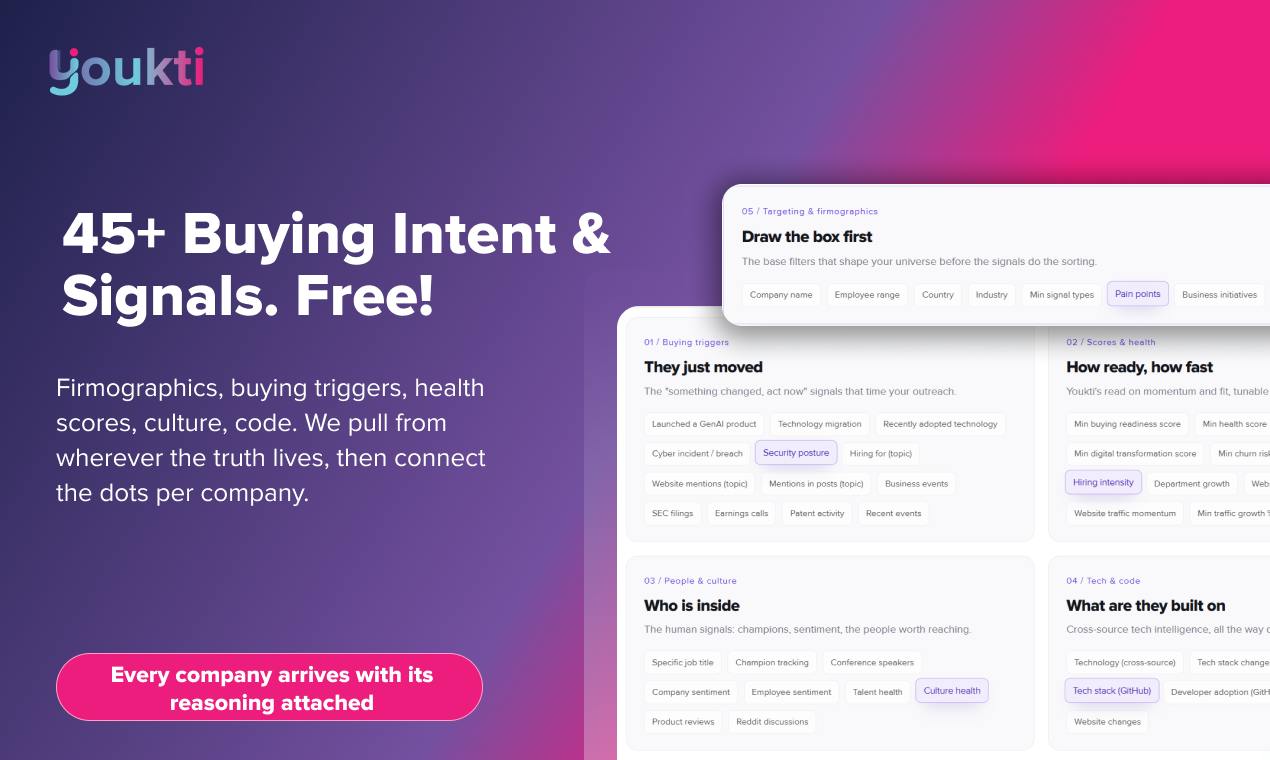
Youkti: An AI That Remembers Every Deal and Tells Your Sales Team What to Do Next
Youkti is an AI sales assistant that hit #2 on Product Hunt. It remembers every account, conversation, and deal — then tells your team exactly what to do next. Contact data, buying signals, and intent data are all free.