Paul Ford's New Piece Sparks Discussion: The Web Itself Is Enough

Paul Ford argues the Web is enough to carry app development without introducing closed platforms.
The article centers on tech writer Paul Ford's "The Web Is More Than Enough" and its Hacker News discussion. The post got only 17 points and 5 comments, but the title stakes a clear position: against the narrative that the Web is inadequate and needs new abstraction layers and closed ecosystems. Ford argues HTTP, HTML, and URL already carry most publishing and interaction needs, with advantages in universal access, permissionlessness, and cross-platform consistency. This clashes with the AI trend of desktop clients, embedded assistants, and proprietary APIs, which may dilute the Web as a public information space. For developers, Web-first means lower distribution barriers and longer lifecycles, but requires weighing the cost of integration convenience.
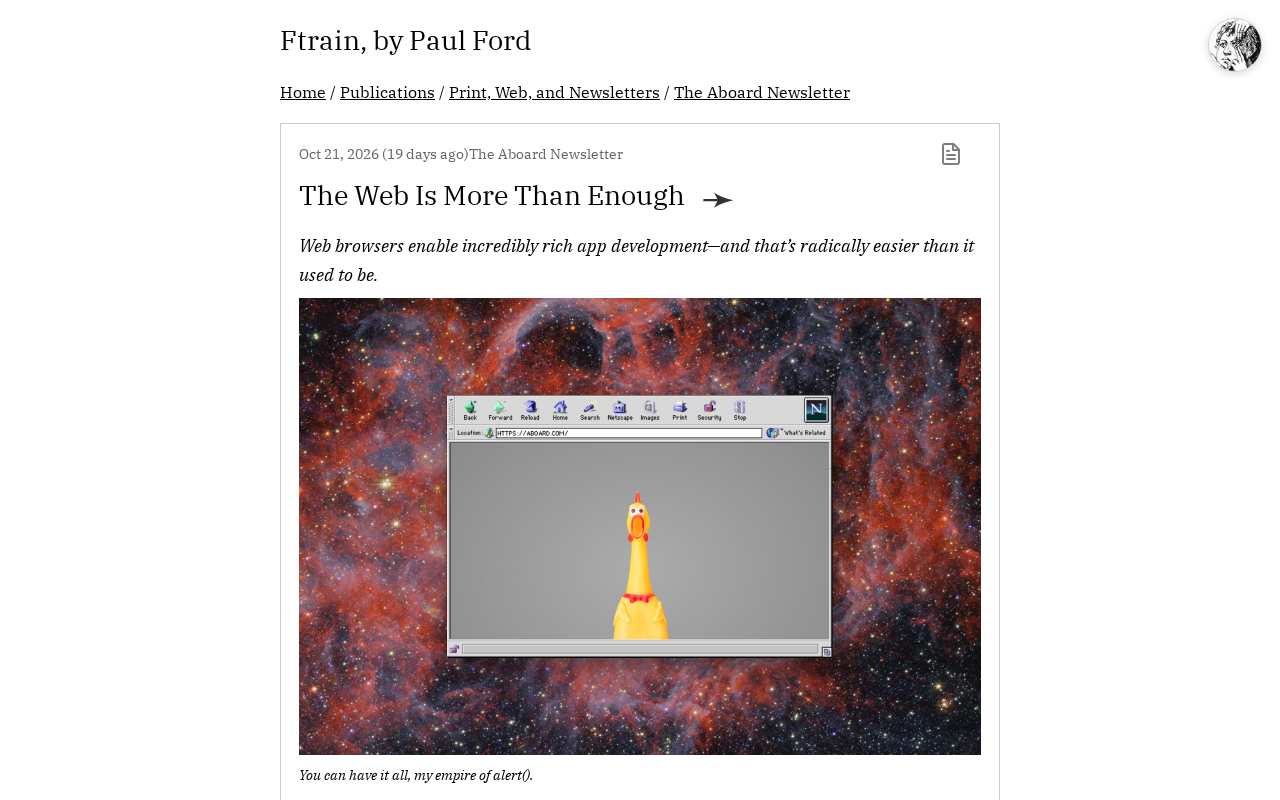
A piece by tech writer Paul Ford titled "The Web Is More Than Enough" has sparked discussion on Hacker News. The post received 17 points and 5 comments—not a large volume of discussion—but the judgment the title itself raises is worth pondering: in an era of endless AI applications and tightening platform ecosystems, does the Web—this long-established technical foundation—already provide everything we need?
A Small-Scale but Clearly Pointed Discussion
From the Hacker News page, the scale of this discussion is limited—17 points and 5 comments means it has yet to form a broad debate. But the value of such posts on HN often lies not in their popularity, but in the type of topic they touch. Paul Ford has long focused on tech culture, programming practice, and internet structure; his writing typically doesn't chase product release cycles but returns to more fundamental questions: what we build with, for whom, and why.
The title "The Web Is More Than Enough" is itself a statement of position. What it opposes is not any specific technology, but a persistent narrative: that the existing Web is inadequate, and therefore we need new abstraction layers, new platforms, and new closed ecosystems to "solve" the problem.
Reaffirming the Web as a Universal Foundation
This judgment has real-world context today. Application development has long had a tendency: encapsulate capabilities into specific platforms or frameworks in exchange for development efficiency and distribution convenience, at the cost of weakened portability and openness. Whenever a new paradigm emerges—mobile apps, mini-programs, AI-native applications—this tension is reactivated.
Paul Ford's argument can be understood as a reaffirmation of Web standards: the combination of HTTP, HTML, and URL, after decades of evolution, can already carry the vast majority of information publishing and interaction needs. Its advantage lies not in performance limits, but in universal accessibility, permissionlessness, and cross-platform consistency. When the tech community is eager to discuss new runtimes or new distribution channels, returning to the Web itself is a lower-cost option.
The roles of HTTP, HTML, and URL: HTTP (Hypertext Transfer Protocol) handles the transmission of requests and responses between clients and servers and is the foundation of Web communication; HTML (Hypertext Markup Language) defines the organizational structure and semantics of content, enabling documents to be parsed and rendered by browsers; URL (Uniform Resource Locator) provides each resource with a globally unique address, making linking, indexing, and navigation possible. Together, the three form the Web's minimal viable contract: any compliant client can access any compliant server resource without prior negotiation or permission. This decentralized design is what fundamentally distinguishes the Web from proprietary platforms—platforms can change the rules or revoke access at any time, while open standards cannot.
Tension with Current Tech Trends
This position forms a subtle contrast with the current AI application boom. Many new tools choose to be delivered in forms outside the browser: desktop clients, platform-embedded assistants, proprietary API ecosystems. These choices have their engineering reasons, but they also make "whether content can be freely linked, indexed, and accessed" a question again.
The openness of the Web was once the precondition for the existence of search engines, aggregators, and independent blogs. If more and more value is locked inside applications, the Web's function as a public information space will be diluted. From this perspective, Paul Ford's title is not just a technical judgment but also carries concern for the public nature of the internet.
Delivery forms of AI-native applications: The so-called "AI-native applications" refer to products built from the outset with large model capabilities at their core, rather than adding AI features onto existing software. Such applications often choose to be delivered as desktop clients or platform-embedded assistants for reasons including: the need for local compute and low-latency inference, the need to access system-level APIs, and the commercial desire to keep users within their own ecosystem. Proprietary API ecosystems refer to model capabilities being made available only through vendor-controlled interfaces, with third parties unable to freely replace or self-host them. These choices are reasonable from an engineering standpoint, but objectively detach content and capabilities from the Web's linkable and indexable characteristics, forming a new closed layer.
Practical Implications for Developers
For frontline developers, the takeaway from such discussions is very concrete. When choosing a tech stack, Web-first means a lower distribution barrier and a longer lifecycle; platform-first may buy short-term integration convenience. The two are not mutually exclusive, but it's necessary to be clear about where the costs lie.
Worth noting is that the discussion on Hacker News is limited in scale, indicating that this topic has yet to form a consensus. It is more of a reminder: while chasing new tools, don't forget that foundational layer that already exists, is general enough, and is open enough.
Frequently Asked Questions
What is the core argument of this article?
Paul Ford argues that the Web itself already provides sufficient capability to build and distribute applications, and that there is no need to constantly seek new closed platforms or abstraction layers.
Why is this topic worth attention?
It touches on the trade-off between openness and convenience in technology choices, and also relates to the accessibility of the internet as a public information space.
How popular is the discussion?
It received 17 points and 5 comments on Hacker News—a small-scale discussion that has yet to form a broad debate.
One-line Summary
Paul Ford argues that the Web is already sufficient to carry application development, without the need to frequently introduce closed platforms.
Paragraph Summary
The article revolves around tech writer Paul Ford's piece "The Web Is More Than Enough" and its discussion on Hacker News. The post received only 17 points and 5 comments—a limited scale—but the title itself constitutes a clear position: opposing the narrative that "the existing Web is inadequate and needs new abstraction layers and new closed ecosystems." The article points out that the combination of HTTP, HTML, and URL, after decades of evolution, can already carry the vast majority of information publishing and interaction needs, with its advantage lying in universal accessibility, permissionlessness, and cross-platform consistency rather than performance limits. This position creates tension with the current trend of AI applications being delivered as desktop clients, platform-embedded assistants, and proprietary APIs, which may dilute the Web's function as a public information space. For developers, Web-first means a lower distribution barrier and a longer lifecycle, but the cost of integration convenience must be clearly weighed.
Related articles
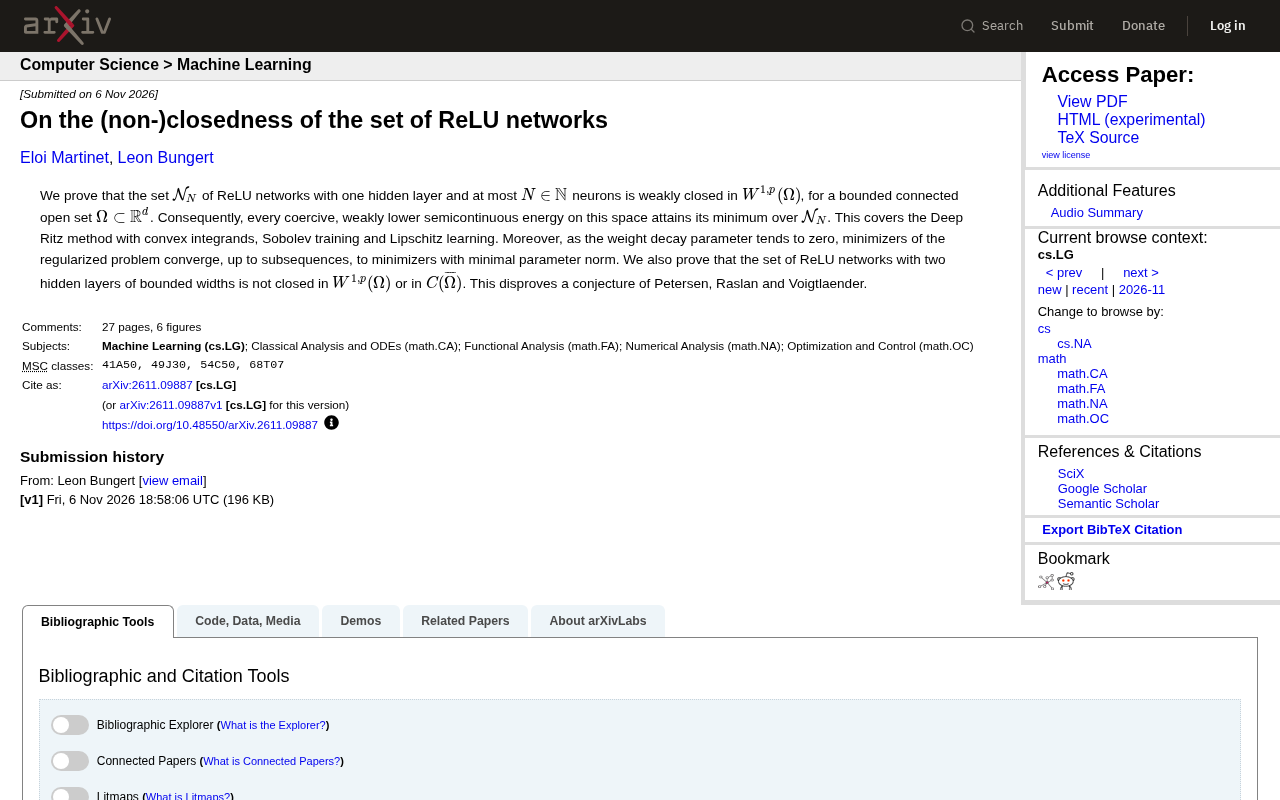
A New Proof on the Closedness of ReLU Network Sets: Single Hidden Layer is Weakly Closed, Two Hidden Layers is Not Closed
New research proves single-hidden-layer ReLU network sets are weakly closed in W^{1,p}, ensuring existence of solutions for Deep Ritz and similar methods; two-hidden-layer network sets are not closed, refuting an existing conjecture.
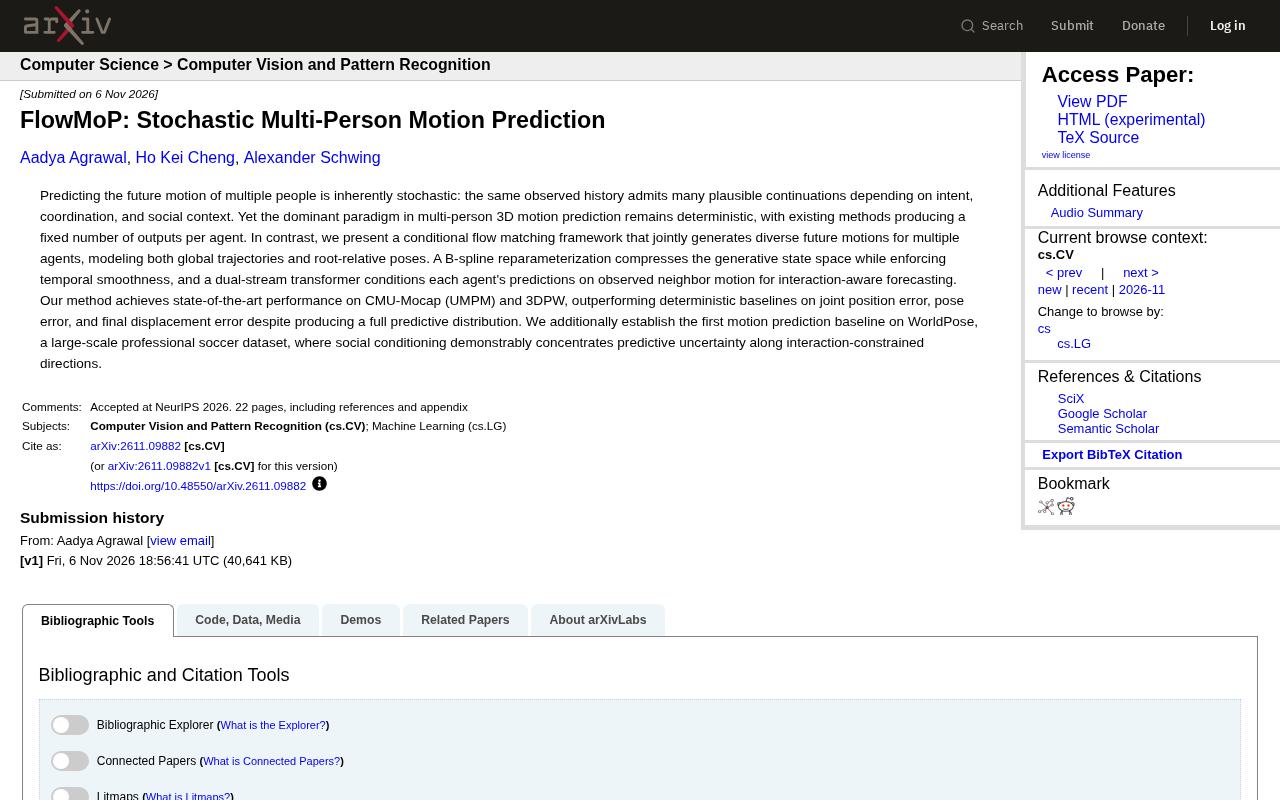
FlowMoP: A New Framework for Stochastic Multi-Person Motion Prediction
FlowMoP introduces a conditional flow matching framework that jointly generates diverse future motions for multiple agents, using B-spline reparameterization and a dual-stream Transformer for interaction-aware prediction. It outperforms deterministic baselines on CMU-Mocap and 3DPW and establishes the first motion prediction baseline on WorldPose.
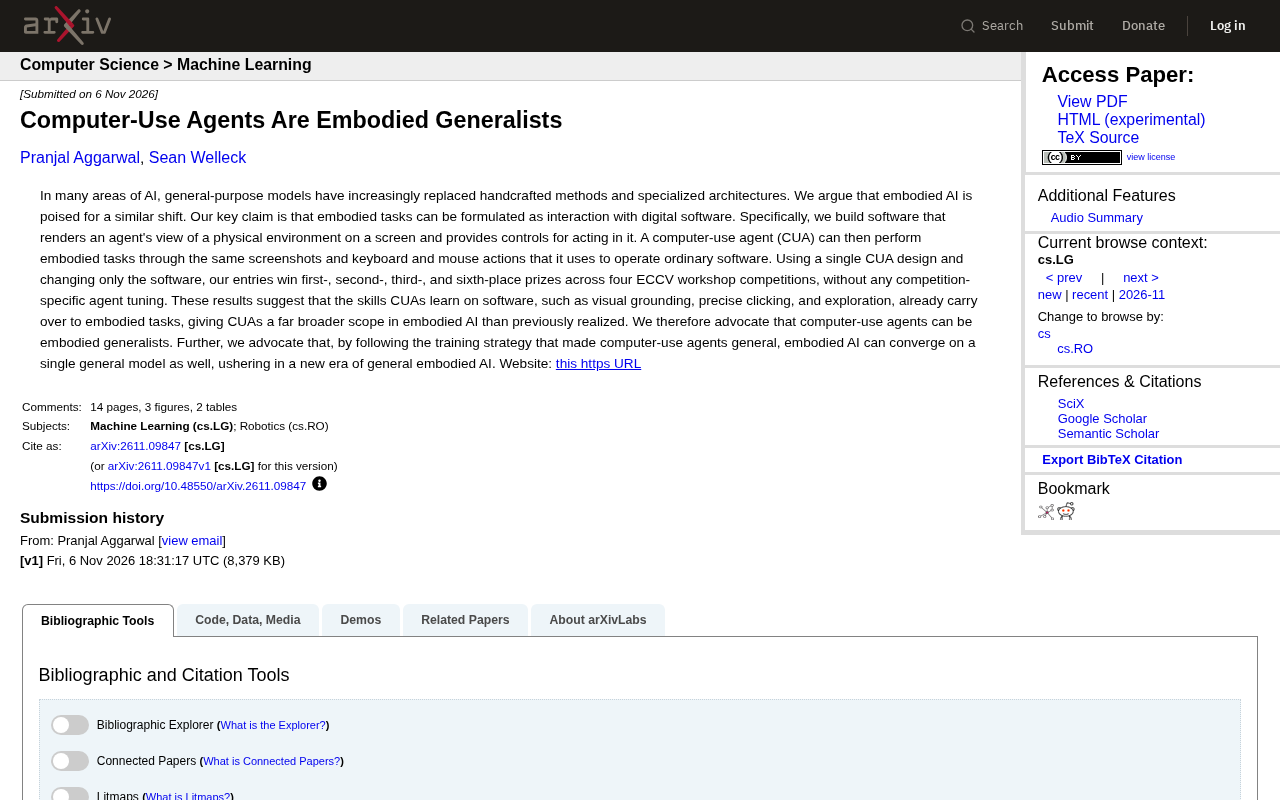
Computer-Using Agents: A New General-Purpose Paradigm for Embodied AI
ECCV workshop competitions show computer-using agents (CUAs) can win multiple contests by turning embodied tasks into software interaction, without specialized tuning—revealing their potential as embodied generalists and a new path to general embodied AI.