Paul Graham's New Essay: How to Make Startups Powerful

Paul Graham's new essay argues startup power comes from deep user focus and iteration, not scale.
In his new essay 'Making Startups Powerful,' Paul Graham extends Y Combinator's signature philosophy: truly powerful startups aren't defined by scale or valuation, but by deeply serving the real needs of a small group of users through continuous iteration. The 'powerful' in his title points to an internal energy capable of shifting markets and changing user behavior — a counterpoint to the mainstream push for rapid expansion. Graham argues that great companies typically begin with products that look insignificant, and that 'make something people want' remains the primary compass for direction. The essay earned 172 points and 76 comments on Hacker News, reflecting the tech startup community's enduring interest in building companies with genuine influence.
Y Combinator founder Paul Graham has published a new essay exploring the growth logic behind startups. The piece, titled Making Startups Powerful, quickly sparked lively discussion on Hacker News, earning 172 points and 76 comments. As one of Silicon Valley's most influential startup thinkers, Graham's views have always been a focal point for the entrepreneurial community.
Note: Since only metadata such as the title, link, and community engagement metrics are currently accessible, this article synthesizes Paul Graham's signature startup methodology as context and interpretation. For his specific arguments, please refer to the original essay.
Why Paul Graham's Take on Startups Deserves Attention
Paul Graham is not only the co-founder of Y Combinator but also a Lisp programmer and the author of Hackers & Painters. He has helped incubate companies like Airbnb, Dropbox, and Stripe — ventures that fundamentally reshaped their industries. That's why every long-form essay he writes on startups gets studied and re-studied by founders.
Making Startups Powerful signals its central thesis right in the title: how does an early-stage company become truly powerful? The word "powerful" here doesn't mean large in scale. It's closer to an internal energy — the kind that can influence markets, shift user behavior, and create real value. In Graham's worldview, that power tends to come from focus, rapid iteration, and serving a small group of loyal users deeply, rather than from indiscriminate expansion.
Powerful Startups Often Start Out Looking Insignificant
Across his body of writing, Graham has returned again and again to a core idea: the most successful startups often look trivial in the early days — even like toys. Real power doesn't come from having a grand business plan from day one; it comes from persistently solving a specific, genuine problem.
This "start small, grow big" logic stands in sharp contrast to the mainstream business world's obsession with scaling and chasing valuation. Graham believes founders should keep their attention on "making something people want" — which also happens to be Y Combinator's most famous mantra. When a product truly fits what users need, growth happens naturally, and the company's "power" accumulates along with it.
What the Hacker News Discussion Tells Us
The essay's 172 points and 76 comments on Hacker News reflect the startup community's sustained interest in the question of how to build a company with real influence. Hacker News is operated by Y Combinator and draws a dense concentration of programmers, founders, and tech professionals — making it a reliable barometer of trends in the tech industry.
High-engagement discussions typically signal that a topic has hit a real nerve. For many teams in the early stages, "how do you get stronger" is not a theoretical question — it's a day-to-day survival challenge. Graham's essays resonate precisely because he uses plain language to articulate patterns that founders sense intuitively but struggle to put into words.
Takeaways for Founders
Drawing on Graham's long-standing methodology, a few valuable principles emerge for startup founders:
- Focus beats expansion: In the early stage, serving a small number of users deeply almost always builds more durable competitive strength than casting a wide net.
- Make something people actually want: This is Y Combinator's most foundational principle — and the ultimate litmus test for whether a product is headed in the right direction.
- Don't be fooled by apparent smallness: Many of today's giants were dismissed as irrelevant at the start.
- Speed and iteration are a startup's natural advantage: The ability to change direction quickly is the single biggest weapon early-stage teams have against established players.
For founders in the Chinese-speaking world, Graham's essays consistently offer value that transcends geography. They serve as a reminder that the essence of building a startup isn't a capital game — it's the ongoing process of creating real value and translating that value into genuine influence.
Closing Thoughts
Making Startups Powerful carries the sharp, insightful voice that defines Graham's best writing. While this article can only offer a broad overview given the available materials, anyone who genuinely cares about startup methodology is encouraged to read the original English essay directly, and to pair it with the Hacker News community discussion for a fuller picture. On a startup journey filled with uncertainty, understanding where power truly comes from may matter far more than chasing the next hot trend.
Related articles
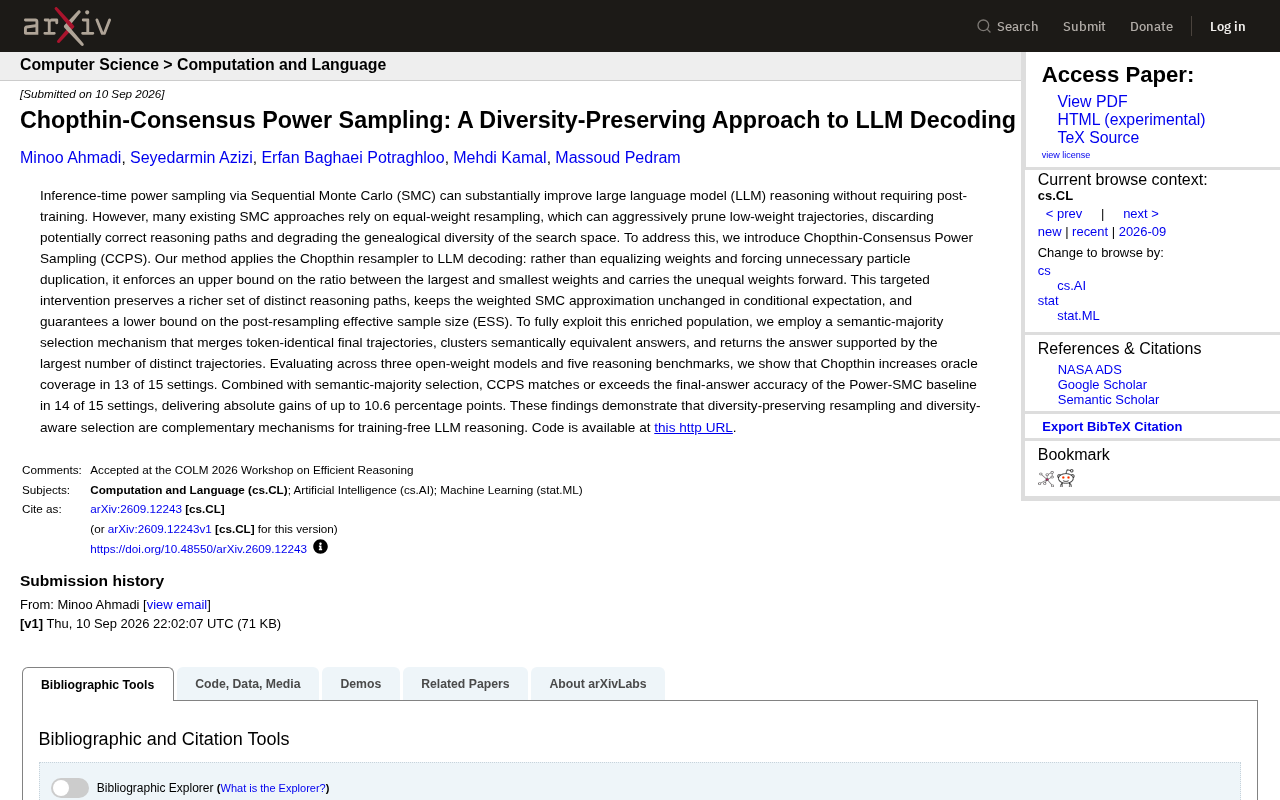
CCPS Sampling: Preserving Reasoning Diversity to Boost LLM Performance Without Fine-Tuning
A new arXiv paper proposes CCPS, which boosts LLM reasoning accuracy without any training by preserving reasoning diversity via Chopthin resampling and semantic majority selection — achieving up to 10.6pp absolute gains.

MIT Spinout Transforms Plastic Waste into High-Resilience Building Materials
MIT spinout Atlas Building Composites converts plastic waste into resilient structural components for buildings and infrastructure, pioneering a high-value recycling pathway.
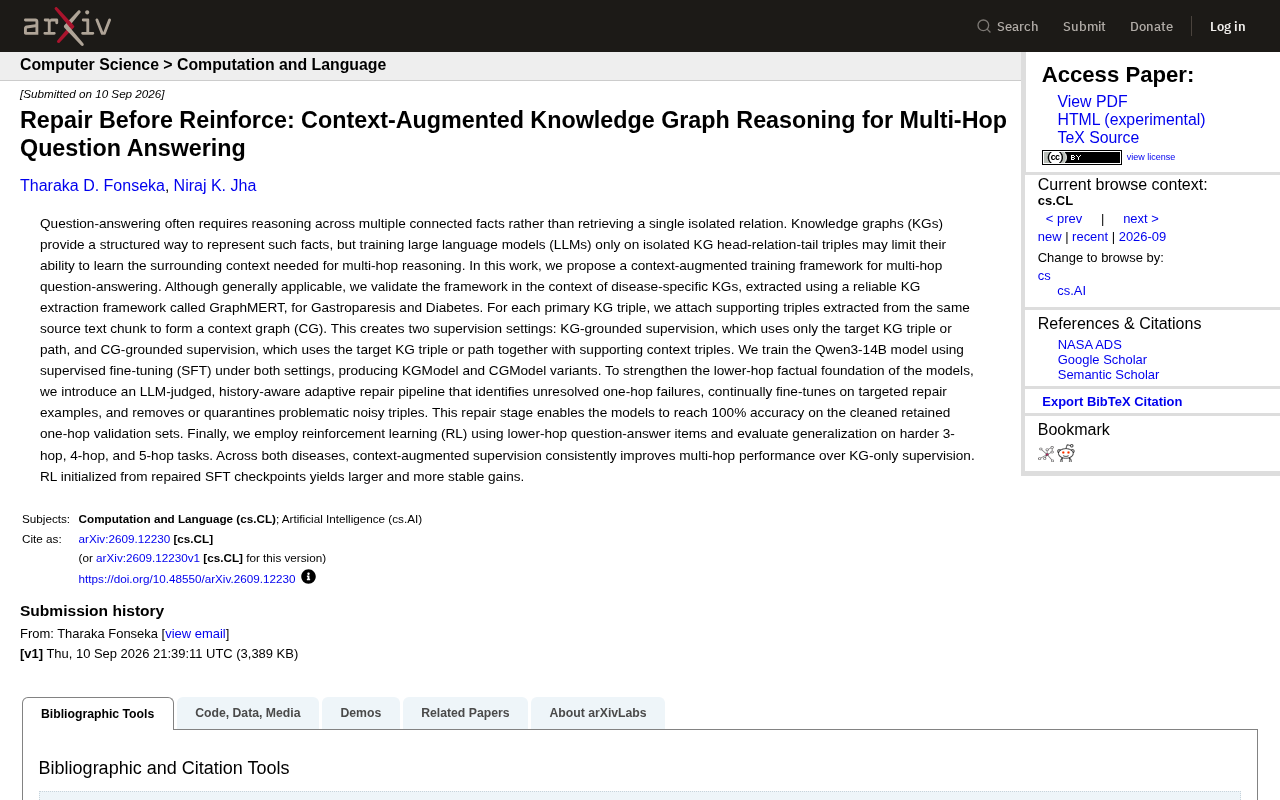
Repair Before Reinforce: Context-Augmented Knowledge Graph Reasoning Tackles Multi-Hop QA
New arXiv paper proposes a context-augmented KG reasoning framework using a "Repair Before Reinforce" strategy to improve LLM multi-hop QA. Validated on Gastroparesis and Diabetes KGs with Qwen3-14B, achieving 100% single-hop accuracy after repair.