PEAK: The Chaotic Co-op Climbing Game That's Basically a Disaster Comedy

PEAK is a co-op climbing game where dying, hallucinating, and shoving teammates off cliffs is the whole point.
PEAK is a multiplayer co-op climbing game where teams scale a mountain island from beach to summit while managing stamina, hunger, and status effects. Its appeal isn't hardcore completion — it's the chaos that naturally emerges from cooperation: teammates shoving each other off ledges, eating hallucinogenic mushrooms, and floating around as ghosts after dying. With practical gear like ropes and pitons alongside joke items like a pitch-bending bugle and mushroom platforms, and a soft-death system that keeps dead players engaged, PEAK exemplifies the recent indie co-op trend of making every movement a social comedy moment. Low barrier to entry, high density of laughs.
PEAK is a multiplayer co-op climbing game that's been making waves in the streaming world lately. Players team up to scale a mountain island from beach to summit. This livestream session featuring streamers Lewis, Sips, PFlax, and others is less of a gameplay walkthrough and more of a several-hour collaborative disaster comedy — four people repeatedly falling to their deaths, eating the wrong mushrooms, and shoving each other off cliffs, all while genuinely discovering what makes co-op gaming so compelling.
A Climbing Game Built on "Chaotic Cooperation"
At its core, PEAK's gameplay isn't particularly complicated: players set off from the beach and climb through jungle, cliff faces, and fog-shrouded zones toward the peak, managing stamina, hunger, and various status effects along the way. The game supports multiplayer, letting teammates boost each other up, form human towers, hand off food, and even haul fallen companions back up with a rope.
One of the streamers admitted they'd "never played PEAK before," while another said they "tried it for two minutes and didn't think it was for them" — but once the group actually got going together, they quickly changed their tune: "This game is actually great, it's hilarious." That "low barrier to entry, high depth of cooperation" design is exactly why it's caught on so fast in streaming environments.
Stamina, Hunger, and Status Effects Are the Core Tension
The game's difficulty stems primarily from resource and status management. Climbing burns through your stamina bar, and loading up your pack significantly increases encumbrance — draining stamina faster. The streamers complained repeatedly: "This backpack is killing me" and "If you want pure free climbing, you basically can't carry anything." Food items like trail mix, coconuts, cookies, and energy drinks restore hunger, while campfires let you cook higher-tier food with better restorative effects.
Status effects are another major hazard: stepping in "toxic spores" on the ground causes poisoning, eating the wrong mushrooms triggers hallucinations or even causes "spider eggs to grow on your body," and rising fog — which climbs over time and eventually becomes lethal — functions as an invisible timer. Quotes like "I got blasted to death" and "I'm starting to hallucinate now" capture the delightful chaos this system produces.
This kind of "survival resource management" mechanic has a well-established design tradition in climbing and exploration games. The encumbrance system borrows from RPG design, where the central tension is balancing "carry more supplies" against "stay mobile." PEAK ties this directly to real-time climbing action, making every decision immediately felt rather than confined to menus. The rising fog borrows the battle royale "zone" concept, making time pressure visible and forcing constant trade-offs between exploration and progress. This multi-layered resource pressure is a common thread in recent indie co-op games like Lethal Company and Content Warning — instead of designing a powerful boss to defeat, the game keeps players under constant decision-making pressure just by moving around, naturally generating calls for help and cooperative behavior.
The Item System: Ropes, Pitons, and All Kinds of Goofy Gear
PEAK's item design balances genuine utility with outright comedy. Practical items include rope, pitons (hammered into rock faces to create climbing anchors and rest points), medkits, antidotes, and flares. The group leaned on ropes to rescue each other constantly throughout the stream — "This rope is a lifesaver" became a recurring line.
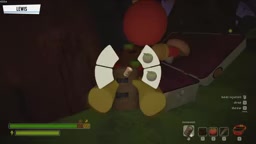
The comedic items delivered plenty of highlight moments: a bugle that makes different pitches depending on how you move it was used for "guess the song" bits, at one point producing a recognizable rendition of the British national anthem. Other standouts included balloons, a frisbee, a "chastity lock," shelf fungus (which turns into a step when thrown), a jetpack, and a chain launcher. These items enrich the interactions beyond pure climbing and ensure every run is full of unpredictable laughs.
Is the Map Randomly Generated? The Streamers Disagree
The group had differing opinions on map generation. One believed the map was "randomly generated to some degree," while another pointed out that the game mentioned "a new map updates in 4 hours" — suggesting a weekly rotating challenge map that players tackle repeatedly and learn over time. During play, they confirmed multiple times that "this section is the same as last time" and "you can plan your route," leaning toward the "fixed challenge map with regular rotation" interpretation. This matters quite a bit for gameplay — it means experienced players can meaningfully improve through memory and route planning.
Pitons are a fundamental piece of protection equipment in real alpine climbing: climbers hammer them into rock cracks and thread a rope through them as fall protection anchors. PEAK lifts this real-world tool directly into the game, giving it a "create a temporary rest point" function — a thoughtful nod to realistic climbing detail. The rope rescue mechanic mirrors the logic of a real roped party, where members are connected so that if one falls, the others arrest the drop. In game terms, this system preserves the necessity of cooperation while naturally creating comedic tension around "one person's mistake dragging down the whole team" — which is precisely why ropes became both the source of the stream's biggest laughs and its most clutch moments.
The Real Fun: Teammates Who Love to Hate Each Other
If the systems are the skeleton, player interactions are the soul of PEAK. Nearly every big laugh in the stream came from teammates "betraying" or sabotaging each other. Lewis repeatedly tried to shove PFlax and Sips off the mountain ("He's trying to throw me off the cliff!"), earning himself the nickname "The Bristol Pusher."
Death, meanwhile, isn't the end — players who die become ghosts and can still float alongside the group (one streamer described a teammate's ghost as looking like "a sad little sperm"), while surviving players must reach the summit statue to resurrect their fallen companions. This "die but don't disconnect, keep going to the top to save everyone" mechanic gives every death and team wipe a kind of darkly comic inevitability.
"It's About the Journey, Not the Destination"
Despite dying countless times and never really making it to the top, the streamers kept emphasizing how funny the game was and how much fun they were having together. "It's about the journey, not the destination" became an unofficial tagline for the session. More than a hardcore completion experience, PEAK feels like a social space built for friends to complain at each other on voice chat and pull pranks — which explains why it thrives so much in streaming and multiplayer contexts.
The "turn into a ghost after death, need teammates to reach a specific spot to revive you" mechanic falls into the "soft death" category of co-op game design — players aren't kicked from the session but continue participating in a limited state. This elegantly solves the "death marginalization" problem in co-op games: in traditional designs, dead players just wait to respawn or watch helplessly, quickly disengaging. The ghost state keeps dead players involved — following the group, reading the situation — while giving survivors a clear and pressing goal: reach the summit. Similar mechanics appear in It Takes Two and Phasmophobia, and have become a standard tool in multiplayer co-op design. The fact that the ghost was spontaneously described as a "sad little sperm" shows that the mechanic successfully transformed a "failure state" into shareable social comedy.
Takeaway: A Different Way to Play Co-op Games
What comes through clearly in this stream is that PEAK doesn't win on extreme difficulty or rich narrative — its value lies in bundling the tension of climbing, the strategy of resource management, and the inevitable chaos and laughter of multiplayer cooperation into an approachable package. Falling to your death, eating the wrong mushroom, shoving teammates, drifting around as a ghost — the "failures" are the content.
For players who enjoy casual online sessions with friends and a light, fun atmosphere, this kind of co-op climbing game — built around spontaneous cooperation and random goofs — offers something genuinely distinct from traditional hardcore co-op experiences. The streamers closed out the session talking about wanting to try Valheim and other multiplayer games, suggesting that this "suffer and laugh together" format is solidifying into a reliable and repeatable genre of streaming entertainment.
Related articles

JobRunner MCP Server: AI Agents Can Now Fix Failed Java Jobs
JobRunner launches an open-source MCP server enabling AI agents to view cluster status, diagnose failures, and recover Java jobs—incident response from any cloud coding environment or existing agent.

MLAI Digital Launches 9 Security Agents: MCP Server Safeguards the Full Lifecycle of Agentic AI
MLAI Digital launches Security MCP Server with nine built-in specialized security agents covering vulnerability discovery, attack simulation, prompt injection detection, API and infrastructure assessment, and accelerated remediation—embedding security validation across the full Agentic AI lifecycle from development to production.

Running Isaac Lab on H100 GPUs: Exploring Better Approaches
Exploring optimization methods for running Isaac Lab on NVIDIA H100 GPUs, including MIG configuration, mixed precision, TensorRT acceleration, and community experience to improve robotics simulation and reinforcement learning efficiency.