People Who Can't 'See' Mental Images Are Rewriting the Science of Imagination
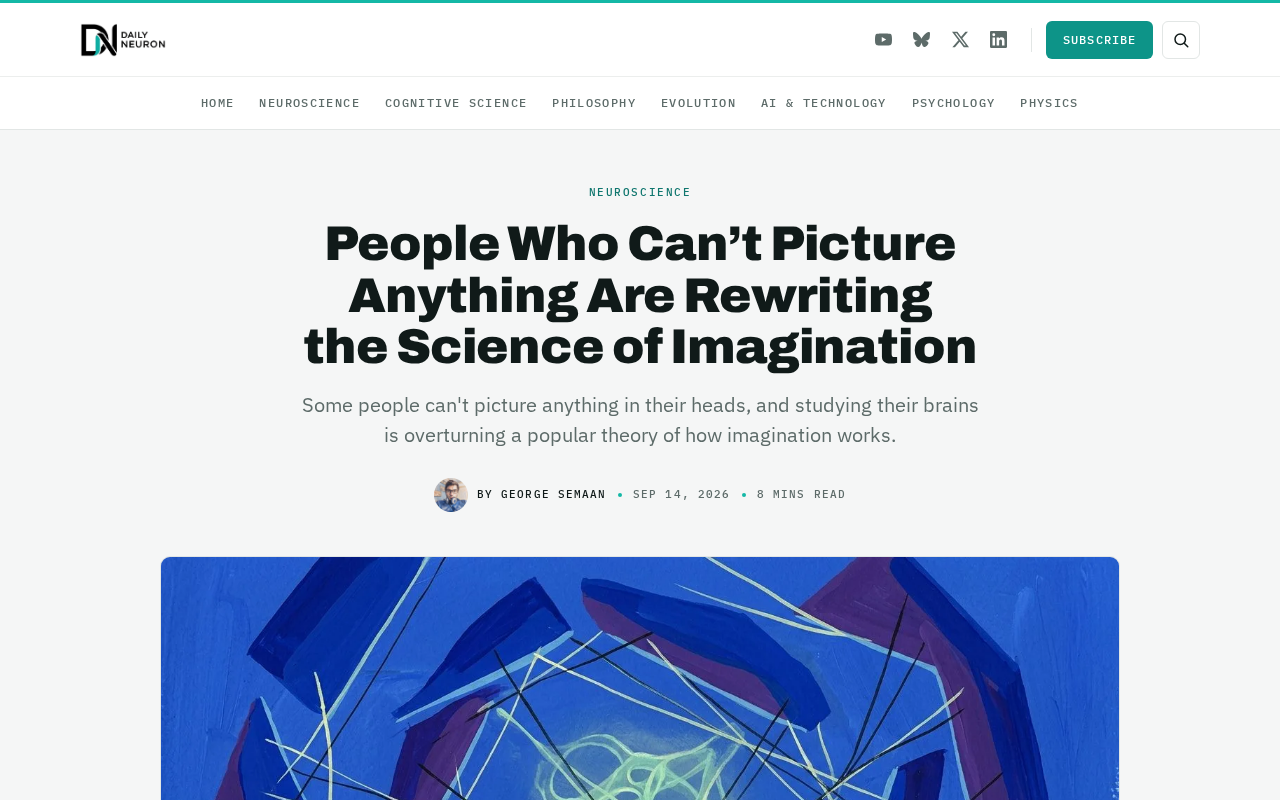
Aphantasia reveals fundamental individual differences in imagination, challenging assumptions about shared inner experience.
Aphantasia is a condition in which some people are completely unable to voluntarily conjure visual images in their minds. Research shows that human visual imagination isn't uniform — it spans a continuous spectrum from those with no mental imagery at all to hyperphantasics who can visualize with near-photographic clarity. Many people don't discover their condition until adulthood. Notably, Aphantasia doesn't impair creativity or intellect; those affected think in concepts and logic rather than pictures, and most can still dream visually. The phenomenon offers a rare natural experiment for studying the neural mechanisms of consciousness, memory, and perception, with implications for psychotherapy and education.
When 'Close Your Eyes and Imagine an Apple' Becomes Impossible
For most people, picturing a red apple in their mind is effortless. But for some, no matter how hard they try, there's nothing but darkness — they know an apple is red and round, yet they simply cannot "see" it. This phenomenon is known as Aphantasia: the absence of voluntary mental imagery.
In recent years, it's precisely these people who "cannot see" that are pushing cognitive science to reconsider the very nature of human imagination. The topic sparked nearly 150 comments on Hacker News, reflecting how deeply it touches on people's curiosity and confusion about their own inner experiences.
Imagination Is Not the Same for Everyone
For a long time, the scientific community assumed that all people experienced mental imagery in roughly the same way — they just described it differently. Research into Aphantasia has shattered that assumption.
Studies show that human visual imagination exists on a continuous spectrum: at one end is Hyperphantasia, where individuals can conjure images as vivid and detailed as photographs — images they can mentally "rotate and inspect" — and at the other end are those with Aphantasia, who experience no visual imagery at all. Most people fall somewhere in between.
This variation went unnoticed for so long because inner experience is nearly impossible to measure objectively. There's no way for one person to know what another person actually "sees" when they imagine something — until someone speaks up and says: "I've never seen anything at all."
From Personal Experience to Scientific Research
Modern Aphantasia research has been largely driven by first-person accounts. Many people don't discover their condition until adulthood, when they stumble upon the realization that when others talk about "picturing something in their mind," they mean it literally — not as a figure of speech.
This discovery often comes as a profound cognitive shock. In the Hacker News discussion, many users shared similar moments of revelation: some had always assumed that "counting sheep to fall asleep" was just a saying — until they learned that other people genuinely "see" sheep leaping over a fence right before their eyes.
How It Affects Memory and Daily Life
Interestingly, Aphantasia does not imply any deficit in memory or creativity. Many people with Aphantasia excel in mathematics, programming, writing, and other fields. They rely on non-visual modes of thinking — concepts, logical relationships, and language — rather than mental pictures.
One point that came up repeatedly in the discussion: people with Aphantasia can often dream normally and "see" imagery in their dreams, suggesting the brain may use different neural mechanisms for conscious, voluntary imagination versus unconscious dream generation. This distinction offers researchers a valuable entry point for further study.
Why This Research Matters
Aphantasia is far more than an interesting piece of trivia. It provides a natural experimental sample for understanding the diversity of consciousness, perception, and cognition.
By comparing brain activity in people with Aphantasia, typical imagers, and hyperphantasics, researchers can investigate: Where in the brain does imagination actually occur? What role does the visual cortex play in "imagining"? Does memory storage and retrieval necessarily depend on mental images?
The answers to these questions have implications beyond neuroscience — they could reshape approaches to psychotherapy (such as imagery-based exposure therapy), educational methods, and even how artificial intelligence understands "representation." After all, humans themselves exhibit remarkably diverse forms of internal representation.
Rethinking What It Means to "See"
Aphantasia reminds us that even a seemingly universal ability like "imagination" can differ fundamentally from one person to the next. We tend to assume that other people's inner worlds resemble our own — but that may not be true at all.
For those who cannot conjure mental images, nothing is missing. They simply think about the world in a different way. And it is precisely their existence that allows science to fill in the gaps in our understanding of the human mind — and gives each of us a reason to pause and ask: when I say "I'm imagining something," what am I actually experiencing?
Related articles
A Reading Guide to Distributed Systems Classic Papers: From Beginner to Expert
A viral Hacker News list of distributed systems classic papers covering consensus algorithms, logical clocks, and the CAP theorem — a structured learning path for engineers.

Valve Is Still Weighing When and How to Launch Steam Deck 2
Valve has completed its 2026 hardware lineup with Steam Controller, Steam Machine, and Steam Frame, but Steam Deck 2 still has no set timeline. Valve says it's still weighing "how and when" to launch.
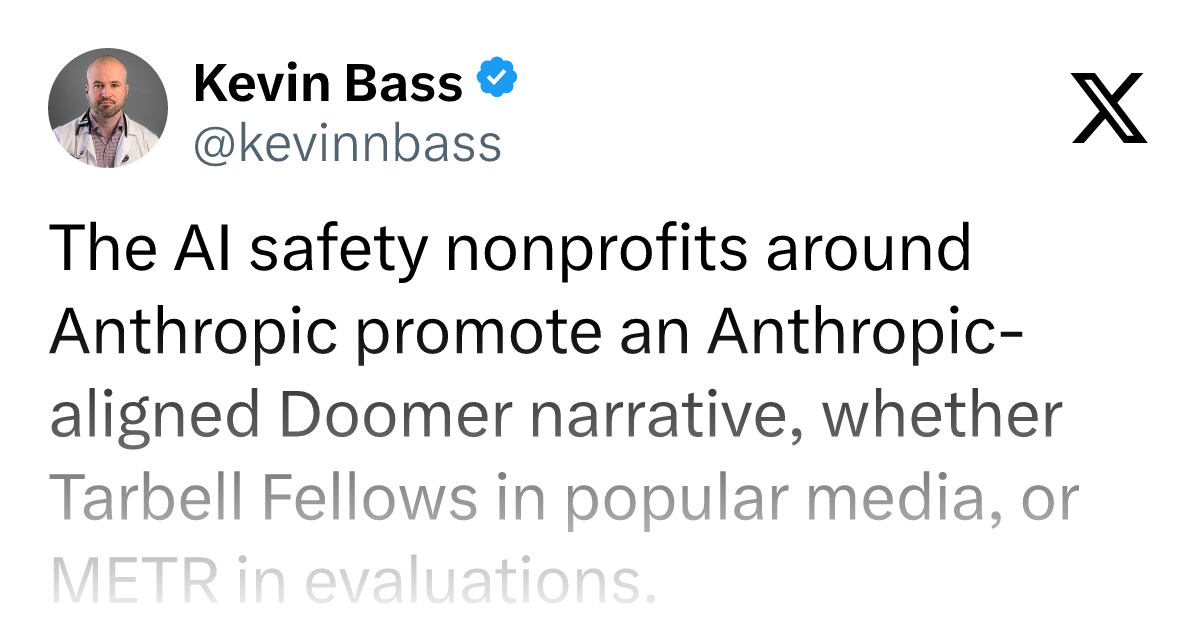
Regulatory Capture Accusations: The Controversy Over Anthropic's Capital and Policy Loop
A Hacker News post questions whether Anthropic is caught in a regulatory capture financial loop. We unpack the concept and why it's being aimed at top AI firms.