Perfect-Web-Clone: A Deep Dive into the Pixel-Perfect Web Cloning Tool Built on Multi-Agent Architecture

Perfect-Web-Clone: an open-source pixel-perfect web cloning tool built on multi-agent architecture
Perfect-Web-Clone is a multi-agent open-source project built on the Claude Agent SDK, focused on pixel-perfect web cloning. Instead of screenshot-based visual reproduction, it works directly from CSS styles and structured content blocks, equipped with 40+ specialized tools to achieve high-precision web replication through multi-agent collaboration. The project embodies key AI development trends: the shift from general-purpose models to vertical specialized systems, from monolithic models to multi-agent collaboration, and from pure reasoning to tool-augmented AI.
Project Overview
In the field of AI-assisted front-end development, Perfect-Web-Clone is an open-source project focused on pixel-perfect web page cloning. Positioning itself as a "true AI agent," it adopts a multi-agent architecture built on the Claude Agent SDK, equipped with over 40 specialized tools. Its goal is to solve the precision limitations that single-model tools like Cursor and Claude Code face in web replication tasks.
The project has earned 213 stars on GitHub, is developed in Python, and is currently in an active iteration phase.

Core Technical Highlights of Perfect-Web-Clone
CSS and Structured Block-Based Cloning Strategy
Unlike tools that rely on screenshots for visual reproduction, Perfect-Web-Clone works directly from CSS styles and structured content blocks for cloning. This technical approach delivers three significant advantages:
- Pixel-level precision: Directly parsing and copying style rules avoids the inevitable pixel deviations in screenshot-based recognition
- Highly maintainable code: Generates semantic structural code rather than simple visual approximations
- Native responsive compatibility: The CSS-based approach automatically adapts to different screen sizes
From a technical implementation perspective, the CSS-based cloning strategy involves several key processes. First is the extraction of CSS Computed Styles—the browser's rendering engine calculates all CSS rules (including inheritance, cascading, media queries, etc.) into final style values for each DOM element. These computed styles contain the complete information for an element's precise visual representation. Second is semantic analysis of the DOM structure, which requires intelligent identification of logical sections on the page (such as navigation bars, content areas, sidebars, footers, etc.) rather than simple element-by-element copying. This stands in stark contrast to the screenshot + visual recognition approach: the latter typically uses multimodal models (like GPT-4V) to analyze page screenshots and generate approximate HTML/CSS code, which tends to introduce deviations when handling complex layouts, CSS variables, pseudo-elements, gradients, shadows, and other details. The structured cloning method also preserves CSS responsive breakpoints and flexible layout (Flexbox/Grid) information, giving the generated code native multi-device adaptability.
How Multi-Agent Architecture Improves Cloning Quality
The project's core competitive advantage lies in its Multi-Agent architecture design. Compared to a single large model generating code directly, the multi-agent approach decomposes complex web cloning tasks into multiple specialized subtasks, with each agent handling its own responsibilities:
- Division of labor: Different agents handle layout analysis, style extraction, component identification, and other dimensions separately
- Specialized tool chain: Over 40 dedicated tools cover every detail of the web cloning process
- Multi-layer quality verification: Cross-checking ensures the final output is highly consistent with the original page
Multi-agent architecture originates from the classic paradigm in distributed artificial intelligence, with the core idea of decomposing a complex problem into multiple sub-problems handled by different specialized agents. In the era of large language models, this paradigm has gained new vitality. A typical multi-agent system includes several key components: the Orchestrator handles task allocation and process control; Specialist Agents possess domain-specific prompts and tool sets; and Shared Memory enables information synchronization between agents. Compared to end-to-end generation by a single model, multi-agent architecture offers these advantages: each agent's context window can focus on a smaller scope of tasks, reducing quality degradation from information overload; different agents can use different models or parameter configurations to achieve optimal cost-performance balance; and task workflows can include verification and rollback mechanisms, significantly improving output reliability. Currently, frameworks like AutoGen, CrewAI, and LangGraph are all driving the adoption of this paradigm, while Perfect-Web-Clone's choice to build on the Claude Agent SDK reflects a deep commitment to the Anthropic ecosystem.
Technical Foundation of Claude Agent SDK
The project is built on Anthropic's Claude Agent SDK, fully leveraging Claude's capabilities in code understanding and generation. The SDK's mechanisms for tool calling and context management make complex multi-agent workflow orchestration possible.
Claude Agent SDK is a development framework launched by Anthropic in 2025, specifically designed for building autonomous agent applications based on Claude models. Unlike directly calling the Claude API, the Agent SDK provides complete agent lifecycle management capabilities, including Tool Use registration and invocation, multi-turn conversation context management, inter-agent message passing and coordination mechanisms, and structured output control. The SDK's core design philosophy enables developers to orchestrate complex tasks as collaborative workflows between multiple agents, where each agent can independently possess its own system prompts, tool sets, and decision logic. This architecture frees developers from implementing low-level logic like agent scheduling and state management from scratch, allowing them to focus their energy on business-level agent design.
What Real Problems Does a Web Cloning Tool Solve?
Pixel-perfect web cloning has multiple application scenarios in real-world development:
- Design-to-code conversion: Precisely transforming visual designs into runnable front-end code
- Competitor page analysis: Quickly replicating competitor page structures for learning and modification
- Legacy system refactoring: Maintaining visual consistency when modernizing outdated front-ends
- Learning excellent implementations: Deconstructing CSS and layout techniques from well-crafted web pages
In front-end development, "pixel-perfect reproduction" has always been a core point of friction between designers and developers. In the traditional design-to-code workflow, developers need to manually measure spacing, font sizes, and color values from Figma or Sketch—a time-consuming and error-prone process. The emergence of AI coding tools has partially alleviated this issue, but existing tools still face significant challenges in the following scenarios: complex CSS Grid nested layouts, precise rendering of custom fonts, reproduction of CSS animations and transitions, handling of interactive states like hover and focus, and support for theme variants like dark mode. Tools like Cursor and Claude Code, as general-purpose AI coding assistants, excel in broad programming language and framework support, but lack specialized tool chains and verification mechanisms for the specific task of web visual reproduction, resulting in outputs that often require extensive manual fine-tuning.
Perfect-Web-Clone, through specialized multi-agent collaboration, elevates web reproduction accuracy to a new level, targeting precisely these pain points.
Technical Trends in AI Development Tools Reflected by This Project
This project reflects several important directions in current AI tool development:
From general-purpose models to vertical specialized systems: For specific tasks, purpose-built agent systems outperform general-purpose large models. Perfect-Web-Clone abandons generality to focus exclusively on the niche domain of web cloning.
From monolithic models to multi-agent collaboration: Multi-agent architecture is becoming the mainstream paradigm for complex AI applications, breaking through single-model capability ceilings through task decomposition.
The rise of tool-augmented AI: The provision of over 40 specialized tools demonstrates that relying purely on model reasoning is far from sufficient—combining domain-specific tools is essential to achieve production-grade output quality.
Tool-Augmented AI is a major development direction in current large model applications. Its core concept is that large language models excel at reasoning, planning, and natural language understanding, but have inherent limitations in precise computation, external data retrieval, and specific format processing. By equipping models with callable external tools, the model's reasoning capabilities can be combined with tools' precise execution capabilities. In the Perfect-Web-Clone scenario, the 40+ specialized tools likely include: Headless Browser control tools for page loading and rendering, CSS parsers for style rule extraction, DOM traversal tools for structural analysis, image resource downloading and optimization tools, color space conversion tools, font detection and matching tools, and visual diff comparison tools (such as Pixelmatch) for quality verification. This division of "models handle thinking, tools handle execution" is becoming standard practice for building production-grade AI applications. OpenAI's Function Calling, Anthropic's Tool Use, and similar mechanisms all provide the underlying support for this paradigm's implementation.
Summary and Assessment
Perfect-Web-Clone represents a new direction in AI front-end development tools—rather than pursuing breadth, it aims for excellence in the specific task of pixel-perfect web cloning. For front-end developers with web replication needs, this is an efficiency tool worth trying; for AI application architects, its multi-agent design pattern also provides a reusable reference architecture.
The project is still in its early stages, and future progress in supporting more framework outputs (such as React and Vue components) and handling dynamic interactive pages is worth continued attention.
Related articles
 Product Reviews
The Programmer's Desk Setup Guide: Building a Workspace That Feels Like Home
Discover how programmers build productive, comfortable workspaces. From multi-monitor setups to ergonomic design, explore the desk philosophy that drives focus and flow.
 Product Reviews
Qoder vs Cursor Real-World Comparison: Which $20/Month AI IDE Is Better?
Hands-on comparison of Qoder vs Cursor AI IDEs: Agent autonomy, human interaction count, and architecture decisions. Qoder needed only 2 interactions vs Cursor's 8.
 Product Reviews
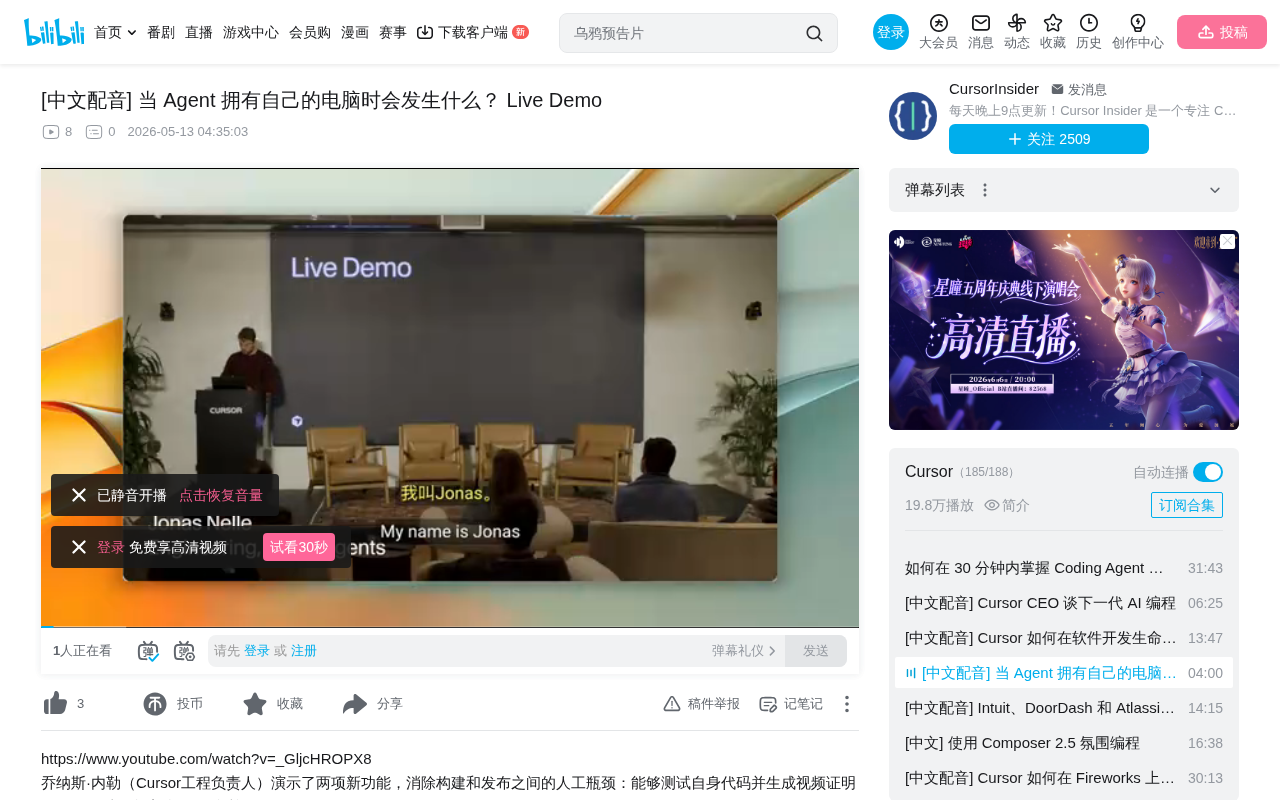
Cursor Cloud Agent Demo: Eliminating Bottlenecks Across the Entire Software Development Lifecycle
Deep analysis of Cursor's Cloud Agent demo showing how cloud VMs, automated test artifacts, and a full-chain control plane systematically eliminate human bottlenecks across the software development lifecycle.