Perplexity Launches Teammates: From Writing Prompts to Delivering Goals

Perplexity launches Teammates, shifting work agents from writing prompts to giving goals.
Perplexity has launched Teammates, positioned as "personal agents for work." The core change is a paradigm shift from users writing prompts turn by turn to users simply giving high-level goals, with the agent handling task decomposition, execution, and follow-up. Available now for Max users on web, with native mobile and desktop apps to follow. The positioning emphasizes "personal" continuous context understanding and "for work" task execution, marking Perplexity's expansion from a search and research tool toward workflow advancement. Industry-wide, agent competition is moving from the capability layer of tool calling up to the goal layer of intent understanding and task decomposition, while goal-driven reliability demands remain higher—whether Teammates can build trust in work scenarios remains to be seen.
Perplexity today officially launched the Teammates feature, positioning it as "personal agents for work." Unlike the past approach that required users to repeatedly write prompts and complete tasks within a single session, Teammates attempts to shift the interaction paradigm toward "giving a high-level goal and letting the agent push it forward continuously." The feature is available starting today for Max users on the web, with native mobile and desktop apps to follow.



From Prompts to Goals: A Paradigm Shift in Interaction
In its official announcement, Perplexity explicitly states that what Teammates aims to change is the habit of "writing prompts within a session." The traditional way of using AI assistants is for users to break tasks down into individual instructions, with the model responding turn by turn; the vision behind Teammates is for users to simply describe the outcome they want to achieve, leaving the agent responsible for decomposition, execution, and follow-up.
The significance of this shift lies in the redrawing of responsibility boundaries. Prompt engineering essentially places the burden of task decomposition on the user, whereas a goal-driven agent hands that decomposition work back to the system. For work scenarios, this is closer to how humans collaborate with colleagues—you hand over goals, not operational steps.
Prompt Engineering refers to a set of techniques by which users carefully design input text to guide large language models toward producing expected results, including role setting, few-shot example injection, chain-of-thought guidance, and more. Its rise stemmed from early models' unstable understanding of instructions, which forced users to take on a great deal of "translation" work—converting vague requirements into precise, model-executable instructions. The barrier to prompt engineering is that its effectiveness depends heavily on user experience; the same task written differently can yield wildly different results, and multi-step tasks require manually chaining multiple rounds of dialogue. Goal-driven agents were born precisely to eliminate this burden, shifting "how to decompose" from the user side to the system side—but at the cost of the system needing stronger planning, memory, and self-correction capabilities.
Product Positioning: A Personal Agent for Work
Officially, Teammates is described as "personal agents for work." Two keywords in this positioning are worth unpacking.
The first is "personal." It emphasizes the binding relationship between the agent and a single user, rather than the one-off Q&A of a general-purpose chatbot. A personal agent typically implies a continuous understanding of the user's context, preferences, and work content—which is precisely where it differentiates itself from ordinary conversational products.
The second is "for work." Perplexity was previously seen more as a search and research tool; Teammates pushes the scenario explicitly toward work tasks, meaning the product's intent extends from "helping you look things up" to "helping you move things forward." This is an expansion of the product's boundaries, and it also means it must contend with the more complex multi-step requirements of workflows.
Personal Agent differs from a general-purpose chatbot in its core characteristics of "persistence" and "binding relationship." A general-purpose chatbot essentially starts from scratch each session, with context dissipating when the window closes; a personal agent emphasizes remembering the user's identity, preferences, historical tasks, and work context across sessions, forming a continuously evolving user profile. Technically, this involves long-term memory storage, retrieval-augmented generation (RAG), and personalization strategies. This brings with it privacy and data governance issues: the more user context an agent holds, the more it needs clear data boundaries and access controls. For work scenarios, a personal agent must also handle permissions—which systems it can access and which operations it can perform on the user's behalf must be auditable and revocable.
Release Cadence: Web First, Native Apps to Follow
According to official information, Teammates is available to Max users on the web starting today, with native mobile and desktop apps "coming soon." This cadence continues Perplexity's previous approach: validating the core experience on the web first, then expanding to native clients.
For Max users, this means they can immediately experience goal-driven agent interaction in the browser; for the broader user base, no timeline has been announced. The absence of native apps will limit usage scenarios in the short term—after all, work tasks tend to move between desktop clients and mobile devices.
Industry Perspective: The Agent Race Enters the "Goal Layer"
Viewed against the broader industry backdrop, the launch of Teammates points to a shift in the focus of competition among agent products. Early agent products competed mostly at the "capability layer"—whether they could call tools, execute code, or browse the web; as these capabilities gradually become standard, the focus of differentiation is moving up to the "goal layer": who can more accurately understand user intent, more reliably decompose tasks, and more transparently report progress.
Perplexity's choice of "work" as its entry point also aligns with its user profile. Search and research are themselves core parts of knowledge work, making the path from research to task execution relatively natural. However, goal-driven agents demand higher reliability: a wrong search answer can be corrected, but an error in a goal that is continuously being executed can be far more costly. Whether Teammates can build trust in work scenarios will depend on its actual performance in task decomposition and process controllability.
Currently, the officially disclosed information centers on positioning and release cadence, while details about specific capability boundaries, the range of supported task types, and collaboration mechanisms remain limited. As Max users begin using it on the web, answers to these questions will gradually come to light.
The "capability layer" and "goal layer" of agents can be understood as two progressive technology stacks. The capability layer corresponds to atomic operations such as function calling, code execution, and web browsing, measuring whether an agent "can do it"; the goal layer corresponds to intent understanding, task decomposition, multi-step planning, and process reporting, measuring whether it "does it right and controllably." The industry commonly uses the "plan—execute—reflect" loop to describe how goal-layer agents operate: first decompose the goal into subtasks, execute step by step, then adjust the plan based on intermediate results. The challenge of the goal layer is error accumulation—small deviations at each step can amplify over multiple steps, making process transparency (letting users see what the agent is doing and why) a key design element for building trust.
One-line Summary
Perplexity launches Teammates, shifting work agents from writing prompts to giving goals.
Paragraph Summary
Perplexity has launched Teammates, positioned as "personal agents for work." The core change is a paradigm shift in interaction: instead of users writing prompts turn by turn, users simply give high-level goals and the agent handles task decomposition, execution, and follow-up. The feature is available to Max users on the web starting today, with native mobile and desktop apps to follow. The positioning emphasizes "personal" continuous context understanding and "for work" task execution, marking Perplexity's boundary expansion from a search and research tool toward workflow advancement. At the industry level, the focus of agent competition is moving from the capability layer, such as tool calling, up to the goal layer of intent understanding and task decomposition—yet goal-driven agents demand higher reliability, and whether Teammates can build trust in work scenarios remains to be seen.
Related articles
 Tech Frontiers
MuJoCo: An Analysis of DeepMind's Open-Source General-Purpose Physics Simulator
An in-depth analysis of Google DeepMind's open-source physics simulator MuJoCo: high-performance C++ kernel, MJCF modeling format, contact solving principles, MJX GPU acceleration, and robot reinforcement learning use cases.
 Tech Frontiers
Claude API Quick Start: The Official Quickstarts Project Collection
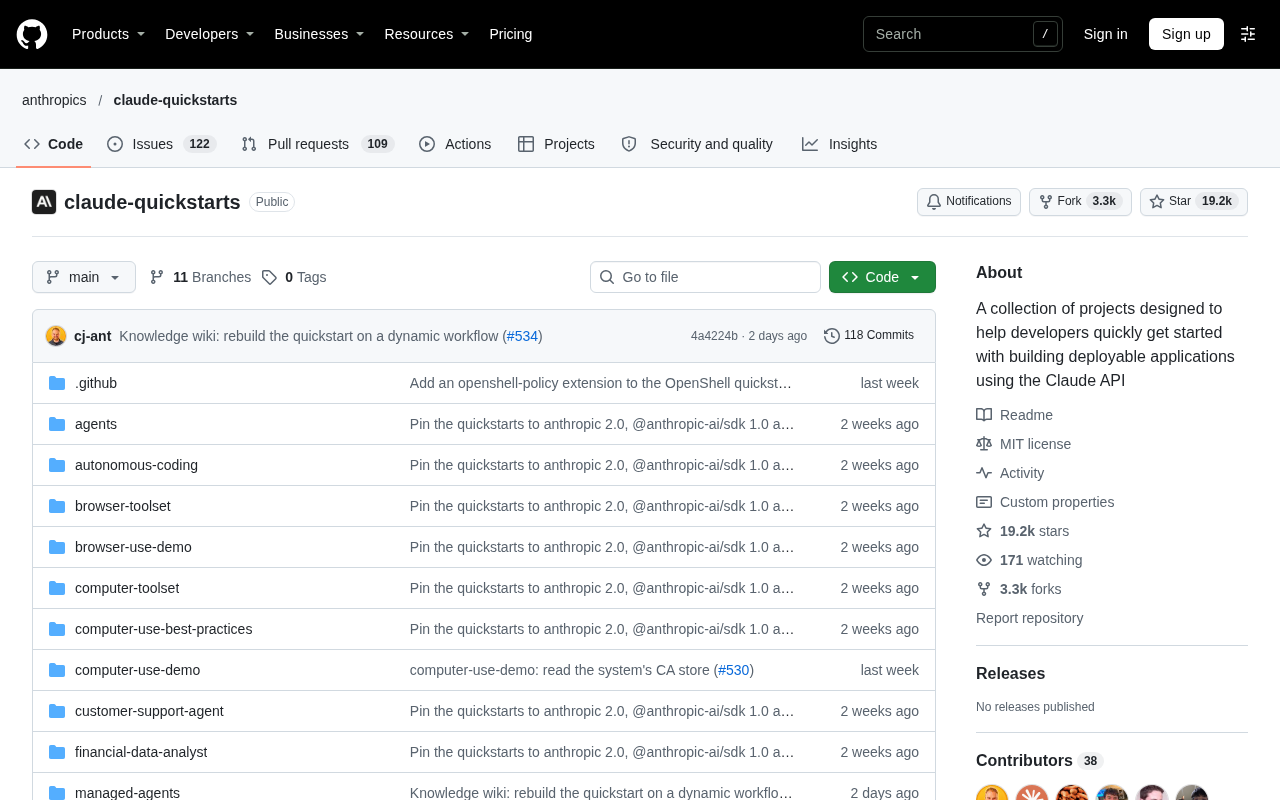
Anthropic's official claude-quickstarts project collection helps developers quickly build deployable apps with the Claude API. Nearly 20k stars, Python-based, great for beginners and prototyping.
 Tech Frontiers
AI Agents Connecting Directly to APIs: Which Calls Can Be Safely Allowed?
AI agents can call any API, but the real challenge is deciding which calls can be safely allowed. This article analyzes allowance decisions from three dimensions—intent matching, least privilege, and controllable impact—and argues that the control layer should sit outside the agent, combined with audit traceability to build a trustworthy API call governance mechanism.