Petlibro Granary 2 Smart Feeder: How AI Cameras Solve Multi-Cat Feeding Challenges

Petlibro Granary 2 uses a built-in scale and AI camera to give multi-cat households precise, per-cat feeding data.
The Petlibro Granary 2 smart feeder targets a key pain point for multi-cat households: not knowing how much each cat is eating. Its built-in scale enables precise portion tracking, while the AI camera on premium models identifies which cat eats what and when, consolidating that data into individual records viewable on your phone. This helps owners spot early health warning signs hidden in eating pattern changes. The catch is that the most valuable health monitoring features sit behind a paid subscription, continuing the "hardware + subscription" trend in smart devices and making the true long-term cost higher than the device price alone.
Multi-cat households often share a common frustration: it's nearly impossible to know exactly how much each cat is eating and when. Petlibro's latest Granary 2 series smart feeder aims to address this long-standing pain point by combining a built-in weight sensor with an AI camera.
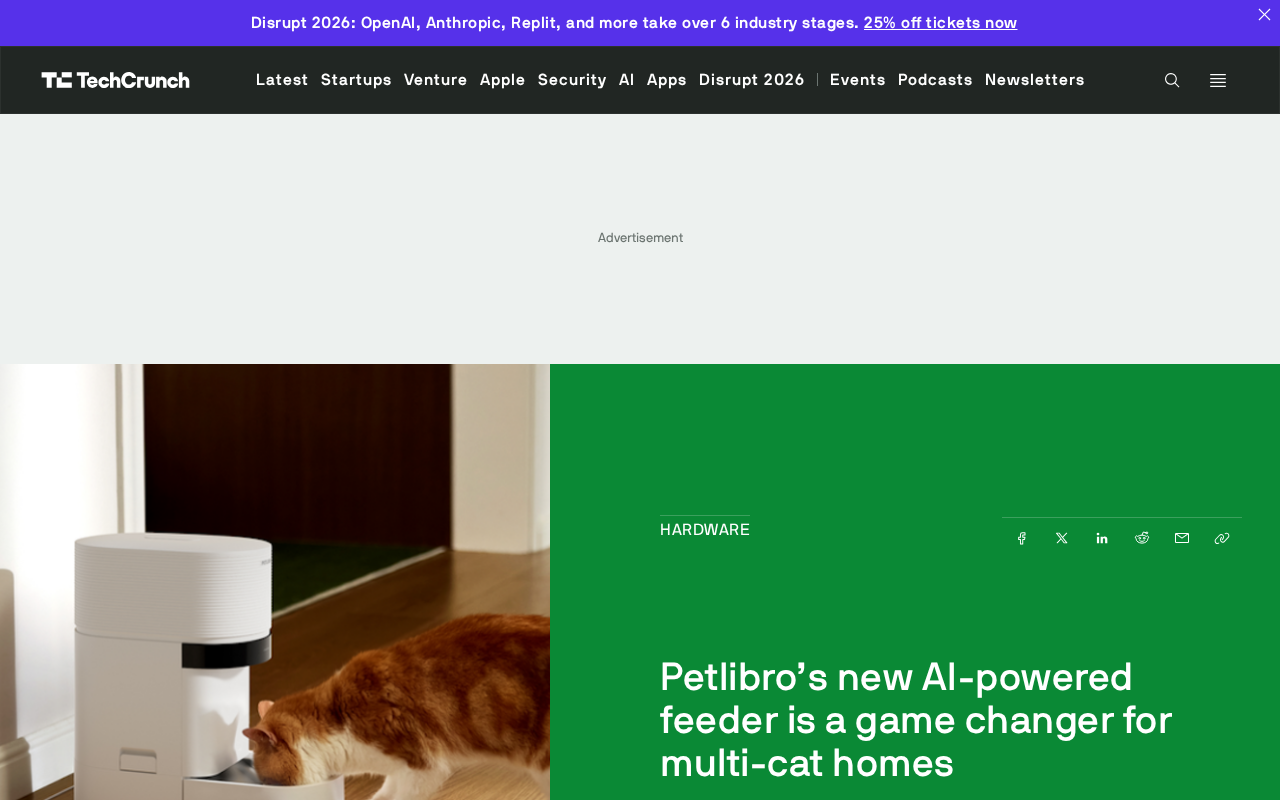
Core Features: Weight Sensor Meets AI Camera
The key upgrade in the Granary 2 is its built-in scale. This design means the feeder does more than simply dispense a fixed portion of food on a schedule — it can precisely measure the actual weight of food dispensed and consumed. For cats that need strict weight control or have special dietary requirements, this level of precision is something a standard timed feeder simply can't offer.
On higher-tier models, Petlibro has also added an AI camera. Its role goes beyond letting owners remotely watch their cats eat — more importantly, it uses image recognition to track exactly which cat is eating and when. This is the hardest problem to solve in multi-cat households: when several cats share a single feeding station, it's nearly impossible to tell who overate and who didn't eat enough.
The underlying logic behind the AI camera's cat facial recognition relies on deep learning models that map each cat's facial features, coat patterns, and body silhouette. This allows the system to distinguish individual cats even when multiple animals appear simultaneously. This type of edge AI inference typically performs the initial identification on-device, then uploads structured data to the cloud to generate historical reports. It's worth noting that recognition accuracy is significantly affected by how similar the cats look, lighting conditions, and camera angle — solid-colored cats or multiple cats of the same breed are noticeably harder to distinguish than a mixed group with obvious visual differences. A learning period is usually required when first setting up the system, allowing it to accumulate enough sample data before achieving reliable accuracy.
Why This Is a Must-Have for Multi-Cat Households
Effective feeding management tools for multi-cat environments have long been lacking. Larger or more dominant cats tend to steal food, while timid or elderly cats may chronically under-eat — often without owners noticing. Abnormal changes in food intake are frequently early warning signs of health issues; a sudden drop in appetite, for example, can indicate illness.
By combining weight measurement with AI identification, the Granary 2 brings together three critical data points — which cat, how much they ate, and when they ate it — in one place. This means owners can access individual feeding records for each cat on their phone, enabling them to detect potential health issues earlier rather than relying on observation or guesswork.
The Subscription Concern
The business model is worth paying attention to. While basic feeding and weighing functions come with the device, the most valuable health-monitoring features require an additional paid subscription to unlock.
This follows the "hardware + subscription" strategy that has become common in the smart device industry in recent years. For consumers, it's a double-edged sword: on one hand, ongoing software services do require cost support, and AI analysis depends on cloud computing resources; on the other hand, users who paid a premium for a higher-end model will find that the most valuable health-tracking capabilities still require extra fees, making the true cost of ownership higher than the sticker price suggests.
Before buying, users should factor subscription costs into their long-term budget and honestly assess whether they actually need advanced health monitoring, or whether basic portion control is sufficient.
The "hardware + subscription" model already has established precedents in the pet tech space. Products like the Furbo dog camera and Whistle GPS collar follow a similar structure: the hardware itself is priced relatively accessibly, but core AI analysis, historical data storage, or health reporting features are locked behind monthly or annual subscription paywalls. The benefit for manufacturers is converting a one-time sale into a recurring revenue stream that funds continued AI model development. For consumers, however, there's a hidden risk: if a product is discontinued or the service is shut down, subscription-dependent features may stop working entirely — meaning software longevity effectively determines hardware value. Before purchasing, it's worth taking the time to confirm subscription pricing, whether a free tier exists, and the data ownership terms in the service agreement.
The Broader Trend in Smart Pet Devices
The Granary 2 reflects a broader shift in smart pet products, moving from "automation" toward "data-driven health management." Early automatic feeders simply solved the convenience problem of timed feeding, while this new generation of products integrates sensors and AI to transform pet care into data-driven health management.
For cat owners, the value of these devices lies in converting the hard-to-quantify aspects of daily care — eating habits, weight changes, behavioral patterns — into trackable data. As the cost of AI visual recognition continues to fall, it's reasonable to expect that individual identification and health alerts will become standard features across more pet devices. The Petlibro Granary 2 is a representative product in this trend, even if the subscription model remains a factor that requires careful consideration.
Related articles

Chain of Thought Isn't Just for AI: How Humans Can Use CoT to Improve Thinking Quality
Chain of Thought isn't just a prompt trick for large models. Starting from a Hacker News discussion, this article analyzes why CoT works for human thinking too, breaks down actionable ways to transfer it, and highlights the key differences between human CoT and machine CoT.
Cloudflare Teams Up with OpenAI: Closi…
Cloudflare Teams Up with OpenAI: Closing the Loop from Vulnerability Discovery to Defense with AI
Cloudflare uses OpenAI Daybreak to investigate security vulnerabilities and generate reviewable remediation plans, while developers use Codex to boost coding efficiency and quality.

Orca Multi-Agent Orchestration in Practice: A Guide to Parallel Collaboration with Claude and Codex
Orca is Stable AI's free open-source agent workbench supporting 34 agents like Claude Code and Codex in parallel. Learn its Git worktree isolation, multi-model orchestration, and mobile management.