PewDiePie Admits Failure: Why Did His Two-Year Crow Friendship Plan Fall Apart?
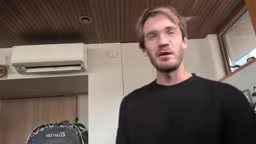
PewDiePie spent two years trying to befriend crows and failed, revealing in self-mockery the difficulty of earning wild animals' trust.
PewDiePie released the video 'I Failed,' detailing his two-year failed plan to befriend crows after moving to Japan. Fascinated by their high intelligence, he tried feeding them peanuts in shells, found parks where crows gathered, and even attempted to rescue a crow hanging upside down—only to be preempted by a Japanese dad. He also built an automatic feeder, but the crows wouldn't come near. The video uses self-deprecating humor to show the difficulty of connecting with wild animals and conveys the value of honestly admitting failure.
On YouTube, we're used to seeing creators showcase their highlight moments—carefully edited achievements, stunning creations, and those "Wow! Amazing!" instants. But PewDiePie's recent video takes the opposite approach, titled simply "I Failed," honestly sharing his two-year-long "crow friendship plan" after moving to Japan, which ultimately ended in failure. The video is not only full of self-deprecating humor but also unexpectedly reveals the insurmountable gaps in human-animal interactions.
Why Want to Be Friends with Crows?
In the video, PewDiePie explains that after moving to Japan, he was surprised by the sheer number of crows on the streets, and what truly captivated him was their intelligence. He mentions a widely circulated claim: crows have an intelligence level roughly equivalent to that of a 7-year-old child. What attracted him even more was hearing that some people had built friendships with crows through feeding and even received "gifts" in return—money.
"That's my dream," he says half-jokingly. "Why do you think I became a YouTuber?"
So he set himself a goal: while in Japan, he absolutely had to become friends with a crow. The plan lasted two years, he tried various methods, but never succeeded.
New Caledonian crows (Corvus moneduloides) are the star species studied by scientists for crow cognition—they can make and use tools (like using twigs to hook insects) and even solve complex problems requiring multi-step reasoning. The claim that "crow intelligence equals a 7-year-old child" usually stems from laboratory test results on New Caledonian crows and ravens, such as performance in causal reasoning and delayed gratification tasks. However, this analogy is not rigorous, as intelligence encompasses multiple dimensions; crows' social intelligence and physical cognition may approach that of a 7-year-old in some aspects but are completely different in others (like language). In Japan, the common large-billed crow (Corvus macrorhynchos) is also known for its intelligence—they can recognize human faces, remember feeders, and learn by observing the behavior of their peers. It is precisely this cognitive ability that makes crows highly sensitive to human intentions, difficult to "bribe" with simple food offerings.
Early Efforts: Peanuts and Prime Locations
PewDiePie's strategy was straightforward: exchange food for trust. After researching, he learned that crows like peanuts in shells, so he used them as "bait." However, the crows seemed unimpressed—every time he approached, they flew away.
"I think they can sense my desperation," he jokes, "because they're smart enough to detect that clingy, annoying vibe I give off."
Later, he found a "prime location"—a park where crows gathered. There, he successfully began feeding, and the crows did get closer to him. But a new problem arose: he couldn't tell which crow was which. He tried to create files for each crow, but there were simply too many crows in Japan.
"Am I making friends with them, or am I just a human feeding machine?" he wonders aloud.
Peanuts in shells are often recommended as food for crows because they are rich in fat and protein, and the shell provides extra manipulation fun, appealing to crows' curiosity. But scientific research shows that building trust with crows regarding food sources and feeders takes a very long time, and they assess risks: a suddenly appearing human may be seen as a potential threat. Moreover, crows are social animals, and alarm behaviors spread quickly through the group—once one crow flies away, others follow. Therefore, feeders need to stay still, avoid direct eye contact, and repeatedly appear at the same time and place to gradually reduce the crows' vigilance. PewDiePie's failure partly stemmed from his overly eager behavior and his inability to individually identify crows, making it impossible to track progress in trust-building.
Golden Opportunity: Rescuing a Hanging Crow
A turning point seemed to arrive on a rainy day. PewDiePie and his wife Marisa were in the park when he spotted a crow hanging upside down from a tree—clearly trapped. He immediately realized this was a perfect opportunity to rescue the crow and win its eternal friendship. He imagined those stories: someone saves a bird, and the bird recognizes them as its master, staying by their side for life.
"That's what I want," he says.
He rushed home and grabbed every tool that might help: climbing shoes (he considered climbing the tree, but the branches were too far), and every long object he could find, taping them together into a "Frankenstein pole" at least six meters long. He planned to use this pole to free the crow from the branch.
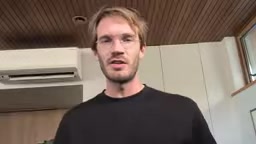
The Chaotic Rescue Scene
However, things did not go as planned. The six-meter pole was extremely difficult to maneuver, and as he tried to wield it, more and more passersby—especially families with children and Japanese mothers—gathered to watch. The children showed great interest in saving the crow, and the mothers began offering advice.
"Someone told me 'use scissors,'" PewDiePie recalls. "I thought, how am I supposed to swing a pole with scissors?"
Someone else suggested calling the police, but he didn't think they would care about such a thing. He felt immense pressure because he felt responsible for the crow.
"One of my biggest traumas is animals suffering within my responsibility," he explains. "If I don't save this crow, who will?"
But the more nervous he became, the less he could complete the rescue. He describes himself as someone who "chokes at the critical moment"—when the time comes to save the world, he slips on a banana peel.

The Japanese Dad Appears and the "Stolen" Glory
Just as PewDiePie decided to go home and get a saw to try attaching it to the pole, a Japanese dad appeared. This dad came out of nowhere, agile, and "handsome, strong, and more capable than me." He handled the situation effortlessly, the crow flew away, and the crowd applauded.
PewDiePie slipped away from the scene, and Marisa captured his expression at that moment. He admits he felt relieved that the crow was finally rescued, but more disappointed—the title he had expected, "PewDiePie: Crow Savior," had become "PewDiePie: The Guy Who Almost Saved a Crow."
"I wanted an RPG-style title," he says, "like 'PewDiePie, Friend of Crows.' That would be the ultimate side quest."
The Final Attempt: Even the Automatic Feeder Failed
The failed rescue didn't make PewDiePie give up entirely. He still wanted to befriend crows and even built an automatic feeder to try to attract them to his home. He spent two weeks monitoring the machine, but no crow came near.
"They eat trash, but my machine? No, they won't come close," he says helplessly. "I've never failed this badly."
Automatic feeders are designed to mimic a "reliable food source," but crows have a natural wariness of novel objects (neophobia). Research shows that crows avoid unfamiliar objects for days or even weeks, especially when they appear in their foraging areas. Additionally, crows prefer to forage on the ground or low branches rather than near machines close to human dwellings. PewDiePie's machine may have failed the crows' "risk assessment" due to its location, noise, or appearance. In contrast, urban crows are already accustomed to human trash, but that habit formed over generations of adaptation; new machines take much longer to be accepted.
The Truth Seen in Failure
What makes this video resonate is perhaps precisely PewDiePie's rare honesty. On social media, we are used to showcasing success, while failure is often hidden. PewDiePie shares his frustration with self-deprecating humor while also conveying a message: even the most experienced creators encounter things they can't handle.
More importantly, his experience reveals a fact: establishing a genuine connection with wild animals is far more difficult than imagined. The intelligence and vigilance of crows make them not easily bribed by food. PewDiePie's failure precisely proves the complexity of these animals.
At the end of the video, he still hasn't given up: "I will still become friends with a crow. If you're watching this video and you're a crow, it's going to happen, whether you like it or not."
This persistence may be the most touching aspect of this "failure" video.
(The video also mentions sponsor boot.dev, a programming learning platform. PewDiePie says he completed their Linux course and finds this kind of learning that truly understands the principles valuable.)
Background Notes
Crows getting hung upside down in tree branches is not common; it usually happens due to feet tangled in thin wires or branches or wings caught in forks. When rescuing wild animals, professional advice is to first contact local animal rescue organizations or municipal authorities, as intervention by non-professionals can exacerbate the animal's stress response or even cause injury. Japan has specialized wildlife rescue centers, but response times may be long. PewDiePie's homemade long pole was creative but lacked stability, and the noise from the crowd increased the crow's fear. Notably, crows have excellent memory—a single negative experience may cause it to permanently avoid the area, which may be one reason PewDiePie's subsequent feeding attempts failed.
Related articles

Starlink Mini 2 Launches: Portable Satellite Internet Evolves Again
Starlink Mini 2 sparks heated debate on Hacker News with 285 points and 291 comments. This article reviews the portable satellite terminal's iteration direction, community discussion focus, and real-world use cases.
PewDiePie Googles Himself: Retirement, His Custom AI Model Ajax, and Linux Life
PewDiePie's self-search video addresses retirement rumors, reveals his custom AI model Ajax hits 60 tokens/s and is still in BF16 training, and shares his Arch Linux routine, OpenAI ban experience, and fatigue with the YouTube ecosystem.

LLM Takes On Zachtronics' Brain-Bending Masterpiece TIS-100
A Hacker News project lets LLMs play Zachtronics' hardcore programming puzzle TIS-100. We analyze why TIS-100 is a litmus test for LLM program synthesis and reasoning, explore model capability boundaries under strict instruction sets, and discuss implications for AI coding tools.