Starlink Mini 2 Launches: Portable Satellite Internet Evolves Again
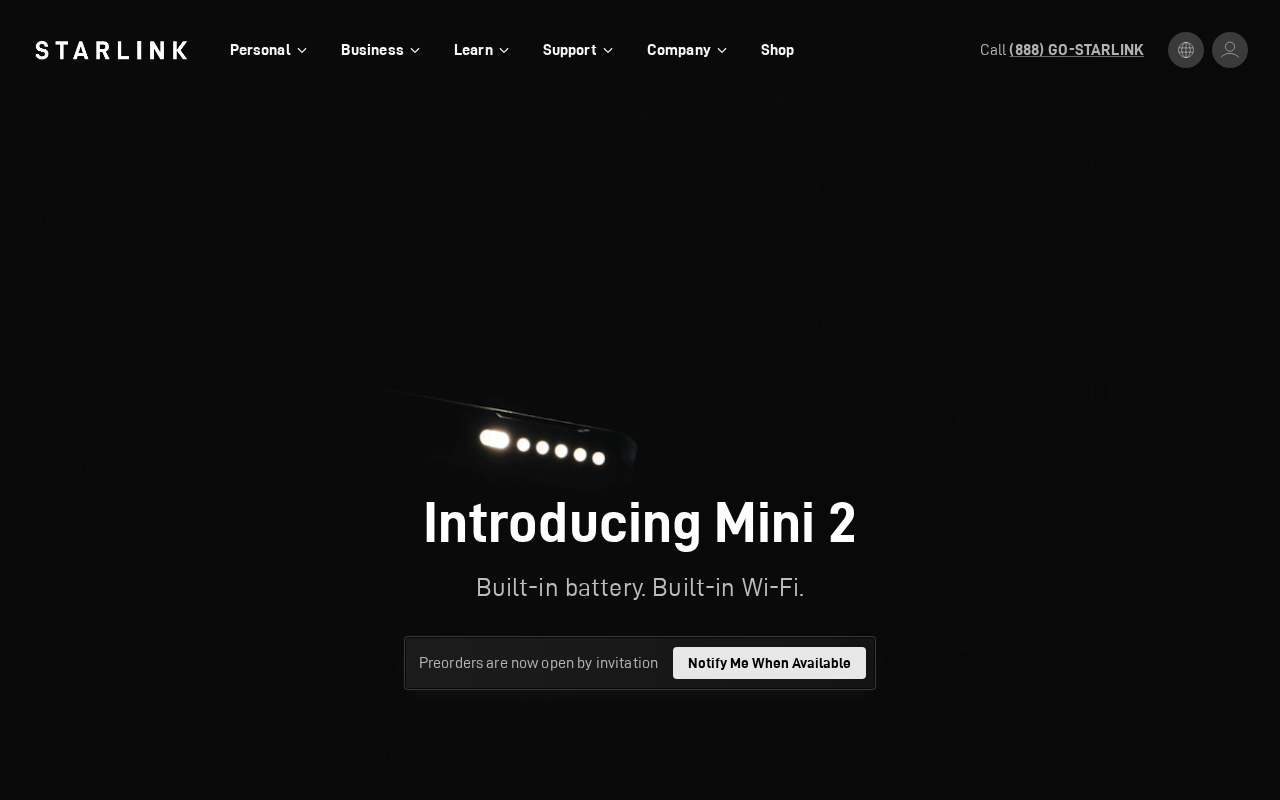
Starlink Mini 2's official page sparks Hacker News buzz, reflecting growing demand for portable satellite internet.
Starlink Mini 2's official page earned 285 points and 291 comments on Hacker News, far exceeding the buzz around a typical product update. The Mini series focuses on compact, portable satellite internet terminals, and Mini 2 marks SpaceX's iteration in this segment. With limited specs disclosed on the official page, community discussion centers on device size, power consumption, and real-world use cases. The comment count exceeding the point count suggests high controversy, possibly involving pricing, usage restrictions, or competitor comparisons. The article notes that portable satellite internet suits outdoor work, RV travel, and emergency communications; whether Mini 2 further reduces size or improves power efficiency will determine its competitiveness in the portable market, and future attention should focus on real-world data on power consumption, antenna performance, and regional service availability.
The official Starlink Mini 2 page has sparked heated discussion on Hacker News, with the post earning 285 points and 291 comments—far exceeding the buzz around a typical product update.
The Second-Generation Portable Satellite Terminal
The Starlink Mini series focuses on compact, portable satellite internet terminals. The launch of Mini 2 marks SpaceX's iteration in this product segment. Although the official page offers limited information, community discussion centers on device size, power consumption, and real-world use cases.
Starlink and LEO Satellite Internet
Starlink is a low Earth orbit (LEO) satellite internet constellation operated by SpaceX, with satellites at an altitude of about 550 km—far below the ~35,786 km of traditional geostationary (GEO) satellites. The lower orbit results in smaller signal propagation delay; Starlink officially claims end-to-end latency as low as 25–60 ms, enabling latency-sensitive applications such as video calls and online gaming. This is a key differentiator from traditional satellite broadband services like HughesNet and Viasat. The trade-off is that each satellite covers a small area, requiring thousands of satellites to form a constellation for global coverage, and terminals must be equipped with electronically scanned phased-array antennas that continuously track overhead satellites and hand off between them. The Mini series integrates the phased-array antenna, router, and power supply into a single-hand-carryable chassis under this architecture, and its size and power trade-offs are directly constrained by antenna aperture and RF front-end design.
Community Discussion Buzz
On Hacker News, the Starlink Mini 2 post received 285 points and 291 comments—far exceeding the buzz around a typical product update. Hacker News users typically focus on network coverage, latency performance, and subscription costs for Starlink products, and the Mini 2 discussion follows this pattern. The comment count exceeding the point count suggests the topic is highly controversial, possibly involving pricing, usage restrictions, or competitor comparisons.
Hacker News Voting and Discussion Mechanics
Hacker News, operated by Y Combinator, uses simple point (upvote) ranking; a post's popularity is roughly determined by points and posting time, while the ratio of comments to points often reflects the controversy level of a topic. Generally, product launch posts tend to get high points but limited comments; when comments approach or exceed points, it usually means readers have significant disagreements on pricing, applicability, or technical approach. With 291 comments against 285 points, this is a classic "high discussion, low consensus" structure, indicating the community isn't merely spectating a new product but debating the cost model and usage boundaries of portable satellite terminals. Additionally, Hacker News commenters are predominantly engineers and technical professionals, and discussions often involve technical details such as power budgets, antenna gain, and spectrum licensing, rather than staying at the marketing level.
Use Cases for Portable Satellite Internet
The core value of the Starlink Mini series is freeing satellite internet from fixed installations. For outdoor work, RV travel, emergency communications, and similar scenarios, compact terminals offer clear practicality. The iteration direction of Mini 2 is worth watching: whether it further reduces size or improves power efficiency will determine its competitiveness in the portable market.
Phased-Array Antennas and Engineering Constraints of Portable Terminals
To maintain a link while mobile, satellite internet terminals rely on electronically scanned phased-array antennas: by controlling the phase difference of each antenna element, the beam can be steered, switching tracked satellites within milliseconds without mechanical movement. Larger antenna aperture yields higher gain and better throughput, but power consumption and size increase accordingly. This is the core contradiction of portable terminals—reducing size sacrifices gain, which in turn affects rain fade margin and usability under low-speed conditions; improving power efficiency requires optimization in the RF front-end, power amplifiers, and thermal design. Additionally, portable devices typically need to support DC power or battery operation, and power consumption directly determines battery life and cooling solutions. Therefore, the iteration direction of Mini 2 (further miniaturization vs. improved power efficiency) is not a simple product choice but an engineering trade-off constrained by RF physics—which is exactly what technically minded users in the community care about most.
Key Questions to Watch
The official Starlink Mini 2 page does not disclose detailed specifications. Judging from the scale of community discussion, users have both expectations and concerns about such portable satellite terminals. Future attention should focus on real-world test data, including power consumption, antenna performance, and service availability in different regions.
Overall, Starlink Mini 2 is a routine iteration in the portable satellite internet space, but the community discussion it has sparked shows that user demand for portable satellite internet is growing.
Related articles

PewDiePie Googles Himself: Retirement, His Custom AI Model Ajax, and Linux Life
PewDiePie's self-search video addresses retirement rumors, reveals his custom AI model Ajax hits 60 tokens/s and is still in BF16 training, and shares his Arch Linux routine, OpenAI ban experience, and fatigue with the YouTube ecosystem.

PewDiePie Admits Failure: Why Did His Two-Year Crow Friendship Plan Fall Apart?
PewDiePie shares a two-year failure: trying to befriend Japanese crows, from feeding peanuts to rescuing a hanging crow, only to have the glory 'stolen' by a Japanese dad. The video reveals the real challenges of interacting with wildlife and a creator's honest take on failure.
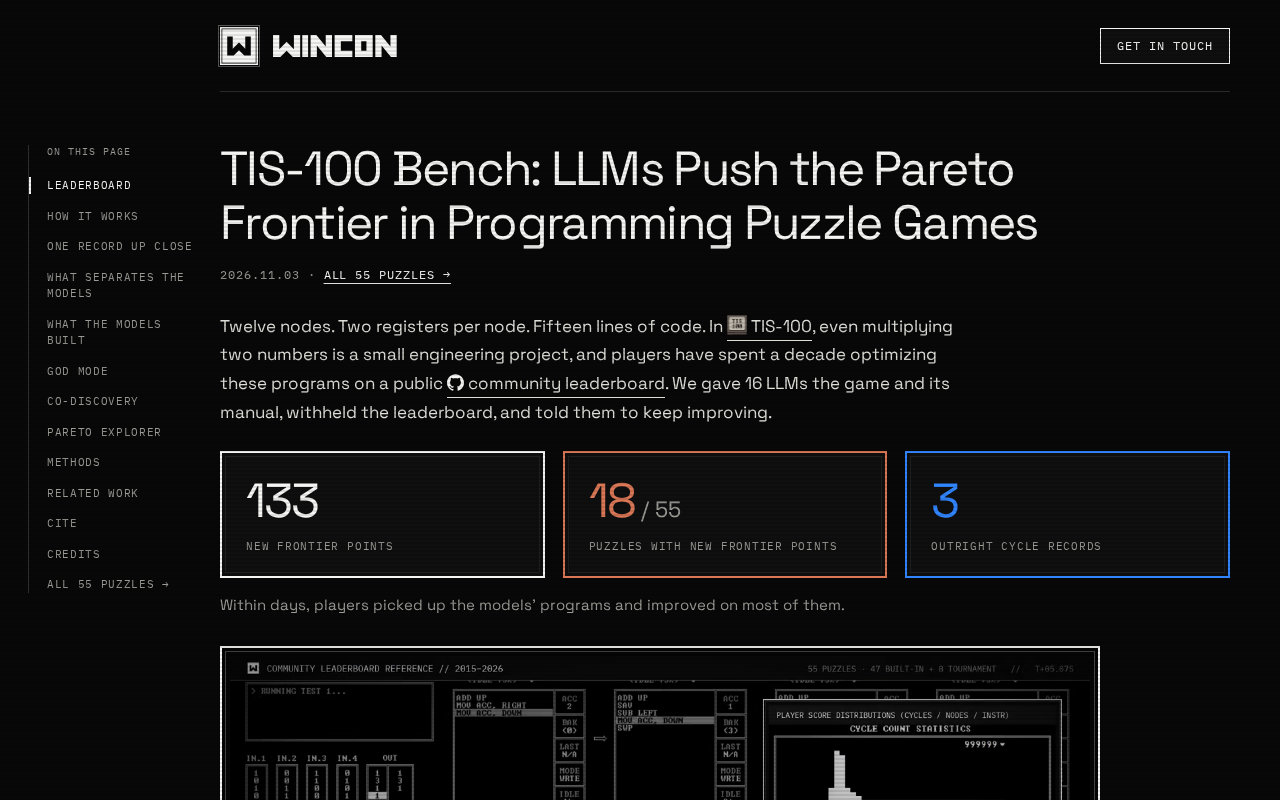
LLM Takes On Zachtronics' Brain-Bending Masterpiece TIS-100
A Hacker News project lets LLMs play Zachtronics' hardcore programming puzzle TIS-100. We analyze why TIS-100 is a litmus test for LLM program synthesis and reasoning, explore model capability boundaries under strict instruction sets, and discuss implications for AI coding tools.