Pi Agent Review: A Minimalist Coding Agent That's Lightweight, Efficient, and Highly Customizable

Pi Agent is a minimalist Coding Agent with ~1,200 token overhead and full workflow customizability.
Pi Agent takes a bare-shell approach to AI coding tools — no built-in system prompts, no pre-baked features, just four core tools and a highly extensible Packages system. With only ~1,200 tokens of initial overhead versus Claude Code's ~14,000, it preserves context budget for real work. It officially supports Codex, Grok, and other model subscriptions, and avoids the AI Slop issues plaguing OpenCode, making it ideal for developers who want full control over their workflow.
A "Bare-Shell" Coding Agent
While Claude Code and Codex dominate most developer conversations, a minimalist Coding Agent called Pi Agent is quietly winning over seasoned developers. According to hands-on testing shared by Bilibili creator Xiaolin, Pi Agent's defining characteristic is radical simplicity: no built-in system prompts, no pre-baked features like to-do lists, sub-agents, or "by the way" suggestions — not even Web Search out of the box.
This might sound like a list of shortcomings, but it's actually the core philosophy. The creator is upfront about it: if you find Claude Code or Codex perfectly comfortable to use straight out of the box and have no desire to heavily customize your workflow, Pi Agent probably isn't for you. On the other hand, if you prefer building your own workflows, adding plugins to your agent, and maintaining full control over your toolchain, Pi Agent is an excellent fit.
In short, Pi Agent hands the power of "renovation" entirely to the user — it delivers a clean, empty shell and lets you furnish it yourself.
Extreme Lightweight: Token Consumption Compared
Pi Agent's first major selling point is how light it is. According to official figures, using it straight out of the box consumes only about 1,200 tokens. By comparison, simply loading the context in Claude Code — without doing anything — already burns through roughly 14,000 tokens: about 1,600 from the system prompt alone, and another 7,000 to 7,500 from a second system module (System 2).
It's worth noting that while modern LLMs' context windows keep expanding (Claude 3.5, for instance, supports 200K tokens), token consumption directly affects both API costs and response latency. In a Coding Agent scenario, system prompts, tool descriptions, conversation history, and code files all compete for this "context budget." When the budget runs out, the model must compact or truncate historical content — a process that can itself introduce information loss. The lower the initial token overhead, the more context space is available for actual work. Pi Agent's 1,200-token starting point essentially reserves the entire context window for real workloads.
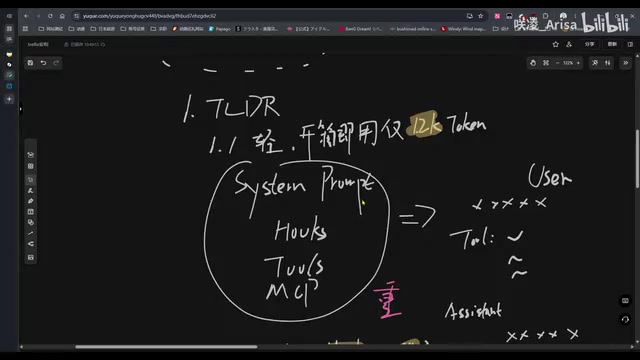
This comparison points to a broader industry trend worth thinking about: as model capabilities continue to improve, the tools and prompts once used to "constrain" model behavior are increasingly becoming a burden. The stronger the model, the more you should be cutting constraints — excessive restrictions not only waste context budget but can also cause prompt drift, interfering with the model's ability to perform autonomously.
Prompt drift refers to the phenomenon where, over long conversations or complex tasks, a model's behavior gradually deviates from the original intent of its instructions. When system prompts are excessively long or deeply layered, the model's attention to early instructions decays as the conversation progresses, leading to inconsistencies in output style, format, or logic. This is especially pronounced in Coding Agent scenarios — complex pre-set rules can compete with real-time user instructions, causing code style inconsistencies or functional drift. By starting with a near-blank system prompt, Pi Agent eliminates this risk at the root.
Pi Agent includes only four core built-in tools — Read, Edit, Write, and Grep — doing a handful of essential things extremely well, and leaving everything else for users to extend as needed.
Everything Is Customizable: The Packages System and Documentation Standards
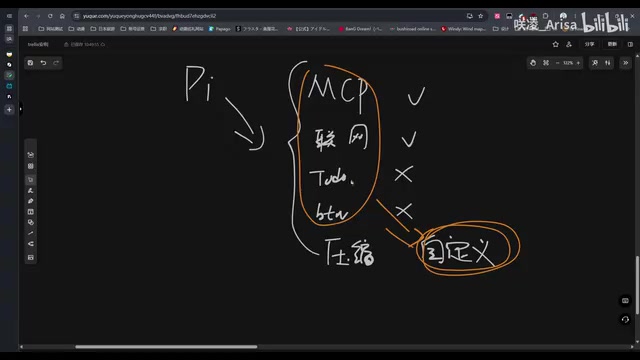
How do you fill in Pi Agent's missing features? The answer is its Packages system. This works like a plugin marketplace — you can install NPM packages to add MCP support, web search, context management, and more, or write your own packages from scratch.
MCP here refers to the Model Context Protocol, introduced by Anthropic in late 2024 — an open protocol designed to standardize how AI models interact with external tools and data sources. Think of it as a "USB interface" for AI: it lets different tools and services like file systems, databases, and browser controllers connect to models through a unified standard. Pi Agent's NPM-based MCP support means users can precisely define their own capability boundaries without bundling every dependency at the base layer — entirely in line with the bare-shell philosophy.
More importantly, Pi Agent's documentation and interface specifications are extremely well-structured. You can even hand the docs directly to Pi Agent and let it configure itself, making incremental changes through conversation. This "AI configuring itself" approach has a very low barrier to entry — no specialized knowledge required.
The decision-making logic in practice is straightforward: MCP and web search are essentials — install them. To-do and "by the way" features aren't needed day-to-day — skip them, save context space, and reduce prompt drift. As for context compression, Pi only includes minimal built-in compaction; users are free to install different context management packages to handle long-context drift.
This stands in sharp contrast to Claude Code: CC is "pseudo open source" — you can add things, but removing them is nearly impossible. Pi Agent's freedom to subtract is where its minimalist philosophy truly lands.
Multi-Model Support: Officially Recognized Integration
Another major advantage of Pi Agent is its multi-model compatibility. A key fact: Codex officially states that 5% of its traffic comes from Pi, and another 5% from OpenCode. This means you can log in directly with your own account and use your Codex quota inside Pi with zero compatibility issues.
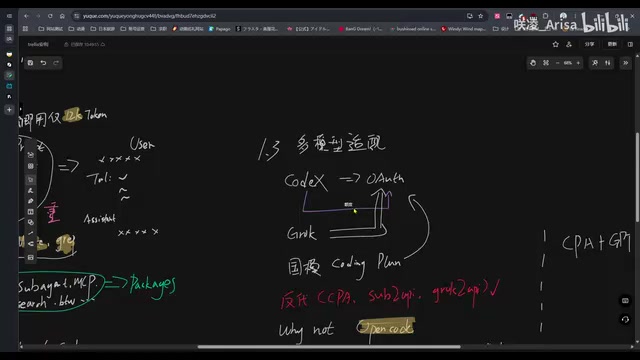
Pi currently supports login for a wide range of account systems: Codex, XAI (Grok subscriptions), OpenCode Go, and domestic Chinese models including Zhipu GLM, Kimi (Xiaomi token plan), and other coding plans — all can be logged in and used directly.
By comparison, some community members have tried using CPA reverse-proxy to expose the v-message interface and connect it to Claude Code to run GPT — compatibility in practice is poor. Even with context compaction configured, Web Search may still fail and requires setting up third-party MCP separately. As long as it's not an officially recognized integration or a native model, Claude Code's compatibility tends to produce various small issues. Pi, as an officially recognized harness, sidesteps all of these pitfalls by design.
Why Not OpenCode? The Code Quality Debate
Since OpenCode supports similar features, what exactly does Pi Agent do better? The answer points to an increasingly sharp problem: AI Slop — the accumulation of low-quality, AI-generated code.
AI Slop is a term that's gained traction in developer communities in recent years, referring to large volumes of AI-generated, unreviewed, low-quality code or content. In open-source projects, this manifests as a flood of AI-generated pull requests that are logically repetitive, lack contextual understanding, are difficult to maintain, and often come with systemic defects like memory leaks and missing edge case handling. As Coding Agent tools proliferate, AI Slop is becoming a growing challenge for open-source maintainers — contribution volume skyrockets while review costs do the same, and project quality actually suffers as a result.
A direct comparison of the two GitHub repositories tells the story: OpenCode has roughly 3,700 issues and 1,100 pull requests — reviewing each one is an impossible task for any maintainer. OpenCode's multi-model collaborative workflow was once quite appealing, but code quality has deteriorated over time, with a persistent memory leak bug and rampant AI Slop driving many users away.
By contrast, Pi's repository has just 53 issues and 15 PRs, and the author has explicitly stated they won't arbitrarily merge web-coding-generated code. This largely shields the project from AI Slop, resulting in exceptionally high stability.
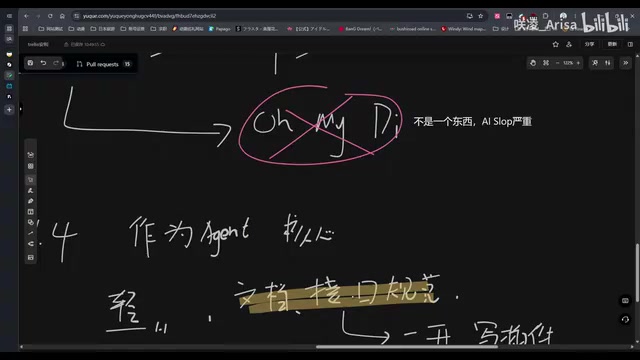
It's also worth mentioning the "Oh My Pi" project — judging by commit frequency and code volume, it has little meaningful connection to Pi itself at this point and exhibits the same AI Slop issues; users should evaluate it carefully on their own.
The Downstream Value of Being Lightweight: Friendly to Secondary Development
Pi Agent's value extends beyond everyday coding. Because it's lightweight, well-documented, and structurally clean, it makes an ideal foundation for secondary development. MiniMax Code has already forked Pi to build their own custom harness — a clear example of this potential. Users can also fork it, develop components, or use it as the basis for their own small tools. This level of customizability is simply not something heavyweight agents can offer.
That said, Pi Agent isn't perfect. It lacks the intuitive context-viewing features found in Claude Code, and it isn't particularly polished straight out of the box — you'll need to install a few packages to reach an ideal working state, even if the list isn't long.
Conclusion: Minimalism Is an Active Choice
Taken together, Pi Agent represents a product philosophy fundamentally different from mainstream heavyweight agents: it returns control and trust to both the user and the model itself.
After setting aside Claude Code, Pi and Musk's Grok Build (written in Rust, with excellent stability and TUI interaction) stand as the two most comfortable lightweight tools in the space.
For developers who value a fast, clean, and controllable experience, Pi Agent is well worth trying: install it with a single npm command, connect your Codex or other subscription directly, and enjoy the comfort that minimalism brings. For users accustomed to out-of-the-box convenience, it may not be the best fit — and that's precisely where the minimalist philosophy draws its line.
Key Takeaways
Related articles
Understanding GitHub's Availability Report: Platform Stability and Developer Response Strategies
Deep dive into GitHub's monthly availability report: analyzing service degradation impacts, CI/CD fault tolerance, and platform dependency risk strategies for resilient development.
OpenAI's Claim of Solving a Millennium Prize Problem Sparks Academic Controversy
OpenAI claims its AI solved a Millennium Prize Problem, sparking debates over attribution, verification, and AI's role in reshaping mathematical research.

Ledoit-Wolf Covariance Shrinkage in Practice: 57% Lower Turnover + 10x GPU Acceleration
Learn how Ledoit-Wolf covariance shrinkage reduces portfolio turnover by up to 57% and how cuML GPU acceleration cuts backtest time from 1.5 hours to 9 minutes.