Plango: Fighting AI with AI — Adding Safety Guardrails to AI Coding Agents on Mac

Plango uses on-device AI to monitor AI coding agent behavior and establish configurable security boundaries for agent permissions.
The article introduces Plango, the #11-ranked Mac security tool on Product Hunt, which addresses permission risks arising as AI coding agents evolve from code completion to autonomous task execution by providing behavior monitoring and access control. Powered by an on-device AI security model, Plango tracks agent behavior across files, networks, and terminals, protects sensitive assets like `.env` and SSH keys, blocks suspicious outbound connections, and scans projects for vulnerabilities — all performed locally to ensure privacy. The article notes that these risks occupy a white space between traditional SAST/SCA and endpoint security, characterized as dynamic, context-dependent behavioral anomalies. Plango currently supports only Mac, and the on-device model's accuracy and tool compatibility remain to be verified, but its underlying idea of "building observable runtime environments for AI agents" is worth watching.
When AI Agents Start "Touching Your Files," Where Does the Security Boundary Lie?
AI coding agents are evolving from "completing code" to "autonomously executing tasks": reading and writing files, invoking terminals, making network requests. While efficiency improves, a long-overlooked question is surfacing — how much system access do these agents actually have? Could they accidentally delete critical files, leak keys stored in environment variables, or be exploited through prompt injection attacks?
Plango, a new product ranked #11 on Product Hunt, offers a direct answer: fight AI with AI. This Mac-based security tool specifically monitors the behavior of AI coding agents, protects sensitive files and keys, blocks suspicious network activity, and scans projects for vulnerabilities. According to its product page, it is powered by a local on-device AI security model and is private by default.

What Exactly Does Plango Do?
A "Behavior Monitoring Layer" Built for AI Agents
Plango is not positioned as traditional antivirus software, but rather as behavior monitoring and access control for AI coding agents. It continuously observes an agent's actions across the file system, network, and terminal, intervening before anomalies occur. The product description lists several core capabilities:
- Monitor AI coding agents: track the agent's runtime behavior rather than only scanning static code
- Protect sensitive files and keys: prevent agents from reading or exfiltrating high-risk assets such as
.envand SSH keys - Block suspicious network activity: intercept anomalous outbound requests initiated by agents
- Scan projects for vulnerabilities: proactively identify project-level security risks during development
- Fine-grained access control: let developers decide which resources agents can access
The value of this combination lies in the fact that AI agent permissions are typically "all or nothing," while Plango attempts to turn them into a configurable, auditable boundary.
On-Device AI Security Model, Privacy First
Plango emphasizes "Powered by an on-device AI security model" and "Private by default." This means security detection is performed locally, without uploading code or behavior logs to the cloud. For developers working with proprietary codebases, this is a key selling point — a security tool itself should not become a new data leak surface.
On-device inference refers to models running directly on the user's local machine rather than calling cloud APIs. In the context of security tools, this architecture has two implications: first, privacy — source code, key paths, and behavior logs need not leave the developer's machine, avoiding the paradox of "the security tool itself becoming a leak channel"; second, real-time responsiveness — local detection requires no network round-trip and can intercept dangerous agent actions immediately before execution. The trade-off is a requirement for local compute and limited model scale, which typically results in detection capabilities weaker than cloud-based large models.
Why "Fighting AI with AI" Is a Real Need
The Double-Edged Sword of Agent Capabilities
The capability boundaries of mainstream AI coding tools are expanding rapidly. Agents can autonomously modify multiple files, execute shell commands, and install dependencies. Once an agent is induced by malicious prompt injection, or simply performs destructive operations due to a misunderstanding, the consequences may include key leakage, code exfiltration, or even system backdoors. Traditional security tools lack awareness of such "anomalous behavior by legitimate processes" because they look like a developer simply using tools normally.
Prompt injection attacks are a core threat facing AI agents. Attackers disguise malicious instructions as normal content — for example, hidden in code comments awaiting processing, README files, issue descriptions, or even web page content — to trick the agent into executing them as legitimate instructions. Because large language models struggle to reliably distinguish "data" from "instructions," once an agent reads a contaminated context, it may be manipulated into reading .env files, executing arbitrary shell commands, or exfiltrating code. Unlike traditional vulnerabilities, prompt injection often does not exploit code defects but directly "deceives" the model itself, making it difficult for traditional SAST tools to detect — which is precisely why a behavior monitoring layer is needed.
The White Space in Developer Security Tools
Code security scanning on the market (SAST/SCA) focuses on defects in the code itself, while endpoint security products focus on malware signatures. The risks introduced by AI agents sit between the two: they are behavioral, dynamic, and highly context-dependent. This is exactly the white space Plango targets. Notably, the Maker team includes members with PhD backgrounds, and the product received 80 upvotes and 9 comments on Product Hunt, indicating that this direction has at least caught the attention of the early developer community.
The SAST (Static Application Security Testing) and SCA (Software Composition Analysis) mentioned in this article are two common types of code security measures. SAST analyzes source code without running it, looking for defect patterns such as injection and out-of-bounds issues; SCA scans project dependencies to identify known CVE vulnerabilities in third-party libraries. Both operate on "static code and dependencies" and belong to the early development or build phase. In contrast, AI agent risks occur at runtime, manifesting as anomalous outcomes arising from combinations of legitimate process behaviors — static scanning cannot cover this dynamic context, which is precisely the differentiated positioning of runtime behavior monitoring tools like Plango.
Limitations and Considerations Worth Noting
Plango currently supports only the Mac platform, which aligns with its target users (the developer community that heavily uses Macs), but it also means Windows and Linux users are not yet covered. In addition, the actual detection accuracy, false positive rate of the on-device AI model, and the depth of compatibility with different AI coding tools remain to be verified through more real-world feedback. A #11 ranking and 80 upvotes indicate the product is still at an early stage, and ecosystem integration capability will be key to whether it can retain users.
From a broader perspective, Plango represents a new approach: rather than trying to limit what AI agents can do, build observable and controllable runtime environments for them. As AI becomes deeply embedded in development workflows, this kind of "agent security layer" may become a standard component of the developer toolchain.
FAQ
Which AI coding tools does Plango support?
The product page does not list a complete compatibility list; the core capability is monitoring AI coding agent behavior on Mac. For specific supported tools, check the official documentation.
Will the on-device AI model affect performance?
On-device execution avoids network latency, but local model inference still consumes some system resources; the actual impact depends on model size and detection frequency.
How is it different from traditional endpoint security software?
Traditional solutions rely on malware signatures, while Plango focuses on behavioral anomalies and access control for AI agents — the two are complementary rather than replacements.
Related articles
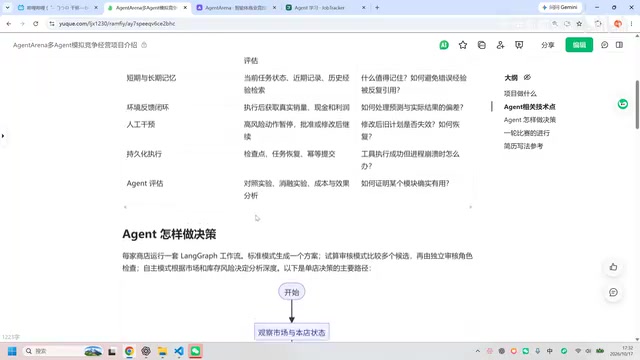
Hands-On Review of an Open-Source Multi-Agent Business Simulation Project
Hands-on review of a Bilibili creator's open-source multi-agent sandbox business project: architecture, memory, HITL, evaluation, and LLM vs rule-engine results.
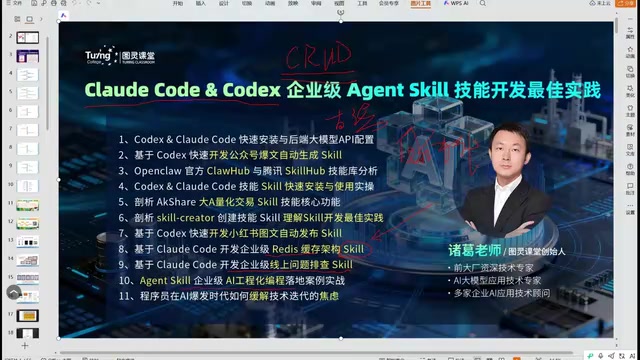
AI Engineering in Practice: The Complete Workflow of Claude Code and Agent Skill Development
A Bilibili hands-on course analyzes AI engineering: using Claude Code, Codex, and WorkBuddy to develop enterprise-grade Agent Skills, covering WeChat article drafts, quantitative analysis, and automated Xiaohongshu posting, while explaining the paradigm shift of Skill-driven development and tool selection.
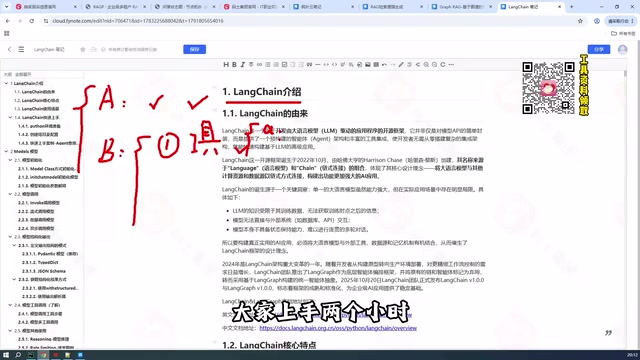
LangChain for Beginners: A Practical Guide to Structured Output and Agents
Starting from zero with LangChain: clarify the difference between low-code platforms and large model application development, covering structured output, tool calling, Agent practice, and multi-tenant RAG enterprise deployment—ideal for engineers with development experience looking to transition into AI application development.