PodRacer: A Powerful Open-Source Tool for Managing iPods on Linux

PodRacer is an open-source, offline iPod management tool built natively for Linux users.
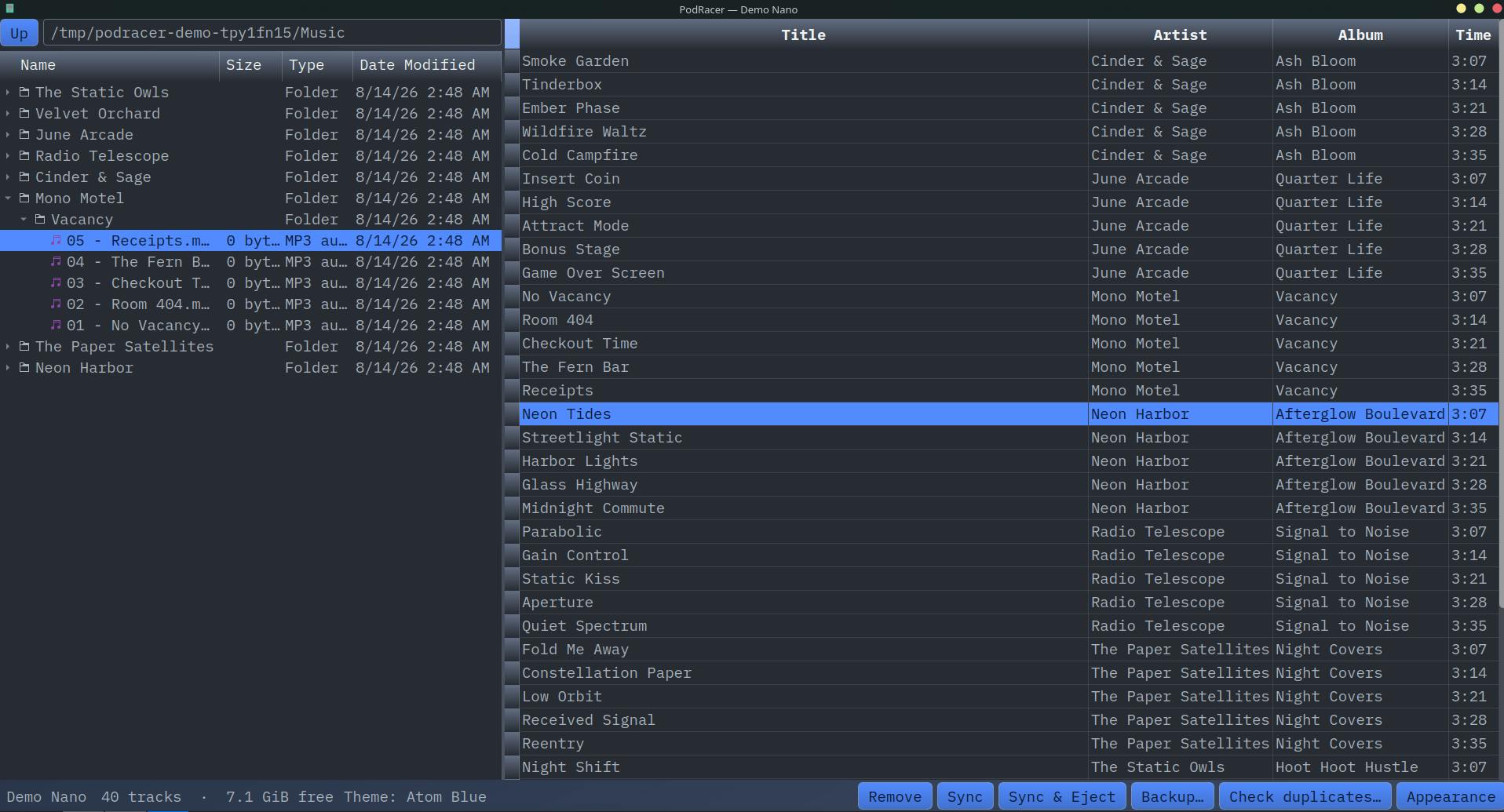
PodRacer is an open-source tool designed specifically for Linux that solves the long-standing challenge of managing iPods without iTunes or Wine. It offers proper music import that preserves the iPod's library database integrity, automatic FLAC-to-compatible-format transcoding, tag editing, duplicate detection, and backup features—all 100% offline with no systemd dependency.
In an era dominated by streaming music, a dedicated group of enthusiasts still clings to the classic iPod. However, for Linux users, managing this aging device has always been a headache—until PodRacer came along. This tool, built around the principles of "100% offline, open source, and systemd-free," aims to solve a long-standing problem for Linux audiophiles.
The Pain Points of Managing an iPod on Linux
For music lovers who've long used Linux, getting music onto an iPod has never been easy. As project creator AJ puts it: "Getting music onto an iPod on Linux really sucks."
The core issue is that the iPod relies on a proprietary database structure to manage its music library. Sure, you can copy music files directly to the device, but doing so often corrupts the iPod's internal library database, preventing the device from recognizing or playing those songs.
Specifically, the iPod uses a proprietary binary database file called iTunesDB to manage all music metadata. This database is stored in a hidden directory on the device at iPod_Control/iTunes/ and contains indexes for all information including track titles, artists, albums, playlists, and more. The iPod's firmware reads only this database at boot to build the library interface, rather than directly scanning audio files in the file system. This means that even if you place a perfectly tagged MP3 file in the device's storage, if there's no corresponding entry in iTunesDB, the iPod simply "can't see" the song. Early open-source projects like libgpod attempted to reverse-engineer this format, but as encryption mechanisms evolved across iPod generations (particularly the hash verification introduced starting with the 5th generation iPod), directly manipulating this database became increasingly difficult.
Even if you manage to get iTunes running on Linux through Wine, the results are far from satisfactory—because "it's still iTunes." Bloated, laggy, and with a fragmented experience, none of the old problems go away. Wine (Wine Is Not an Emulator) is a compatibility layer that enables running Windows applications on Linux and macOS by translating Windows API calls into POSIX system calls in real time. While it can theoretically run iTunes, the practical experience is often problematic: iTunes deeply depends on Windows COM components, the CoreAudio framework, and specific USB driver models, which are either incompletely implemented or have performance issues in Wine. Additionally, iTunes' USB device detection relies on the Apple Mobile Device Service, a Windows service that frequently fails to properly recognize connected iPods under Wine. This is precisely the predicament PodRacer aims to end.
Core Features of PodRacer
PodRacer is an iPod management tool built specifically for the Linux platform, with the goal of providing a smooth, native, and painless library management experience. According to the author's introduction on Product Hunt, its core features include:
Library and Tag Management
- Music Import: Properly loads music onto the iPod while maintaining the integrity of the library database, avoiding the data corruption issues caused by direct file copying.
- Tag Editing: Supports directly editing song metadata tags, keeping your library information well-organized.
Automatic FLAC Transcoding
The iPod doesn't natively support the FLAC lossless format. PodRacer includes an automatic conversion feature that transcodes FLAC files into a device-compatible format during import, eliminating the tedious manual transcoding step. This is especially practical for audiophiles with large lossless music collections.
FLAC (Free Lossless Audio Codec) is currently the most popular open-source lossless audio compression format, capable of compressing audio files to 50-70% of their original size without any loss in audio quality. It's particularly popular among Linux music enthusiasts and audiophile communities because it's a completely open format standard, unlike Apple's ALAC (Apple Lossless) which is tied to a single vendor. However, iPod firmware only supports formats like AAC, MP3, WAV, AIFF, and ALAC—FLAC support was never added. This means users with large FLAC collections must transcode their files to ALAC (maintaining lossless quality) or high-bitrate AAC/MP3 (lossy but smaller in size) before importing. PodRacer's automatic transcoding feature simplifies this tedious workflow into a one-click operation, eliminating the need to manually invoke ffmpeg or other transcoding tools from the command line.
Practical Utility Tools
- Duplicate Detection: Automatically checks for duplicate files in your library, helping you keep things clean.
- Backup Function: Supports backing up iPod content, providing an extra layer of protection for precious music collections.
The "Three-Free" Design Philosophy Explained
PodRacer's most distinctive hallmark is its "100% offline, open source, systemd free" positioning. These three keywords reflect the author's clear philosophy on tool design.
100% offline means all operations are completed locally, with no cloud uploads or network verification involved. For users who value privacy or are accustomed to working offline, this purely local processing approach is reassuring and eliminates dependency on network connectivity.
Open source ensures the tool's transparency and sustainability. The project is hosted on GitHub, allowing users to freely review the source code, contribute, and even modify it for their own needs. For niche hardware ecosystems, open source is often the key to a tool's long-term survival.
Systemd-free is a point with distinct Linux community flavor. systemd is a Linux system initialization and service management framework initiated by Red Hat engineer Lennart Poettering in 2010, which aggressively replaced traditional SysVinit and Upstart systems. The core of the controversy lies in systemd's design philosophy violating Unix's "do one thing well" principle—it not only manages system startup but has gradually absorbed logging (journald), network configuration (networkd), DNS resolution (resolved), scheduled tasks (timers), and many other functions, forming a massive monolithic system. Critics argue this design increases system complexity, reduces auditability, and creates unnecessary dependency lock-in. As a result, distributions like Devuan (Debian's systemd-free fork), Artix Linux, Void Linux, and Gentoo (optional) explicitly offer systemd-free options. PodRacer's explicit declaration of no systemd dependency is clearly aimed at accommodating this subset of users with strict requirements for system components, broadening the tool's compatibility.
Serving a Niche but Real Need
Based on Product Hunt data, PodRacer is currently quite a niche project. This isn't surprising—the iPod itself is a classic device gradually fading from the mainstream stage, and Linux desktop users are a relatively small group, so the intersection is naturally limited.
But it's precisely these "niche upon niche" scenarios that most lack quality tool coverage. Commercial companies have no incentive to serve such a narrow market, and this is exactly where open-source communities shine brightest. When hardware manufacturers cease official software support for legacy devices, the open-source community often becomes the sole force keeping those devices alive. This phenomenon is common in the tech world: the Rockbox project provides alternative firmware for multiple discontinued MP3 players, enabling support for more audio formats and custom interfaces; PostmarketOS lets old Android phones run full Linux systems; and OpenWrt gives budget routers enterprise-grade capabilities. These projects share a common trait: commercial returns are virtually zero, but community members maintain them out of passion for technology and real-world usage needs. For devices like the iPod that have been discontinued (Apple officially discontinued the last iPod touch in 2022), official software updates ceased long ago, and Linux never received official support in the first place.
PodRacer's value isn't in how many people it serves, but in how precisely it solves a genuine, long-standing pain point for that small group of Linux users who still hold onto their iPods.
Conclusion
PodRacer may not be a headline-grabbing star product, but it embodies what's admirable about the open-source community: there's always someone willing to build the right tool for needs that the mainstream ignores. For users still wrangling iPods on Linux, an offline, open-source management tool that doesn't corrupt the library and can automatically transcode FLAC is more than enough to be called a godsend. If you're fed up with the miserable experience of iTunes on Wine, head over to GitHub and give this "iPod racer" a try.
Related articles

Chain of Thought Isn't Just for AI: How Humans Can Use CoT to Improve Thinking Quality
Chain of Thought isn't just a prompt trick for large models. Starting from a Hacker News discussion, this article analyzes why CoT works for human thinking too, breaks down actionable ways to transfer it, and highlights the key differences between human CoT and machine CoT.
Cloudflare Teams Up with OpenAI: Closi…
Cloudflare Teams Up with OpenAI: Closing the Loop from Vulnerability Discovery to Defense with AI
Cloudflare uses OpenAI Daybreak to investigate security vulnerabilities and generate reviewable remediation plans, while developers use Codex to boost coding efficiency and quality.

Orca Multi-Agent Orchestration in Practice: A Guide to Parallel Collaboration with Claude and Codex
Orca is Stable AI's free open-source agent workbench supporting 34 agents like Claude Code and Codex in parallel. Learn its Git worktree isolation, multi-model orchestration, and mobile management.