Ponytail: The Open-Source Skill That Makes AI Write Less Code, Gaining 59K Stars in a Month

Ponytail is an open-source Skill that teaches AI Agents restraint, cutting code volume by 54% on average.
Ponytail, GitHub's top monthly open-source Skill, injects a 'less is more' engineering philosophy into AI Agents. Its official benchmarks show an average 54% reduction in code volume—up to 94% in over-engineering scenarios. Compatible with 20+ mainstream Agents including Claude Code, Cursor, and Gemini CLI, it works with a single install.
A Counterintuitive Hit Project
Have you ever asked an AI Agent to build a date picker for you? It often starts by installing the Flatpickr package, wraps it in a Wrapper component, adds a Style Sheet, and then wants to discuss timezone handling with you on top of that. Something that could have been done in one line ends up becoming 50 lines of code plus a pile of dependencies.
There's a Skill on GitHub called Ponytail that just crossed 80,000 stars—ranking first on June's monthly leaderboard—and it exists specifically to cure this affliction. According to a breakdown by the Bilibili tech channel "Mingjing and Diandian," this project surged by roughly 59,000 stars in a single month, becoming one of the most-watched open-source Skills of the month.
What makes it interesting is this: while everyone else is piling capabilities onto AI, Ponytail goes the opposite way, injecting a sense of restraint into the Agent.

The basic project info is clear at a glance: the repo is DietrichGabert/Ponytail, under the MIT license, with JavaScript as the primary language, and it's published to NPM (package name @dietrichgabert/ponytail). At its core, it's a Skill that plugs into your AI Agent, and it officially claims compatibility with over 20 mainstream Agents.
The Core Philosophy: The Best Code Is the Line You Never Wrote
Ponytail's core idea can be distilled into a single sentence—the best code is the code you never wrote at all.
Any engineer with plenty of hands-on experience understands this truth: one fewer abstraction, one fewer Wrapper, one fewer layer of dependency means one fewer bug and one fewer upgrade pitfall down the road. The complexity of software engineering often isn't written into existence—it's "over-written" into existence.
What Ponytail does is distill this "less is more" engineering taste into a Skill and inject it into the Agent's context. When you ask the Agent to add a feature, it first asks itself three questions:
- Can this feature be done in one line?
- Can existing API capabilities be reused directly?
- Is it really necessary to introduce a new dependency package?
This is essentially that senior developer's instinct of "quietly turning 50 lines into one," made explicit and written into the Prompt.
Three Core Capabilities
One Skill, Usable Everywhere
Ponytail follows the Agent Skills open specification, achieving install-once, use-anywhere functionality. Whether you're using Claude Code today, switching to Cursor tomorrow, or using Codex or Gemini CLI the day after, you don't need to maintain a separate set of Rules for each Agent.
The project officially claims compatibility with over 20 mainstream Agents, covering Claude Code, Cursor, Codex, Gemini CLI, GitHub Copilot, Aider, and more. This "one repo for multiple hosts" cross-platform design is also a common trait among the top-ranking Skill projects on the current monthly leaderboard.

Official Benchmark: Average 54% Reduction in Code Volume
The team ran comparison experiments on an open-source FastAPI + React repo: they set up 12 feature tasks, used Claude Haiku 4.5, and ran each task 4 times. The results were as follows:
- With Ponytail enabled, code volume dropped by an average of 54%
- In over-engineering scenarios (like date pickers), the reduction reached up to 94%
- Inference cost dropped by roughly 20%, and generation speed improved by roughly 27%
- Safety guardrails remained intact
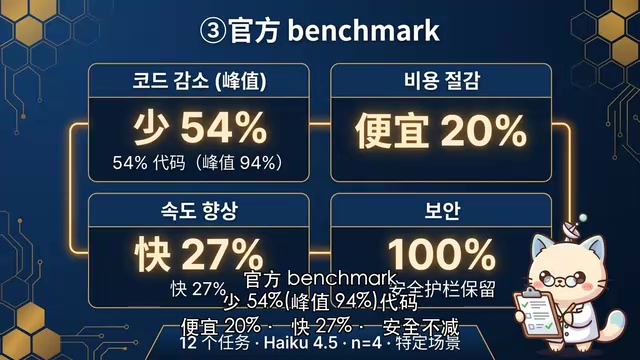
It's worth emphasizing: these figures are experimental conclusions under specific scenarios, not universal numbers that apply everywhere. Readers who want to verify can head to the repo's Benchmarks directory and reproduce them for themselves.
Judgment Is Still a Human's Job
The third and most critical point: writing less code doesn't mean cutting corners carelessly. Ponytail injects "engineering taste" into the Prompt—it doesn't think for you.

The shared premise is this—you yourself must have the judgment to recognize whether "this line of code is worth writing." The tool can restrain the Agent's impulses, but it can't replace the engineer's decision-making.
Who Should Use Ponytail the Most?
Based on the project's positioning, the following three groups are the best fit to get started:
- Frontline engineers: Those who use Claude Code, Cursor, or Codex daily to handle business code—especially developers frustrated by Agents installing loads of unnecessary dependencies.
- Tech Leads: Technical leaders who want their team's Agents to produce cleaner, more review-friendly code.
- Technology evaluators: Engineers who want to reproduce the Benchmark data to convince their teams.
Three Cool-Headed Reminders
Before jumping on the bandwagon, it's worth keeping a measure of rationality:
First, benchmarks have boundaries. The official data comes from the specific combination of FastAPI + React + Claude Haiku 4.5. Change the language, the model, or the codebase, and the numbers may shift—don't treat 54% as an all-purpose promise.
Second, writing less code is a philosophy, not a hard rule. When the business genuinely needs explicit extension points, Ponytail may "over-restrict," and complex projects still require human review.
Third, license responsibility is on you. Ponytail itself uses the permissive MIT license, but the third-party libraries referenced in the project each have their own licenses that you must comply with yourself.
Final Thoughts
What's truly interesting about Ponytail is its reverse thinking: at a time when AI code generation capabilities keep growing stronger, "writing less" has ironically become a scarce ability. It doesn't pile features onto the Agent—it teaches the Agent restraint.
When every AI tends to "do a little more," a Skill that knows when "not to do" may be the answer that's closer to the essence of engineering.
Related articles
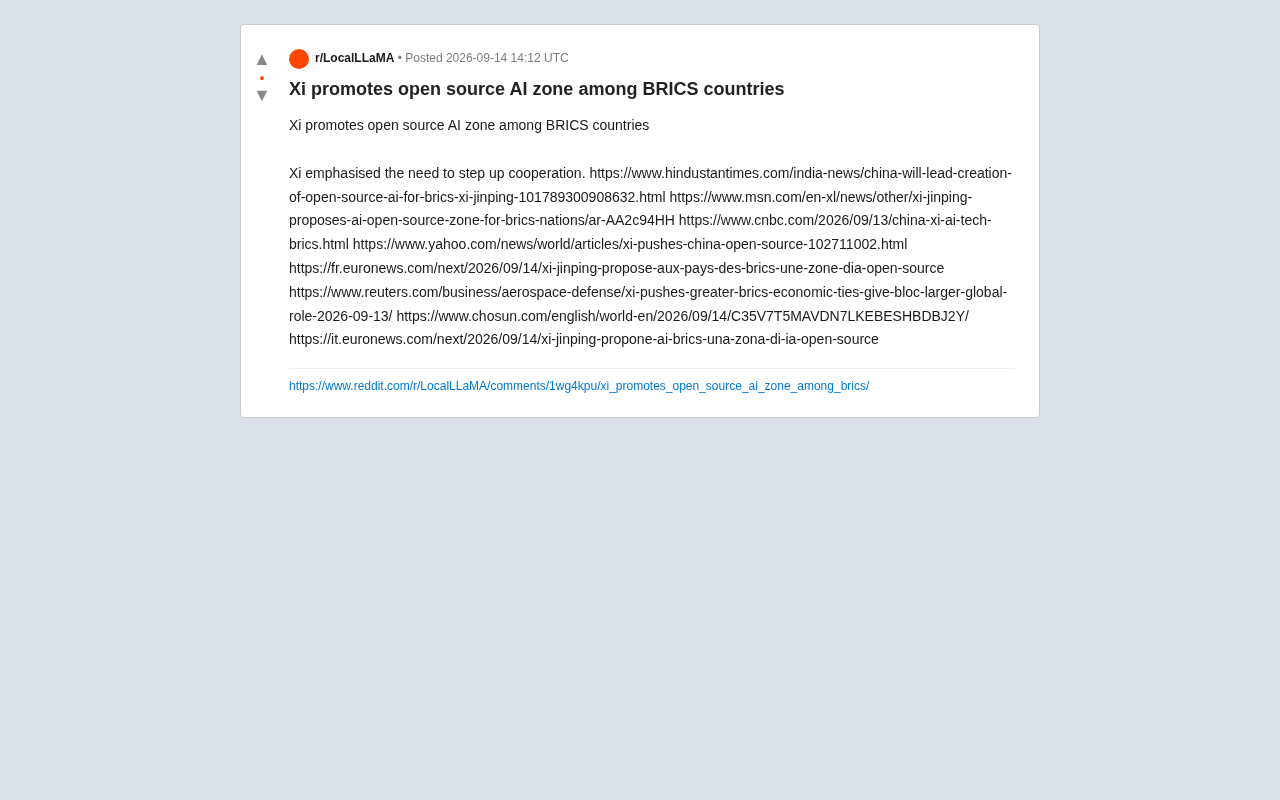
Xi Jinping Proposes Open Source AI Cooperation Zone Among BRICS Nations
Xi Jinping proposed an open source AI cooperation zone at the BRICS summit. Analyzing the strategic intent, open source rationale, and global AI governance implications.
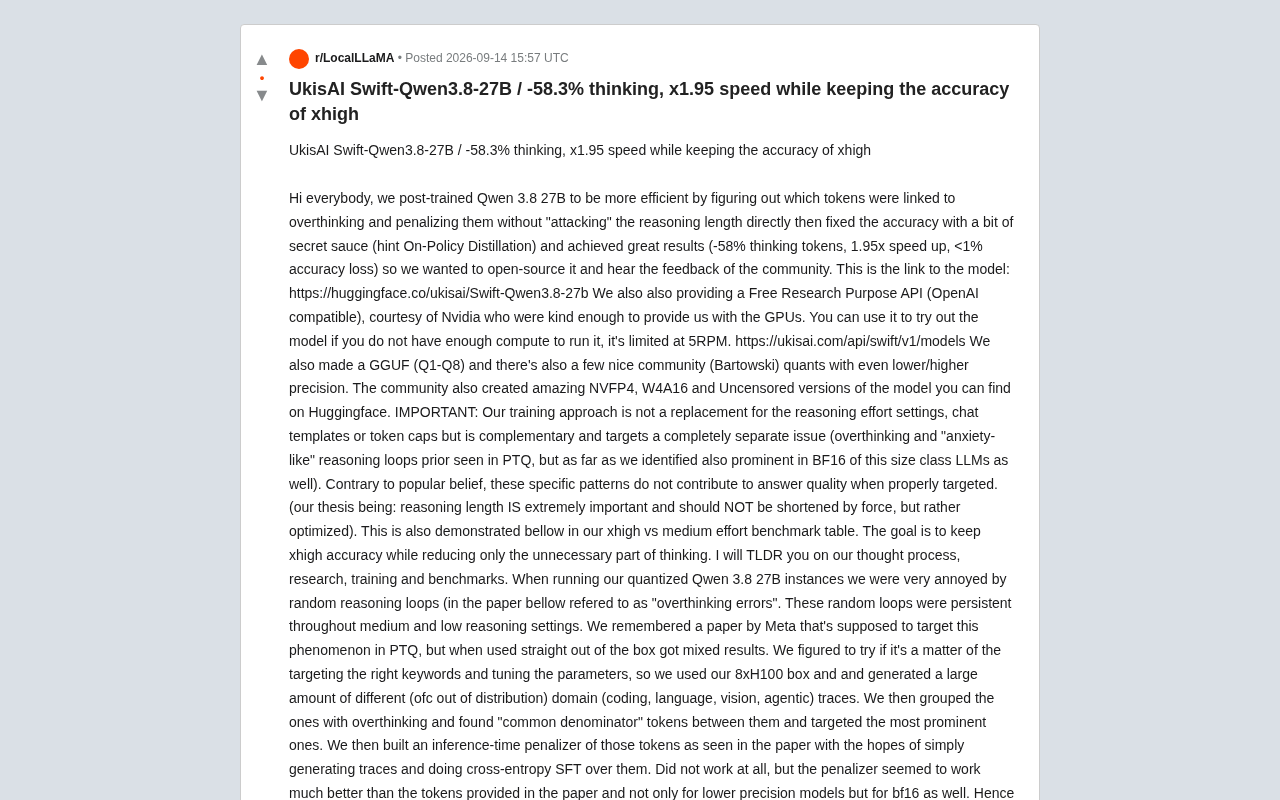
Swift-Qwen3.8-27B: 58% Fewer Thinking Tokens, Nearly 2x Faster Inference
UkisAI open-sources Swift-Qwen3.8-27B, cutting thinking tokens by 58% and boosting inference speed 1.95x via overthinking token penalties and on-policy distillation — with under 1% accuracy loss.

Netflix Partners with Sega: Crazy Taxi Movie and New Sonic Animated Series on the Way
Netflix announces three Sega game adaptations: a Crazy Taxi movie, a new Sonic animated series with edge, and a live-action film based on RGG Studio's Stranger Than Heaven.