Postaway: How a Vintage Postcard Tool Uses Emotional Design to Win Over Digital-Age Users
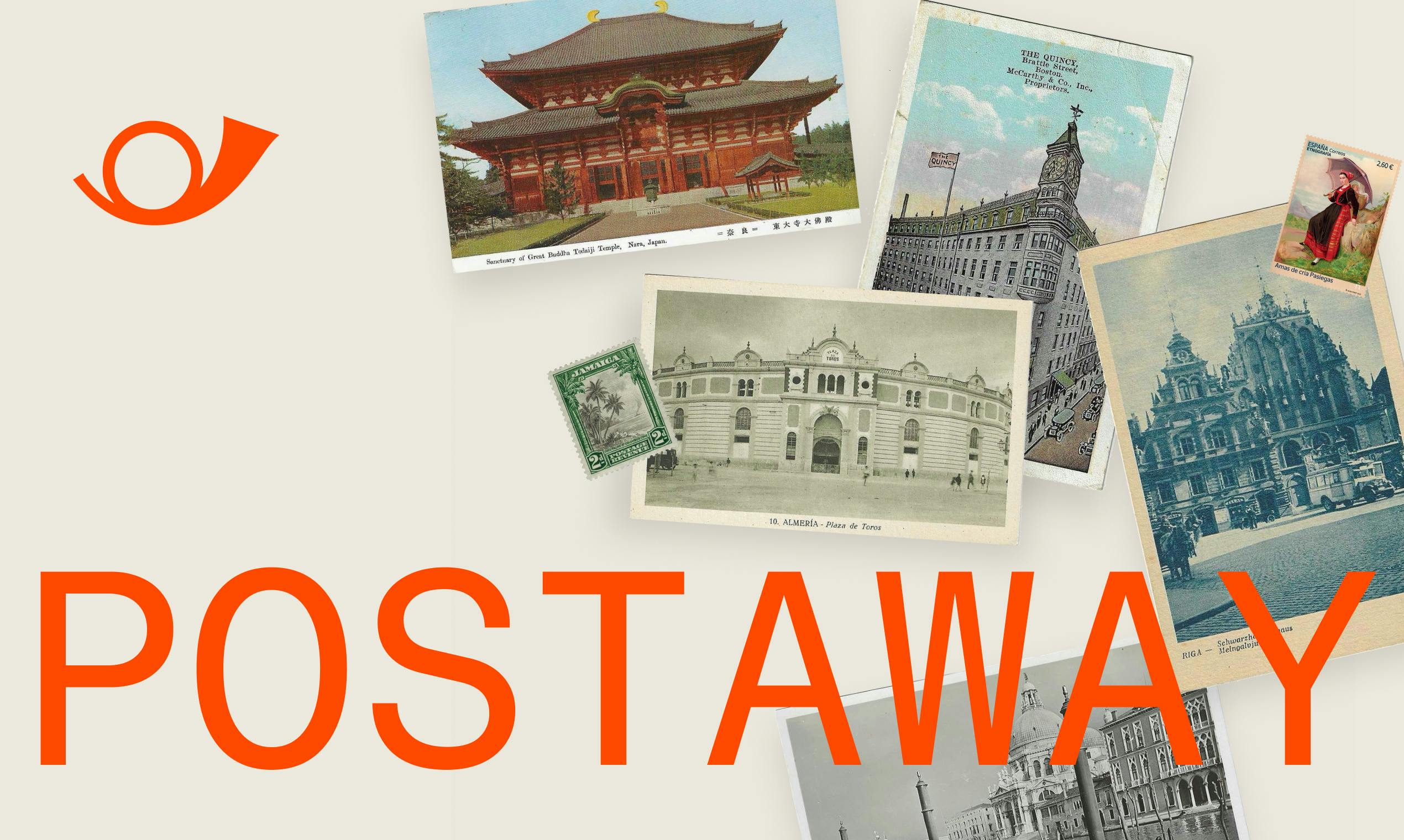
Postaway.space carves out a niche selling ritual and emotional connection in an efficiency-obsessed tool market.
Postaway.space is a digital postcard tool built by indie developer Martin Chen. Users choose a destination, write a message, and the system randomly matches a vintage postcard to generate a shareable link. Spanning travel, design, and social categories, its value lies not in efficiency but in ritual — the deliberate friction of random matching and mindful writing is the heart of its emotional design. Monetization flows from a free digital tool into a paid Mail Club subscription for physical postcard delivery, borrowing the excitement of blind-box surprises. After earning 73 upvotes on Product Hunt, it occupies the stable "Digital Nostalgia" niche, though challenges around retention, monetization scale, and network effects mean the path from "fun little tool" to "sustainable product" remains long.
In an era dominated by algorithmic feeds and instant messaging, a product called Postaway.space has chosen to swim against the current — bringing the warmth of old-fashioned postcards back into everyday communication. The product recently launched on Product Hunt, earning 73 upvotes and ranking 13th on the day's leaderboard. It wasn't a viral hit, but its distinctive emotional positioning sparked genuine interest in a small but engaged audience.

A Nostalgia-Driven Digital Postcard Tool
Postaway's core mechanic is refreshingly simple: you choose a destination, write a message, and the system randomly matches you with a vintage postcard, generating a shareable link. The entire experience is free.
The product spans three categories — Travel, Graphics & Design, and Social Networking — a range that reflects the multiple emotional dimensions it aims to connect: the memories of a journey, the aesthetics of a bygone era, and the bonds between people.
One design detail worth highlighting is the "random match" feature. Users have no control over which postcard style they end up with, and that uncertainty deliberately recreates the surprise of receiving a traditional postcard — you never know what image will arrive. This intentional "lack of control" is a clever stroke of experience design.
Extending from Digital Tool to Physical Product
Postaway isn't content to stay on-screen. The product also offers the Postaway Mail Club, a membership that sends users an actual vintage postcard in the mail, along with some "surprises."
This is a genuinely imaginative monetization path: use a free digital tool as a top-of-funnel acquisition channel, then convert users through physical goods and a subscription model. The tagline "You never know what you'll get" transplants the excitement of a blind box into the physical mailing experience, deepening the product's emotional stickiness.
Emotional Design: A Product Philosophy for the Anti-Efficiency Era
In today's productivity tool landscape, "efficiency" is almost the only metric that matters — faster, smarter, more automated. Postaway does the opposite. It doesn't sell efficiency; it sells ritual and emotional connection.
Handwriting a message, choosing a faraway destination, waiting for a randomly matched vintage image — these seemingly "unnecessary" steps are precisely what make the product valuable. They make communication feel slower, and in doing so, more meaningful.
This kind of product isn't without precedent. From paper-style note apps to the revival of film cameras, "Digital Nostalgia" has emerged as a stable niche. When technology makes everything instantly accessible, people start paying for experiences that offer friction. Postaway has landed squarely on this emotional trend.
"Digital Nostalgia" as a product category has a clear psychological foundation. Researchers describe this as "technologically mediated nostalgia" — people don't actually want to return to the past; they use digitally retro products as emotional anchors in a rapidly changing world. From Polaroid-style filter apps and typewriter-sound keyboards to the rise of BeReal (which emphasizes unpolished, authentic photo sharing), the common thread is this: when digital experiences become frictionless and costless, meaningful resistance becomes the scarce resource. Behavioral economics' "IKEA Effect" also partly explains the phenomenon — the more effort users invest in a product, the higher they perceive its value. Postaway's deliberately designed "random match" and "writing and waiting" steps are engineered to create exactly this kind of valuable friction.
Real Challenges: The Ceiling of a Niche Position
To be clear-eyed about it, Postaway is still a very lightweight product. 73 upvotes is a mid-tier result on Product Hunt, and just 1 comment suggests it hasn't sparked widespread conversation yet.
As the work of indie developer Martin Chen, it faces several concrete challenges:
- User retention: Digital postcards are a low-frequency use case. Getting users to come back repeatedly is the central challenge.
- Limited monetization scale: Physical postcard delivery involves printing and logistics costs — the margin and operational complexity of Mail Club are both significant considerations.
- Weak network effects: As a product with social dimensions, it needs enough sharing behavior to create a viral loop, and current scale is far below the critical threshold.
In short, Postaway's emotional vision deserves credit — but there's a long road ahead between "charming little tool" and "sustainable product."
The indie developer ecosystem has grown in recent years with the rise of tools like Notion and Figma and the proliferation of no-code platforms, but its core dilemma remains unchanged: solo developers or tiny teams in the cold-start phase depend heavily on one-time exposure from platforms like Product Hunt and Hacker News, and retention from that traffic is consistently low. More than 60% of products that launch on Product Hunt go dormant or lose users within six months. For products involving physical fulfillment, the challenges are even more concrete: printing and postage costs scale linearly with users, unlike pure digital products where marginal cost approaches zero. Subscription-based physical goods like Mail Club require sustained investment in supply chain management, customer service, and ongoing content updates — a genuine test of any indie developer's operational capacity.
Closing Thoughts
Postaway reminds us that product innovation doesn't always have to revolve around AI and automation. In an age where everyone is chasing efficiency, rediscovering the value of slowness and warmth is itself a differentiation strategy.
It may never become a breakout hit, but it represents a product philosophy worth paying attention to: using a lightweight digital form to carry people's simple longing for the past, for faraway places, and for genuine human connection. For indie developers, a small but elegant entry point like this may be exactly how you find your footing in a market crowded with giants.
Related articles
Open-Source Python SDK: Measuring AI Agent Reliability with SRE Principles
Agent Reliability is an open-source Python SDK that applies SRE's SLO and error budget concepts to AI Agent evaluation, with PASS/FAIL/UNKNOWN states, CI assertions, and zero forced dependencies.
MiniMax RefMod: A Complete Guide to Training-Free Reusable Identity Workflows
MiniMax RefMod offers training-free reusable identity workflows for image, video, and audio generation. Includes Runpod template and tutorial for quick setup.

Invalid Source Material Notice
The source material provided lacks substantive information and is unrelated to AI/tech topics, making it impossible to produce a complete professional article.