Preparing 3D Scenes with Agentic AI: A New Paradigm for Physical AI Simulation
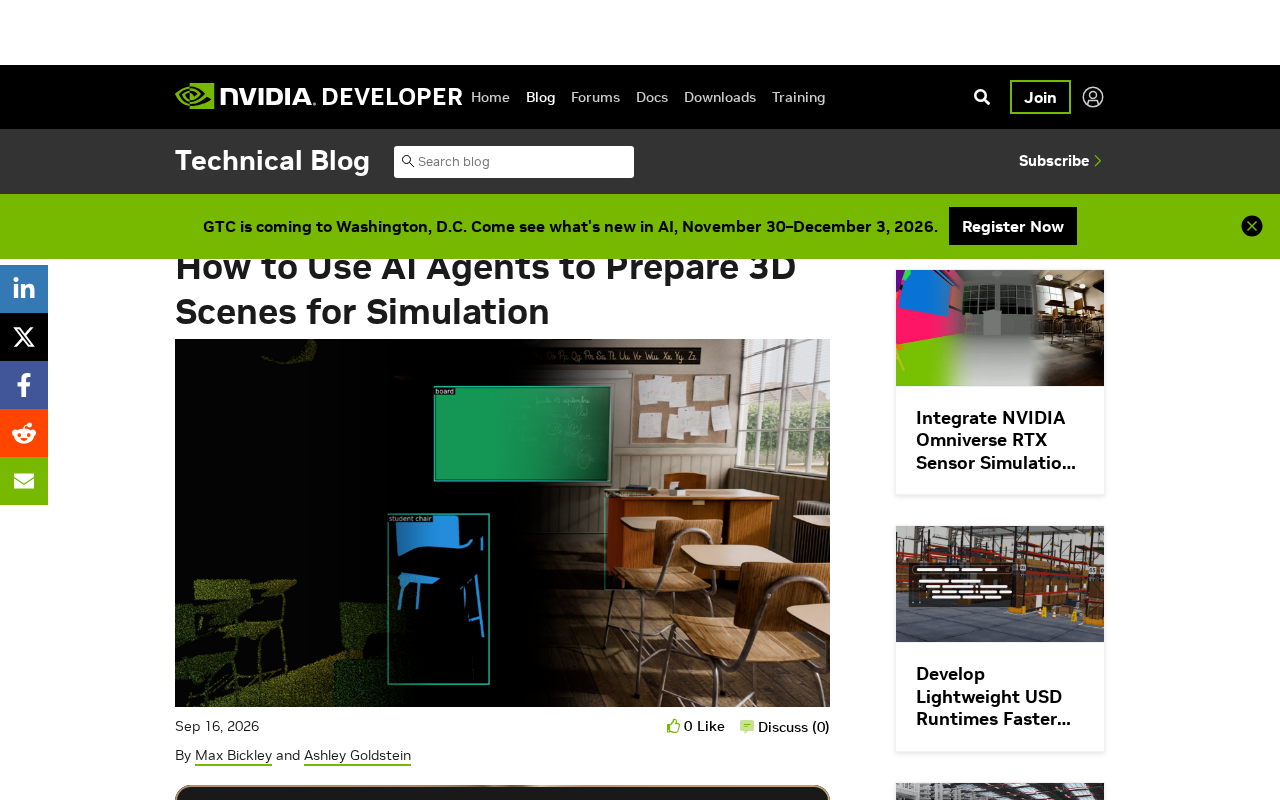
NVIDIA's Agentic AI workflow automates the conversion of raw 3D scenes into simulation-ready digital twins for physical AI training.
Training physical AI systems like robots and autonomous vehicles relies heavily on simulation, but converting raw 3D assets into simulation-ready digital twins — complete with colliders, physical materials, and joint constraints — has always been slow and technically demanding. NVIDIA has shared an Agentic AI workflow that lets AI agents act as "physics-aware technical artists," automatically handling scene inspection, simulation data authoring, and usability validation in a closed loop. This lowers the barrier to simulation prep and reflects a broader shift: AI agents are evolving from conversational tools into active participants in production pipelines.
Training physical AI systems — robots, autonomous vehicles, and the like — increasingly depends on high-quality simulation environments. But before a simulation can run, converting raw 3D scenes into "digital twins" that a physics engine can actually use has always been a time-consuming process demanding specialized expertise. A recent Agentic AI workflow shared by NVIDIA aims to automate exactly that preparation work.
Why Simulation Prep Is a Bottleneck for Physical AI
Physical AI systems — whether robotic arms, mobile robots, or self-driving vehicles — require extensive training and validation in simulation. The value of simulation lies in generating massive amounts of scene data at minimal cost and high efficiency, while avoiding real-world safety risks.
But simulation requires a "simulation-ready" 3D scene to begin with. Raw 3D assets typically contain only geometry and surface appearance — they lack the information physics engines actually need: object mass, collision shapes, physical material properties, joint constraints, and hierarchical relationships between objects. Filling in this data manually is not only tedious, it demands that the person doing it understand both 3D modeling and physics simulation.
This is precisely where Agentic AI can step in. According to the NVIDIA Developer Blog, Agentic AI workflows can be used to prepare and validate the digital twins required by physical AI systems — letting agents take over the scene inspection and data authoring work that humans previously had to do by hand.
Digital Twin refers to a precise virtual replica of a physical-world object or system — one that not only reproduces the geometry but faithfully reflects physical behavior. In robot simulation, a qualified digital twin must include: colliders (defining an object's physical boundary, distinct from the visual mesh used for rendering), rigid body properties (mass, inertia tensor, friction coefficients, etc.), joint constraints (describing degrees of freedom and limits for each axis of a robotic arm), and parent-child hierarchy relationships between objects. This information is typically stored in file formats such as USD (Universal Scene Description, developed by Pixar and widely promoted by NVIDIA) or URDF (a common format in robotics). Without these attributes, physics engines like NVIDIA PhysX cannot correctly simulate collisions, gravity, or joint motion — causing simulation results to diverge from reality and often leading to Sim-to-Real transfer failures when AI models trained on such data are deployed in the real world.
How Agents Intervene in 3D Scene Processing
The core idea behind this workflow is to have an AI agent "look at" a 3D scene the way a technically skilled artist who understands physics would. According to the original source, the agent can inspect 3D scenes and author simulation-relevant data.
Specifically, the agent's tasks break down into several layers:
Scene Inspection and Understanding
The agent first needs to understand what objects exist in the scene, how they relate spatially, which objects should be interactive, and which are static background. This step is essentially a "health check" for the scene — identifying missing simulation properties.
Automated Authoring of Simulation Data
Once the scene is understood, the agent can automatically add the properties objects need for simulation: collision shapes, physical materials, rigid body settings, and joint configurations. Work that previously required manual, object-by-object setup can be batch-processed by the agent, significantly lowering the barrier to entry.
Validating Digital Twin Usability
After preparation, the agent can also participate in a validation step — ensuring the generated digital twin behaves reasonably within the physics engine without common issues like mesh interpenetration or jitter. This "prepare–validate" feedback loop is key to improving the reliability of simulation data.
Agentic AI differs fundamentally from ordinary LLM conversations in its ability to use tools and execute multi-step tasks autonomously. An agent perceives its environment by calling external tools (such as 3D scene parsing APIs, physics engine interfaces, and file I/O operations), formulates an action plan, executes it, observes the result, and then decides the next step — forming a perceive–plan–act cycle. Within NVIDIA's ecosystem, this type of workflow is typically built on Isaac Sim (a USD-based robotics simulation platform), where agents can directly manipulate USD properties in a scene via Python scripts or dedicated APIs. Unlike single-turn Q&A, agents must maintain state memory across steps and can autonomously backtrack and correct errors (such as misconfigured colliders) — which is precisely why they can handle multi-stage engineering tasks like simulation preparation.
What This Means for Developers and the Industry
For robotics and autonomous driving developers, the most immediate value of this workflow is reducing both the technical barrier and the time cost of simulation preparation. Scene preparation work that once required a dedicated technical artist spending hours or even days can potentially be completed by an agent in a fraction of the time — freeing engineers to focus on the algorithms themselves.
From a broader perspective, this reflects how Agentic AI is evolving from "conversational assistant" to "production pipeline executor." When an AI agent can operate professional 3D and simulation tools, understand physical rules, and autonomously complete multi-step tasks, it becomes a link in the training data pipeline for physical AI. This aligns closely with NVIDIA's consistent vision of "train AI with simulation, then deploy AI in the physical world."
One note: this article is based on summary information from the NVIDIA Developer Blog, and the original post is limited in its disclosure of specific agent architecture, models used, and toolchain details. Teams looking to implement this approach in production should consult NVIDIA's official documentation for a complete implementation path.
Summary
Agentic AI's involvement in simulation preparation for 3D scenes represents a key step in the physical AI development pipeline that is now being automated. By having AI handle scene inspection, simulation data authoring, and validation, developers can build reliable digital twins more quickly — accelerating the training and iteration of robots, autonomous vehicles, and similar systems. While still early, this direction points to a clear trend: AI is not only what gets trained, but is increasingly becoming the tool that prepares the training data.
Related articles
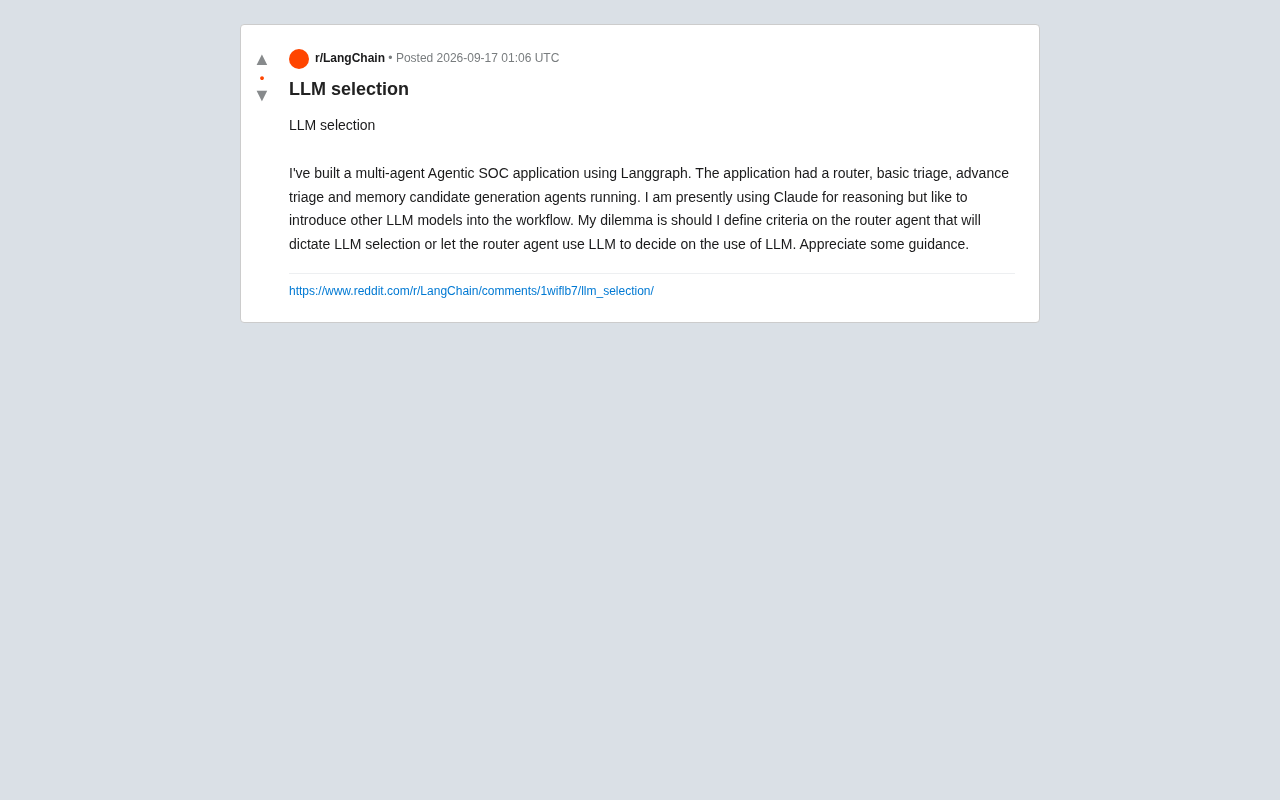
LLM Selection Strategy for Multi-Agent SOC Applications: Rule-Based Routing vs. LLM-Driven Decisions
Should multi-agent SOC apps on LangGraph use rule-based routing or LLM-driven model selection? This article analyzes both approaches and recommends a hybrid strategy for security operations.
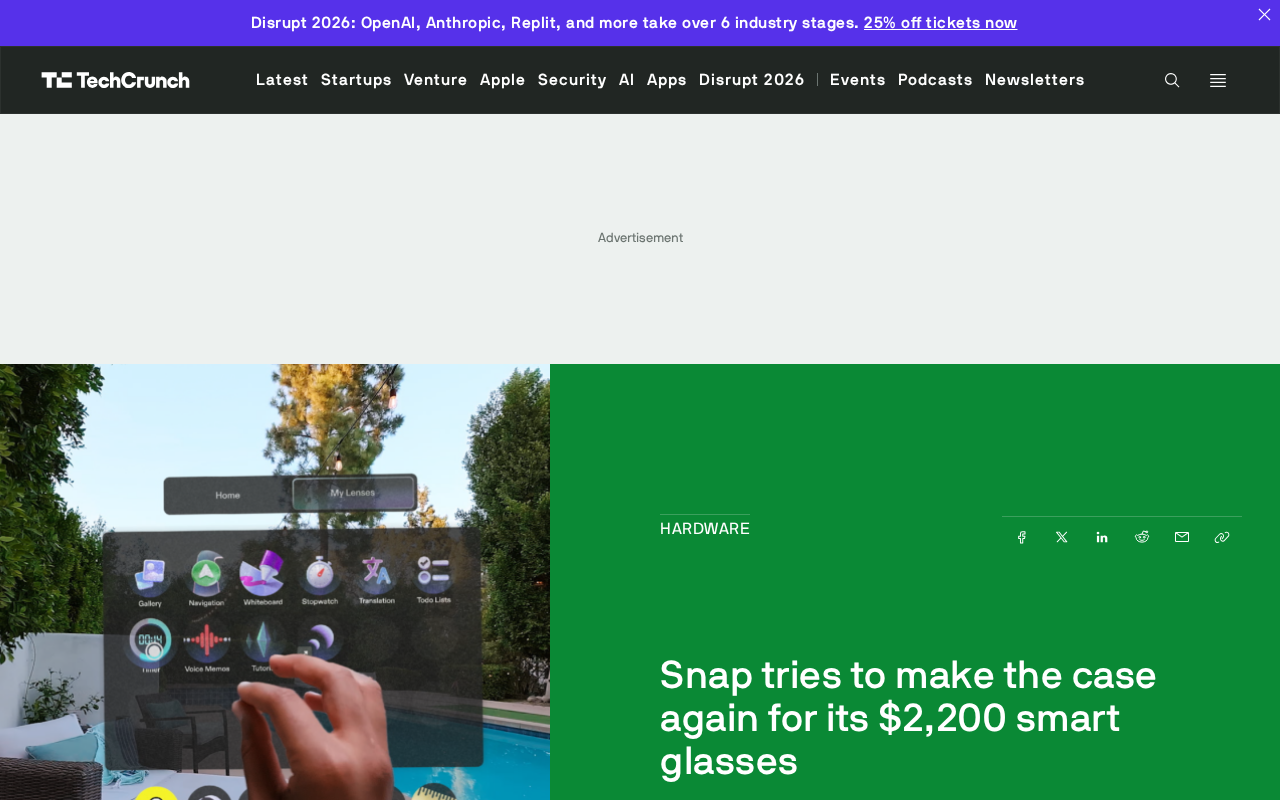
Snap Pushes Its $2,200 Smart Glasses Again — Can It Convince the Market?
Snap launched new features for its $2,200 smart glasses, doubling down on AR. We break down the pricing dilemma, its rivalry with Meta Ray-Ban, and what it means for the AR glasses race.
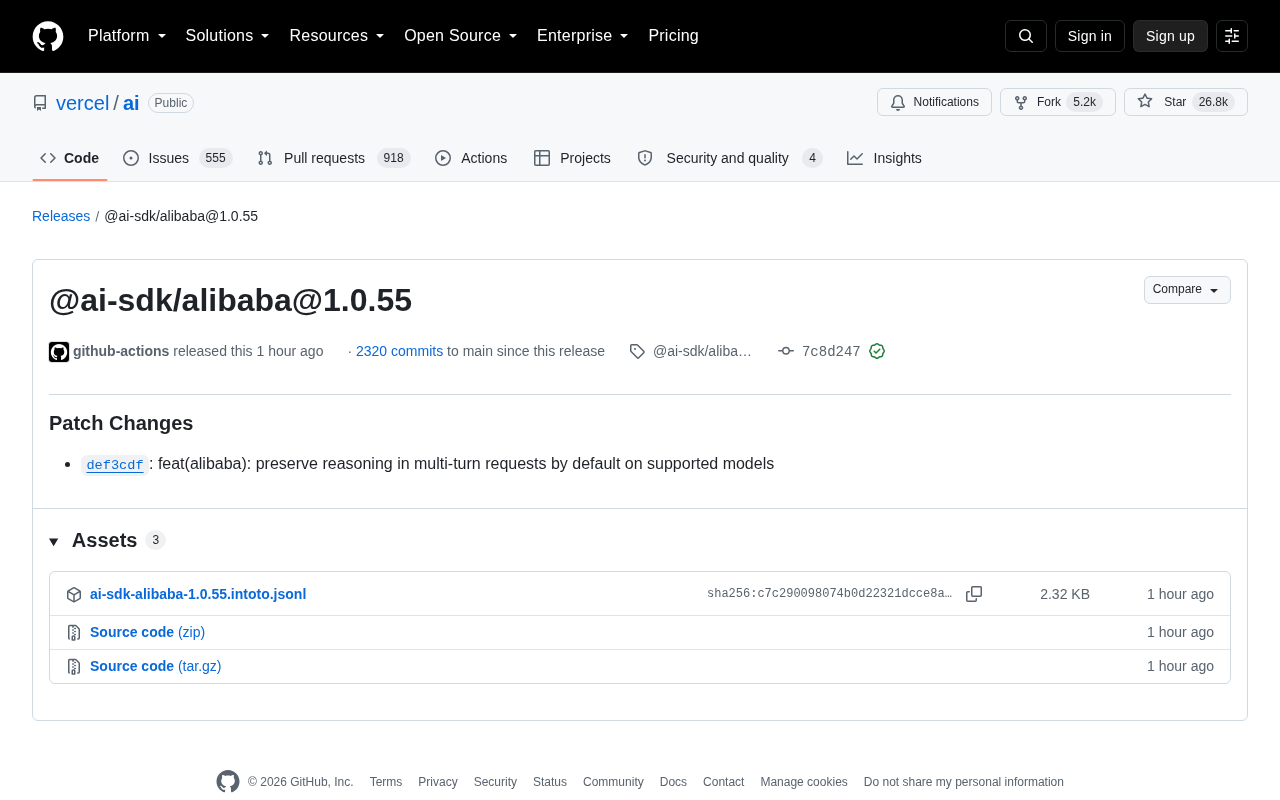
Vercel AI SDK Update: Multi-Turn Reasoning Preservation for Alibaba Models
Vercel AI SDK releases @ai-sdk/alibaba@1.0.55, enabling reasoning preservation by default in multi-turn requests for supported Alibaba models like Qwen.