Prison Planet: Would Humanity Use Convicts to Colonize Alien Worlds?

The real prison planet problem: can civilization transform punishment into citizenship across the stars?
This SFIA episode uses the "prison planet" concept to explore whether future space civilizations would use convicts and exiles to colonize new worlds. Drawing on Britain's transportation of convicts to Australia and Siberian exile, the author traces humanity's ancient logic of combining unwanted people with unwanted work. The core argument: a prison planet is likely just a developmental phase — once children are born and free immigrants arrive, it must transition into a community or become a caste system with rockets. The greatest danger isn't running out of convicts, but a system that discovers it needs them, causing the list of deportable offenses to expand indefinitely. Everything hinges on execution and whether civilization can build a genuine path from exile to belonging.
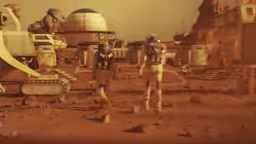
In science fiction, the prison planet is an enduring image: barren red deserts, watchtowers, sealed domes, transport ships, and a group of people in orange pressure suits walking toward a settlement they never chose. It's dramatic, eye-catching. But in this SFIA (Science & Futurism with Isaac Arthur) episode, a deeper question is raised — the real "prison planet problem" isn't whether we can build a prison in space, but whether a future civilization would use convicts, exiles, and undesirables to colonize new worlds — and what happens after that prison planet starts to become something more.
Launching Old Logic into the New Sky
Science fiction loves prison planets because the logic is brutally simple: a planet is one enormous prison. Gravity is the wall, vacuum is the moat, orbital defenses are the razor wire. Go far enough, and even guards become optional.
This logic has deep historical roots. Exile has always been about distance — sending troublesome people somewhere remote enough that escape is impossible, rescue is hopeless, oversight is minimal, and their labor can still be exploited. The video cites several real-world examples: Britain's Transportation Act of 1718 sent over 50,000 convicts to North American colonies, particularly Maryland and Virginia; when the American Revolution cut off that route, Britain redirected transportation to Australia; Russia's Siberia served a similar function.
The core pattern: whenever a society has people it doesn't want and work it doesn't want to do, someone will always propose combining the two. Space seems to offer the same logic at a cosmic scale.

Why Using an Entire Planet as a Prison Is Actually Strange
The author astutely identifies a contradiction: if your technology can already ship people across interplanetary or even interstellar distances, you almost certainly have cheaper, more secure alternatives — orbital habitats, sealed underground facilities, virtual prisons, hibernation vaults, asteroid installations, or in darker societies, direct psychological conditioning. Using an entire planet as a prison seems extravagant by comparison.
More critically, a genuinely habitable planet is an extraordinarily precious resource. Nobody looks at a world with breathable air, surface water, compatible gravity, and a compatible biosphere and says, "Perfect — let's dump the murderers here." So a real-world prison planet would more likely be a transitional world mid-terraforming: hostile enough that most people don't yet want to live there, but not so hostile that every step burns through a billion dollars in life support.
Historical Context: The Australian Transportation System
Britain's transportation system to Australia (1788–1868) was the largest and most thoroughly documented forced colonization experiment in history, shipping approximately 160,000 convicts. The system eventually developed an "assignment" mechanism: convicts were allocated to free settlers as labor; those who served their time or behaved well could earn a "ticket of leave" and ultimately a "certificate of freedom," allowing them to remain in the colony as free persons. This inadvertently created a distinctive social structure in early Australian society — the tension between "free settlers" and "emancipists" ran through the entire nineteenth century. Crucially, many descendants of convicts went on to become core citizens of a founding Australia. This history provides a real-world reference point: forced transportation colonization can, across generations, complete a genuine transition from punishment to belonging — but the costs, trauma, and social fractures persisted for well over a century. The article's later argument that "a prison planet is just a phase" can largely be read as an extrapolation of this historical logic to an interstellar scale.
A Prison Planet Is Just a Phase
This is the most powerful argument in the episode: a prison planet will very likely not remain a prison planet forever — it's just a developmental stage.
Imagine a cold desert planet orbiting a dim orange star, with slightly lower gravity than Earth, a thick carbon dioxide atmosphere, no open water, and surface radiation strong enough that sunscreen won't save you. But skilled technicians and robots have been preparing it for decades: comet impacts have replenished volatiles, orbital mirrors have warmed certain regions, automated factories produce glass, metal, oxygen, and pressure-sealed panels. On the surface: pressurized dome towns, buried reactors, algae cultivation tanks, greenhouses, and tunnels.
The first generation of settlers might be a mixed population: convicts with reduced sentences, exiles, contract workers who signed land indentures, military engineers, family members who voluntarily accompanied convicts, ideological groups seeking a blank slate, plus administrators, doctors, teachers, and AI supervisors. To the first generation, this looks very much like a prison — restricted movement, monitored communications, limited political rights — because you can't "express yourself" by switching off the oxygen recycler. The recycler represents everyone's shared interest in continuing to live.

The Moral Test: From Prison to Society
As decades pass, domes expand, mining camps become towns, children are born who committed no crime, convicts finish their sentences, guards marry locals, and free immigrants arrive. The old prison charter starts to look absurd.
The author draws a critical distinction: a prison can hold guilty people, but a society necessarily contains innocent ones. Once children, spouses, free workers, and subsequent immigrants enter the equation, the place must stop being a prison and become a more typical community — unless its parent civilization accepts inherited guilt or a caste system.
This may be the prison planet's core moral test: can it complete the transition? "If it cannot, then it isn't a colony — it's a caste system with rockets."
Philosophical Context: Inherited Guilt
Philosophically, the problem of "inherited guilt" shares roots with the concept of infamia in ancient Roman law and with collective punishment in modern history. In contemporary legal systems, culpability is strictly individual — children cannot bear criminal liability for their parents' crimes. Yet history offers abundant counterexamples: Soviet families of "enemies of the people" were sent to Siberia; Nazi racial laws defined guilt by bloodline; North Korea still maintains a three-generation punishment system. Once a second generation born on a prison planet has neither been tried nor can leave, "serving time" shifts from a punitive quality to an identity — structurally indistinguishable from caste logic. The phrase "a caste system with rockets" points precisely to this institutional drift: no single act of malice is required. Inertia and administrative convenience alone can quietly solidify an original framework of punishment into a hereditary social status.
Do We Actually Need Convict Colonists?
A common argument holds that finding space colonists will be hard. But the author doesn't buy "shortage of settlers" as the primary driver. A future civilization capable of serious space colonization will likely have enormous populations, high automation, and ample time. If a trillion people live in the solar system, even one in a million willing to join a colonial mission means a million volunteers — and that's before considering frozen colonists, robots, cloned embryos, and artificial wombs.
The real reason is more subtle: what's scarce isn't labor — it's second chances. Every society contains people who cannot or will not live constructively within existing structures. Rather than holding them indefinitely in resentful confinement, perhaps the better option is a hard but meaningful way out.
Will Post-Scarcity Societies Still Have Crime?
The video also explores an interesting angle: in a near-post-scarcity civilization, eliminating hunger reduces survival-driven theft, and eliminating scarcity reduces many conflicts — but you cannot eliminate pride, jealousy, obsession, resentment, thrill-seeking, ideology, or plain stupidity. Wealthy societies may have less crime, yet may also be less tolerant of whatever crime remains — when nobody steals bread because their family is starving, crime becomes much harder to sympathize with.
The author argues that a person who is destructive inside a utopia might become genuinely useful in a settlement where fixing a pipe, sealing a leak, and completing a harvest all have immediate, visible value. "The frontier won't forgive your crime — but it can give the rest of your life something useful to do."
The Dark Version: When a Prison Planet "Needs" Prisoners
The dangerous turning point comes when a society discovers that frontier labor is useful — and starts expanding the list of who qualifies for transportation. First violent criminals, then repeat offenders, then debtors, political extremists, those accused of "social disruption," those who failed mandatory psychological optimization, and finally people who complained about the transportation program.
The most dangerous moment for a prison planet isn't when it runs out of convicts — it's when it discovers it needs them.
This requires no cartoon villains. Just budgets, quotas, incentive structures, and a committee with a name like the "Bureau of Civic Redeployment." Then come the false choices: "You can voluntarily choose to go to the hardship planet, or serve three hundred years in prison here" — which is the same choice as "left airlock or right airlock."
But the author also notes that an outright ban carries its own costs: if a convict would rather earn land and citizenship through dangerous work than sit in a safe cell, is forbidding that choice necessarily more humane?
Historical Context: Mission Creep in Criminal Justice
"Mission creep" refers to the systemic tendency of an originally well-defined policy or operation to gradually expand its targets or scope over time. Criminal justice history offers clear examples: Britain's Black Act (1723) initially targeted armed poaching, but eventually made over 50 new offenses capital crimes; America's twentieth-century "habitual offender" laws initially targeted violent recidivists but evolved into mandatory long sentences for nonviolent offenders. The mechanisms driving creep are usually not single malicious decisions, but budget dependency (facilities need to stay full to cover operating costs), bureaucratic incentives (processing more cases means more institutional power), and definitional slippage (each expansion uses the previous expansion as its baseline). The logical chain the article describes — from "violent criminals" to "people who complained about the transportation program" — is precisely this mechanism extrapolated to an interstellar scale.
The First Wave and Generational Resentment
One of the episode's most compelling thought experiments concerns the arrival of later immigrants. The first generation dug tunnels, built domes, buried reactors, and died in accidents. A century on, the planet has improved — the atmosphere is thicker, sheltered valleys have greened, orbital infrastructure is safer. Then come ordinary immigrants who were never convicts, never exiles — arriving with polished accents, advanced tools, and capital, cheerfully calling themselves pioneers while walking roads built by people who had no choice.
You can imagine how smoothly that escalates into conflict. The descendants of the original convicts see the newcomers as soft, lazy, and privileged; the newcomers may see the old families as rough, clannish, and corrupt. Add radical life-extension technology, and the original workers may still be alive — ready to explain, in exhaustive detail with supporting charts, exactly why they are angry.
This is precisely where a prison world might become a rebellion world. But a convict origin doesn't inevitably lead to revolt — if the system genuinely provides redemption, if the parent civilization keeps its promises, grants rights on schedule, and honors the pioneers' labor, a colony might become fiercely loyal, even a evangelist for the model.
Conclusion: A Civilization's First Draft
So will prison planets exist? The author's judgment: probably yes, in some form — though usually not as permanent dungeon worlds. Before a full prison planet, we'd more likely see orbital prisons, asteroid facilities, and programs trading sentence reduction for frontier infrastructure labor.
The author admits uncertainty about whether this is "inherently bad," and acknowledges potential benefits — yet still leans toward opposition, because everything depends on execution. Mission creep is nearly irresistible, and independent oversight is hardest to provide at the margins of colonized space. The agency responsible for oversight very easily becomes the agency with the greatest incentive to keep the system running.
The real question is whether a civilization can create a genuine path from punishment to citizenship, from exile to belonging, from coerced service to real ownership — without letting justice become exploitation, or mercy become a polite euphemism for "disposal."
Someday, beneath an unfamiliar star, a child will stand in a city whose first walls were built by convicts, whose first fields were tended by exiles. That child won't ask whether their ancestors were sent here as punishment. They will only ask: is the world I've inherited free? If the answer is yes, then perhaps this prison planet was never really a prison planet at all — it was only a civilization's first draft.
Related articles

Chain of Thought Isn't Just for AI: How Humans Can Use CoT to Improve Thinking Quality
Chain of Thought isn't just a prompt trick for large models. Starting from a Hacker News discussion, this article analyzes why CoT works for human thinking too, breaks down actionable ways to transfer it, and highlights the key differences between human CoT and machine CoT.
Cloudflare Teams Up with OpenAI: Closi…
Cloudflare Teams Up with OpenAI: Closing the Loop from Vulnerability Discovery to Defense with AI
Cloudflare uses OpenAI Daybreak to investigate security vulnerabilities and generate reviewable remediation plans, while developers use Codex to boost coding efficiency and quality.

Orca Multi-Agent Orchestration in Practice: A Guide to Parallel Collaboration with Claude and Codex
Orca is Stable AI's free open-source agent workbench supporting 34 agents like Claude Code and Codex in parallel. Learn its Git worktree isolation, multi-model orchestration, and mobile management.